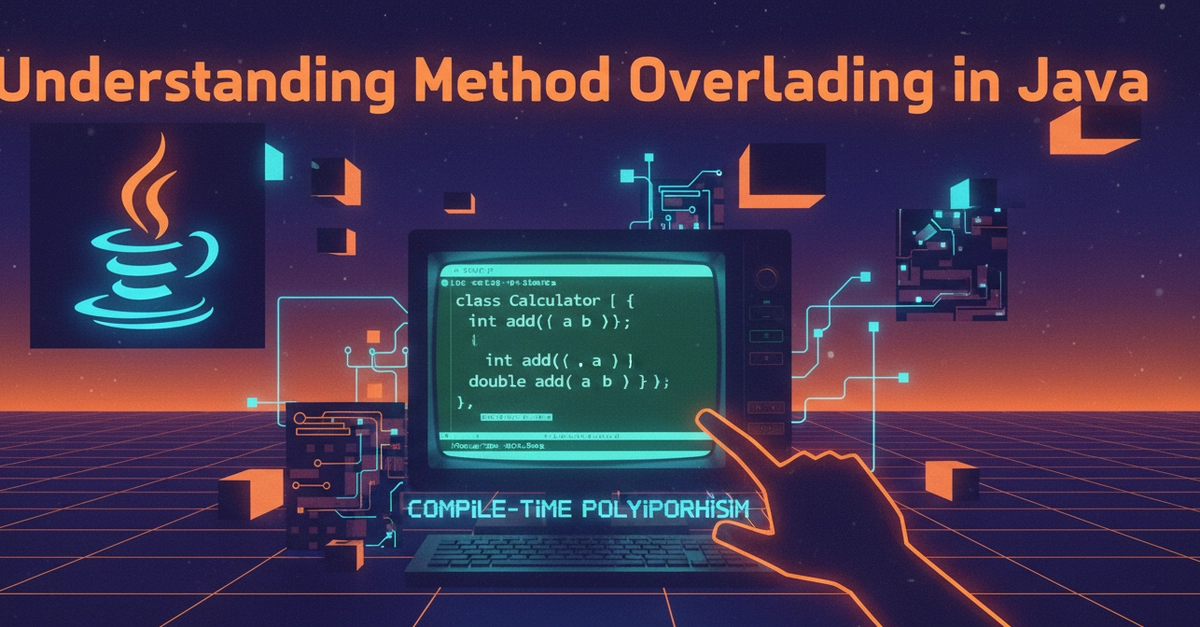
Java is one of the most popular object-oriented programming languages, and one of its powerful features is Method Overloading. Method overloading allows developers to create multiple methods with the same name within the same class, as long as their parameter lists are different. This feature improves code readability, reusability, and flexibility.
What is Method Overloading?
Method overloading is a concept in Java where two or more methods share the same name but differ in the number, type, or order of parameters. The Java compiler determines which method to execute based on the arguments passed during the method call. Because this decision is made during compilation, method overloading is also known as Compile-Time Polymorphism.
Why Use Method Overloading?
Method overloading helps developers write cleaner and more intuitive code. Instead of creating separate method names for similar operations, a single method name can be used for different types of inputs. This reduces complexity and makes programs easier to understand and maintain.