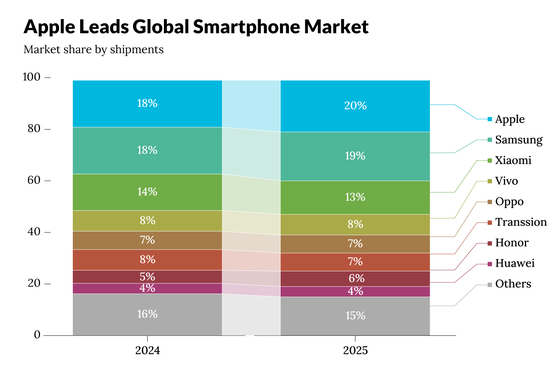
Chinese smartphone makers are bracing for their most challenging year since the Covid-19 pandemic, as skyrocketing memory chip prices force brands to make a difficult choice: absorb the higher costs, raise retail prices or downgrade storage configurations, analysts say.In a report published on Monday, market research firm Counterpoint projected that global smartphone shipments would plunge nearly 14 per cent this year to about 1.08 billion units – marking the industry’s lowest volume since 2013.The sharp contraction was being driven by the dual blow of soaring memory costs and sluggish consumer replacement demand.However, market pressure is likely to hit vendors unevenly. Apple and Samsung Electronics are expected to weather the downturn best, shielded by stronger pricing power and premium-heavy product portfolios.Meanwhile, Chinese Android brands, led by Xiaomi, face a harsher profit crunch because of their thinner hardware margins and heavier reliance on price-sensitive, lower-to-mid-end segments.Other Chinese Android vendors, including Oppo, Vivo and Transsion, are also expected to face pressure as higher component costs weigh on their price-sensitive product lines and overseas emerging-market sales.
Huawei defies memory chip squeeze hurting Xiaomi smartphones
As the memory price surge squeezes Chinese brands like Xiaomi, Huawei is likely to be the only brand to grow shipments in 2026: Counterpoint.
TL;DRAI
Chinese smartphone makers face 14% shipment decline as memory chip costs soar; Counterpoint projects 1.08 billion units, lowest since 2013. Xiaomi and regional vendors with thin margins must cut storage or raise prices, while Apple/Samsung consolidate premium dominance—reshaping profitability dynamics.
172 words~1 min read