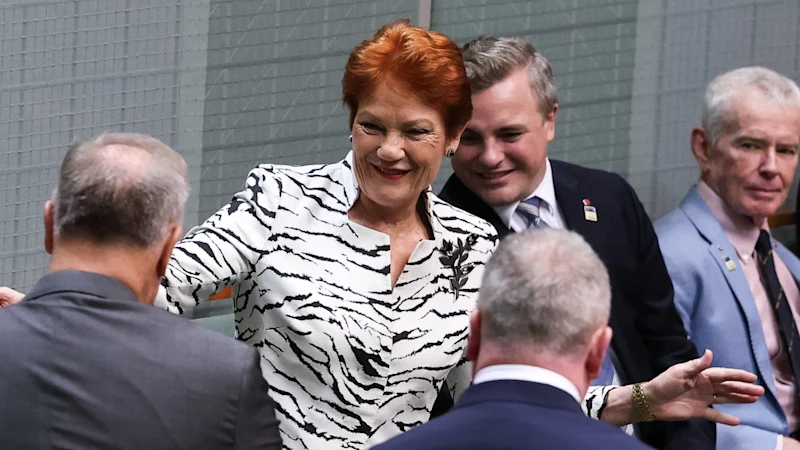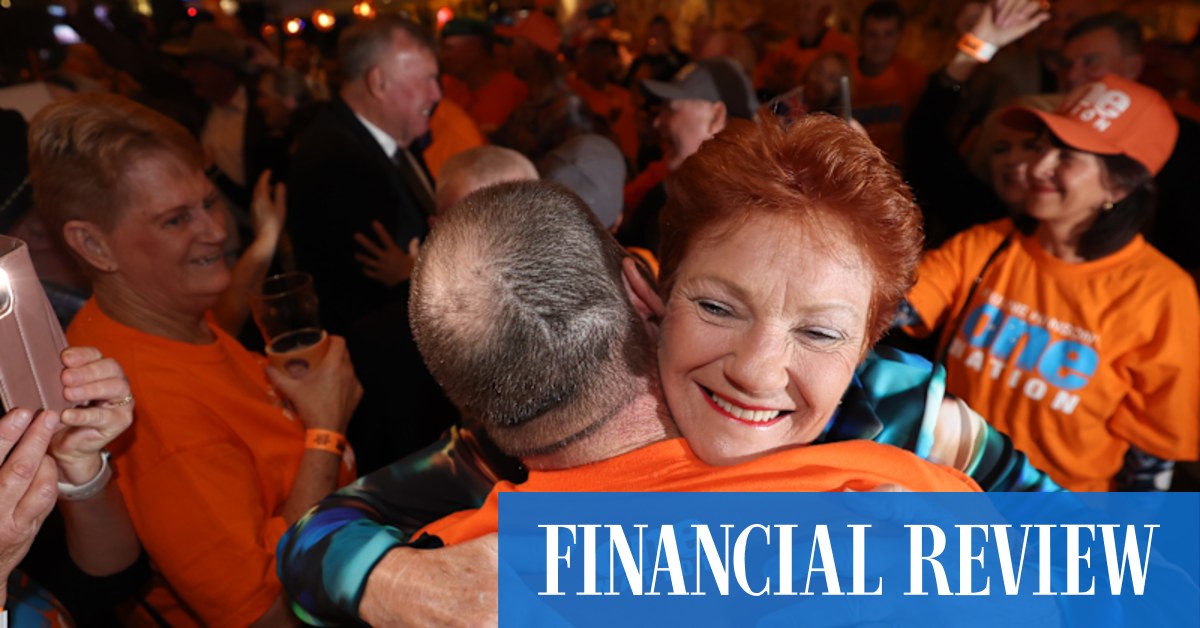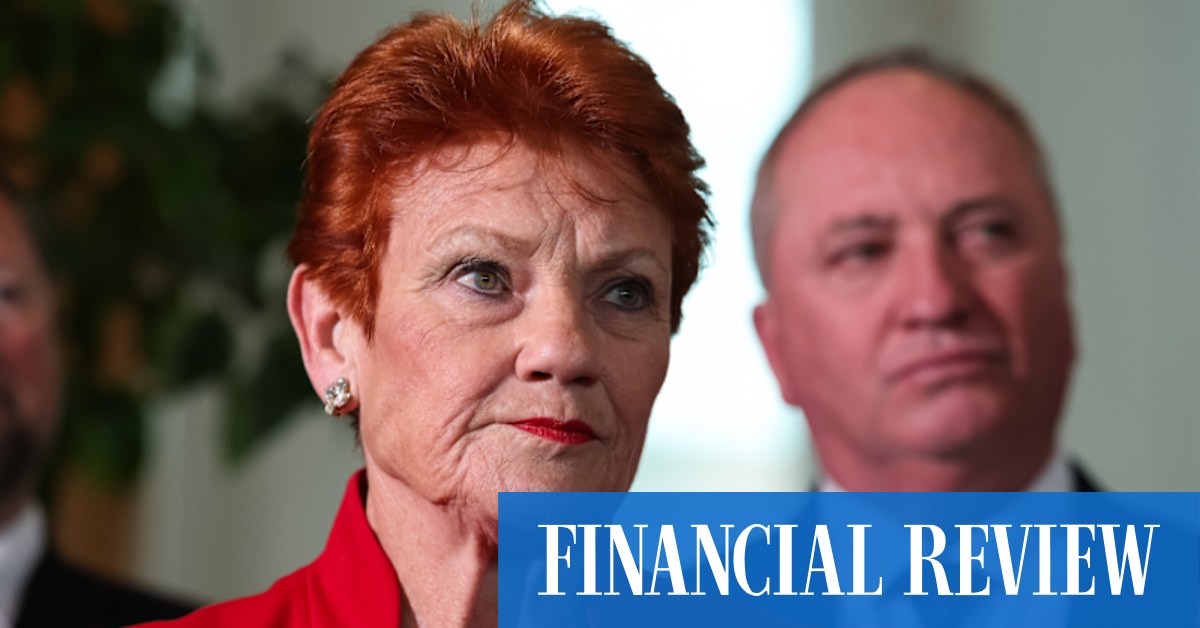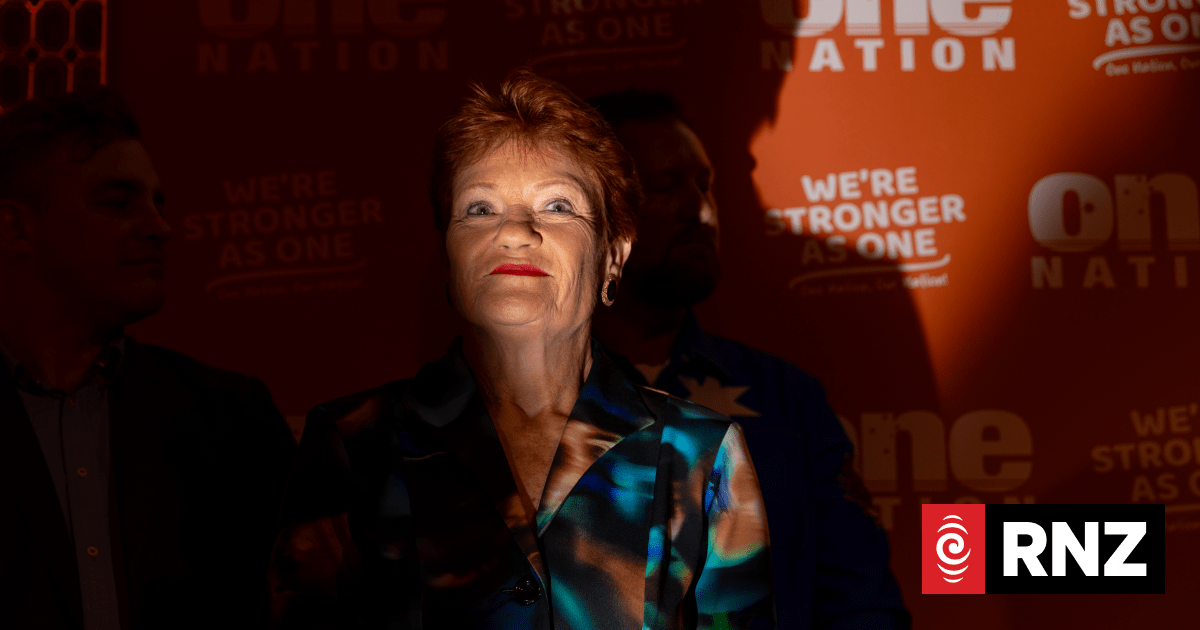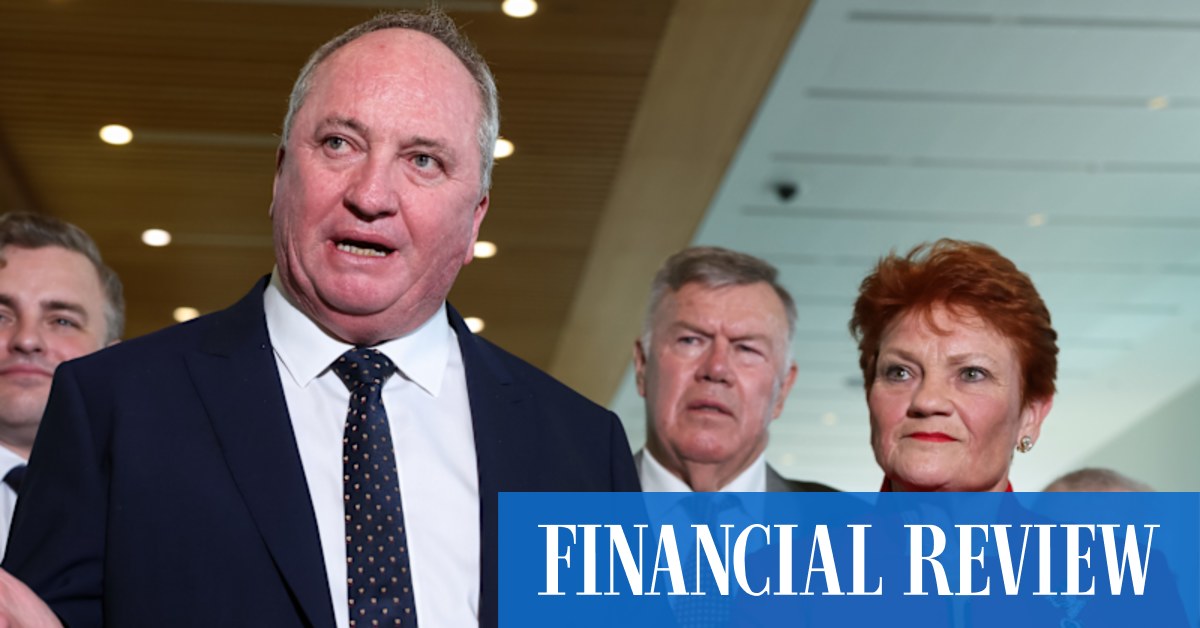
June 2, 2026 — 3:44pmOne Nation is on track to become the biggest third party in Senate history at the next election, but would likely fall short of holding the balance of power as Labor and the Greens maintain control over the chamber.The populist party could quadruple its representation in the Senate, winning seats in every state, presenting a dilemma to party leader Pauline Hanson over whether moving to the House of Representatives would better position her to set the political agenda.A review of three current polls – including this masthead’s Resolve Political Monitor – by independent election analyst Ben Raue of The Tally Room blog puts One Nation just behind the Coalition in the next Senate, with the party growing from its current four senators to 16. The Coalition would hold 18 seats, down from 27.However, Labor would likely remain relatively stable at 28 seats, meaning with the support of a prospective 12 Greens senators, the government could pass legislation without the need for conservatives or independents.Raue’s calculations assume that One Nation’s vote is spread equally across the states and territories as detailed state-by-state polling is not yet available.To win a single seat in the Senate, a candidate needs to collect a “quota” of votes – around 14.3 per cent of the vote. Based on current polling, One Nation could win two quotas per state, and in a stretch, three in states such as Queensland, New South Wales, Western Australia and Tasmania.One Nation had a new member sworn in to parliament on Tuesday. If polling holds at the next election, they would welcome a dozen more senators.Alex EllinghausenIn the most recent Resolve Political Monitor One Nation received 24 per cent of the primary vote. In polls published by The Australian Financial Review and The Australian newspapers, the party received between 27 and 31 per cent of the vote.“The right is doing, probably, overall as a combined unit a little bit better than they were in 2025, but this isn’t a right-wing landslide,” Raue said.“If that’s what we’re getting at next election, then the fact that the left did very well in 2025 means you still end up with a progressive Senate.”Only half of Senate seats are contested during a general election. At the next election, the contested Senate seats were last won in 2022, when conservative parties performed better than in 2025.Election analyst Antony Green agreed with Raue broadly, but said without those state-by-state polling breakdowns, speculation over the potential make-up of the Senate would be difficult to discern.“It is highly likely that Labor and the Greens are not going to lose much at the next Senate election. If One Nation does particularly well, the question is where their seats come from if all they do is cannibalise the Coalition’s holding.“One Nation’s enduring electoral appeal will be tested in the next 12 months, when the two most populous states hold elections – Victoria in November and NSW in March. The party won 22.9 per cent of the vote in the South Australian election three months ago.The Nationals’ Senate seats are the most vulnerable. The junior Coalition partner has four senators, with three up for re-election in 2028. Party leader Matt Canavan, whip Ross Cadell and deputy leader Bridget McKenzie could all lose their seats under current polling.McKenzie said last month that she would campaign with One Nation in Labor-held seats, despite the existential risk to her own career.On Tuesday afternoon, One Nation’s first elected lower house MP David Farley was sworn in after a landslide win at last month’s Farrer byelection in which he received a higher vote than the Nationals and Liberals combined. He joins former Nationals leader turned One Nation defector Barnaby Joyce on the House crossbench.Hanson in the House?In a series of media appearances this week, Hanson said she is considering a move to the House of Representatives, where she could serve as prime minister, opposition leader, or head of a powerful voting bloc, depending on One Nation’s electoral performance.Speculation over which seat Hanson could run in has been rife.The most widely discussed has been Nationals MP Michelle Landry’s Queensland seat of Capricornia. The seat takes in the city of Rockhampton and sections of Mackay. The Liberal held seat of Wright, which takes in the Gold Coast hinterland, has also been suggested as a possible option. One Nation achieved a 16 per cent primary vote in the electorate last year.Oxley and Blair, both held by Labor, could also be options. Hanson won Oxley, now held by Labor speaker Milton Dick, in 1996. She was disendorsed by the Liberal Party before the election, but ballots listed Hanson as the Liberal candidate.On Monday, Hanson noted there was no constitutional requirement for the prime minister to sit in the lower house.Constitutional law expert Professor Anne Twomey agreed, with qualification, saying: “While the Constitution requires that the prime minister be a member of parliament … it does not specify which house he or she must sit in”.“Under another convention, the governor-general appoints as prime minister the person who commands the confidence of the House of Representatives. It is hard to command its confidence if the prime minister is not directly accountable to it … and cannot be directly sanctioned by it.”Cut through the noise of federal politics with news, views and expert analysis. Subscribers can sign up to our weekly Inside Politics newsletter.From our partners
How One Nation’s polling surge would reshape Australia’s parliament
The party could quadruple its representation in the Senate, a polling analysis reveals, but the conservative bloc may fall short of holding power.
895 words~4 min read