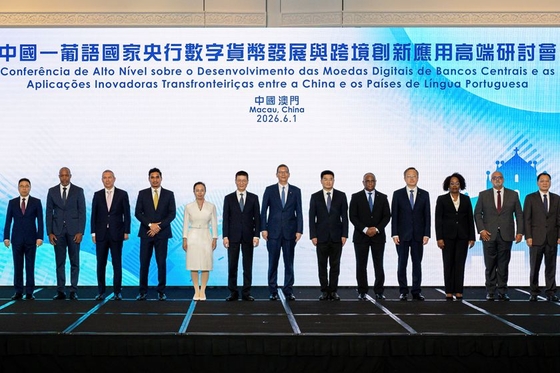
Macau has joined a cross-border central bank digital currency settlement platform, with 11 banks in the city becoming the first participating institutions, the Macau government announced.The Monetary Authority of Macau had completed system integration with Project mBridge participants, allowing those banks to begin conducting transactions through the platform from Tuesday, a news release by the government quoted authority executive director Henrietta Lau Hang Kun as saying on Monday.The move marks another step in the expansion of Project mBridge – a multi-country payment platform designed to enable direct settlement between central bank digital currencies – which had already brought together the central banks of mainland China, Hong Kong, Thailand, the United Arab Emirates and Saudi Arabia.Project mBridge, along with China’s Cross-Border Interbank Payment System, is widely seen as part of Beijing’s broader push to establish alternatives to traditional, US-dollar-centric payment networks – an effort that has gained momentum in recent years amid heightened tensions between the world’s two largest economies and growing concerns over the weaponisation of the US dollar.Speaking at a seminar on central bank digital currency development and cross-border financial innovation between China and Portuguese-speaking countries, Lau said the digital Macau pataca had entered sandbox testing and would eventually be used for e-government services, on public transport and in campuses.Macau, which reverted from Portuguese to Chinese administration in December 1999, retains deep institutional and cultural ties with the Lusophone world, making it a natural hub for trade and financial settlements between China and Portuguese-speaking economies.
Macau taps into Project mBridge digital currency platform
Project mBridge is seen as part of Beijing’s push to establish alternatives to traditional, US-dollar-centric payment networks.
TL;DRAI
Macau's 11 banks joined Project mBridge enabling CBDC settlement with China, Hong Kong, Thailand, UAE, Saudi Arabia. This advances Beijing's de-dollarization strategy, creating non-dollar payment networks that reshape enterprise treasury and fintech decisions.
246 words~1 min read