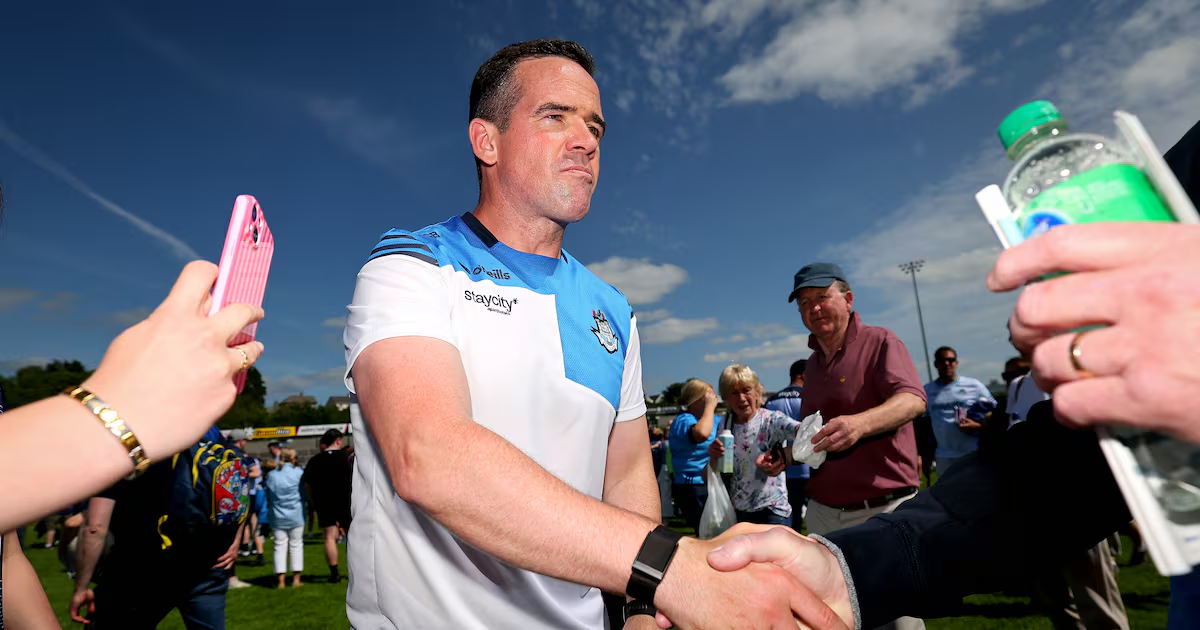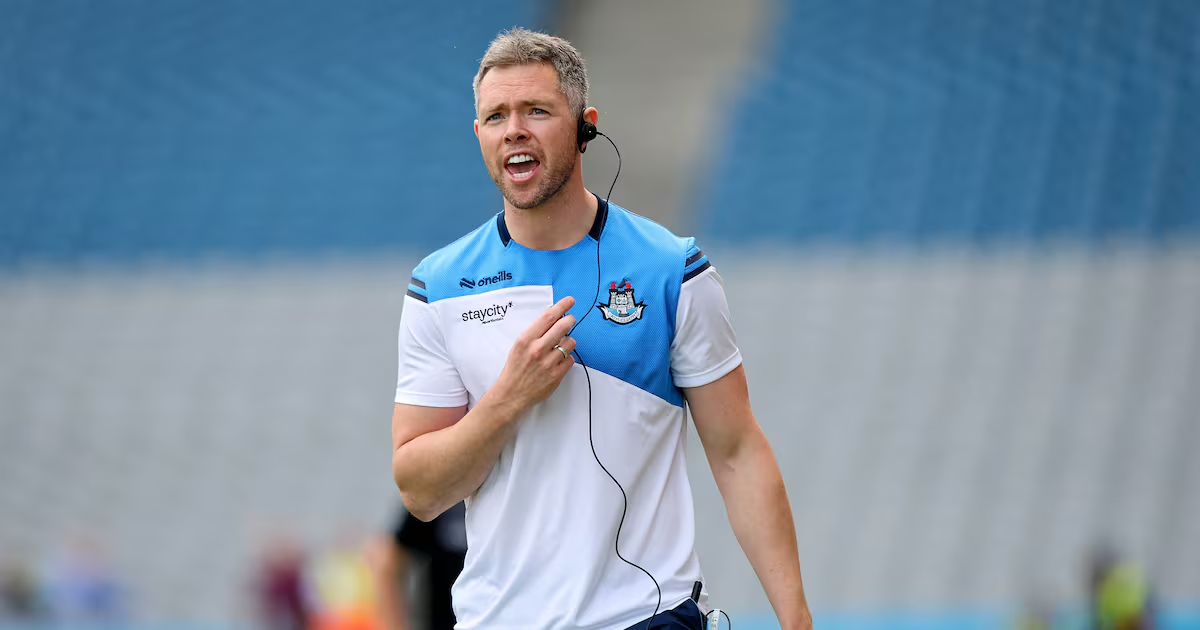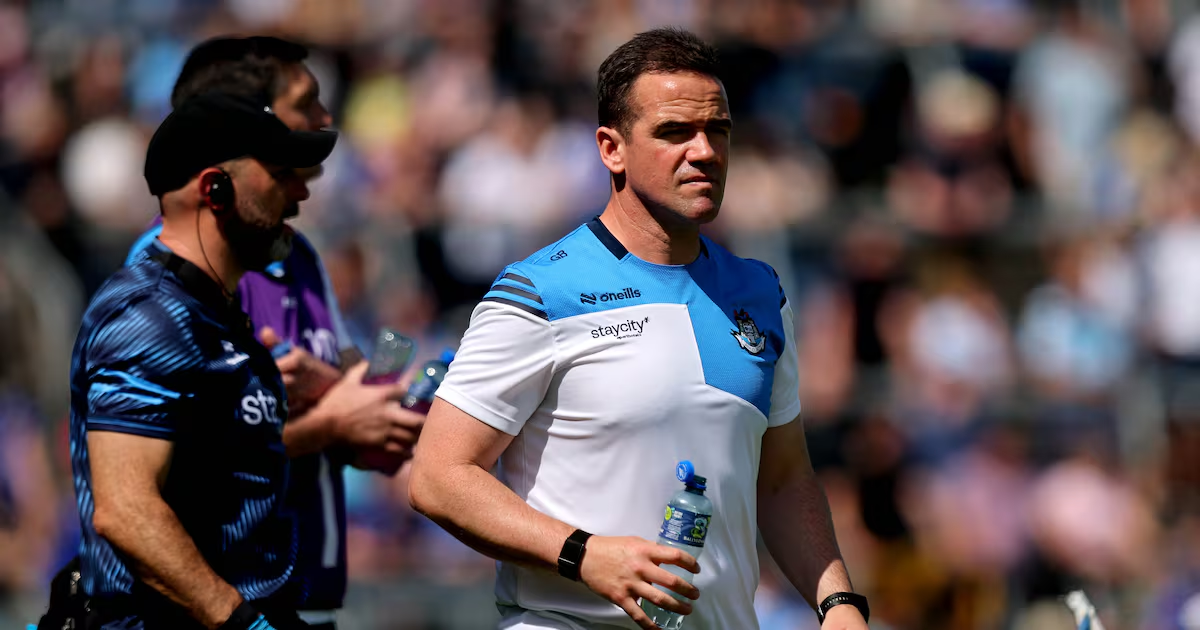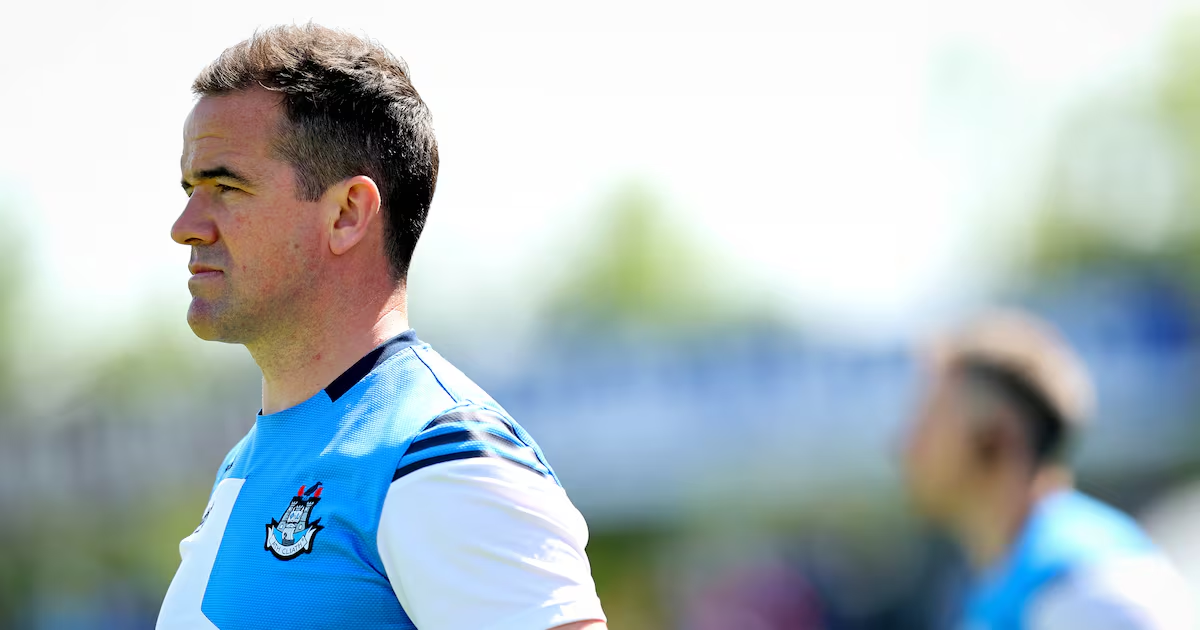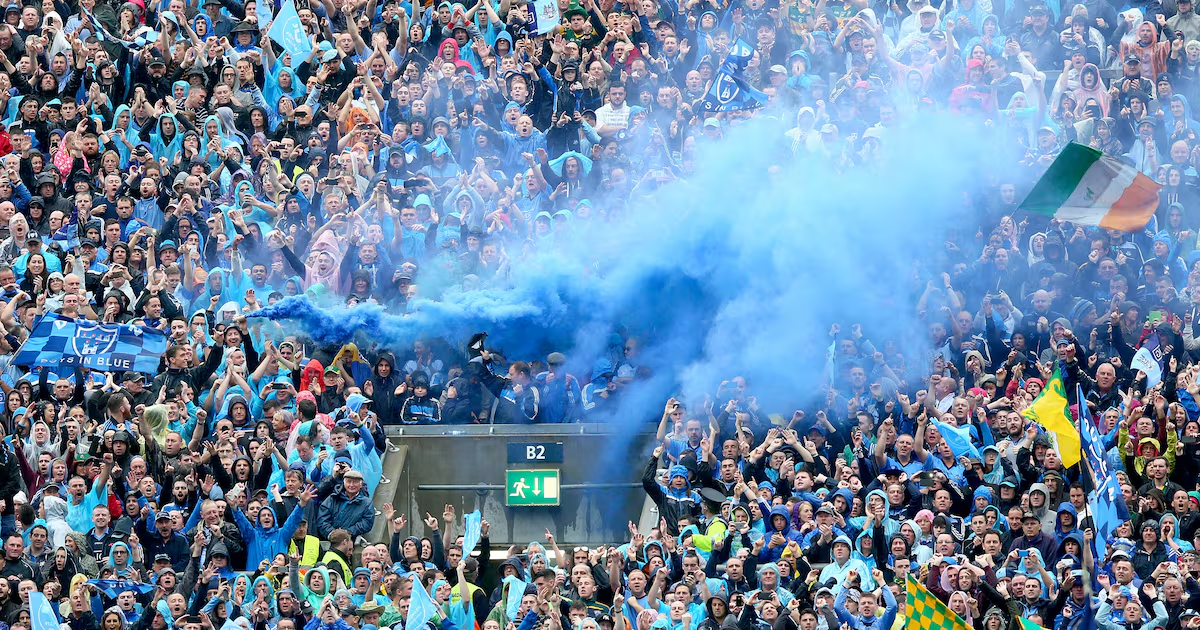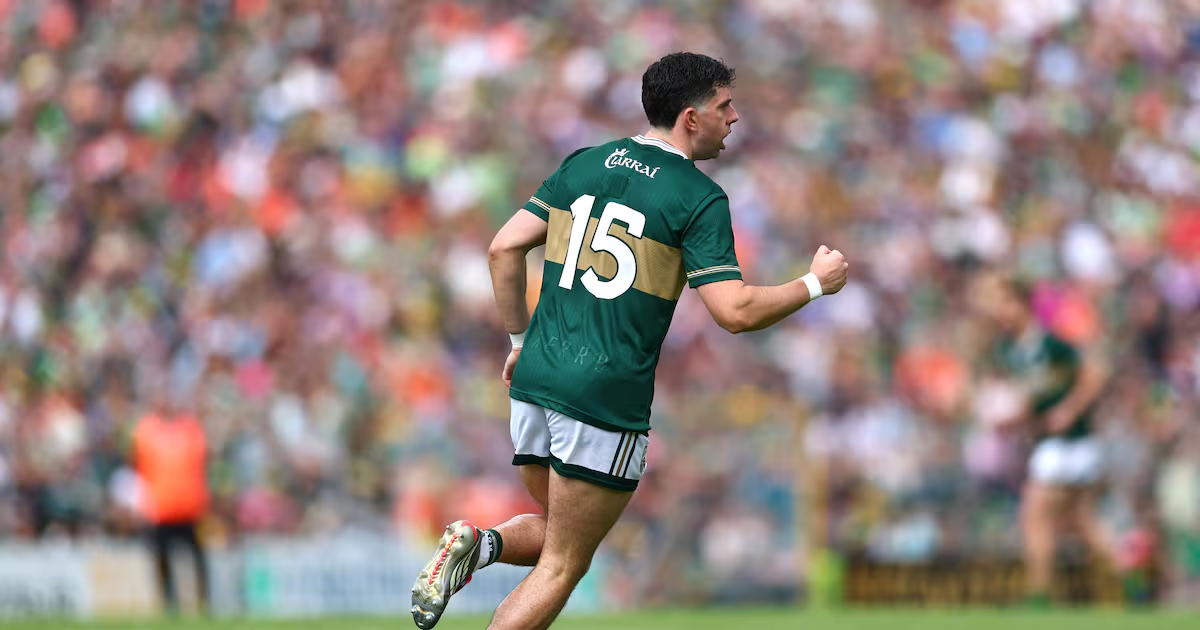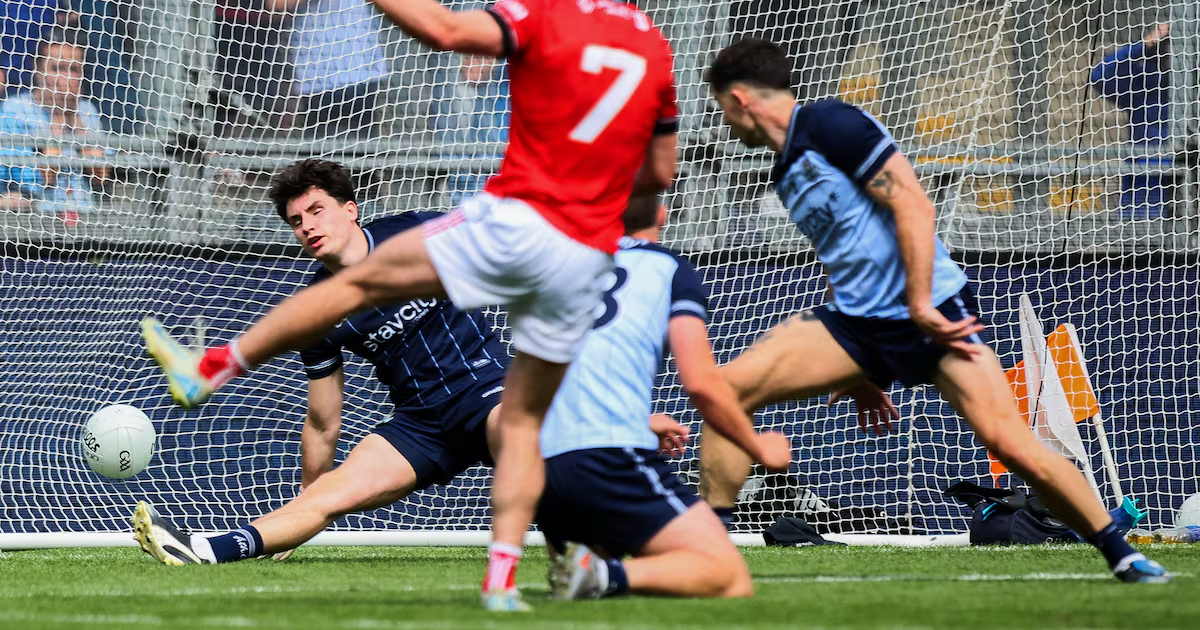
Ger Brennan’s absence from the Dublin sideline was raised again after their defeat to Louth on Sunday, but for years a pillar of that dressingroom revolved around it being very much a player-led environment.Under Jim Gavin and Dessie Farrell, that had been the message. With products of that era involved in the current management team – such as Dean Rock, Stephen Cluxton and Denis Bastick – the plan would have been to continue fostering such a method.However, be it on the sideline or on the pitch, Dublin seem to be lacking leadership when the game is in the melting pot. They are desperate for someone to grab the game by the scruff of the neck.It’s not as if the experienced players with All-Ireland medals are not trying to drive the team forward. But for me, it’s more that the opposition just don’t fear those players in the way teams in Leinster had done for years.The new Dublin players coming through just haven’t been exposed to enough high-end quality. They also haven’t been through enough hurt. This is important because it helps develop leadership qualities and resilience. That first generation of Dublin footballers from Pat Gilroy’s time in charge had to experience some hard days before making the breakthrough.Brian Fenton might not have suffered too much hurt at the outset, but he joined a group that were already setting really high standards.Right now, Dublin appear to be caught a little bit in the middle. It’s difficult to see them having a long summer campaign on the back of two missed opportunities – in extra-time against Westmeath in the Leinster final and in the second half against Louth on Sunday.Dublin’s Cormac Costello fires the ball beyond Donal McKenny of Louth at Croke Park last Sunday. Photograph: Ryan Byrne/Inpho That’s not to say there haven’t been green shoots. I thought Charlie McMorrow was very good in the opening half on Sunday and it has been encouraging for them to get Cian Murphy and Lee Gannon back on the field.But at the same time, the concession of four goals – some of which were very sloppy – has to be a major concern for Dublin.Given the flatness and near-indifference towards the footballers in the capital at the moment, Ger Brennan might find there’s something to be gained from playing their next game in Parnell Park. Of course, that’s based on them getting a home draw.A crowd of just 16,160 turned up at Croke Park on Sunday. I understand there would be logistical hurdles to playing in Parnell Park in relation to season ticket holders and the ground not being big enough to cater for the likely demand.And obviously if Dublin are drawn away, the point is moot. Indeed, even if they were given a home draw it is difficult to see them making such a leap. But as it stands, they look like a group that needs a spark.In terms of what managers can do to influence matches and show leadership, that would be a pretty brave and defiant call by Brennan. A reset. Because for all the talk about Dublin’s advantages playing at Croke Park, would potential opponents really prefer to play them in Parnell Park?Whatever about Brennan’s absence on match day, it’s on the training pitch where a management team does most of their work. The influence managers can have during a game is probably not as significant as some might believe. Much of the input happens at training. Donegal, Kerry and Armagh are seen by many as the leading All-Ireland contenders. Of the three, only the Orchard County were in action last weekend.Armagh manager Kieran McGeeney shakes hands with Shane McGuigan of Derry after Sunday's All-Ireland Senior Football Championship match at the Athletic Grounds, Armagh. Photograph: Nick Elliott/Inpho Again they demonstrated how well coached they are. You could clearly see the influence of Kieran McGeeney and his coaching team. During the 10-minute period when they were reduced to 14 men for Jason Duffy’s black card, they were outscored 0-4 to 0-1.But at no stage during that spell did it feel like Derry had grabbed the initiative. Armagh remained really competitive on kickouts and they continued to create attacks. In fact, Jarly Óg Burns cut through the Derry defence with a sublime pass in the 52nd minute to Peter McGrane, but the cornerback fired wide. Armagh could very easily have emerged from that period with an equal score – 1-1 to 0-4.At the back, they never allowed Derry in for a goal chance during that spell. On top of that, within 90 seconds of Duffy returning to the field, Armagh scored two points. None of that happens by accident. All that defensive work and attacking play when at a numerical disadvantage comes from repetition on the training field.Armagh have been road-testing those scenarios for years. What we saw in that 10-minute period was training-ground work being translated to a match-day scenario.As for other ways a manager can influence the course of a game, they can alter the team’s approach. Monaghan’s Gabriel Bannigan did just that at the start of the second half in Clones on Sunday, bringing in Bobby McCaul against Mayo. Monaghan would be going direct. It was a distinct change.But despite their spirited second half, I’d imagine Monaghan must be very disappointed by their slow starts in games. Those issues are really frustrating for managers.Mayo’s Kobe McDonald scores a goal despite the presence of Monaghan's Dylan Byrne during Sunday's All-Ireland SFC match at St Tiernach's Park, Clones, Co Monaghan. Photograph: James Crombie/Inpho Back in 2017, with Mayo, I remember we had some similar issues. We agreed as a group to go after three or four key targets early in matches. Things like aiming to get five scores in the first 15 minutes and winning two opposition kick-outs. We would challenge the players to create X number of turnovers, to allow them settle into the game.You discuss what is the best way to deal with the problem in front of you at that time.And it crossed my mind watching the Westmeath-Cavan game on Saturday that there had probably been a conversation in the Cavan dressingroom on how they would use the wind if they had it at their backs at the start of extra-time.Because all of their shots in the first half of extra-time were taken for two-pointers, including Dara McVeety’s goal, which came from a dropped two-point effort. Cavan’s first two shots in extra-time went wide from outside the arc, but they kept taking on those long-range shots and their next three efforts read: two-pointer, goal, two-pointer. That was a deliberate approach with the wind.Managers can obviously make player changes with subs or switching man-markers, moving a forward out from the inside line and so on. But in terms of the tactical approach – bar something like putting a big man on the edge of the square – your influence is largely limited to the training field. And in the current game, that means you are looking at phases of play and certain match scenarios – they’re the two big items.Kieran Donaghy's use of the maor uisce bib has been a smart move by Kerry. Photograph: James Lawlor/Inpho Phases of play are situations like 11 v 11 or your counter-attacks, 3 v 3. And you examine how best to create opportunities for a two-pointer or how to manage the clock to allow you to get a shot off before the hooter sounds.After that, you are talking about scenarios like playing with an extra man or playing with a numerical disadvantage, dealing with black- and red-card scenarios. What are your game principles in those scenarios? You go after all of those with reps at training.In what is probably a further evolution of how management can influence games, it has been interesting to see Armagh use Conleith Gilligan as a maor uisce and Kerry use Kieran Donaghy likewise.Both are very talented coaches and completely understand their team’s gameplan. And with a maor uisce bib, they are able to get the management’s message across to players during the game.It’s a ploy I’d expect more teams to utilise in the future.
Stephen Rochford: Parnell Park may bring out more in a Dublin team rejected by its fans
Ger Brennan’s influence has been limited this season, but ground switch could be a positive move
TL;DRAI
Dublin faced back-to-back eliminations to Westmeath and Louth with leadership gaps and flagging fan interest (16,160 at Croke Park). Parnell Park could help, but sustainable recovery requires training-ground coaching that instills tactical discipline currently lacking.
1,357 words~6 min read