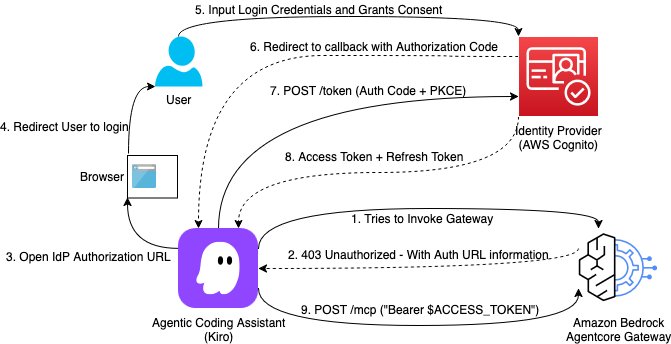
In modern development workflows, developers increasingly rely on agentic coding assistants such as Kiro Integrated Development Environment (IDE) to interact with remote tools and services. However, organizations require robust authentication mechanisms to provide secure, identity-verified access between these agentic coding assistants and enterprise Model Context Protocol (MCP) servers.
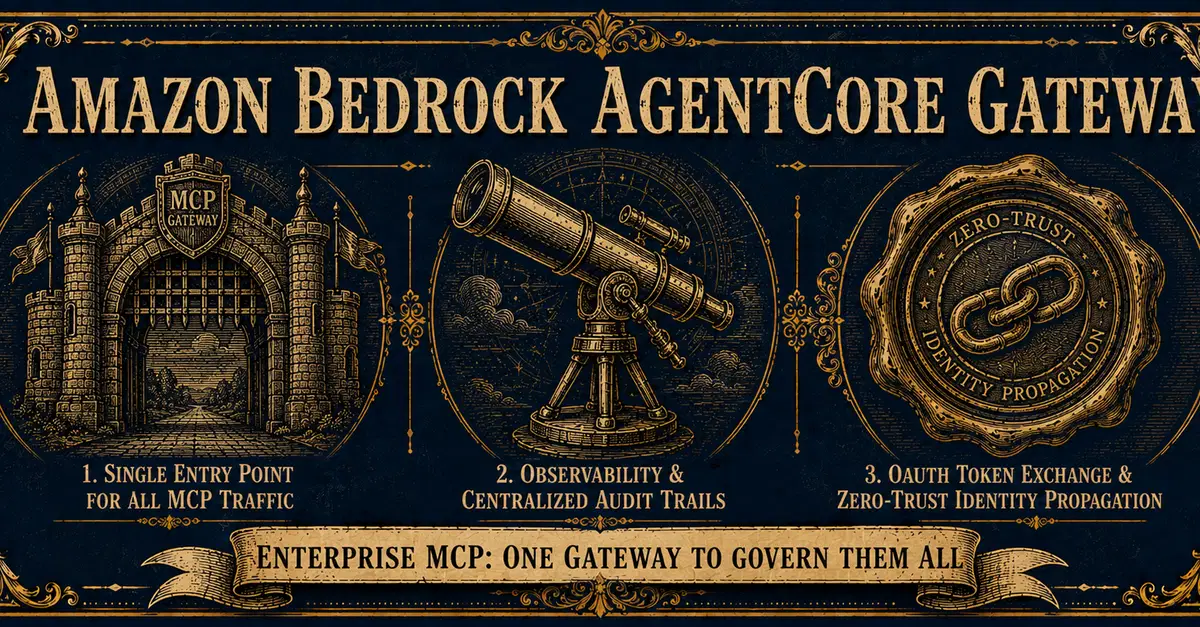
Amazon Bedrock AgentCore is a fully managed service that helps you deploy, manage, and scale AI agents in production. One of its key components, the AgentCore Gateway, provides a centralized entry point for routing and securing agent-to-tool communications. When an AI assistant makes a request to an MCP server through the Gateway, that request must be verified before it’s processed. This is known as inbound authentication. Only authorized users and agents can access the tools and services exposed by the MCP server. Organizations typically manage user identities through an identity provider (IdP), such as Okta, Microsoft Entra ID, or Amazon Cognito, which authenticates users and issues security tokens that verify who they are.
This post demonstrates how to implement Open Authorization (OAuth) Code flow as an inbound authorization mechanism for MCP servers hosted on Amazon Bedrock AgentCore Gateway. By the end of this guide, you will have a production-ready setup where each AI assistant request is authenticated with a valid user identity token issued from your organization’s identity provider.
 aws.amazon.com