Before a product made in Jiangxi province can reach overseas customers, it typically requires two crucial elements the inland province has historically had to "borrow" from coastal regions: efficient port logistics access and mature market channels. Consequently, Ganzhou International Land Port in Jiangxi and the cross-border e-commerce ecosystem of Shenzhen, Guangdong province, have emerged as pivotal components of Jiangxi's deepening collaboration with the Guangdong-Hong Kong-Macao Greater Bay Area.
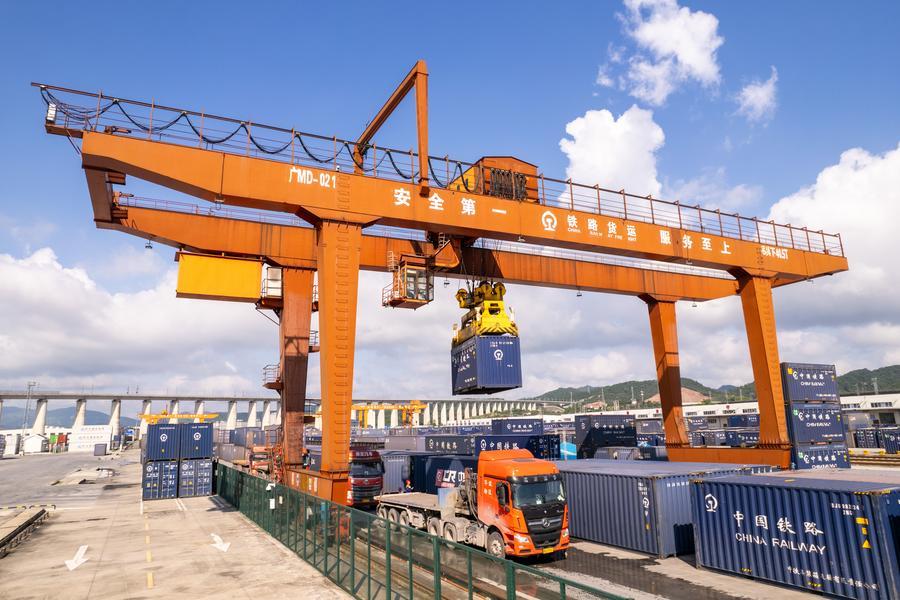
At Ganzhou International Land Port, containers of Jiangxi-made goods are loaded onto freight trains bound directly for Shenzhen's Yantian Port. The "Rongwan" intercity high-speed freight train between Ganzhou and Shenzhen has slashed average transit time from 12 hours to just six, saving nearly 2,000 yuan ($296) per container, said Liu Liping, deputy director of the port's operation and management bureau.
For a landlocked city, this represents far more than a logistical upgrade. By connecting with Yantian and Guangzhou ports, the land port has established an intermodal rail-sea channel designed to offer the "same port, same price and same efficiency". This cross-customs and cross-provincial coordination effectively extends the GBA's maritime reach inland to Ganzhou.