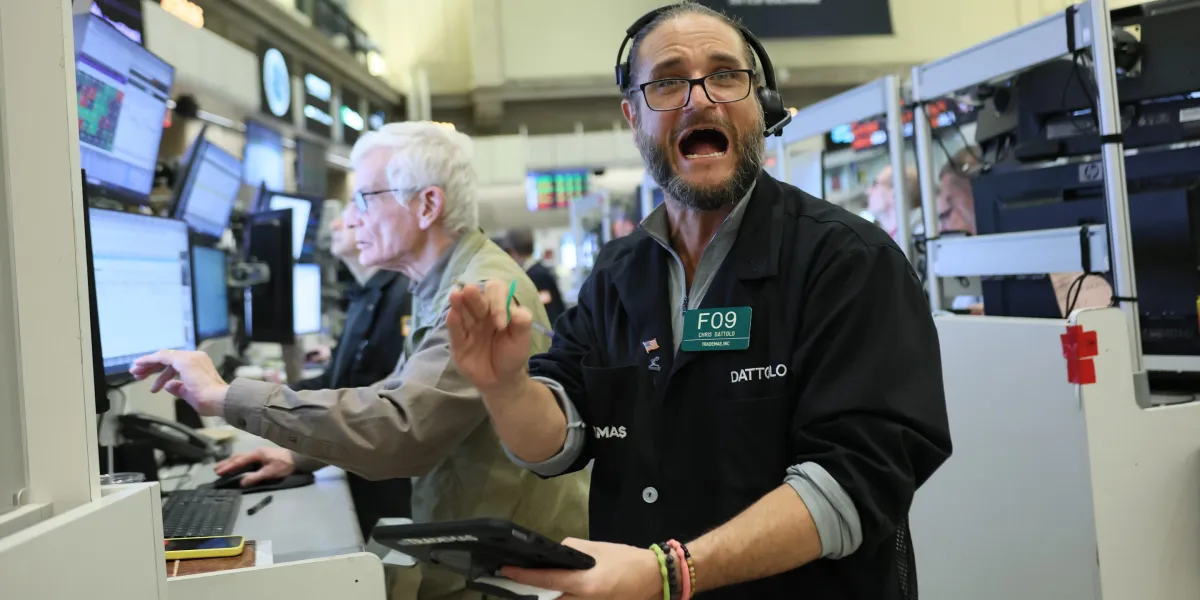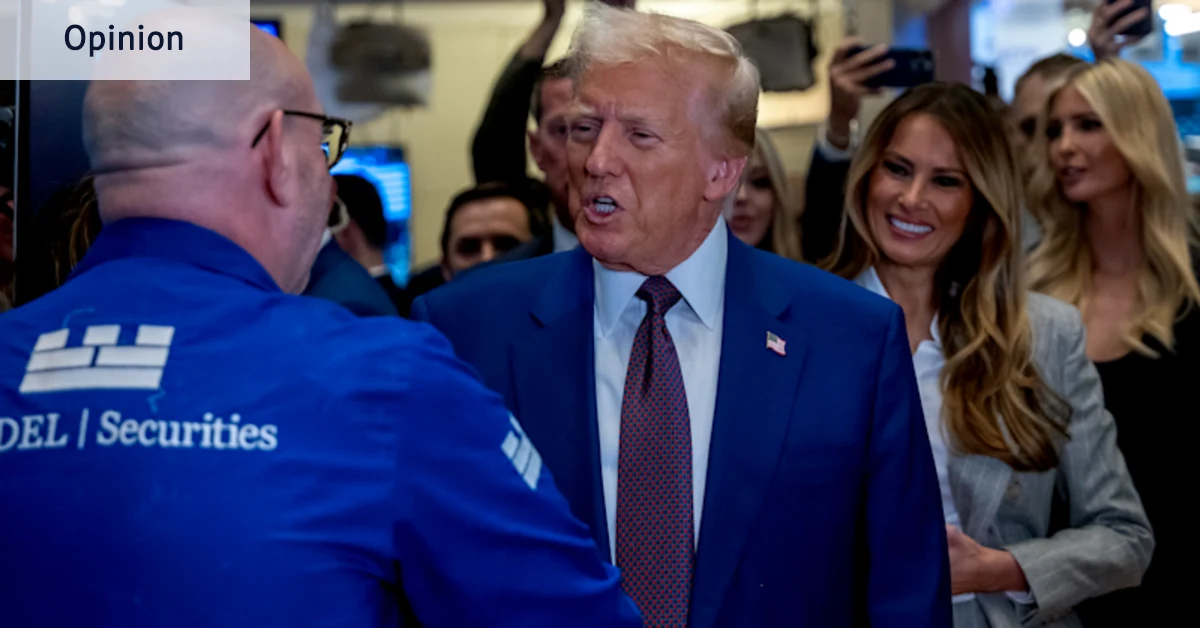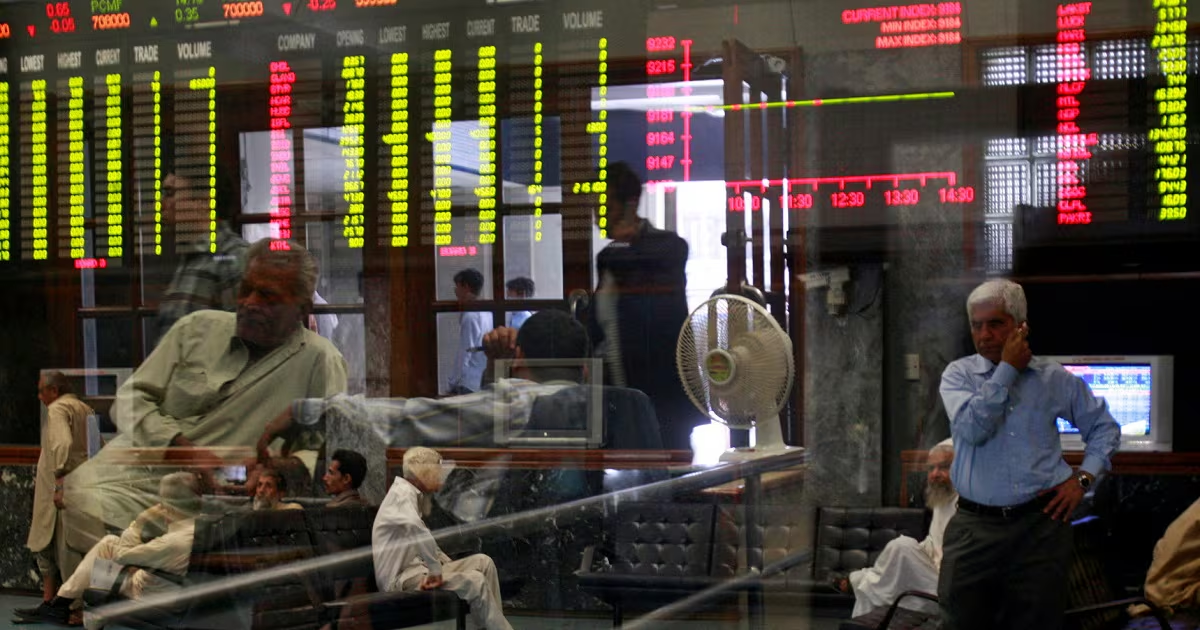
US President Donald Trump has given Wall Street everything it asked for. The rules built after the 2008 crash are being dismantled. The watchdogs have been defanged. Capital is, once again, free to do as it likes. Which raises the oldest question in political economy – free to do what, exactly? Somewhere in the gap between the rally speech and the policy document, the revolt of the left-behind has become a windfall for the already-ahead. Part of what should disturb many about modern finance ― not least the Trump voters in America’s Rust Belt ― goes beyond money-making; it is about how far the act of money-making has strayed from creating something real. Consider the moral intuition, not at all irrational, that value should correspond in some way to effort or production or social utility. The driving aspects of our modern economy are reasonably far removed from this concern. Much of it operates in what has been termed the casino economy. John Keynes predicted that when enterprise has become “the bubble on the whirlpool of speculation” capitalism can go off the rails as an economic and a moral system. This view was underscored by Thorstein Veblen, who argued that responsible production generates goods; irresponsible money-making generates money from money. It might sound old-fashioned, but this distinction is still relevant. The reality is complex. The best of public markets direct capital to productive enterprises such as railroads, medicines, infrastructure and software. Purchasing of stocks may constitute a real economy that qualifies as risk-taking. Financial markets bear the burden to hold up everyday retirees from pension funds. Not every financier is parasitic. But the moral discomfort starts at a familiar destination where profits go to middlemen instead of original producers, speculation takes precedence over stewardship, short-term extraction outweighs long-term investment and generational wealth replicates itself through financial engineering rather than through production. What we have built is not capitalism so much as feudalism with a ticker tape ― call it what it is, a system that rewards proximity to capital far more reliably than it rewards contribution to anything. Moreover, a deeper root of distress is that position has increasingly trumped production in terms of market rewards. You become the engine of wealth simply by owning things. Those who already have capital are making their returns through leverage, arbitrage and the inflation of physical goods, while those who provide real labour struggle to gain a fraction. This inversion turns the concept of merit on its head. Compare this to the racecourse. No-one at a bookmaker’s window is trying to unlock shareholder value or optimise capital structures. Risk, instinct, luck, loss and an acceptance of the unknown are what is at play there. In that light, an ordinary bet can seem more dignified than astronomical financial speculation masquerading as virtuous technocracy. Those who already have capital are making their returns through leverage, arbitrage and the inflation of physical goods, while those who provide real labour struggle to gain a fraction. All in all though, the difference between finance and manufacture is hardly the most important moral distinction to be made anymore; wealth creation nowadays takes place through small-scale productive risk versus large-scale extractive speculation. Capital that builds a cancer ward and capital that games a trading algorithm are not morally equivalent simply because both turn a profit. One creates; the other skims. The market does not distinguish between them. We should. Modern liberal capitalism speaks in the language of choice and freedom; invest, speculate, leverage, acquire. That you have a choice is the mantra. If participation is voluntary, markets are moral arenas. But this defence falls flat when freedom becomes merely transactional. It tells you that you are free to trade, free to view and free to monetise everything. But the question becomes, free for what? The older liberal tradition, including John Stuart Mill, by 1869 connected freedom with individuality, cultivation, character and public virtue. Contemporary market liberalism ― vestigial and gutted ― feels thinner and the casino economy makes its own case where no-one is compelled to join and voluntary transactions are intrinsically valid. Yet this argument evades the moral question of how an activity can be socially valuable, ennobling and/or corrosive. A derivatives trader is able to, freely, make millions off speculative arbitrage. A private equity fund is out of the woods ― free to strip assets, cut labour and pocket a windfall. An oligarch is allowed to compound inherited capital in perpetuity. Most people understand the distinction between simply following rules and doing the right thing. The difficulty is that market liberalism, in its present form, has little to say beyond: the rules were followed. These are possibly the reasons for this nostalgia many have expressed for components of an earlier economy based on craft, manufacture and the neighbourhood bookie, not from a place of sentiment but because they seem to lie within tangible human relationships and effects rather than abstraction and velocity. The racecourse at least does not pretend speculation is civic virtue. It does not wrap appetite in the language of emancipation. It simply says this is risk, luck, instinct, folly or exhilaration. By contrast, modern finance often seeks moral absolution through the rhetoric of freedom while blowing hot and cold over any deeper tale about what it is for. The vital question is if the economy remains connected to human purpose and contribution or it shuts into itself ― capital circulating largely for its own sake. Everyone knows the answer they would provide at the racecourse. The challenge is who in Wall Street and its global equivalents has the guts to confess that here too it all comes down to the same answer. • Cachalia, a businessperson and management consultant, is a former DA MP and public enterprises spokesperson and chaired De Beers Namibia.
GHALEB CACHALIA | Modern finance drifts from real value creation
Speculation and financial engineering prioritised over genuine economic contribution
967 words~4 min read