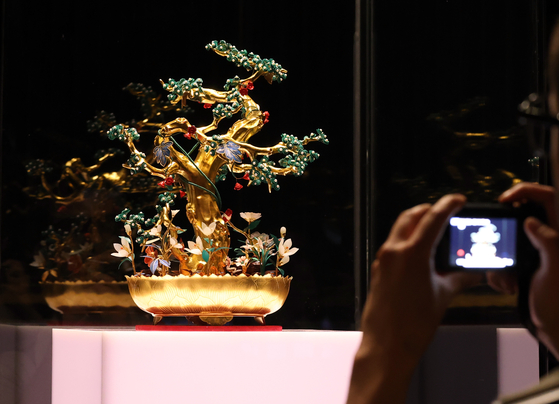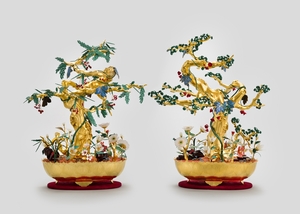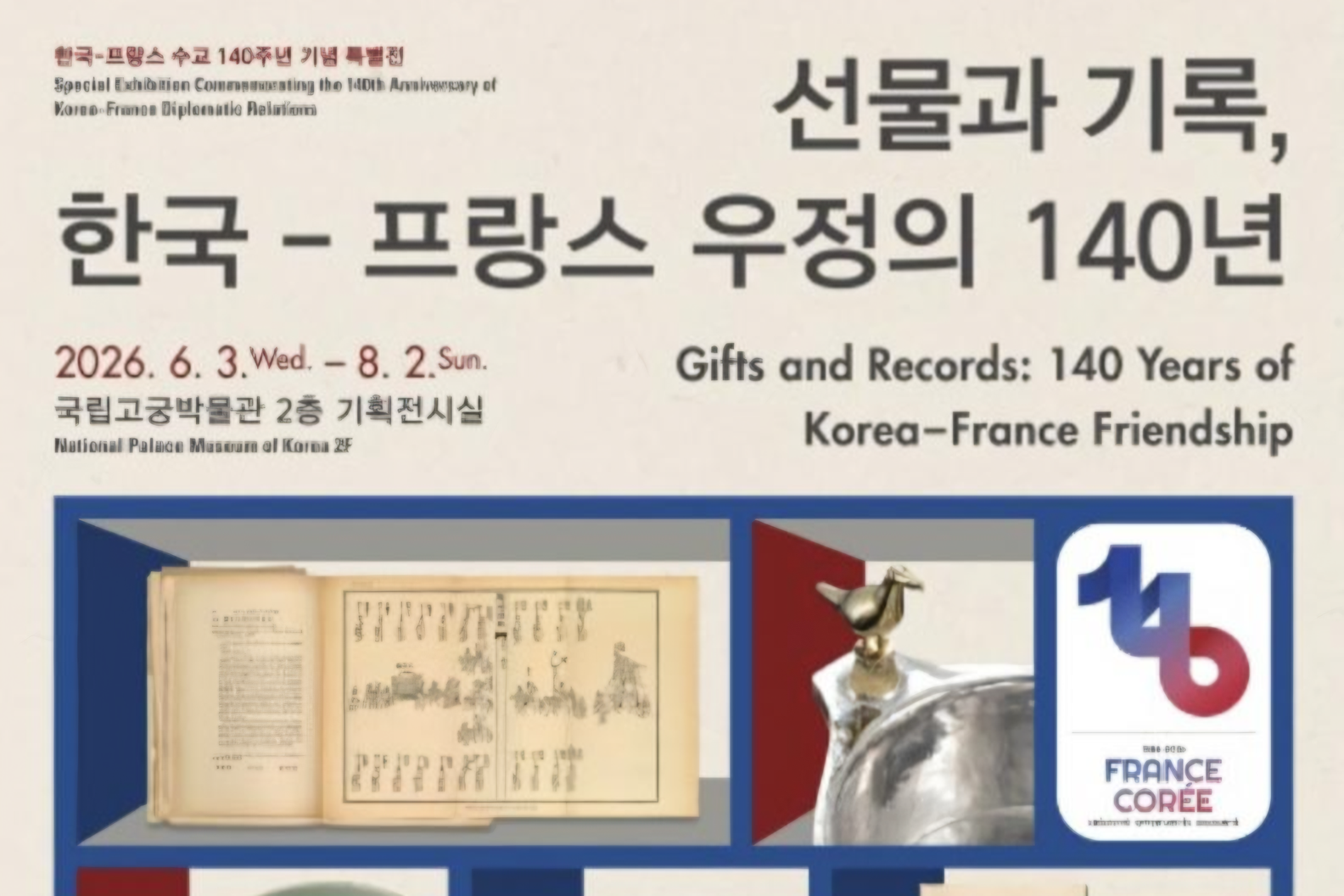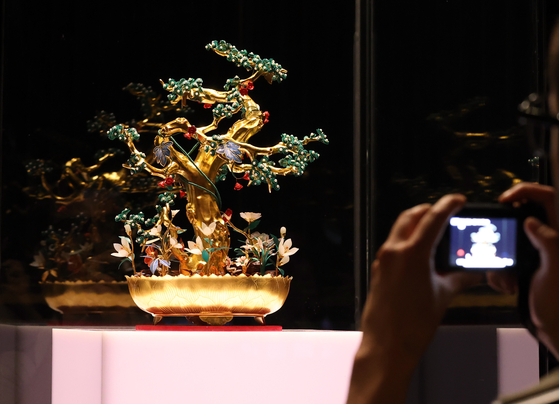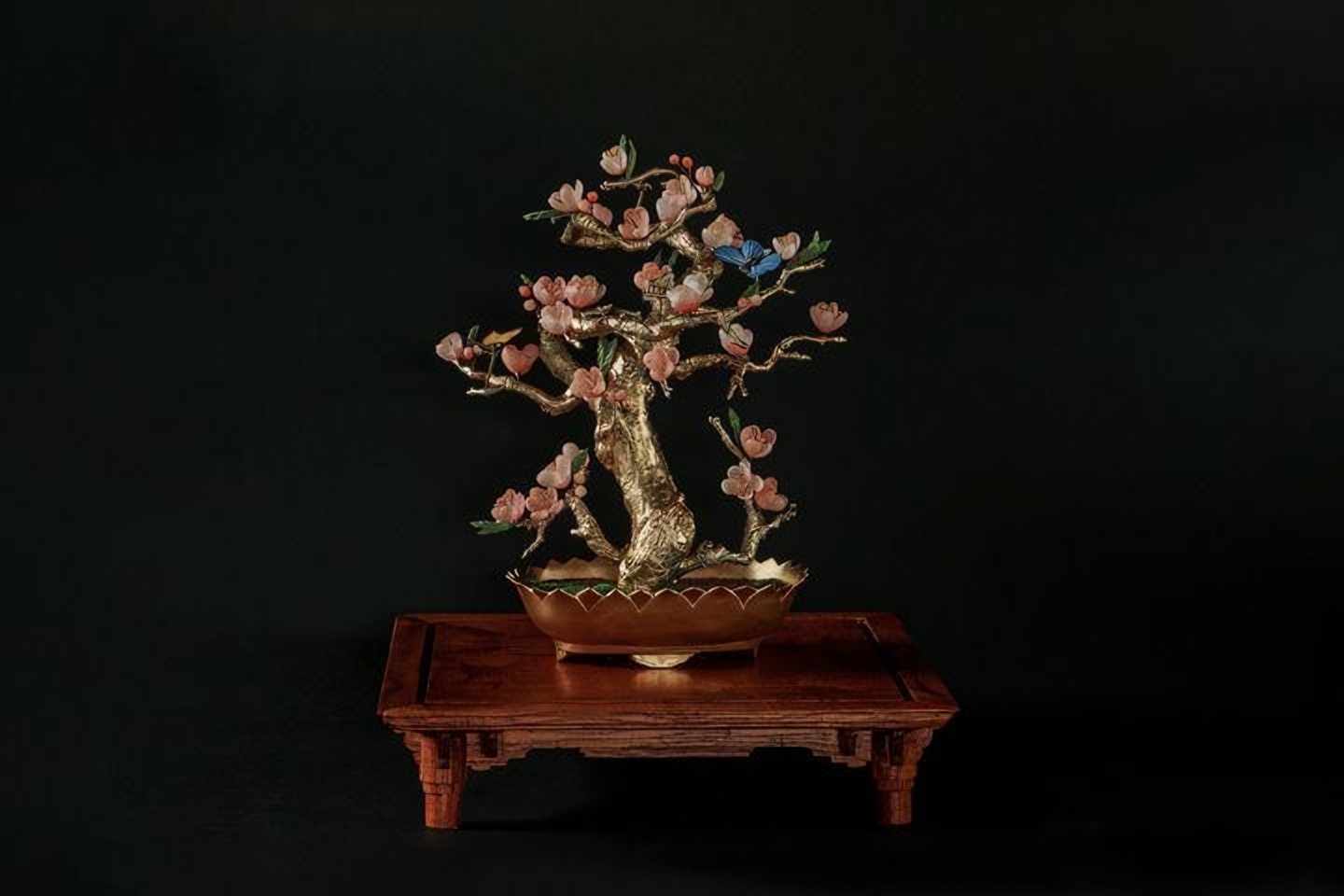
An elaborate "banwha" featuring delicate metal flowers, gemstones and stylized wooden branches — including pine, cypress, peony and orchid — anchored to a lotus-shaped metal stand. Courtesy of Korea Heritage ServiceWhen King Gojong sought to solidify Korea’s early diplomatic footing with the West following the 1886 Treaty of Amity and Commerce, he did so through an object of extreme, delicate craftsmanship. The gift he sent to French President Marie Francois Sadi Carnot was a "banwha" — an elaborate court ornament of metal flowers, gemstones and wooden branches symbolizing prosperity and longevity.That historic offering takes center stage, Wednesday, at Deoksu Palace in central Seoul. To mark the 140th anniversary of diplomatic relations between Korea and France, the Korea Heritage Service's Royal Palaces and Tombs Center will open a special exhibition, titled "Gifts and Records: 140 Years of Korea-France Friendship — Banhwa: An Auspicious Heart," at Dondeokjeon Hall.The venue itself carries distinct historical echoes. Dondeokjeon, a Western-style brick pavilion built in the early 1900s, originally served as the ornate reception hall where Gojong welcomed foreign envoys.The exhibition's focal point is a meticulous reconstruction of the original banwha. Gojong's original gift was donated to the Guimet Museum in Paris in 1953 by one of Carnot’s descendants, accompanied by a simple handwritten note identifying it as "a gift from the King of Korea." Because the fragile artifact was deemed too vulnerable to survive international transit for a temporary loan, the Korean government commissioned a replica. Kim Yeong-hui, a master jade artisan and a holder of National Intangible Heritage status, recreated the piece over months using traditional court materials.Divided into three narrative sections, the exhibition first traces the history of floral appreciation within Joseon royal court society before examining the heavy symbolism of the banwha’s botanical elements. The wealth and status implied by the peony motifs, the longevity of the pine and cypress branches and the abundance of the lotus flowers are contextualized alongside period folding screens and celadon ceramics.The final room pairs the newly struck replica with an interactive digital display that causes the metal flowers to bloom in response to visitors' movements, backed by a 27-meter LED media wall that projects the artifact's floral motifs into a sweeping landscape of golden trees and cranes.The exhibition runs through Aug. 30 and is free with general admission to the Deoksu Palace grounds. Operating hours 9 a.m. to 5:30 p.m. on Tuesday through Sunday, although the hall will close temporarily on June 4 for an anniversary-related event.This article was published with the assistance of generative AI and edited by The Korea Times.
Recreation of King's gift marks 140 years of Korea-France ties - The Korea Times
When King Gojong sought to solidify Korea’s early diplomatic footing with the West following the 1886 Treaty of Amity and Commerce, he did so throu...
426 words~2 min read