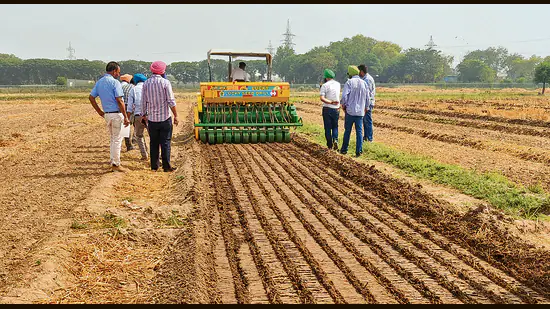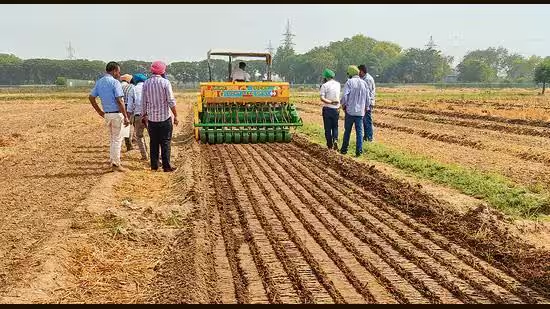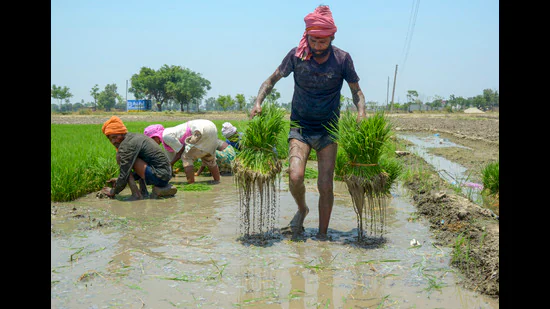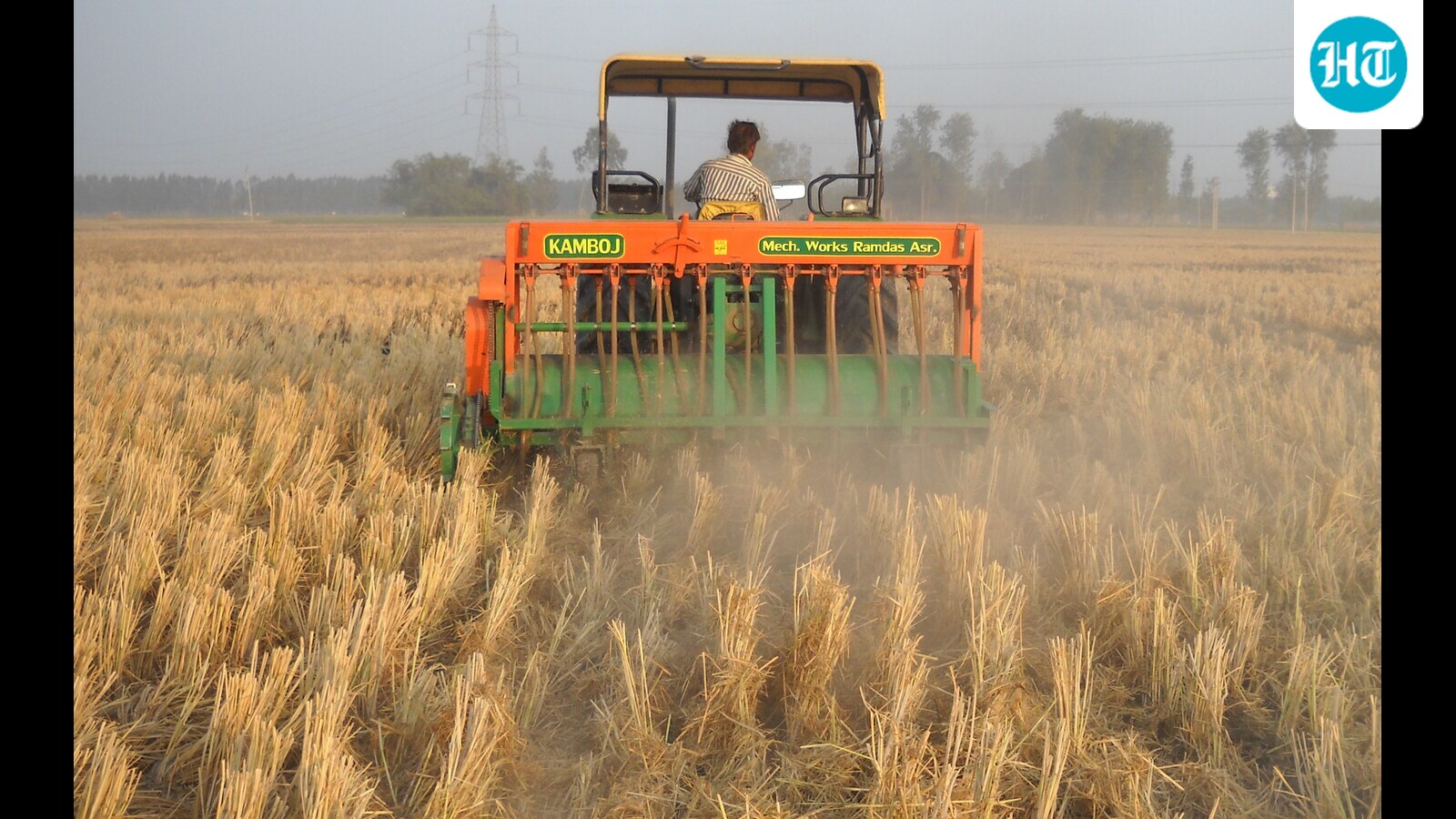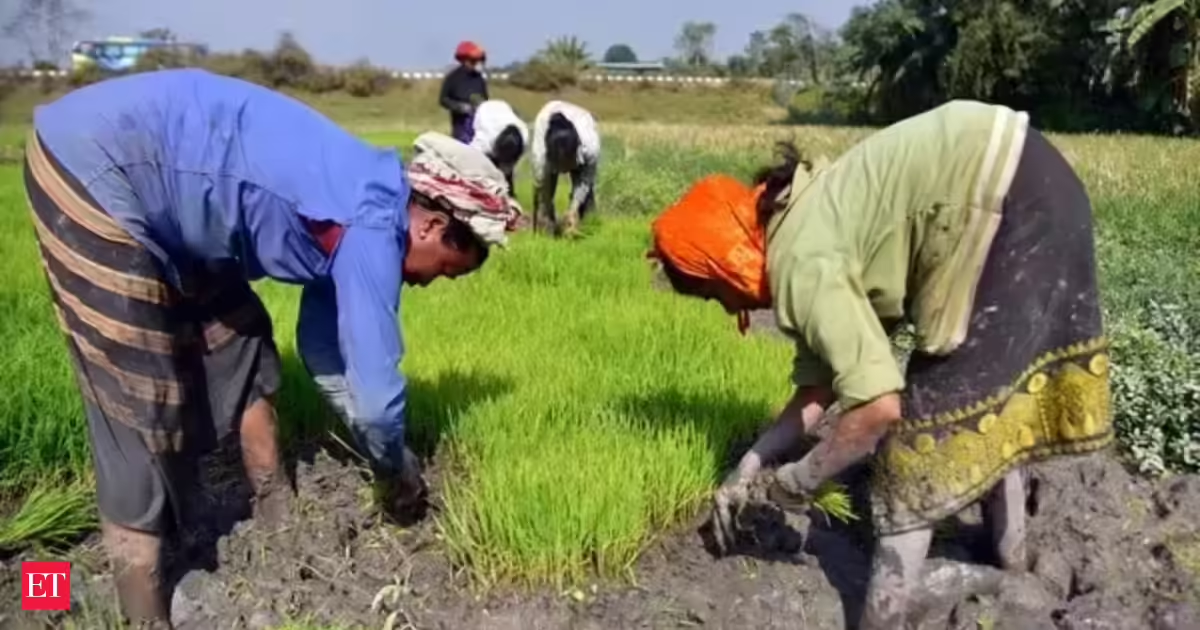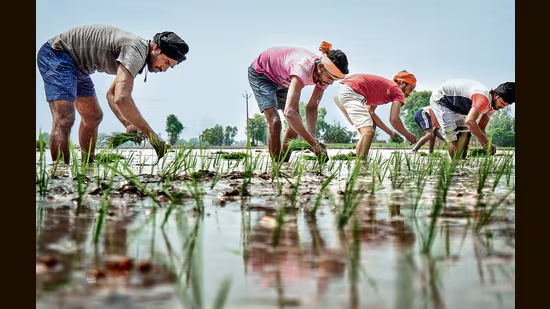
The phased transplantation of paddy for the current kharif season began in Punjab on Monday, with the government dividing the state into three zones. The state government has imposed a ban on all hybrid varieties owing to low yield and poor grain strength reported by rice millers in the previous season.Paddy is sown in Punjab over an area of 32 lakh hectares (nearly 80 lakh acres) every year. (PTI)“It is not known yet how many farmers have transplanted saplings on the first day. We have allowed (transplantation) from today onwards in a staggered manner,” said Punjab agriculture director BS Brar, adding that transplantation will take five to seven days for which the state government had released canal water and provided power supply for tube wells as well.He added that the department was keeping a vigil to ensure that no farmer planted hybrid varieties and long-duration PUSA-44 was also not allowed.Paddy is sown in the state over an area of 32 lakh hectares (nearly 80 lakh acres) every year. Owing to the minimum support price (this season it is ₹2,461 per quintal) and assured purchase, farmers prefer cultivating paddy over other kharif crops despite its water-guzzling nature.According to the government decision, transplantation in the first phase has begun in Gurdaspur, Pathankot, Amritsar, Tarn Taran, Rupnagar, Mohali, Fatehgarh Sahib and Hoshiarpur, spanning across Malwa, Majha and Doaba regions, from Monday.In Phase 2, sowing will begin on June 5 in Faridkot, Bathinda, Ferozepur, Muktsar and Fazilka districts, all in the Malwa belt.Phase 3 will follow from June 9 in Ludhiana, Malerkotla, Mansa, Moga, Patiala, Sangrur, Barnala, Kapurthala, Jalandhar and Shaheed Bhagat Singh Nagar districts, in Malwa and Doaba.Before conventional wet paddy transplantation, the government also encouraged direct seeding of rice (DSR) between May 15 and May 31, offering an incentive of ₹1,500 per acre and setting a target of 5 lakh hectares, compared to last year’s 2.7 lakh hectares. Brar said the department will be assessing the exact area covered under DSR this season.While transplantation involves growing seedlings in a nursery for three to four weeks and manually or mechanically replanting them in flooded, puddled fields; DSR involves directly drilling or scattering soaked, pre-germinated seeds in the field.DSR requires significantly less water as it does not need continuous flooding and relies on soil moisture, in turn significantly reducing irrigation, land preparation and labour cost.Additionally, as DSR eliminates the “transplanting shock” to the plants, the crop matures 7-10 days earlier than transplanted paddy.
Phased transplantation of paddy begins in Punjab
According to the government decision, transplantation in the first phase has begun in Gurdaspur, Pathankot, Amritsar, Tarn Taran, Rupnagar, Mohali, Fatehgarh Sahib and Hoshiarpur, spanning across Malwa, Majha and Doaba regions, from Monday
409 words~2 min read