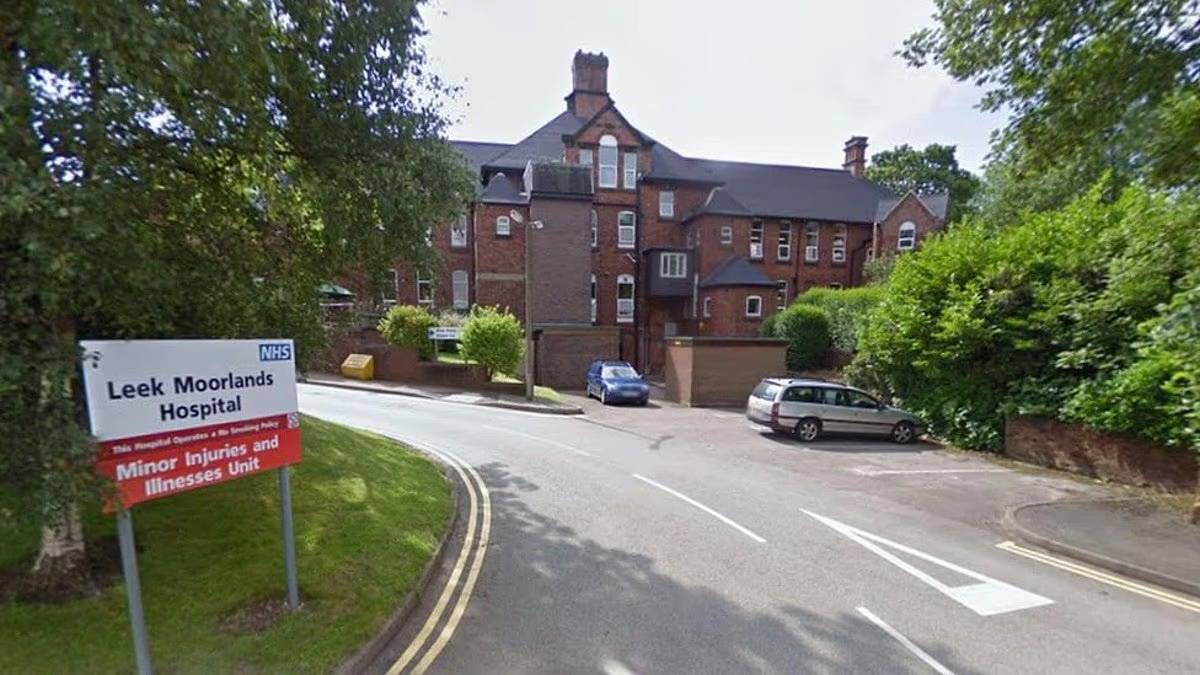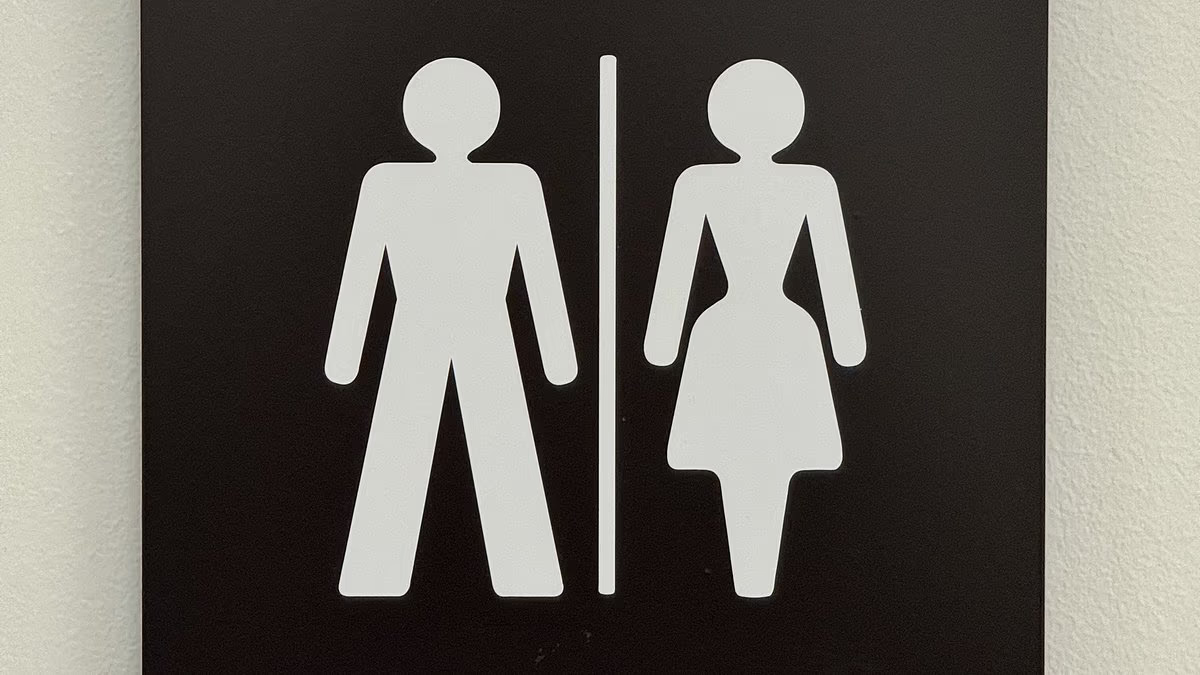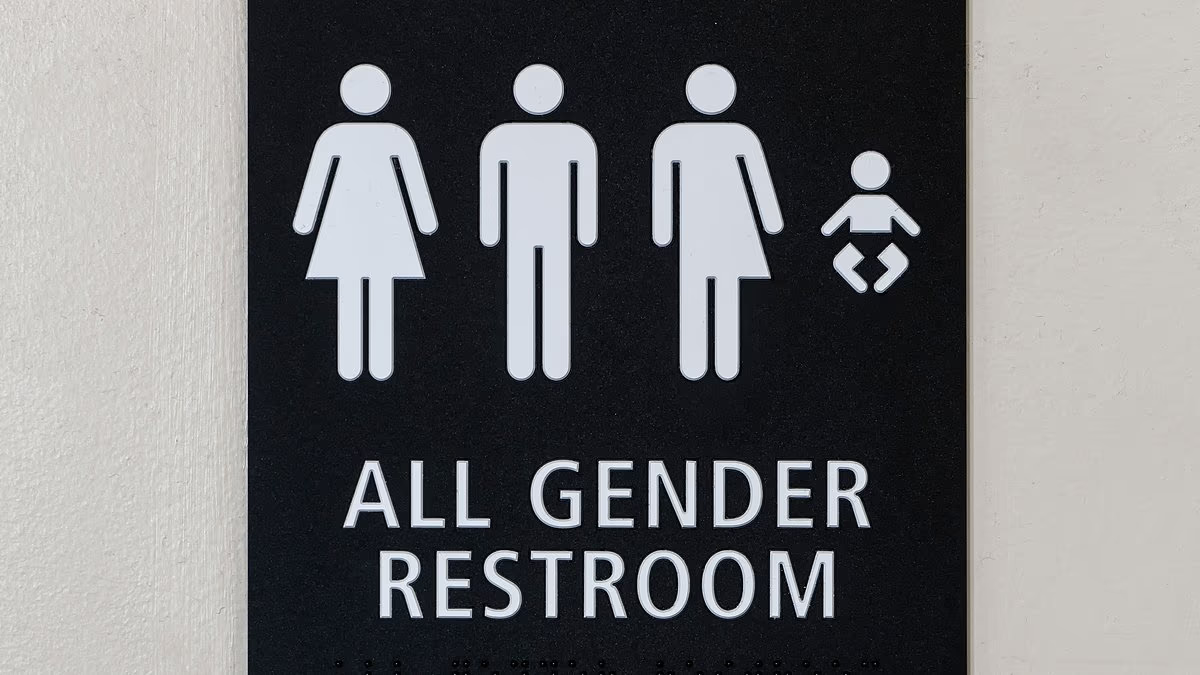
A police force is facing legal action over internal guidance allowing transgender officers to use women's toilets. Gwent Police, which operates in southeast Wales, has been accused of 'kicking the can down the road' on policies for single-sex spaces. The force allows transgender staff to use the facilities, including toilets and showers, for the gender they identify as 'from the first day they present as that gender'.It comes after campaigners at the Women's Rights Network (WRN) published research showing that several police forces across the UK allow access to sex-based facilities according to a person's identified gender rather than their birth sex. Meanwhile the group found that others have 'unclear' policies.Education Secretary and women and equalities minister Bridget Phillipson published advice in May telling services and businesses to ban transgender women from women's facilities. The draft Equality and Human Rights Commission (EHRC) guidance confirmed that for a service to provide a space considered single-sex it must be on the basis of biological sex, not gender identity. The EHRC advice, which was for services rather than employers specifically, suggested unisex facilities such as self-contained lockable cubicles could be provided for trans people who do not want to use services according to their biological sex. Bridget Phillipson (pictured) published advice in May telling services and businesses to ban transgender women from women's facilitiesThis guidance has been laid in Parliament but has not yet been approved by MPs. It has not become law yet so it is not in force. On toilets, which the commission said are 'necessary for everybody', the code said it would be 'very unlikely to be proportionate to put a trans person in a position where there is no service that they are allowed to use'.This guidance follows the Supreme Court judgement in April last year which the UK's most senior judges unanimously ruled that the terms 'women' and 'sex', as laid out in the Equality Act, referred to 'biological woman and biological sex'.The WRN has now threatened Gwent Police with legal action after requesting copies of its guidance on the use of its facilities.The group claims that the force refused a meeting earlier this year in February because this was not 'necessary or appropriate at this stage'. The force's existing policy, which is dated June 2025, after the Supreme Court ruling, states: 'Trans members of staff are entitled to use the facilities of the gender in which they present. This will be the case from the first day that they present in that gender.'It is not acceptable to insist that a member of staff transitioning at work should use separate facilities unless they so wish.'Gwent Police also plans to deliver entirely 'gender-neutral facilities' in its workplaces. Gwent Police's guidance states that 'trans members of staff are entitled to use the facilities of the gender in which they present'. Pictured: A gender-neutral toilet signThe WRN had made the information request under the Freedom of Information Act to determine whether the force was complying with the Supreme Court ruling. The group said it has sent Freedom of Information requests to all UK police forces asking for their policies on provision of facilities such as toilets and changing rooms and will publish a report in the coming months collating the results. According to the WRN, Gwent Police is one of at least eight forces that allows transgender colleagues to access single-sex spaces. Cathy Larkman, director of the WRN and a retired police superintendent, said forces should be rapidly updating their policies in line with the judgment.She said: 'Surely we can't have a situation where police forces that are meant to uphold the law and enforce the law are telling us they're going to ignore the law.'It's not good enough for police forces to be kicking the can down the road. They must comply with the law. 'They cannot kick the can down the road. There aren't options for them to wait and consult with networks. The law is the law.'She added: 'Large organisations like police forces will always have suitable facilities that can be accessed by people who don't want to go into single-sex spaces.'And that's for those organisations to resolve. They have to ensure the dignity and the rights of those members of staff as well, and that is absolutely fine.'But women have rights too, and it's not good enough to break the law and ignore those rights.' A Gwent Police spokesman said: 'We are committed to an inclusive workplace where everyone feels safe, respected and able to be themselves. 'Our Trans Inclusion Policy is being reviewed in light of recent Equality and Human Rights Commission (EHRC) guidance on public spaces, and we await further guidance on workplaces.'A revised policy will be issued once the latest guidance and legal developments have been considered, following consultation with our staff networks.'
Police force allows trans officers to use women's toilets
Gwent Police, which operates in southeast Wales, has been accused of 'kicking the can down the road' on policies for single-sex spaces.
TL;DRAI
WRN challenges Gwent Police policy on trans toilet access, conflicting with UK Supreme Court ruling on biological sex. Signals regulatory pressure on large organisations' workplace policies; forces rapid compliance revision or legal exposure.
799 words~4 min read