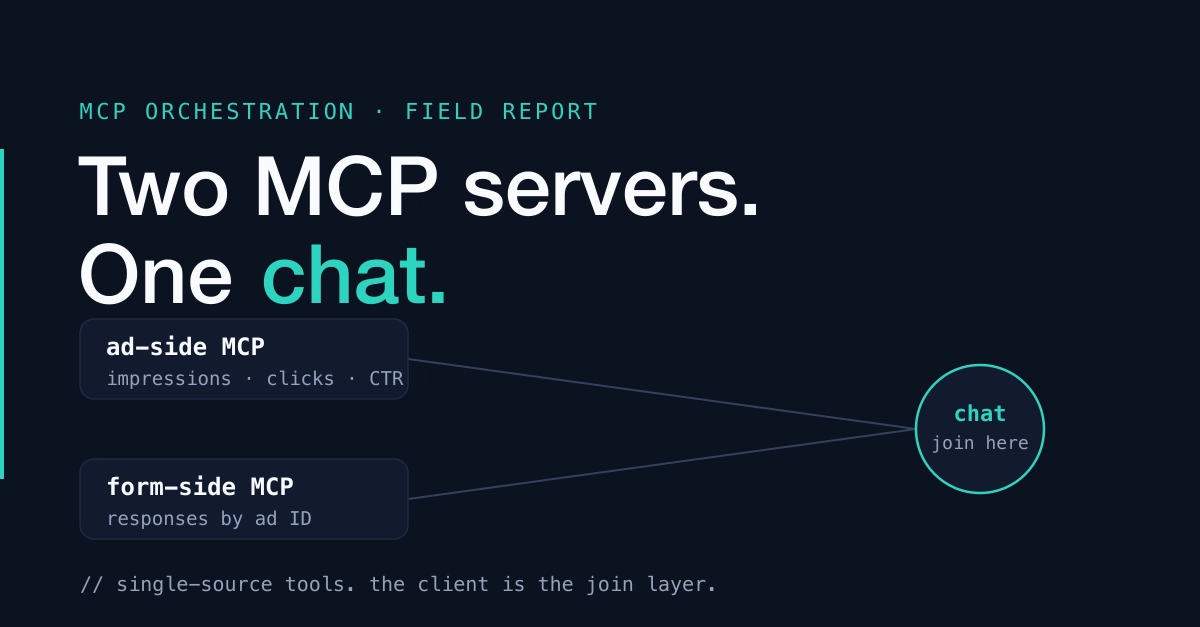
There is a particular kind of work that never lives in one place. You run ads in one screen. You collect form responses in another. To know whether a cheap click actually became a registration, you copy a number out of the ad dashboard, open the form admin, and reconcile it by hand. The two systems do not know about each other, so a human becomes the join layer.
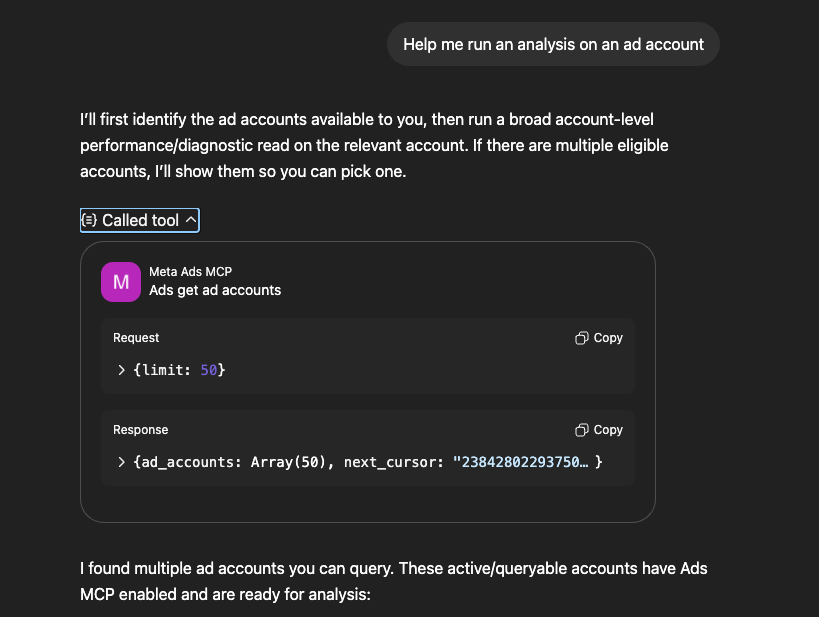
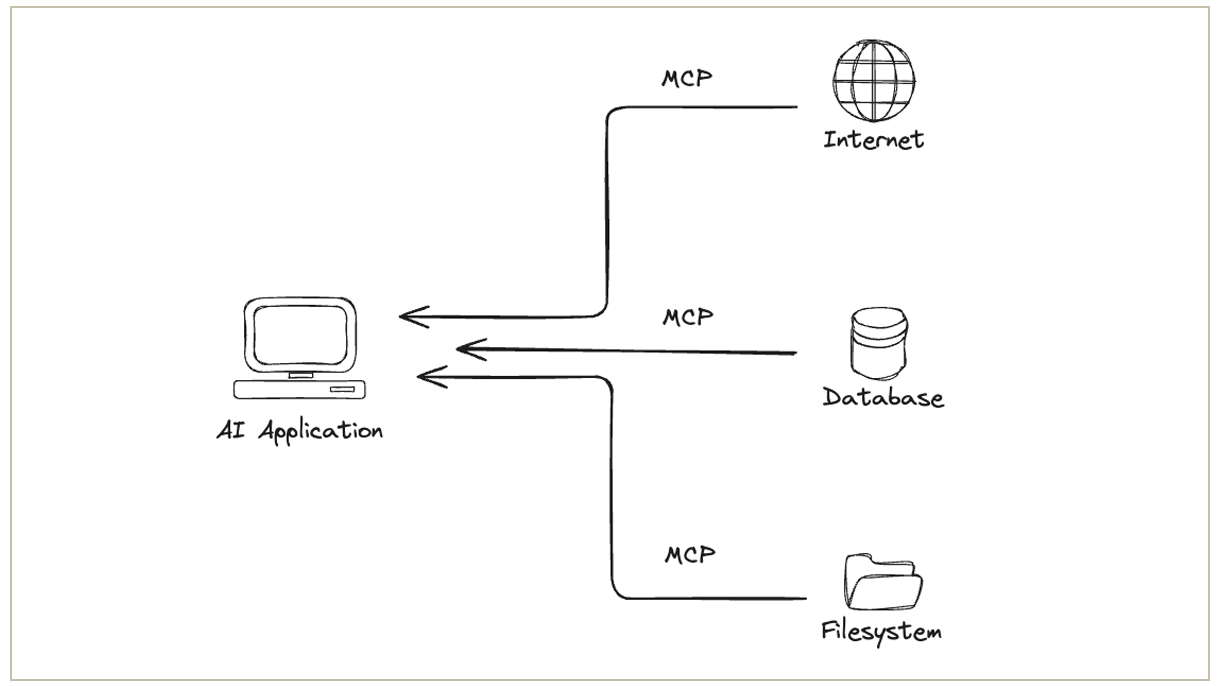
For eight days I tested whether that join could move out of my head and into a single conversation. The setup: two MCP servers connected to the same AI client. One is an ad-side connector that returns the running campaign's metrics. The other is FORMLOVA's connector, which returns form outcomes. MCP — the Model Context Protocol — is the shared doorway through which an AI client connects safely to an outside service. With both doorways open in one chat, the LLM can pull from one side, pull from the other, and fuse the results in the same turn.
This article is about the design pattern that makes that fusion clean, and about one honest finding that fell out of it.
The shift: who performs the join
When you wire two SaaS products together the traditional way, one of them usually has to know about the other. You build a connector inside product A that calls product B's API, maps the fields, and stores the joined result. That connector is a maintenance liability, and it bakes one vendor's data model into another's.