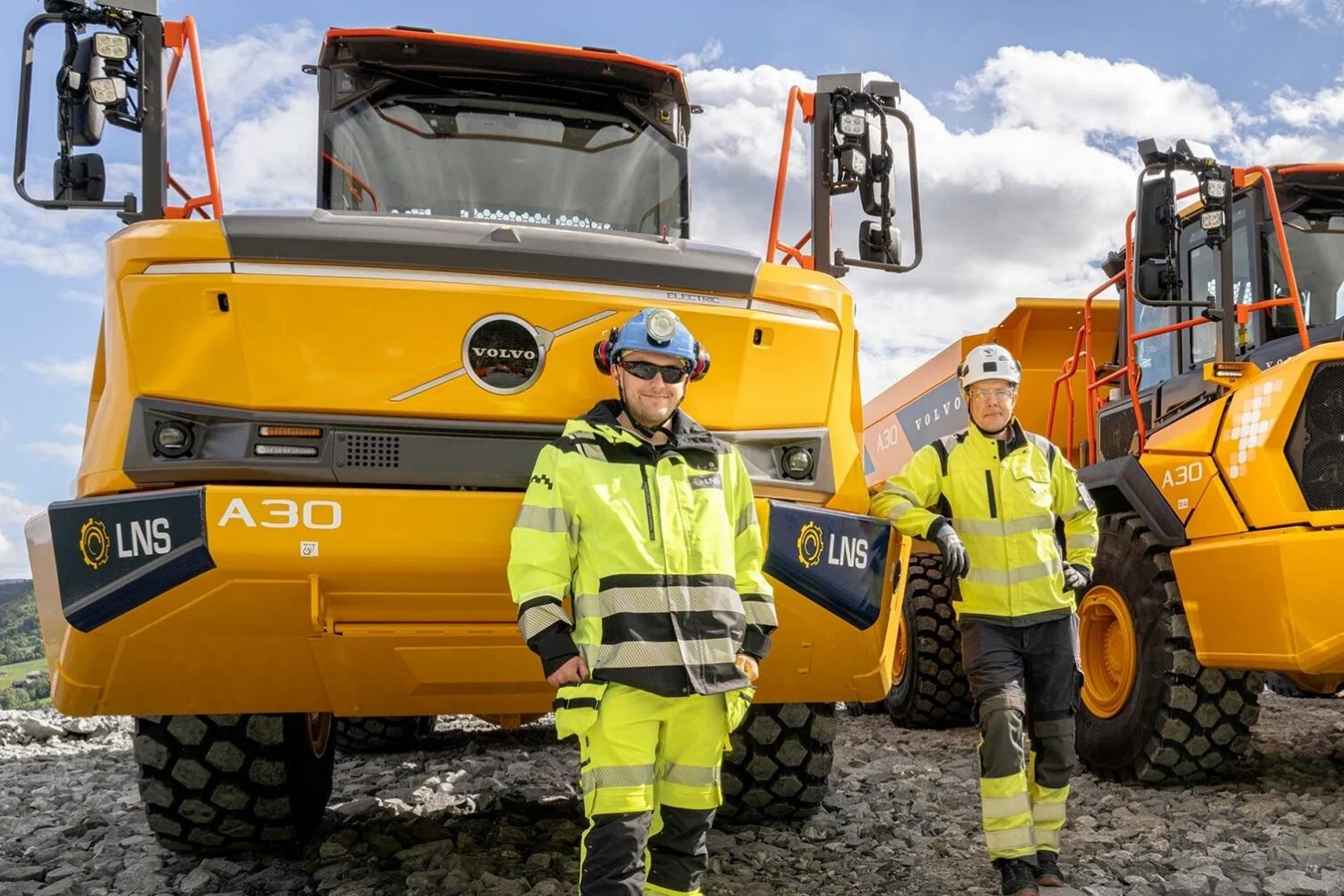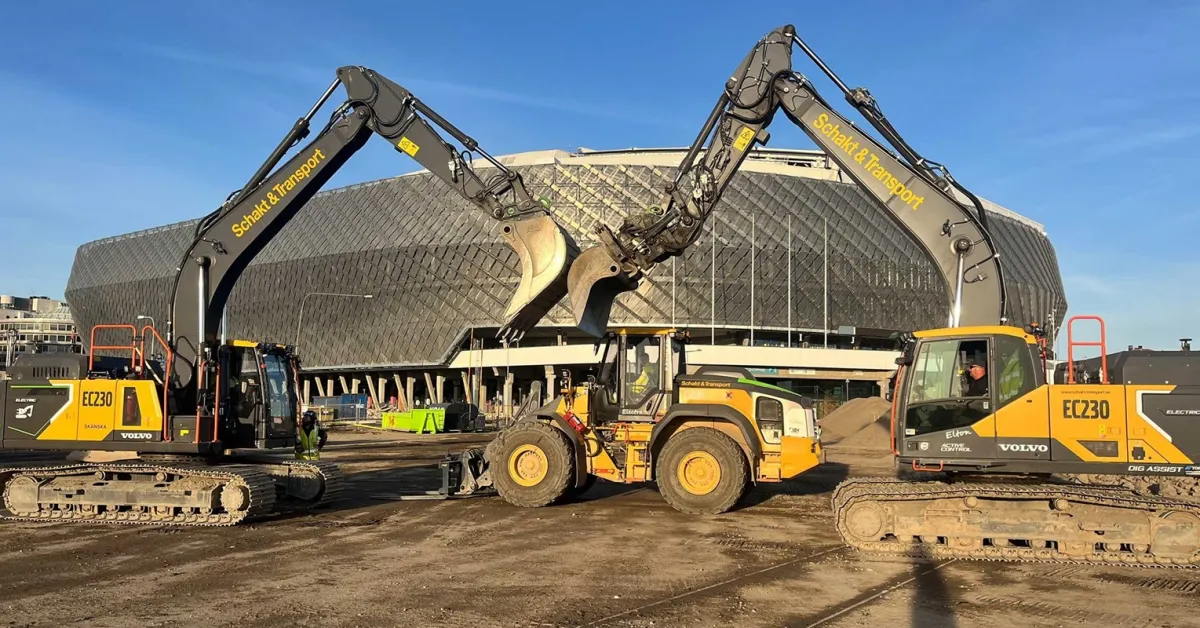
Volvo CE and Hitachi Energy have signed an MOU to support and accelerate the deployment of battery electric construction equipment powered by a clean, renewable energy supply that’s backed by intelligent energy storage and management.
Global demand for cleaner, quieter construction projects is driving equipment brands like Volvo and Hitachi to develop new, more efficient electric vehicles to offer their customers. Developing those new products takes money, however – and the better that new stuff is at operating in a broader job site ecosystem the easier it will be to deploy.
To that end, a new memorandum of understanding (MOU) between Volvo CE and Hitachi Energy is commiting the two companies to work together as they assess a number of potential technical and commercial concepts for zero-emission construction and manufacturing equipment. The agreement emphasizes broad systems integrations and site-level operational execution, and includes joint work on business models and go‑to‑market strategies.
“Electrification is a game changer in the decarbonization puzzle, particularly for hard‑to‑abate environments such as construction sites,” explains Niklas Persson, CEO of Grid Integration at Hitachi Energy. “As construction operations become more electric and more complex, success depends less on individual technologies and more on system‑level integration, strong execution, and close collaboration with partners like Volvo CE who share our ambition to enable zero‑emission construction at scale.”