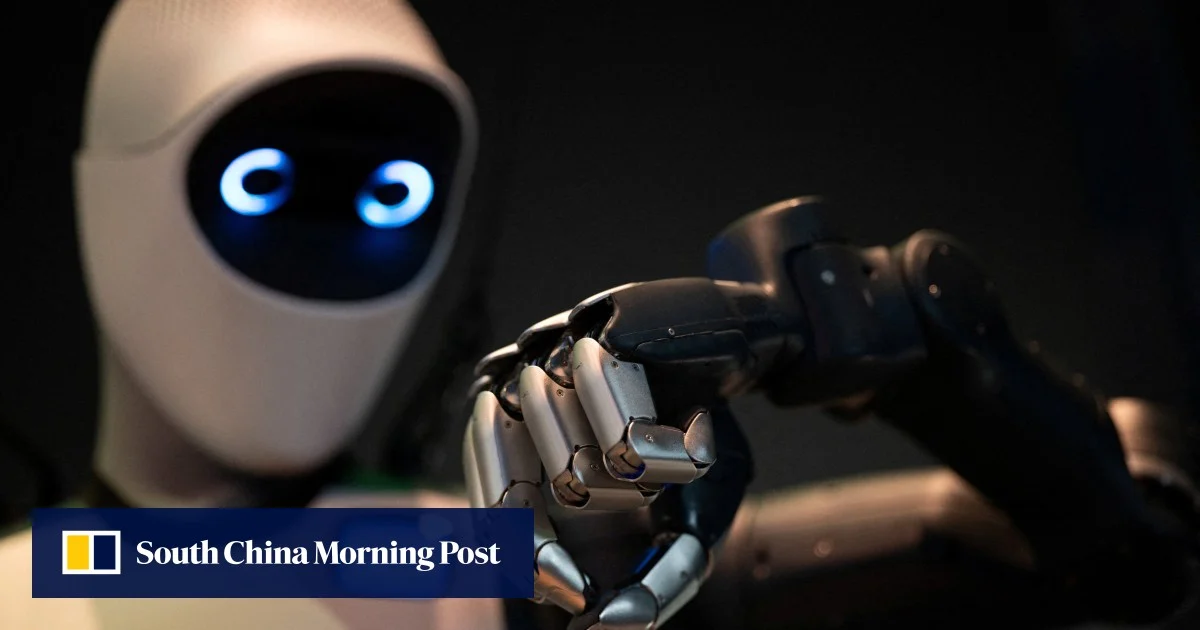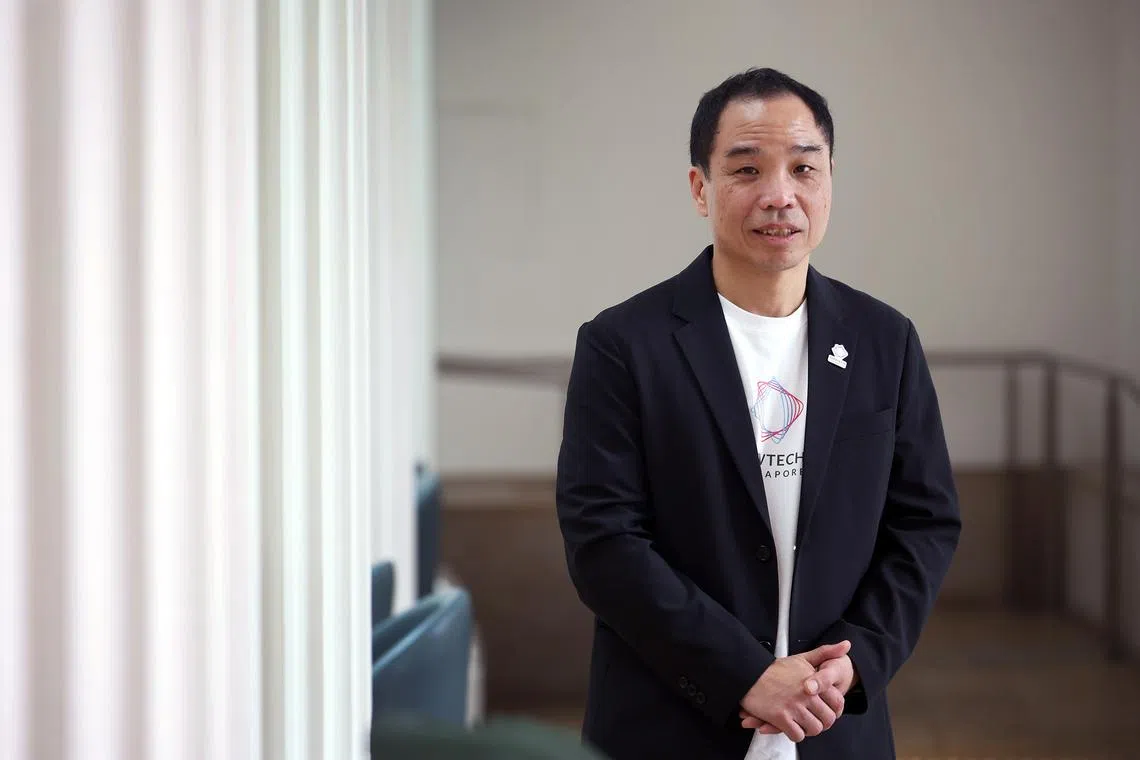
SINGAPORE – A registry of artificial intelligence agents is being developed for 150,000 public officers in Singapore to use cutting-edge AI in their work without compromising data security.This registry is a safeguard to track the owners and activities of AI agents, which can make decisions and execute actions at machine speed. It is part of a suite of tools being fast-tracked at the Government Technology Agency (GovTech) to provide greater oversight as government employees increasingly use AI for everything from coding to generating reports and scheduling meetings.Dubbed AI Assistant Desk, the suite aims to provide a secure personal digital assistant for all government employees, GovTech chief executive Goh Wei Boon told The Straits Times. “We want to have a layer of customisable rules, sanctioned AI tools and a registry to provide better visibility and security, so we can ensure that people use AI agents correctly,” said Goh.AI agents are able to use tools on a computer as a human user would by proactively figuring out the sequence of steps needed to make an online transaction or perform risk assessments with minimal or no human intervention, among other tasks. This has been made possible by advancements in natural language processing and reasoning, allowing AI to comprehend human language and respond dynamically. AI Assistant Desk, which is still in development, is being tested by some public officers, ahead of a wider roll-out planned for later in 2026. The use of AI agents by the public sector is part of a larger national goal to push the boundaries of AI automation. On Aug 28, 2025, Minister for Digital Development and Information Josephine Teo said the public sector was already experimenting with AI agents – for instance, to help navigate the multi-agency administrative requirements for business licence applications or paperwork for social aid.Goh said that AI Assistant Desk’s security layers remain unchanged even when third-party AI tools are added or replaced. The security measures could include disallowing agents from deleting files or e-mailing external recipients, and imposing recipient limits to minimise spam.Automated hygiene checkers built by GovTech also ensure that no offensive language is used in prompts or present in AI outputs. Having such granular control is in line with the original mission of GovTech: to enable the public sector to be a self-reliant technology user. The agency has been at the helm of public-sector technology transformation since 2016, when it started with 1,800 employees. It now has 3,900 employees supporting the technology needs of more than 50 public agencies. In addition to managing current IT infrastructure, GovTech is driving a massive AI roll-out for 150,000 public employees to integrate AI into their daily work. “It is about bringing technology closer to the ground, enabling teams closest to real-world problems to develop more agile and impactful solutions,” said Goh. “This evolution aims to transform agencies into stronger product owners by building deeper in-house capabilities.”GovTech maintains a continuous deployment of about 1,600 of its engineers to various government agencies for technical support. But with AI-assisted coding eliminating technical barriers, public servants without engineering backgrounds are increasingly also expected to actively design and propose workflow automations.GovTech’s inaugural hackathon – called {build} – in 2025 saw participation from 600 public servants. Some projects have since been developed into real-world prototypes currently undergoing testing. One example is an AI marking assistant called Mark.ly, currently being trialled in 18 local schools. The tool aims to help teachers mark handwritten English, geography and history scripts faster and with greater consistency. There are plans to integrate the tool with Google classroom tools that teachers use today, as well as in future versions of the existing Student Learning Space e-learning platform.Another example is LangBuddy, a web-based AI voice-enabled chatbot designed to help students brush up on their mother tongue. The virtual bot can converse with students in Mandarin, Malay and Tamil. If a student trips up, say, by using an English phrase in a sentence, the bot will jump in to provide the translation. LangBuddy is currently being trialled by around 300 students from 10 secondary schools and junior colleges, with plans for more schools to be involved.Leading by example in the public sector, GovTech engineers are already using AI-assisted development tools, while non-engineering teams are increasingly using low-code AI tools to help with their work.This reflects a broader national effort to achieve AI fluency, defined as the ability to combine professional domain expertise with AI know-how to solve real-world work problems. Singapore’s aim is to have 100,000 AI-fluent individuals across all sectors by 2029 through tailored upskilling programmes.AI Assistant Desk’s security layers remain unchanged even when third-party AI tools are added or replaced, said GovTech chief executive Goh Wei Boo.ST PHOTO: JASON QUAHAlready, more than half of Singapore’s 150,000 public officers regularly use Pair, the Government’s AI chatbot, to enhance their productivity, writing and research, said GovTech.Cybersecurity is another critical pillar in Singapore’s national push to embrace advanced AI.GovTech is developing an AI tool to conduct automated penetration testing on some 2,000 government systems that contain citizen data and transactions. Penetration testing – “pen test” in tech slang – is a simulated, authorised hacking into computer systems to identify and fix vulnerabilities before malicious hackers cause actual damage.“This process is very laborious. You can either do it manually yourself or engage a vendor. It can take a couple of months for each engagement, which is not very sustainable,” said Goh. “If you ‘pen test’ yearly, you are only secure once a year, correct? With AI automation, we can test our systems continuously.”The use of AI has become critical following cyberespionage group UNC3886’s attack on Singapore’s telcos in 2025.Since January, GovTech has been using automated penetration testing tools. Plans are under way to progressively scale the use of AI tools for automated penetration testing across the whole of government.Since October 2025, GovTech has also been incorporating AI smarts into its threat detection tools to secure public-sector systems. These AI tools are designed to proactively identify traffic anomalies, helping agencies detect stealthy cyberthreats.“These developments are crucial to Singapore’s ongoing digital transformation to ensure better public service delivery and national security,” said Goh. “With higher expectations and a faster-evolving threat environment, our work goes beyond mere maintenance.”
S’pore to create a registry of AI agents for 150,000 public officers amid AI push
The registry is a safeguard to track the activities of AI agents, which can make decisions and execute actions. Read more at straitstimes.com. Read more at straitstimes.com.
1,033 words~5 min read