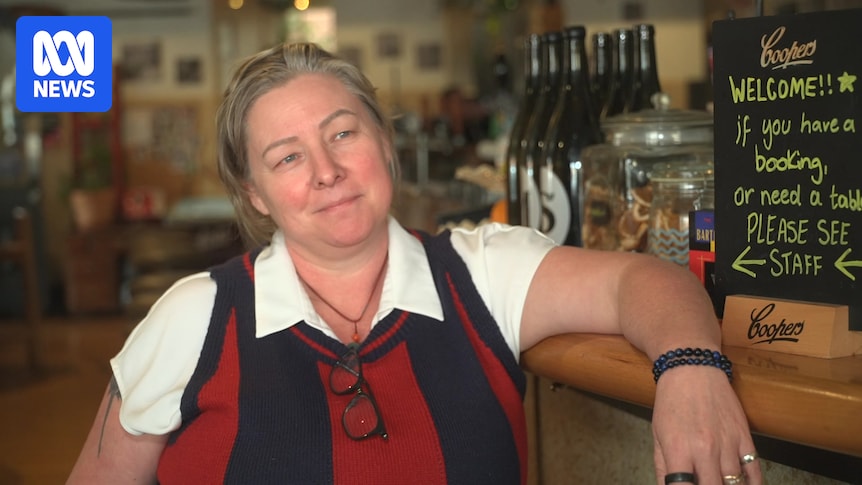
Publican Simone Douglas has been pouring pints for decades, but the rising cost of staying in business has become a daily worry."If you're a small business owner, your sleepless nights have increased probably by 50 per cent," Ms Douglas said."Every day on Facebook there is something that pops up in my feed about another cafe or a restaurant or a pizza bar that's closing down."It's a pretty sad state of affairs in the local industry and the national industry at the moment."Ms Douglas, who operates two pubs in Adelaide and Port Adelaide, has navigated the devastating impacts of the pandemic and economic fallout on the hospitality industry, but warned small businesses were now facing a different kind of emergency."It is 100 per cent more challenging [now] than it was during COVID," Ms Douglas said."The cost of doing business in South Australia, and particularly in a hospitality environment, is skyrocketing and they are costs that we don't have any control over."Life isn't all doom and gloom, but we really need to be aware that if we continue to create an environment where small business can't succeed … the economy is going to flatline."Simone Douglas says the hospitality industry is in a "sad state". (ABC News: Luke Pike)Ms Douglas was forced to close her CBD cafe in mid-2024 after she said operating costs, such as electricity, gas and insurance, had "gone through the roof"."We spent probably 18 months trying to get it to work and … I've been in the game a long time," she said."That thing just haemorrhaged money left, right and centre to the point the smart decision was to close it down and absorb the cost of rent."'Unprecedented' cost risesRestaurant and Catering Australia is the national peak body representing more than 57,000 cafes, restaurants and caterers. Executive chair John Hart said the challenges experienced in South Australia were part of a national trend, with about 10.9 per cent of businesses closing their doors over the past year.He said that number equates to thousands of restaurants and cafes across the country.John Hart says the costs of food, transport and labour have risen. (ABC News: Lincoln Rothall)"The cost increases right now are absolutely unprecedented," he said."Food prices are going up, the cost of transporting goods is going up but then also labour costs are going up dramatically, over the last three years, a 21 per cent increase."Even in the last four months, we've seen a 17 per cent increase in the cost of goods."Serving that cup of coffee is nearly a quarter again as much as it was only three years ago."Mr Hart said despite rising cost-of-living pressures, there had been an increase in the number of patrons, but dining habits had changed. "They do that by selecting different items from menus, sharing entrees, sharing desserts, doing things that lessen the cost of the meal, but still allows them to go out," he said."We see customers want to eat out more but they want to eat out locally and they want to eat out in a way that's better value for them."Diners are choosing options that lessen the cost of meals. (ABC News: Esther Linder)However, Mr Hart said for the 10.9 per cent of businesses which had folded, another 10.9 per cent had opened their doors."We know that over that first year, we're going to see around about a 20 per cent failure rate of a new business and by the time we get to four years, a 50 per cent failure rate," he said. "It's quite astounding how quickly those businesses go out of business, but what never ceases to amaze me is that there's another business to take their place each and every time."Surviving 'tough times'After years spent working in hospitality, Elliott Brown decided to branch out and open his first cafe in 2023.Within a year, the 24-year-old was running three cafes at the same time in McLaren Vale, Henley Beach and Aberfoyle Park."Things started to get very tough as I opened the third one just with staff and, obviously, I can't be in every place at once," he said."Prices were going up, which meant we had to put the price up and people who used to buy three coffees a day were buying one or a regular you'd see every day, you'd see them three times a week."Former cafe owner Elliott Brown speaks about the struggles of running a business. (ABC News: Lincoln Rothall)Mr Brown said as the financial pressures were increasing, he took steps to cut costs such as producing their own coffee beans, introducing a weekend surcharge, reducing staff numbers and not using a chef.But eventually he closed all three venues, the most recent selling earlier this year."People don't want to pay more than $22 for smashed avocado, but avocado [has] probably gone up a dollar and so you then need to factor that in plus the wages," he said. "You essentially need a line out the door the whole day if you want it to make money … which just wasn't feasible towards the end."Mr Brown said he would like to see the state government implement more subsidies and rebates to support businesses."I think probably like more rebates that businesses can get access to, like gas, power, they're both very expensive," he said. Thousands of restaurants and cafes have shuttered in the past year. (ABC News: Luke Pike)In a statement, SA Minister for Small and Family Business Nadia Clancy said while global and national pressures like oil prices continued to put a strain on budgets, SA remained the best place in the nation to do business due to competitive tax, regulatory and planning settings."This is why more than 25,000 small businesses opened in South Australia in the last financial year, the third highest percentage of growth in the nation," Ms Clancy said."We also have the second highest survival rate for new businesses in the nation and ASIC insolvency data shows South Australian companies represent a relatively small share of national insolvency."South Australian small businesses are also set to get a big break on energy costs, with a significant drop in the default offer power price of 12.1 per cent announced last week."
Tough times for hospitality businesses with rising cost of food and power
The hospitality sector is grappling with "unprecedented" cost increases, according to a national peak body, with many being forced to close their doors.
TL;DRAI
10.9% of Australian restaurants closed in 12 months as food costs jumped 17% in four months and labour surged 21% over three years. Broad inflation squeezes corporate discretionary budgets, signalling tighter IT spending and capex cuts ahead.
1,027 words~5 min read