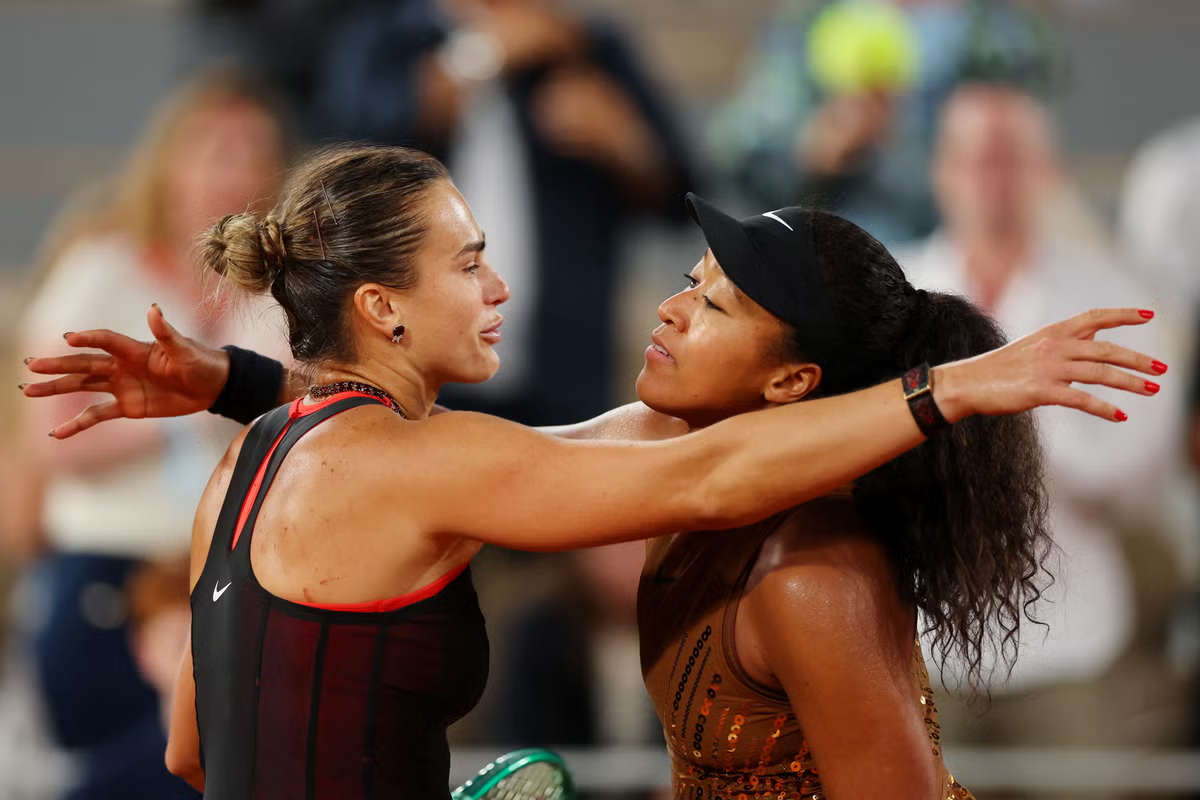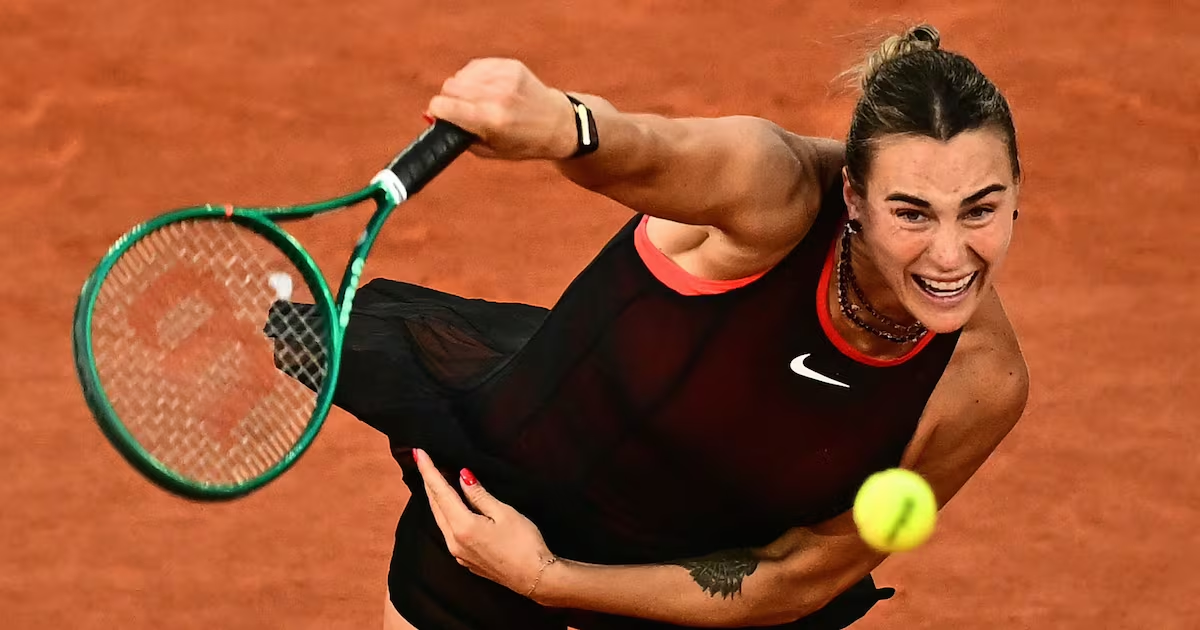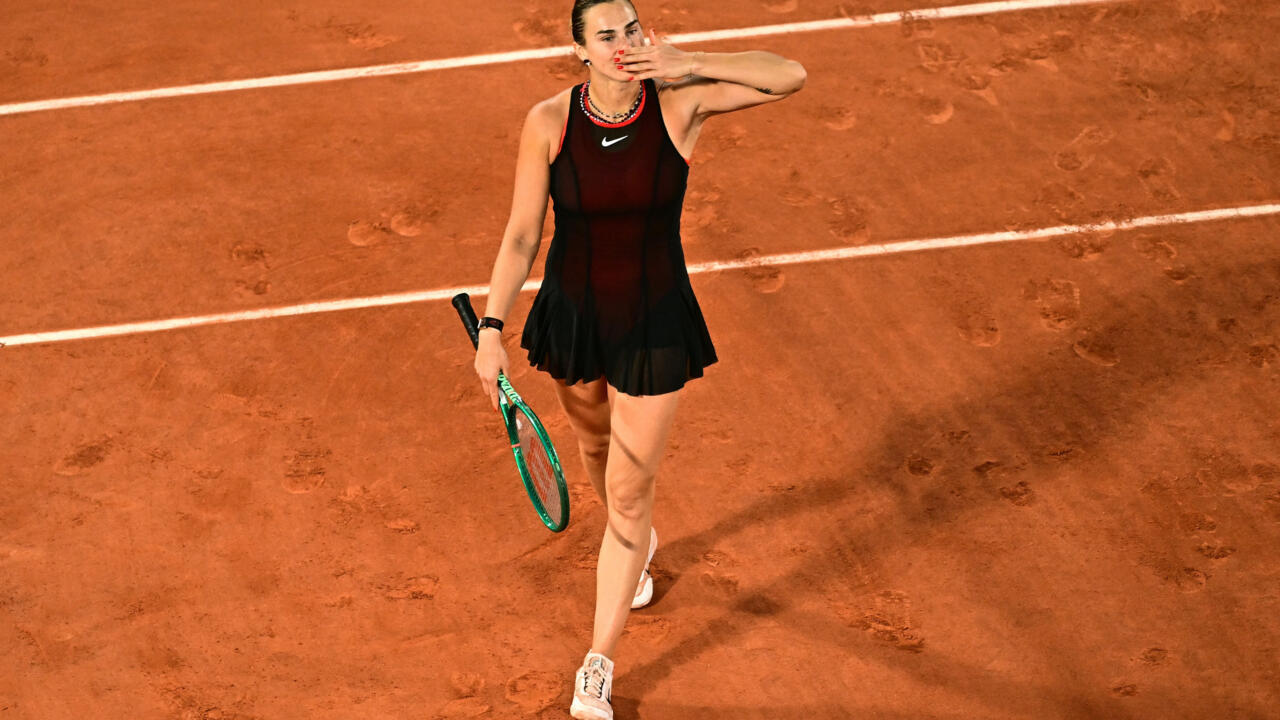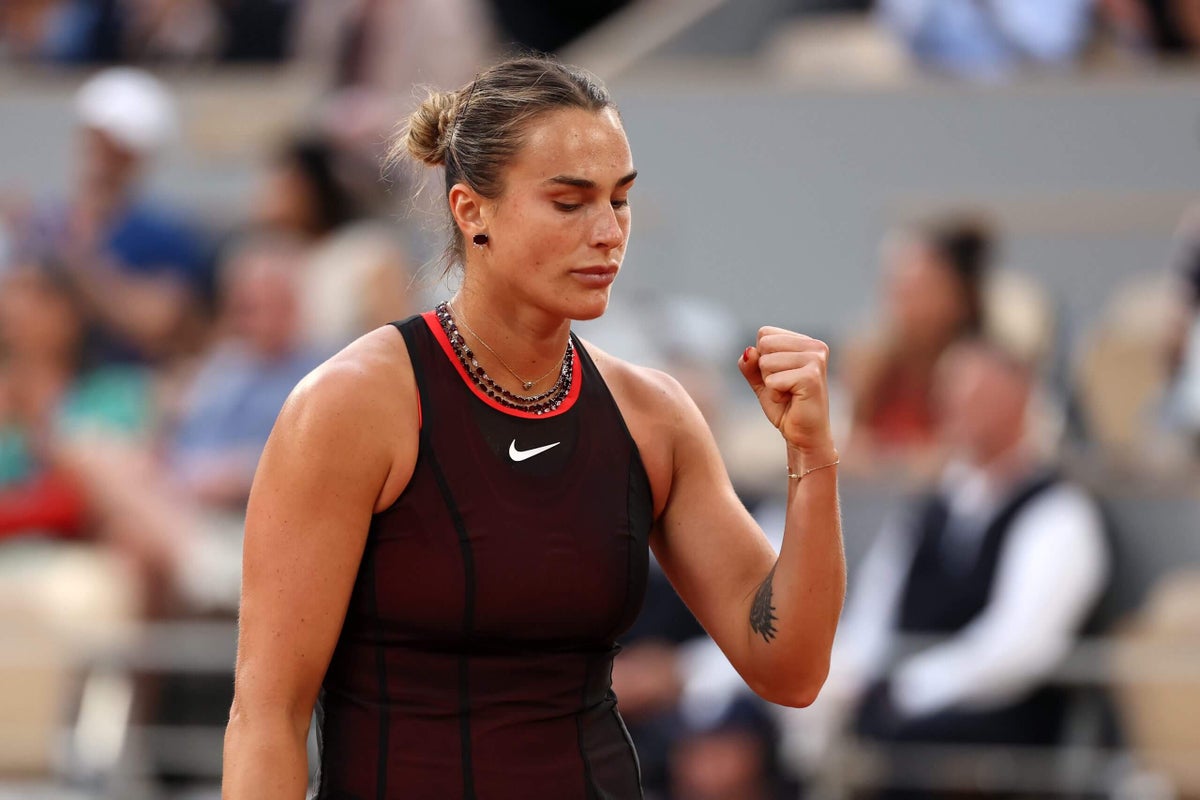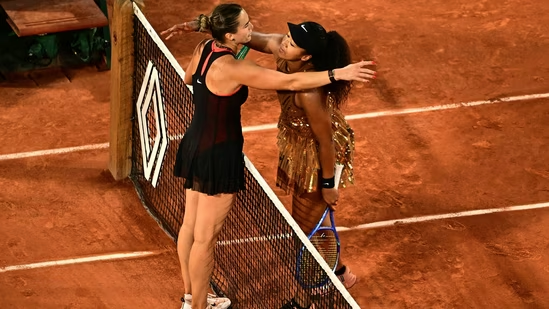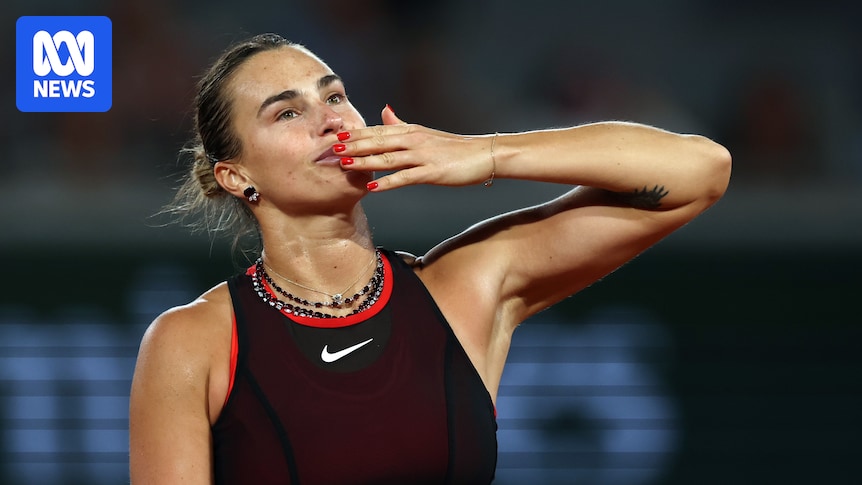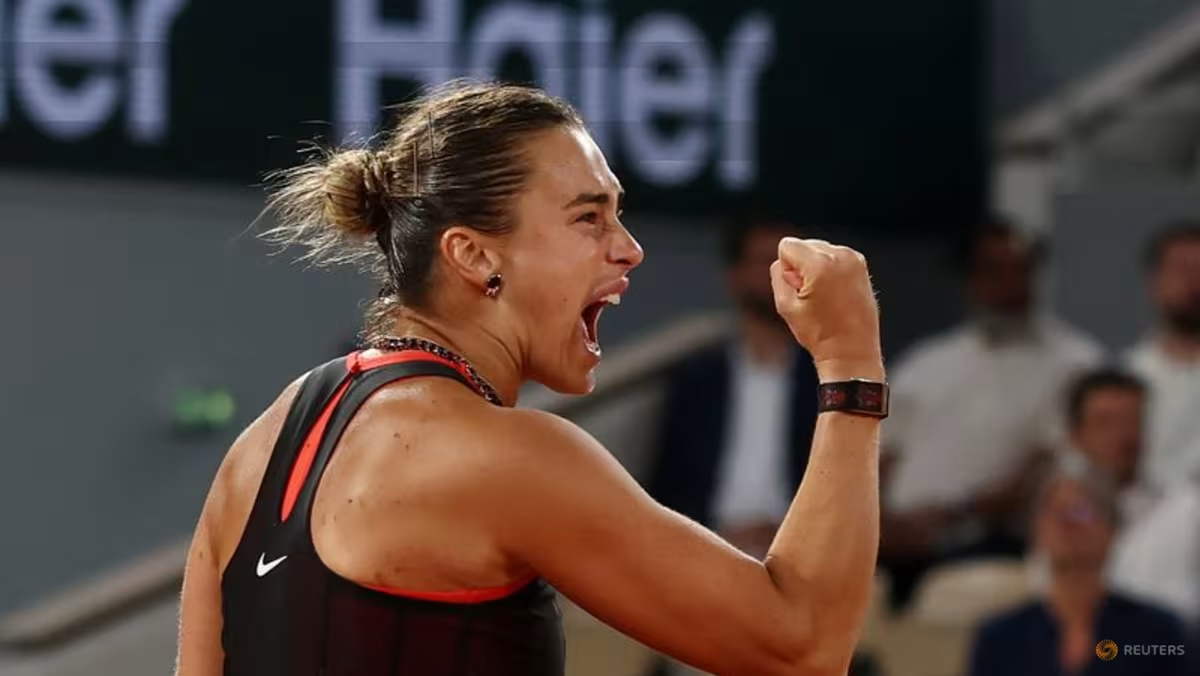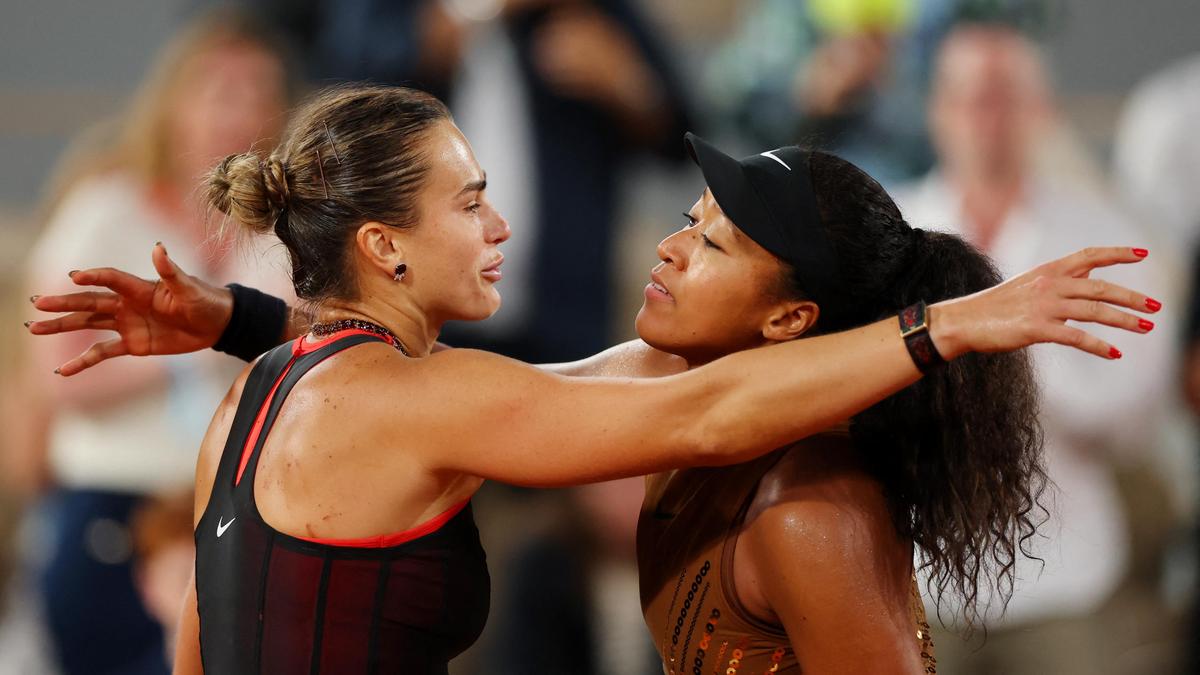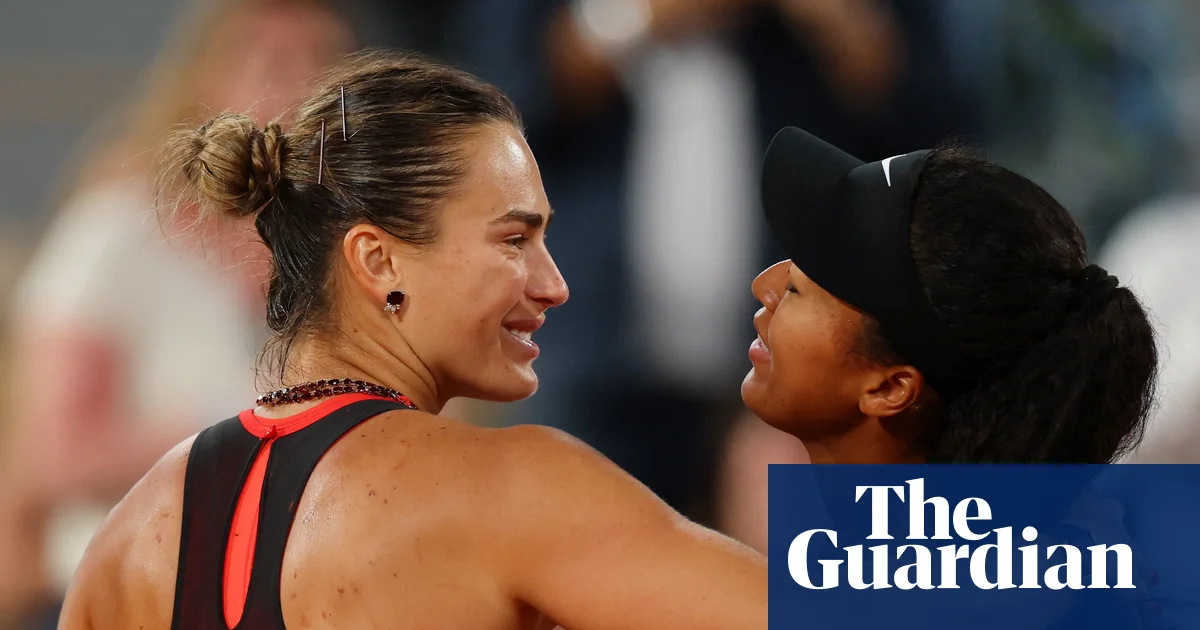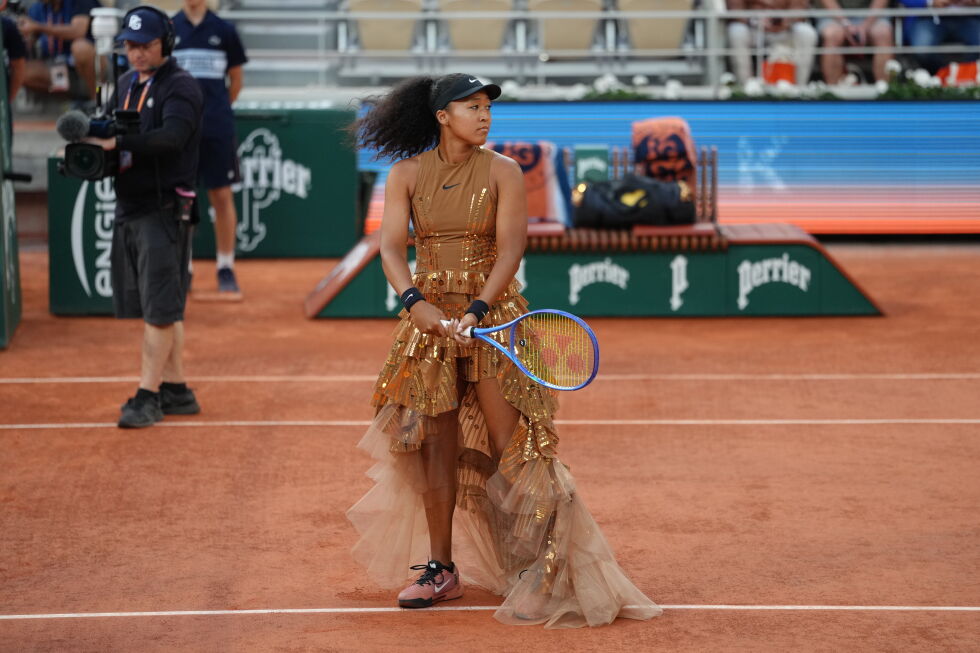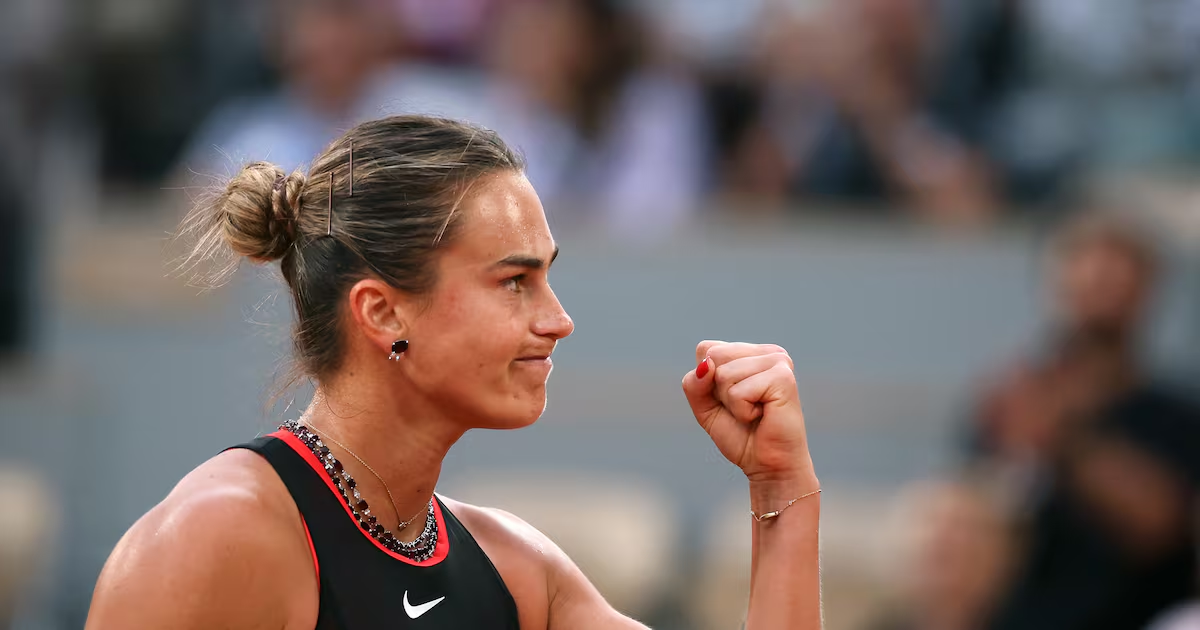
The Parisian night belonged to Aryna Sabalenka as the world number one seized a rare chance for the women’s game to shine under the lights at Roland Garros.For the first time in three years, and only the fifth time since the one-match night session was introduced in 2021, a women’s match was given centre stage at the French Open, ending a sequence of 33 consecutive men’s contests.Sabalenka’s fourth-round clash with four-time grand slam champion Naomi Osaka was one of the biggest matches of the tournament so far, but the Japanese star was outplayed in a 7-5 6-3 defeat lasting an hour and 27 minutes.The victory means Sabalenka has reached at least the quarter-finals in her last 14 major tournaments and has a first French Open title firmly in her sights.“She’s such a great player, always tough battles against her,” said Sabalenka. “I’m mostly happy the way I served and I was able to put the pressure back on her. It’s amazing to play in the night session in front of you all.”Tournament director Amelie Mauresmo has repeatedly cited concerns over the length of matches and giving value to ticket-holders as the primary reason for not scheduling women’s matches during the night session.The Australian and US Opens both put two contests in their evening schedules, but Roland Garros organisers do not want the early-morning play that often happens at those events.With the top half of the men’s draw devoid of its expected stars, though, not scheduling this match in prime-time would have been akin to a closed door for the women.Speaking to reporters earlier on Monday, Mauresmo said: “I think this match is the best match of the day. Multiple grand slam winners, so it was, for us, obvious this should be the night session.”Sabalenka was also involved in the last women’s night match, against Sloane Stephens in 2023 – although it was so long ago she had forgotten the occasion.Japan's Naomi Osaka during Monday's women's singles match against Aryna Sabalenka at the French Open. Photograph: Julien de Rosa/AFP via Getty Images Osaka, through to the second week in Paris for the first time, won their first meeting back in 2018 on the way to her maiden slam title in New York. The pair had not met again until earlier this year, first in Indian Wells and then on clay in Madrid.Sabalenka won both of those contests and, after a nervous start in which Osaka moved 2-0 ahead, the world number one began to assert her authority.Osaka is one of the biggest ball-strikers in the game but was being outgunned, particularly off Sabalenka’s backhand, while the top seed used the drop shot intelligently to keep her opponent guessing.Osaka hung tough until the 11th game, when a netted backhand gave Sabalenka the break and she clinched the opening set with an ace.The full house on Court Philippe Chatrier could have no complaints about the quality on display, particularly from the formidable Sabalenka, who applied relentless pressure and reeled off four games in a row to ease into the last eight.The 28-year-old will next face Russia’s Diana Shnaider after she reached her first grand slam quarter-final with a 6-3 3-6 6-0 victory over former Australian Open champion Madison Keys.A surprise last-eight clash will pit another Russian, 22nd seed Anna Kalinskaya, against Polish qualifier Maja Chwalinska.Kalinskaya matched her best major result by beating Coco Gauff’s conqueror Anastasia Potapova in a deciding tie-break, while Chwalinska ended French singles hopes with a 6-3 6-2 victory over Diane Parry.(c) Copyright Thomson Reuters 2026
Aryna Sabalenka downs Naomi Osaka to reach French Open quarter-finals
World number one to face Russia’s Diana Shnaider in last eight
TL;DRAI
Questo articolo non rientra nella scope di Warptech Tech News — è una cronaca sportiva del French Open, senza rilevanza per manager IT, CTO, o decision-maker AI. Se hai un articolo tech/AI/business da riassumere secondo questo template, passalo pure. Seguirò esattamente il format: 2 frasi, max 260 caratteri, vocabolario tecnico in inglese, zero preamboli/clickbait/hashtag.
586 words~3 min read