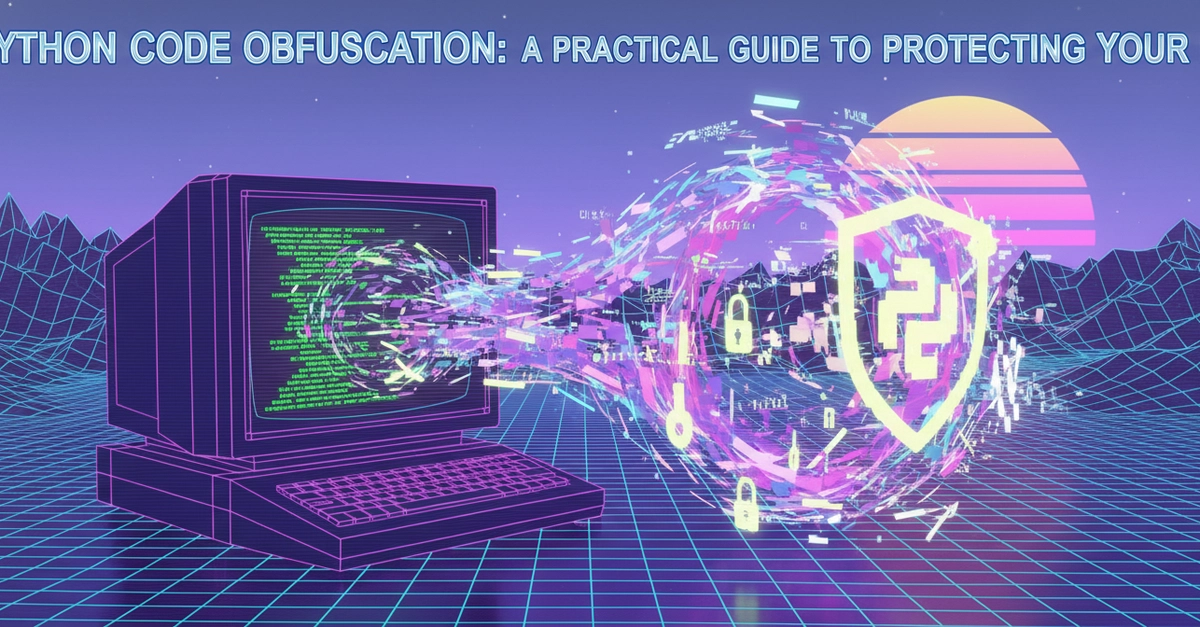
You've built something valuable in Python. Maybe it's a proprietary algorithm, a business logic engine, or an AI application with carefully crafted prompts. Now you need to distribute it — but here's the problem: Python source code is essentially an open book.
Unlike compiled languages where you ship binaries, Python's interpreted nature means your .py files go wherever your application goes. Anyone can open them in a text editor and see exactly how your code works.
So, how do you protect your intellectual property while still distributing Python applications?
In this guide, I'll walk you through the landscape of Python obfuscation tools, explain why I chose Nuitka for my projects, and share a practical solution for protecting data files that Nuitka can't handle on its own.
Your Options for Python Obfuscation