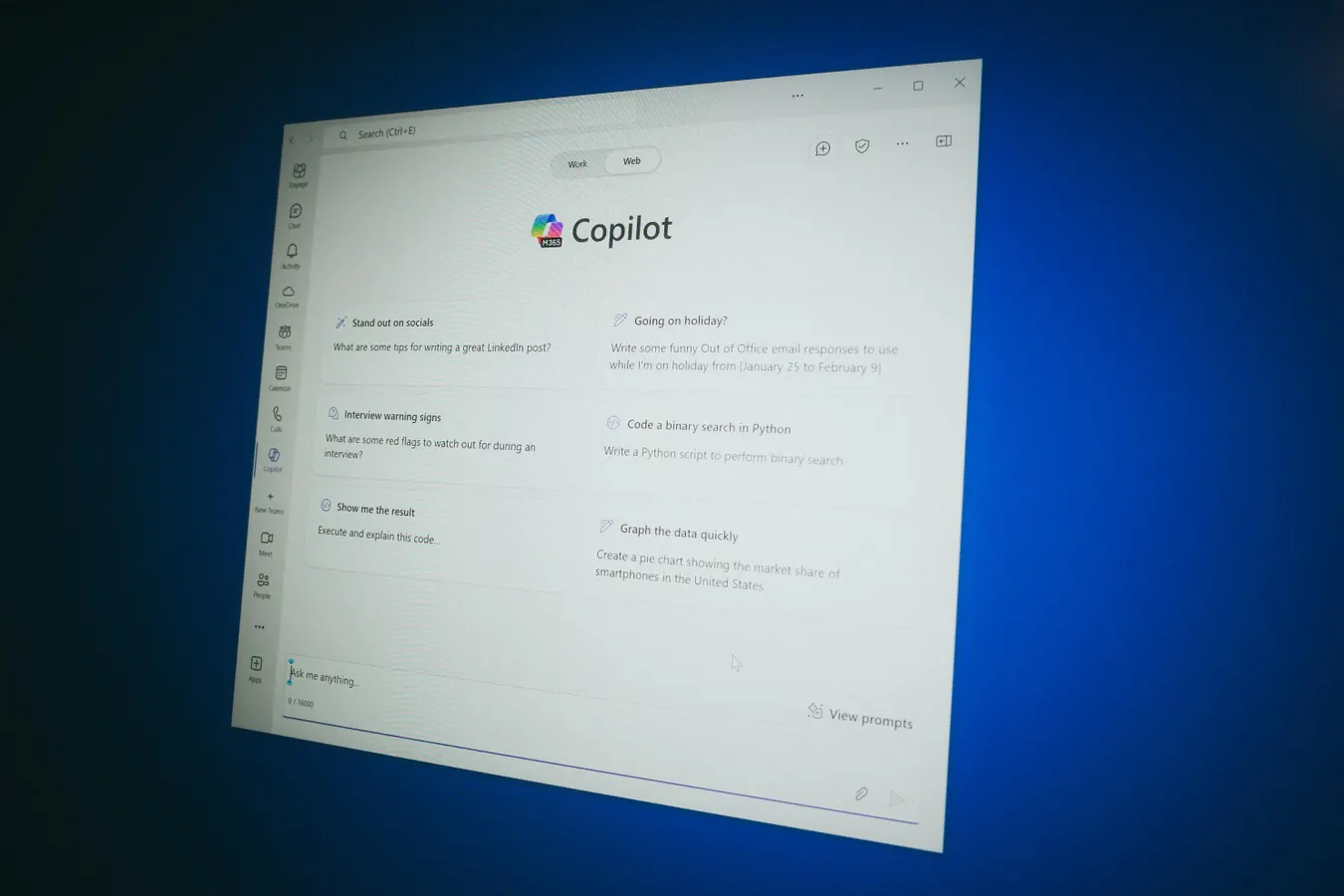
Illustration photo of a computer display with the Microsoft Copilot logo, shot in Savigny sur Orge in France on January 30th 2025. (Photo by Daniel Dorko / Hans Lucas / Hans Lucas via AFP) (Photo by DANIEL DORKO/Hans Lucas/AFP via Getty Images)Hans Lucas/AFP via Getty ImagesMicrosoft is ending its Claude Code licenses because it no longer wants to rent the intelligence inside its own products. Instead, it is pushing developers onto a homegrown coding model built for Copilot, a shift that signals where the company believes power in AI will actually accrue. In San Francisco this week, at its Build developer conference, Microsoft will show off that model — a coding system it build for one purpose: to sit at the center of GitHub Copilot. For two years Copilot was the default AI coding assistant, bundled into the platform most of the world’s developers already use. Then the market moved. In the nine months after Anthropic released Claude Code in May 2025, developers followed it, and in one major survey nearly half of respondents named it a favorite. The incumbent got overtaken.Here is the part worth slowing down on. Microsoft lost on model quality. Instead of putting the better model inside Copilot, Microsoft is building its own. That choice only makes sense if you believe the thing that decides this market is not the model. Microsoft is betting that distribution beats the best model, and the early enterprise data says the bet is reasonable.What Microsoft Is Shipping NextThe coding model is one piece of a larger move. Under Mustafa Suleyman, the division he runs has spent the past year pushing toward what it calls self-sufficiency in AI, building a family of in-house MAI models so the company depends less on OpenAI for the intelligence inside its products. Build is where the next batch arrives. Alongside the coding model, Microsoft is readying new MAI models for voice, image and transcription. The pattern is consistent. Microsoft used to integrate a partner's model. Now it is building its own and running it through products it controls.One detail makes the strategy legible. In December, Microsoft let thousands of its own engineers use Claude Code on the company dime, and inside its Experiences and Devices group it became the preferred tool. Then the bill arrived. Claude Code is priced by the token, the engineers used it heavily, and the costs ran past the annual AI budget months ahead of schedule. MORE FOR YOUSo Microsoft is winding it down by June 30 and moving those engineers onto its own GitHub Copilot CLI. The company that owns GitHub handed its engineers the tool they preferred, then took it back in favor of its own. Cost pulled the trigger. What cost exposed is the real lesson: renting intelligence by the token is a price Microsoft does not control, and leaning on a rival's tool is a dependence it would rather shed. Building its own model answers both, and it is the same bet Microsoft is making on the outside.Why The Best Tool Doesn’t Always WinThe survey that showed developers love Claude Code showed something else underneath. The preference flips with company size. At organizations with more than 10,000 employees, Copilot was the most commonly reported tool. At smaller companies, Claude Code dominated. The best-loved product wins where individuals choose. The incumbent holds the enterprise.The cause is structural. Microsoft owns GitHub, the development environments, the enterprise agreements and the cloud the code already runs on. When an AI feature lives inside the tools a company has already standardized on, adopting it across thousands of engineers is a configuration change, not a procurement fight. A better standalone tool has to be bought, approved, secured and integrated. The good-enough tool that is already in the building just gets switched on. This is the same advantage that let Microsoft bundle Teams into Office and pass Slack and Zoom, a comparison the survey's own authors reach for.Now layer in what a model actually is as an asset. The frontier models are genuinely excellent and close to one another. Claude, GPT and Gemini trade the lead constantly. A model that is best in May is matched in June. That closeness is the whole point. When the top models are all good and all only weeks apart, the advantage shifts from owning the best model to owning the path customers reach it through. A model lead depreciates, while distribution compounds.This is the Google 2000 lesson, which the firm has invoked before for a reason. People called Search a commodity and said Google had no defensible moat. The moat turned out to be the platform itself, which eventually absorbed the businesses built on top of it. The companies that lived on Search at Google's pleasure were hostages of the platform they were built on. The question Build raises is whether the best AI coding tool is building a business or building it on someone else's platform.The Model Was Never The MoatMost coverage this week will frame Build as friction between Microsoft and OpenAI, or as one more entrant in a crowded model race. That is the small version of the story. The larger one is a tell about where value accrues in AI. The layer everyone watches, the model, is the layer that leapfrogs fastest and holds a lead the shortest. The layers nobody applauds, distribution and the installed base, are the ones that compound.The same logic favors the companies that already own the rails. Microsoft is the cleanest example, with GitHub, Windows, Office, and Azure all funneling into one another. Google can route AI into surfaces it owns outright, from the browser to Android to Workspace. The enterprise-software incumbents carry AI into accounts through systems their customers already run rather than asking them to adopt something new. In each case the durable asset is the same, and it is not the model.There is a caution hiding in here too, stated as a pattern rather than a call. The market keeps paying a premium for model quality as though the best model were the prize. The coding-tool fight is the counterexample running in real time. The tool developers rated highest is the one losing the enterprise, and it is losing to a company that concedes the model and owns the distribution. The thing to watch out of Build is narrow and specific: whether Microsoft’s good-enough coding model holds enterprise seats even while developers keep preferring Claude Code. If it does, distribution beat quality in the open, and that becomes the template for every layer of the stack above the chips. Everyone measured the model. The distribution around it is what decided the winner.
Microsoft Ends Claude Code Licenses As It Shifts Developers To Copilot
Microsoft ends Claude Code licenses and shifts developers to its in‑house Copilot model, signaling a strategic move toward AI self‑sufficiency and distribution power.
TL;DRAI
Microsoft terminates Claude Code and launches a proprietary Copilot model after Claude dominated developer surveys in 9 months. The choice reveals distribution and lock-in matter more than model quality: GitHub's platform beats superior standalone tools.
1,107 words~5 min read