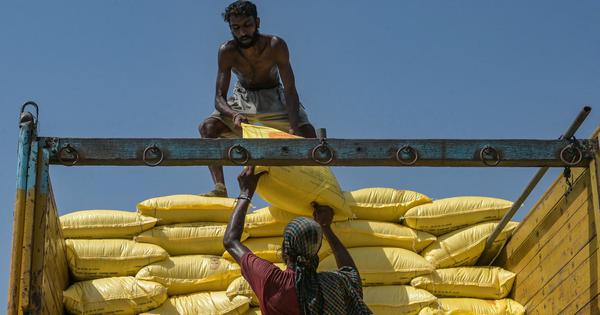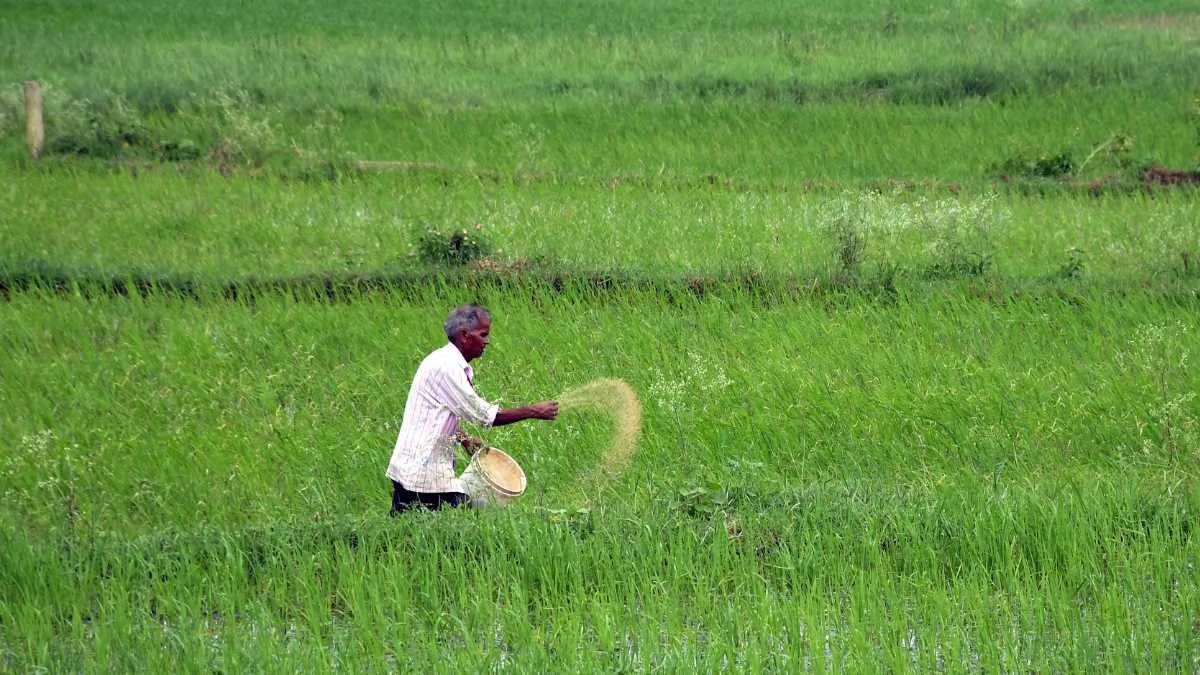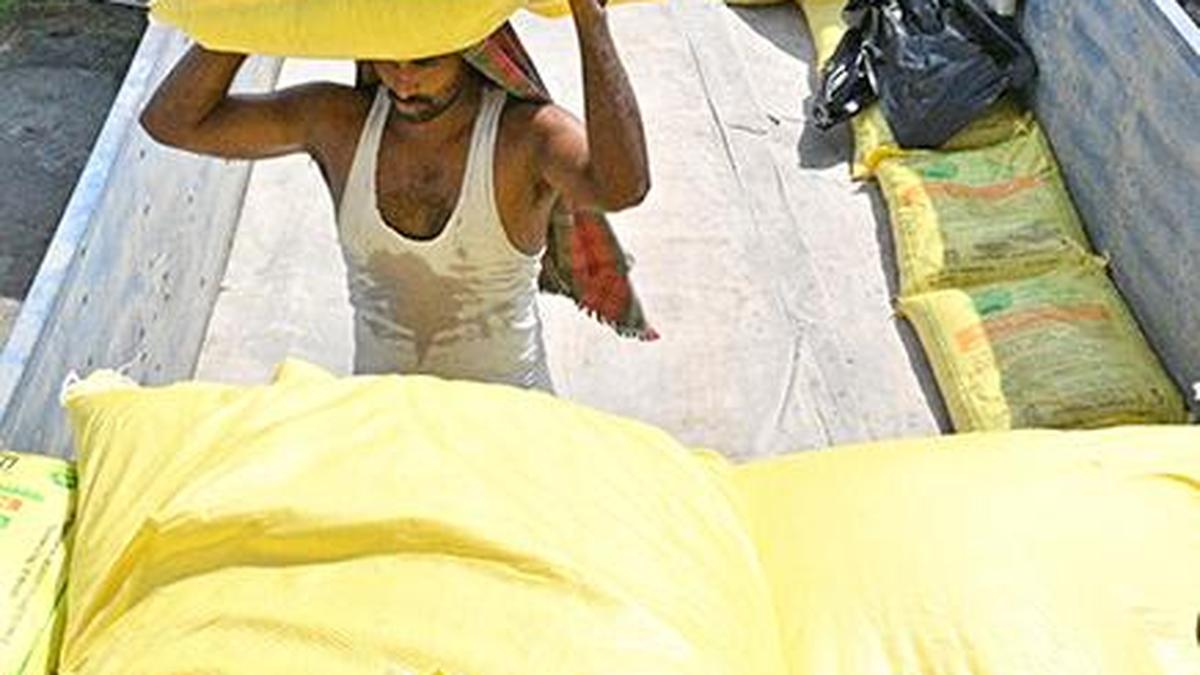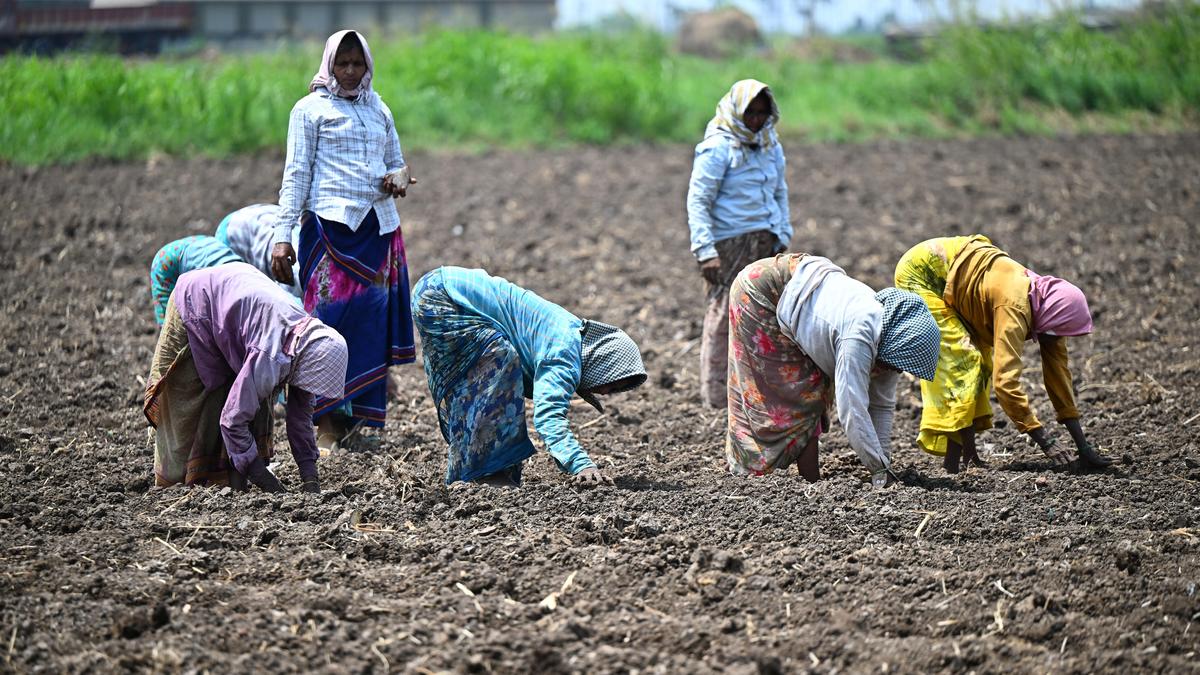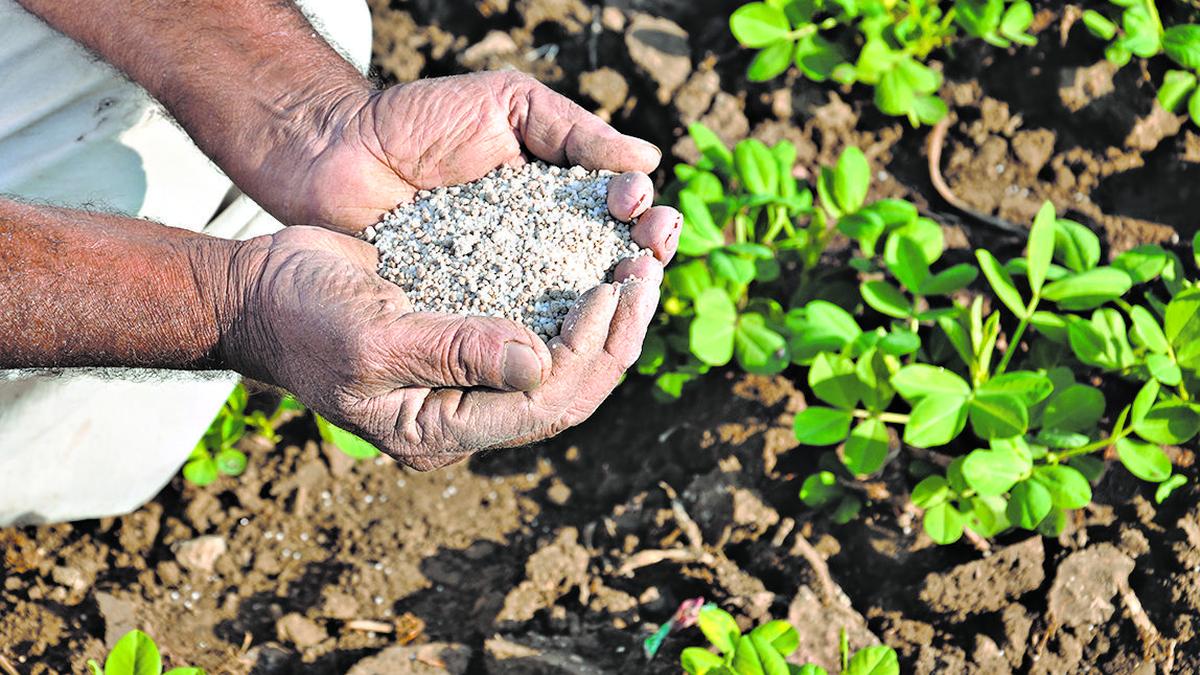
On a day when Agriculture Minister Shivraj Singh Chouhan launched a month-long farmer awareness campaign to reduce chemical fertilisers by engaging the agriculture scientists in t extension work, which is normally overseen by the States, the Centre announced that the demand for the five major crop nutrients has been reduced for the kharif season.Briefing media on the fertiliser situation after the geopolitical crises deepened with the Iran war on February 28, Aparna S Sharma, additional secretary in the Department of Fertilizers, said that 20 per cent of the subsidy allocated for FY27 has been exhausted in the first two months of the current fiscal. But, she said that the Department of Fertilizers would raise the demand with the Finance Ministry as and when the subsidy spent.In the 2026-27 Budget, Finance Minister Nirmala Sitharaman provided ₹1,70,944.53 crore for fertiliser subsidy, including ₹1,16,805 crore for the urea sector (both domestic and imported) and ₹54,000 crore for the phosphorus (P) and potash (K) sectors. In 2025-26, the fertiliser subsidy was pegged at ₹1,86,630.63 crore (Revised Estimate), which has since gone up due to war-induced surge in global rates from March 1.Below-normal monsoon impactThe fertiliser subsidy may exceed Rs 3 lakh crore in the current fiscal if the problem in West Asia persists till end of kharif because of current high global prices of raw materials as well as finished products, an official last week had said. He said that the subsidy could even reach Rs 3.5 lakh crore if the current situation – high global price and closure of Strait of Hormuz through the rabi season.Sharma said that in view of the “below normal” monsoon forecast by the India Meteorological Department and the threat of El Nino, the Agriculture Ministry has lowered its demand estimate for the kharif season. Accordingly, the urea demand, which was previously estimated to be 19.4 million tonnes, has been cut to 19 mt, she said.The IMD had actually forecast the monsoon rainfall to be “below normal” as early as in mid-April and it has recently reduced the quantity of rainfall by 2 percentage points -- from 92 per cent of long period average (LPA) to 90 per cent.Plea to farmersThe additional secretary said that fertiliser stocks stand at 51 per cent of the requirement for the kharif season, which is higher than the conventionally maintained 33 per cent due to advance stocking and improved logistics management.India’s domestic fertiliser production was 10.48 mt post the West Asia crisis, and with imports of 2.76 mt total availability reached 13.24 mt during March-May, she said.Meanwhile, Chouhan on Monday launched the nationwide “Khet Bachao Abhiyan” (save the soil) from Ramasiya village in Madhya Pradesh under his parliamentary constituency. He appealed to the farmers to avoid the indiscriminate use of chemical fertilisers and pesticides and instead apply manure only according to the soil’s requirements based on test results.No price volatilityIn the Inter-Ministerial briefing on the impact of the West Asia crisis in India’s different sectors, Anupam Mishra, additional secretary in the Department of Consumer Affairs, said that prices of cereals, pulses and sugar have remained stable, while potato, onion, and tomato prices are range-bound, with no unusual volatility reported in essential commodities.He said that there is comfortable production of foodgrains including pulses as a result of which pulses import has declined. With higher buffer stock of pulses – 4.3 mt against 1.8 mt -- as maintained by the government, the prices are likely to remain steady, he said.C Shikha, joint secretary in the Department of Food and Public Distribution, said that rice stocks with the government are at 69.5 mt (including those in form of paddy in terms of rice) against the buffer norm of 13.5 mt (as on July 1). She said that edible oil availability remains adequate, supported by regular imports from Indonesia and Malaysia (palm oil), Russia and Ukraine (sunflower oil), and Argentina and Brazil (soyabean oil) — largely through unaffected trade routes via the Strait of Malacca and the Indian Ocean.Published on June 1, 2026
Government steps up to save fertilisers as 20% of subsidy exhausted in 2 months
Government reduces fertiliser demand for kharif season as subsidy funds deplete and monsoon forecasts predict below-normal rainfall.
666 words~3 min read