Jerry Shu, Daylit CTO, architects AI frameworks like ‘Contextual Hierarchy’ to advance AI & unlock human creativity.gettyIn today’s technological zeitgeist, we are obsessed with the AI “brain”—the raw reasoning power of large language models. But a brain without input is just a processor, not intelligence. In finance, that brain is starving.Financial operations exist in a state of high-entropy fragmentation. Unlike many other AI applications, finance operates under a deterministic mandate: in a ledger, “approximate” is another word for “failure.” Every cent must be accounted for. Every decision must be auditable. The primary barrier to AI adoption in the CFO’s office is not a lack of reasoning power. It is the absence of a high-fidelity context architecture.To solve this, I propose a new industry framework: the Contextual Hierarchy for Financial Agents. This model moves beyond simple retrieval toward a layered architecture for intelligence.The Deterministic Mandate: Bridging The Reasoning GapThe core tension in financial AI is simple: LLMs are probabilistic, while accounting is deterministic. An LLM predicts the most likely next token. A CFO requires the exact next truth.Bridging that gap requires moving beyond “Generative AI” toward contextual intelligence. At Daylit, we have engineered a three-tiered foundation that feeds the reasoning engine not just data, but comprehensive truth.Foundation 1: The Smart Data Lake And Semantic HarmonizationThe bedrock of financial context is the system of record. Finance is paradoxically both the most structured and the most fragmented industry on earth. ERPs, CRMs, legacy accounting systems and file hosts are mathematically reliable, but they are also often old-world systems—rigid, siloed, on-premise and constrained by rigid rate limits.The answer is not a simple dump into a single data lake. It is semantic harmonization. We use specialized models to approximate relationships across disparate systems—linking a cryptic line item in an ERP to a sales note in a CRM, or an inbound email to a dispute-handling type. By creating an operational graph across data objects, we ensure the AI understands that a given invoice is not just a static number, but a milestone in a broader customer journey.Foundation 2: The Communication Layer As A Social SensorCritical financial context rarely lives in a database. It lives in the communication layer. When a client ghosts an invoice, the reason is often buried in an email thread about a service dispute or a Slack message about a management shakeup.We should treat communication systems as both archives and active sensors. An intelligent financial agent must have the agency and access to tap the human network for context. It must know when to nudge a salesperson for clarity and when to escalate to senior management. That requires a sophisticated understanding of organizational hierarchy. The AI must know who holds the truth and how to extract it without creating operational friction.Foundation 3: The Human Element And The Trust BoundaryOperational truth often lives only in the minds of employees. Accessing it is not just a technical challenge, but a social and hierarchical one. AI cannot blindly ping the organization for information. It must operate inside defined information sandboxes.To make AI agents scalable, we must engineer strict trust boundaries. A CFO must feel comfortable connecting their inbox, knowing the system is protected by a firewall that syncs only domain-specific context and ignores sensitive executive discussions. This trust layer is what separates an intrusive tool from an executive extension.The Distillation: Moving From Data To LogicRaw context is necessary, but not sufficient. Above the foundation sits the logic layer—the frequently ignored middleware of human intelligence.In the CFO’s office, this logic layer consists of distilled tribal knowledge: the unwritten rules that govern edge cases, the historical behavior of specific clients and the standard operating procedures that define business as usual. Without this distillation, an AI is just a librarian. With it, the AI becomes a practitioner—capable of navigating the why behind the numbers.The Apex: Executive ObjectivesAt the top of the hierarchy sit executive objectives. Context without intent is noise. The AI must understand the organization’s strategic north star to prioritize effectively.If a company’s primary objective is aggressive top-line growth, then a late payment from a strategic partner should be interpreted not as a collections trigger but as an opportunity for a payment plan. By aligning the agent’s autonomy with executive intent, we ensure the system does not merely process tasks. It advances the company’s mission.The Future Of AI Agents In The CFO’s OfficeThe transition from AI that talks to AI that works depends entirely on the architecture of context. The Contextual Hierarchy offers a framework in which the model's reasoning power is finally matched by the precision of its environment.In the high-stakes world of finance, the brain is becoming a commodity. Context remains the true competitive advantage. The companies that master the architecture of their own data, communication and human intelligence will lead the autonomous era. We are no longer just reporting on the past. We are architecting the future of financial agency.Forbes Technology Council is an invitation-only community for world-class CIOs, CTOs and technology executives. Do I qualify?
The Contextual Hierarchy: A Framework For Autonomous Financial Intelligence
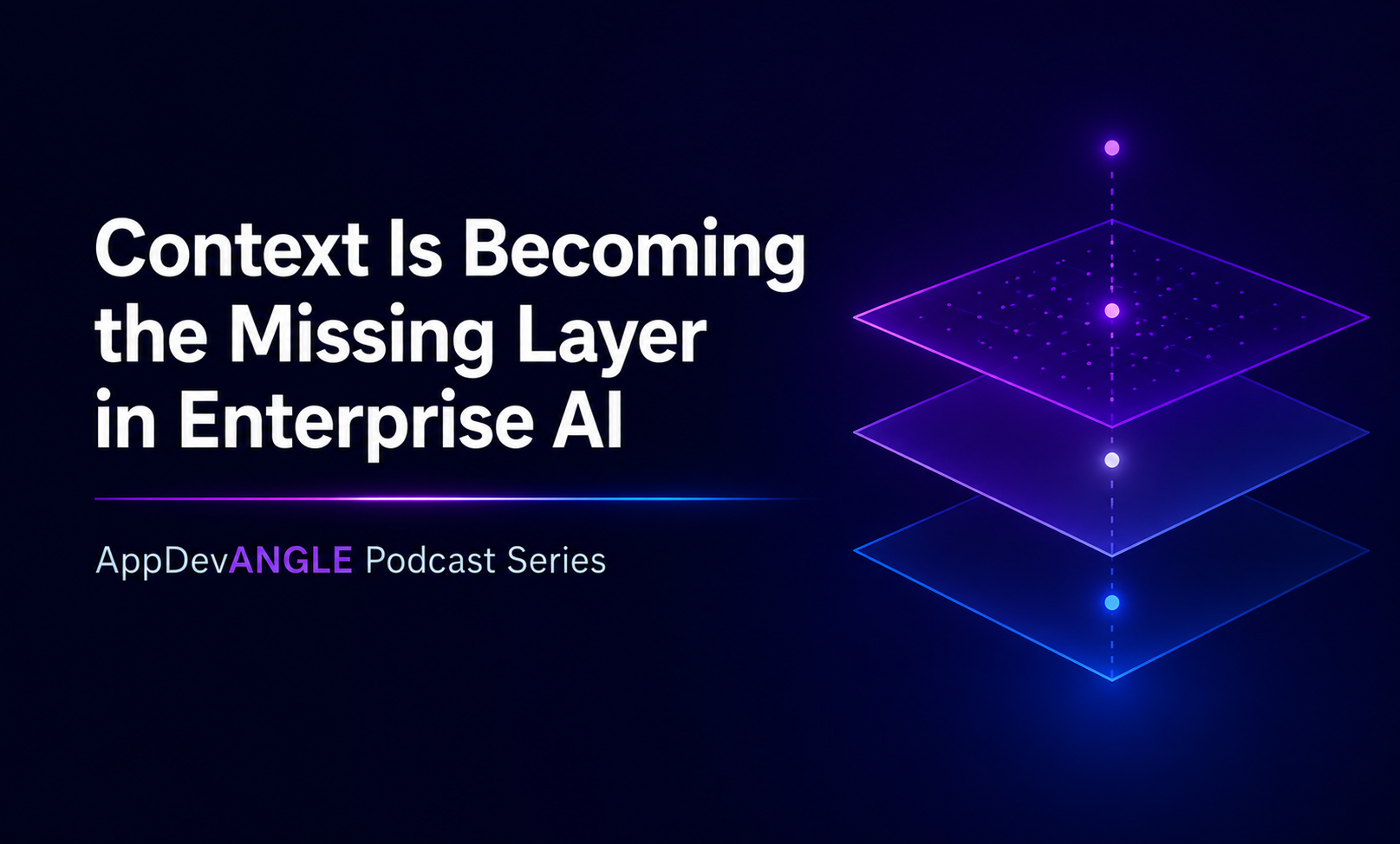
The transition from AI that talks to AI that works depends entirely on the architecture of context.
TL;DRAI
Daylit CTO proposes Contextual Hierarchy, solving the LLM-finance tension via semantic data, communication, and trust boundaries. Tech leaders: financial AI leadership depends on organizational context mastery—data semantics, governance rigor—not model capability.
831 words~4 min read