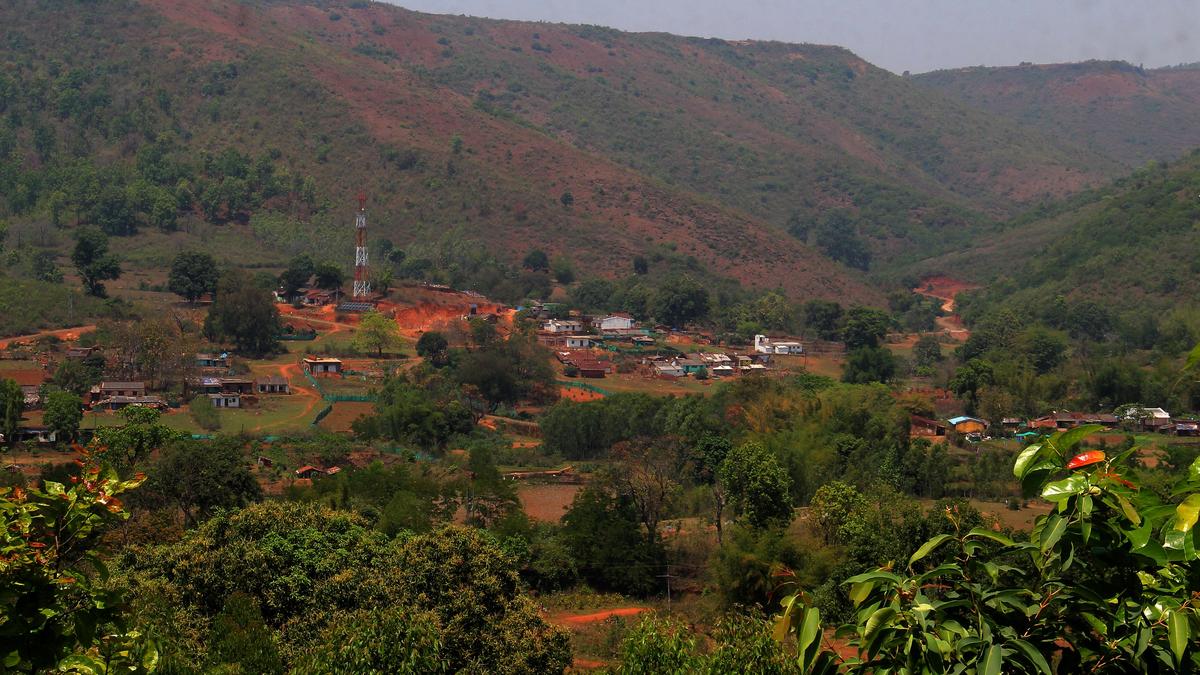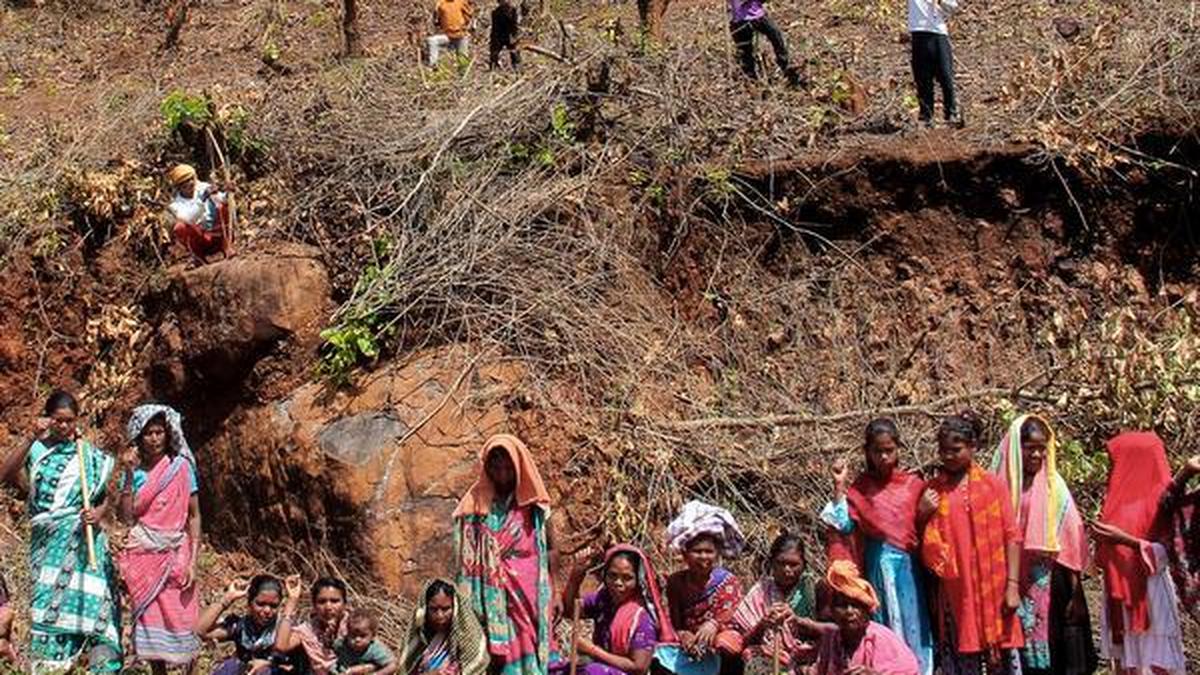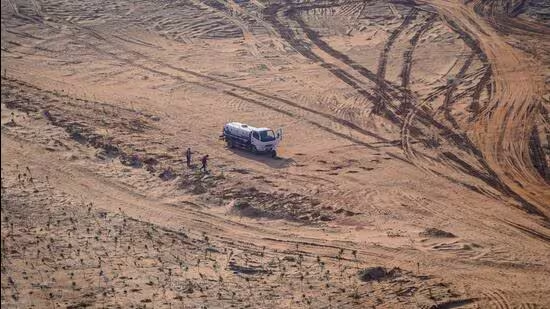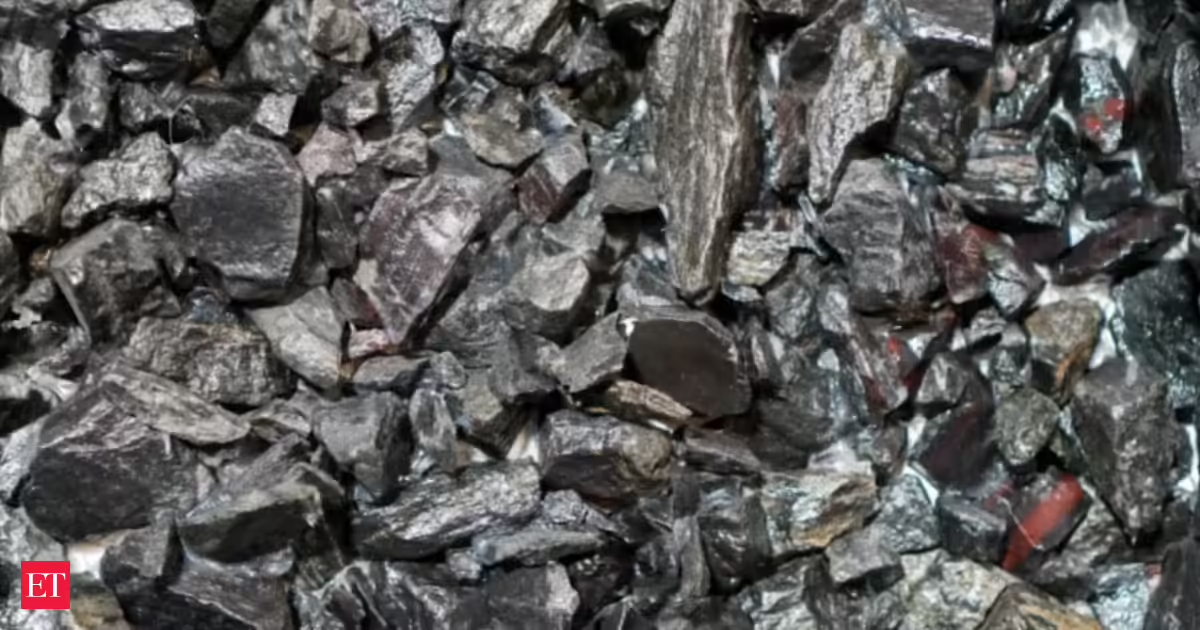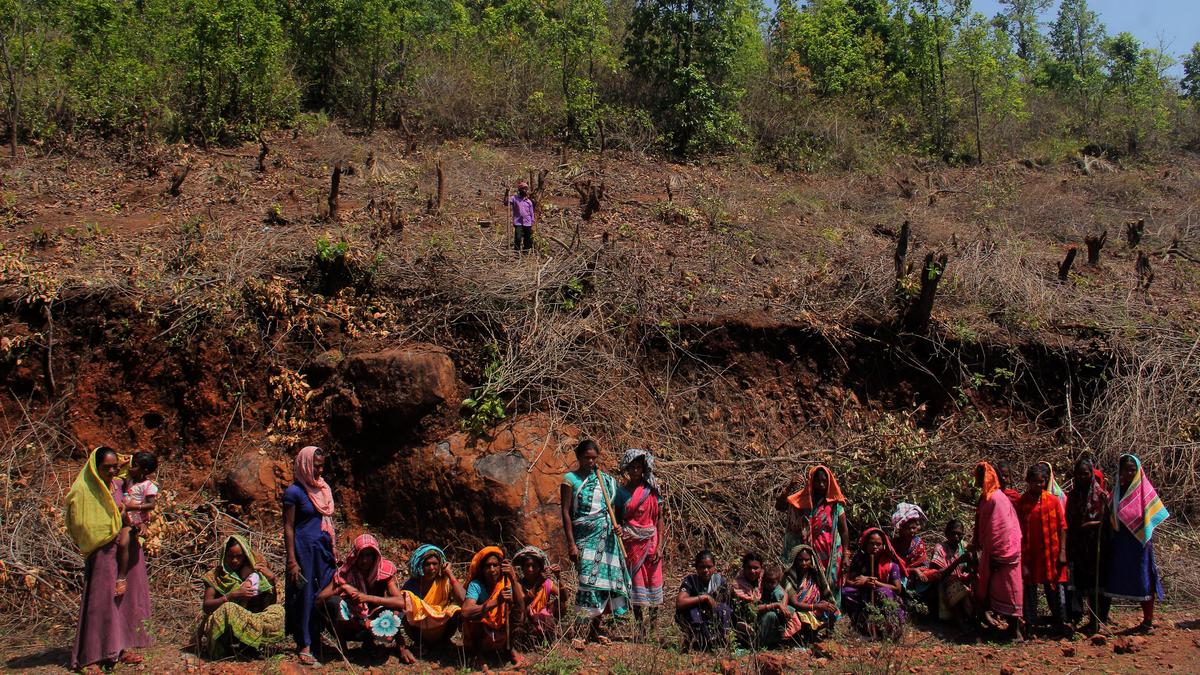
Amidst the sustained protests against bauxite mining in Sijimali hills, villagers in Odisha’s Koraput district have now said that the Gram Sabhas that cleared an Adani-linked firm to mine bauxite from Balda Hill in the Nageswari forest reserve were “fraudulently” held and that the resolutions clearing the mining contain forged signatures of villagers who are dead, were paralysed or injured, or simply absent on the day.The villagers have now alleged that, despite lodging a detailed complaint months ago in February, the police have not yet registered an FIR against Kalinga Alumina Limited, the panchayat, and district officials, whom they accuse of colluding to divert 157.2 hectares of forest land over which they had traditional and spiritual rights under the Forest Rights Act, 2006. The local police and the office of the Superintendent of Police in Koraput were unavailable for a comment.Similar complaints have emerged from the ongoing agitation in Rayagada and Kalahandi districts, where villagers have accused the Vedanta Group, and the same Adani-linked firm Kalinga Alumina and officials of conspiring to forge signatures on Gram Sabha resolutions to divert forests for mining bauxite from Sijimali hills and the nearby Kutrumali bauxite reserve.In Koraput district, Kalinga Alumina Limited obtained the Stage-I Forest Clearance from the Environment Ministry to mine the Balda Hill bauxite reserve in December 2024, with one of the key conditions requiring that processes related to identifying and vesting of rights under the Forest Rights Act be completed and consent obtained from the Gram Sabhas concerned for the diversion of forest land under the law.A little after a year on January 15, 2026, the Koraput district administration issued a document certifying that all processes for identifying and settling rights of forest-dwelling Scheduled Tribe and Scheduled Caste villagers under the Act had been completed, adding that the Gram Sabhas concerned had been informed and had consented to the diversion of 157 hectares of Balda Hill for bauxite mining. It cited Gram Sabha meetings that had purportedly been held on October 9, 2025, in Balda and Banur villages of Balda and Attanda Gram Panchayats.‘Fake’ meetingsIn complaints, they have now written to district officials, the police, the Union government, and the State government, the villagers of Banur and Balda villages have said that these alleged gram sabhas were “fake”, and did not have as many people attending as the signatures on the resolutions, nearly all of which were forged. They have further said that less than a 24-hour notice was given to them ahead of the Gram Sabha, adding that the notice was also backdated.Rajendra Khara, 50, a daily wage labourer in Balda village, said: “My brother Raju Khara passed away in 2023 after a sudden bout of illness. His signature is present in the Balda Gram Sabha resolution. How is this possible? We had opposed the Gram Sabha the moment we saw the backdated notices and even told the Sarpanches. But on October 9 [2025], the meeting went ahead even as we stood outside to protest.”As per the General Diary entry for the police complaint, the villagers have said that at least two other dead people’s signatures appeared on the resolutions, one paralysed woman’s signature was also there, and several signatures of people who were not in town or simply absent from the meetings.In their complaints, the villagers have attached photographs of the room where the Gram Sabha meetings were held to argue that there were not as many people in attendance as the number of signatures on the resolutions. “The room can only hold 50 people. How can there be 300-plus people as per signatures on the resolutions?” Mr. Khara asked, adding that all of this happened even as their claims for community forest rights and community forest resource rights remain pending under the Forest Rights Act.According to government records, the sub-divisional and district-level meetings that cleared the diversion of forest land for mining, approved forest rights claims of five villages surrounding the Balda Hill, amounting to about 500 acres. “Firstly, a total of 12 Gram Sabhas had filed FRA applications. Secondly, all of the land given has been carved in a way that deprives us of the forests on the slopes of the Balda Hill,” 46-year-old Laba Khilo, whose dead parents’ signature also appeared in the Gram Sabha resolution, said.The forests on the slopes of the Balda Hill are used by locals of villages located around the base of the hill for collecting minor forest produce, for using water from an artificial pond at the hilltop, and for religious purposes, particularly the site of a cave that is worshipped. The sub-divisional committee that refused to include these sites in the forest rights for locals noted that locals cannot claim traditional rights over the pond, as it was artificially made after the Forest Rights Act came into being.It further noted that, as for the cave, since multiple villages were claiming rights over it, this right cannot be included for any one village and that the site should be protected. In the Environment Clearance granted for the mining project, while one condition is to ensure uninterrupted access to the cave for worship, other filings have shown that Kalinga Alumina has proposed to develop the site to attract tourism.
Gram Sabha consent fabricated to divert forest for mining bauxite, say villagers in Odisha’s Koraput
Villagers in Odisha allege forged Gram Sabha consent for bauxite mining by Adani-linked firm, raising concerns over forest rights violations.
868 words~4 min read