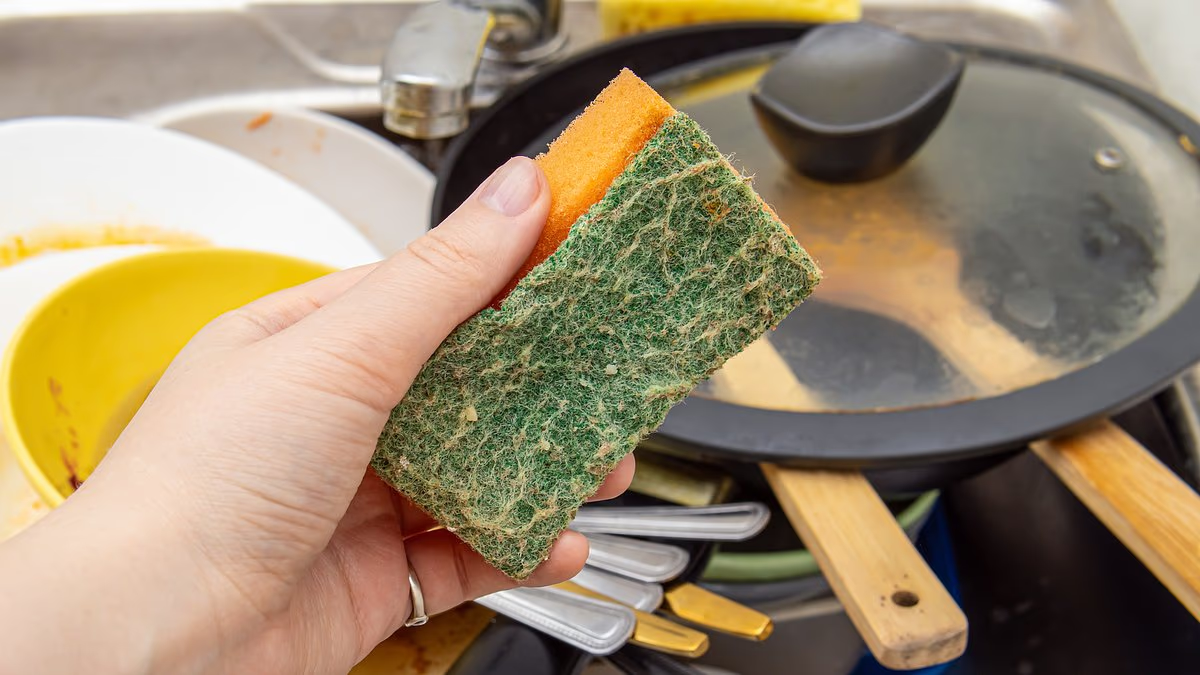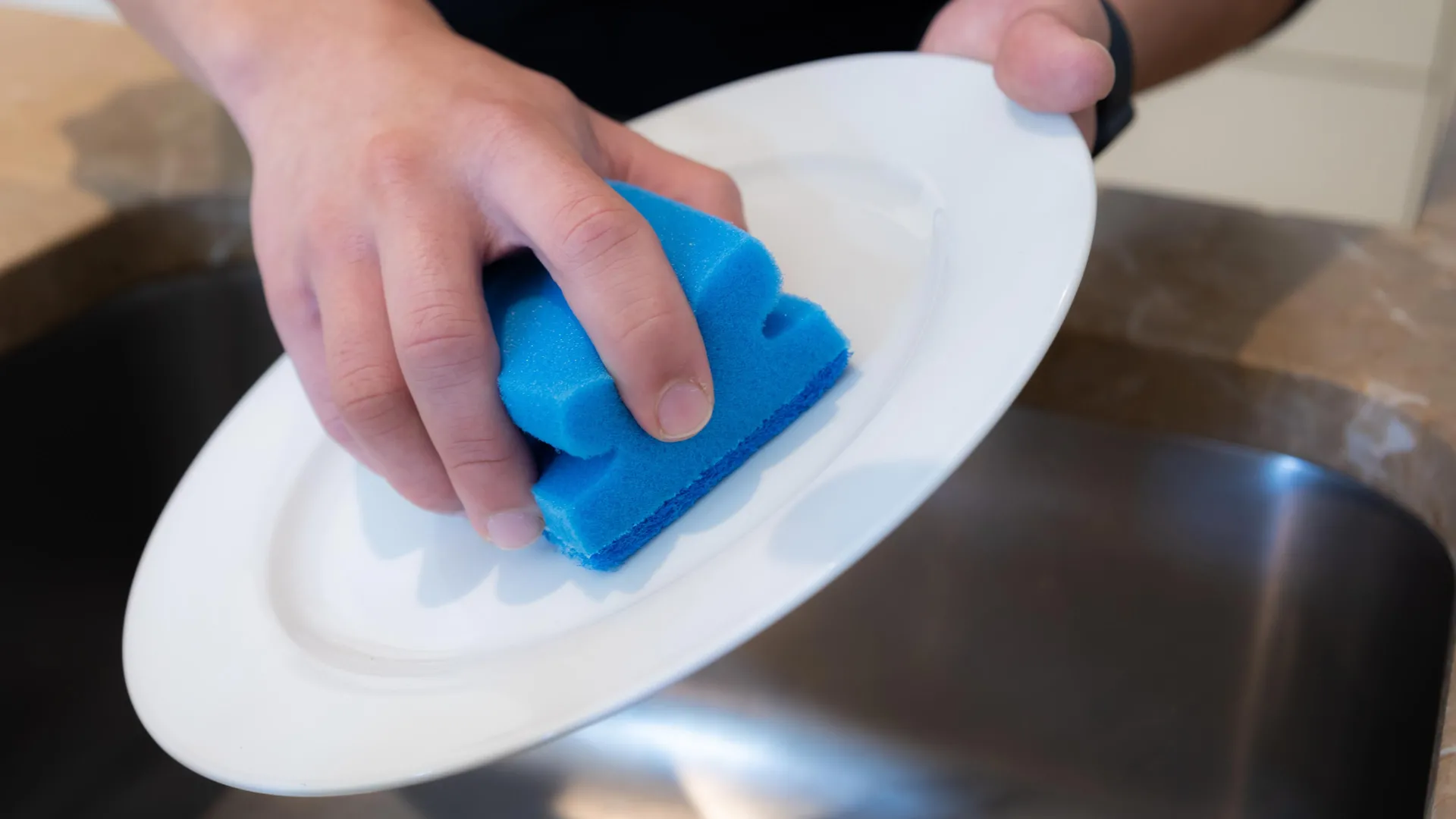
Kitchen sponges are a staple in most homes, but they may also be an overlooked source of microplastic pollution. A new study led by researchers at the University of Bonn examined how many tiny plastic particles are released from sponges during everyday dishwashing and what impact those particles have on the environment.
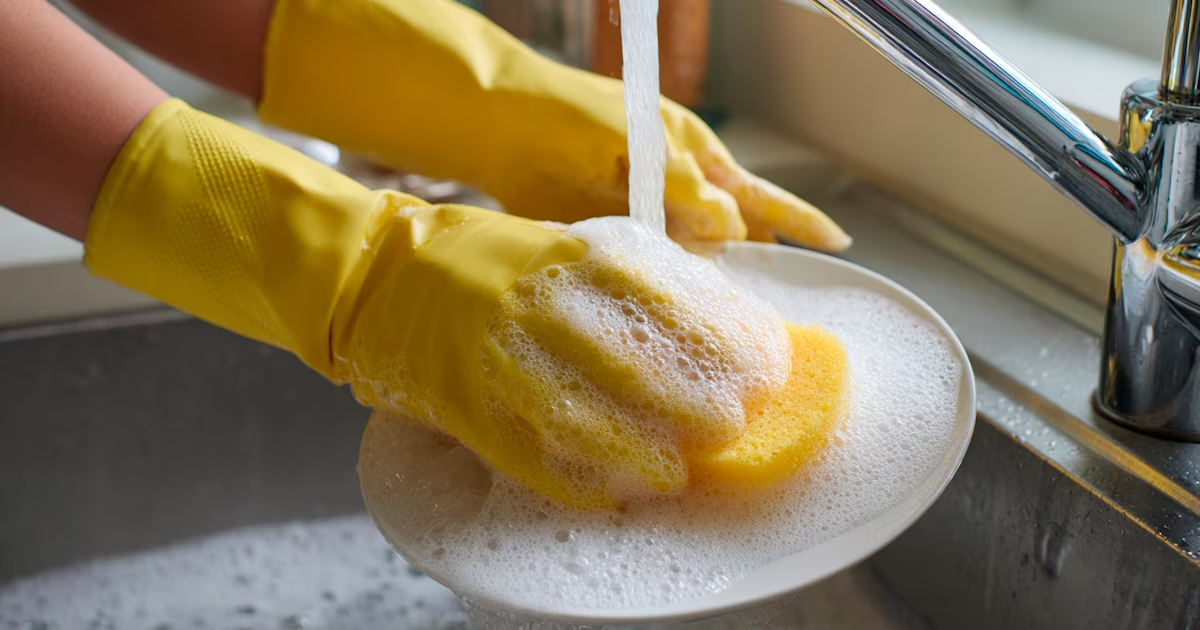
The results show that kitchen sponges do shed measurable amounts of microplastics over time. However, the researchers found that the biggest environmental burden associated with hand washing dishes is not the plastic particles themselves. Instead, water use accounts for the vast majority of the overall impact.
Kitchen Sponges as a Source of Microplastics
Although kitchen sponges are used daily in millions of households, their role as a source of microplastics has received relatively little attention. The research team set out to measure how much plastic is released as sponges wear down during normal use and to evaluate the environmental consequences through a life cycle assessment (LCA).
To gather realistic data, the study combined laboratory testing with citizen science. Households in Germany and North America volunteered to use one of three sponge types as part of their regular dishwashing routines while documenting how the sponges were used.