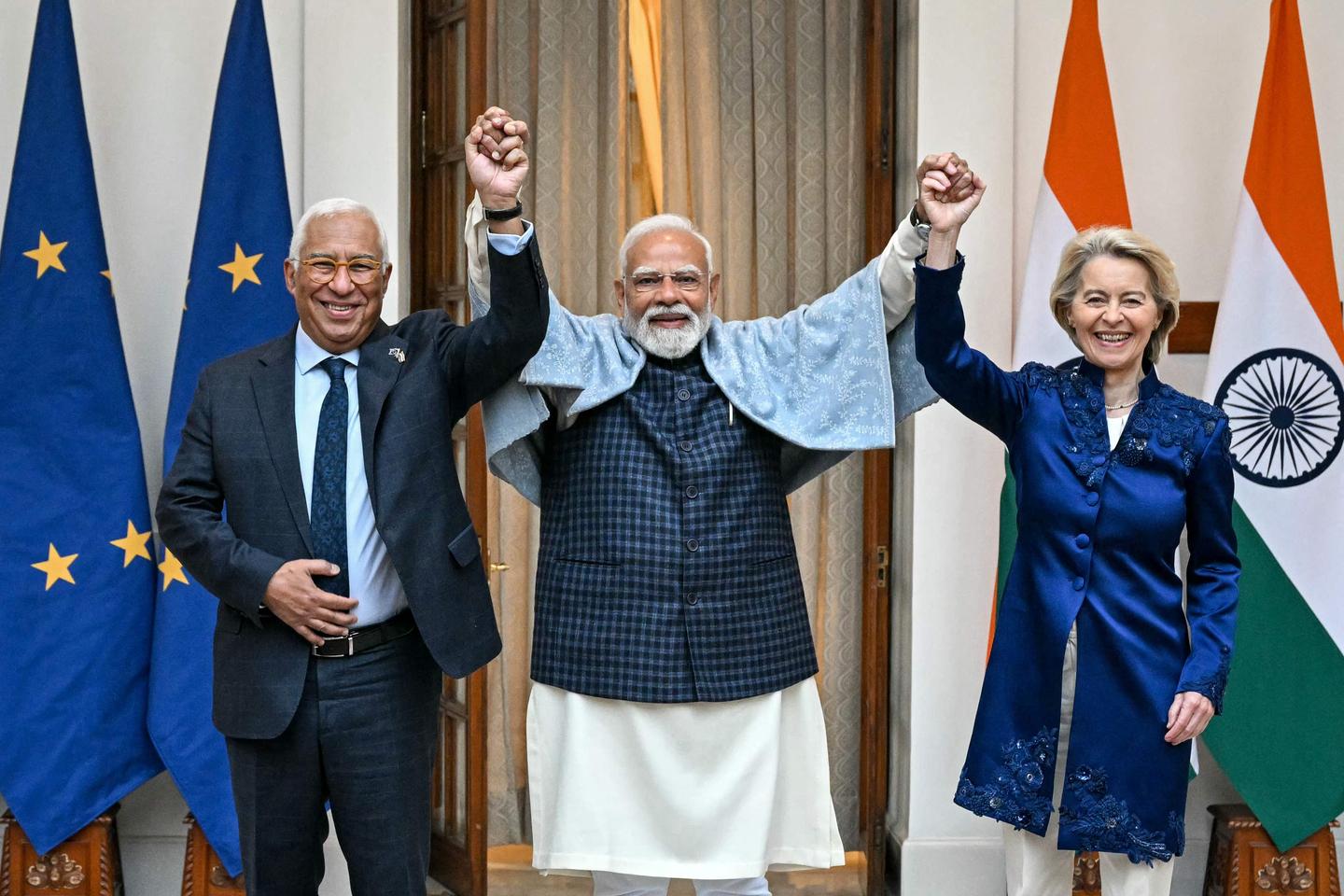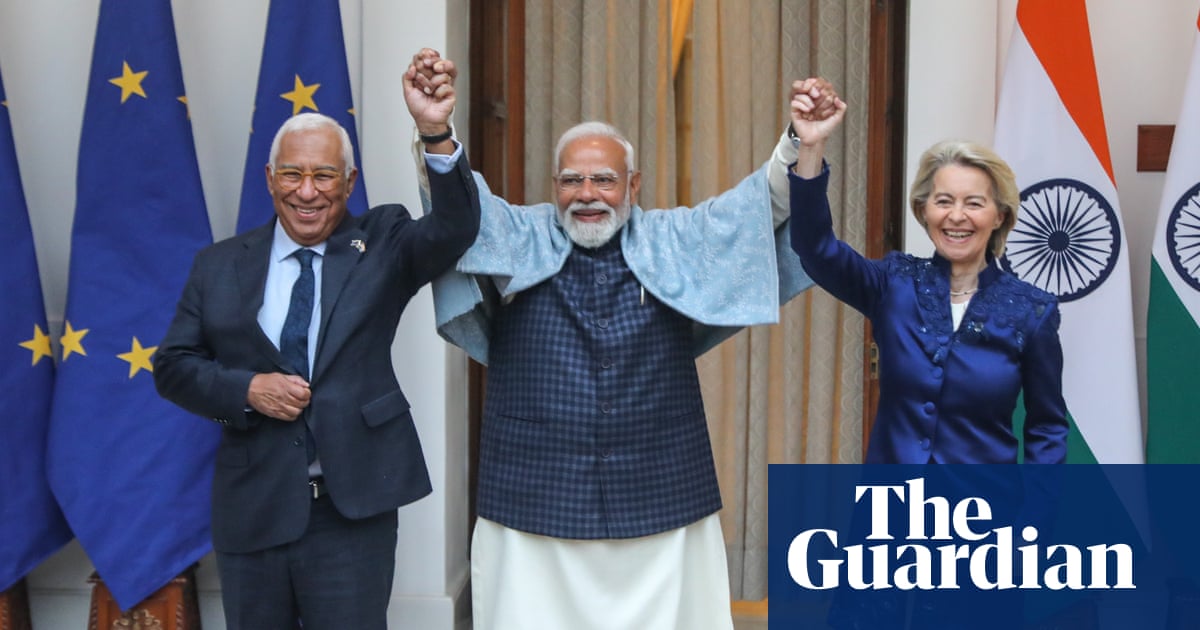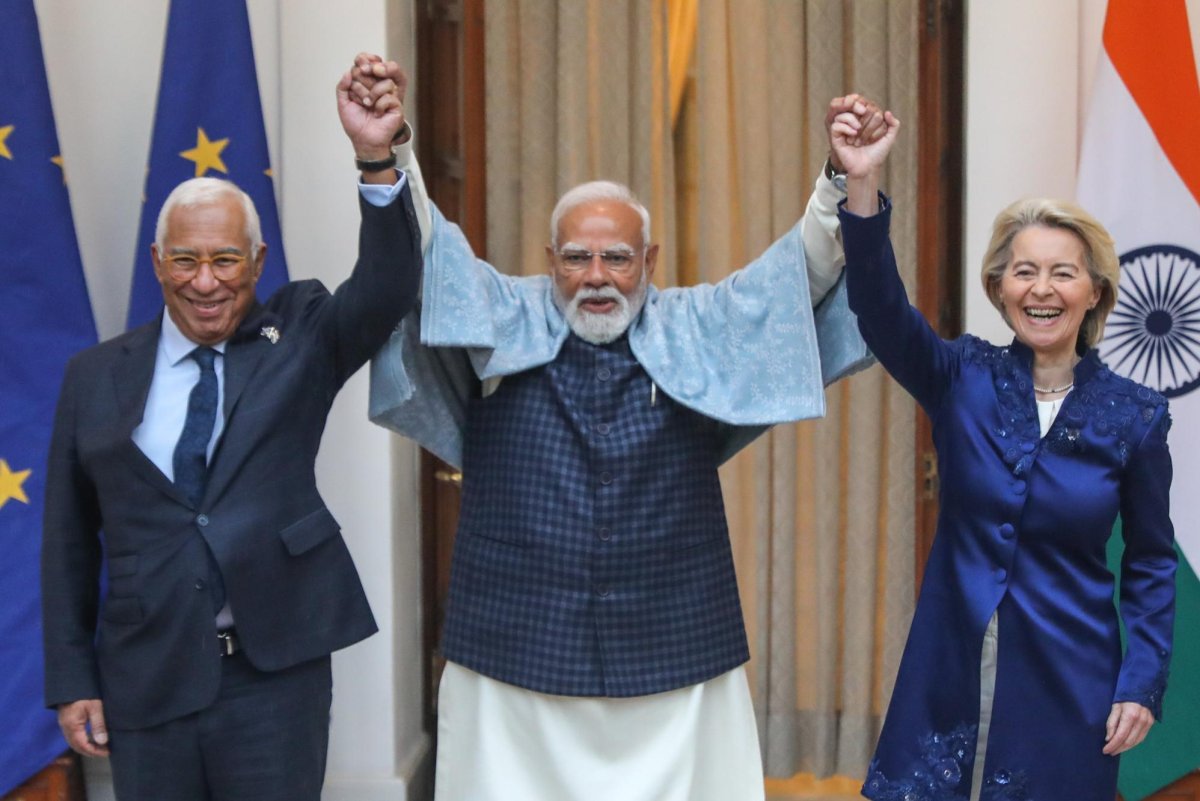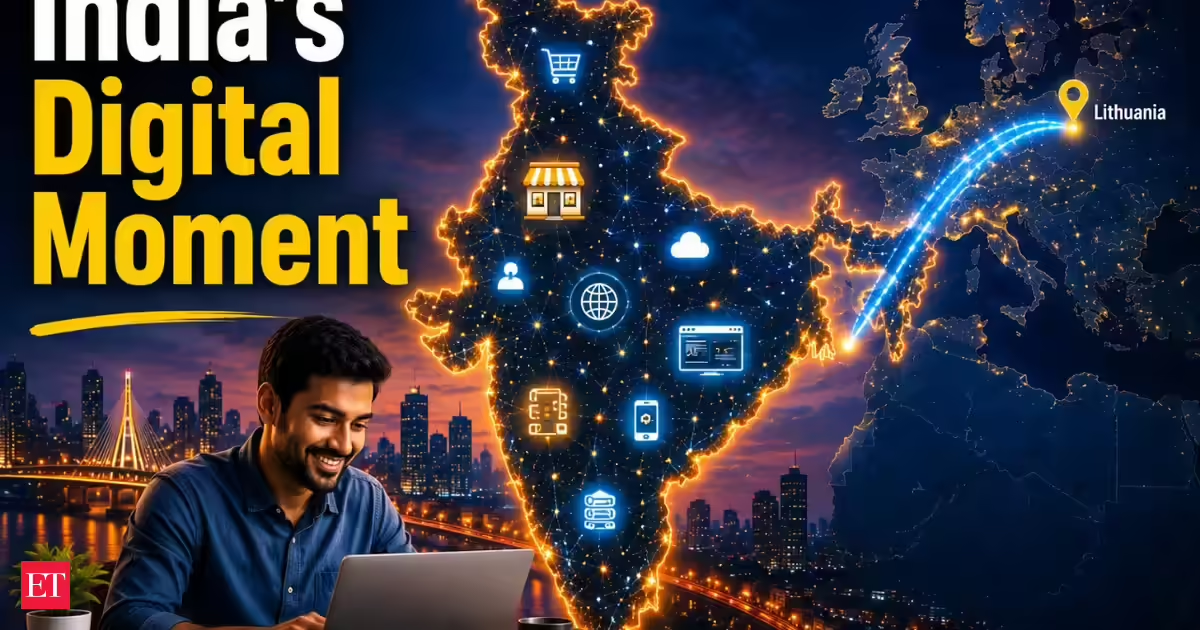
When European Commission President Ursula von der Leyen announced the conclusion of the India-EU Free Trade Agreement on January 27, 2026, she called it the "mother of all deals."Nearly two decades in the making, the agreement, the largest trade deal ever concluded by either side, covering €120 billion in goods trade and €59.7 billion in services, was framed as the moment European companies would finally get serious about India's 1.45 billion consumers.Also read: When Digital India meets a dead endBut the more immediate story is less about what the FTA unlocks and more about what it finds already waiting. India has over 57 million registered MSMEs, per the Ministry of MSME's 2024-25 Annual Report.Government programmes from Digital India to Jan Dhan have pushed connectivity, payments infrastructure, and smartphones deep into the economy. What they have not done, at scale, is give India's small business owners a functional online presence.For one company in Vilnius, that moment had arrived twelve years earlier.The market nobody was watchingHostinger, a web hosting and online presence platform bootstrapped by young Lithuanian entrepreneurs in 2004, entered India in 2014 with fewer than 1,700 customers. It did not wait for a trade corridor, a bilateral framework, or a government push. It built a data centre in Mumbai, integrated UPI and RuPay payments, added Hindi-language support, and priced its services in Indian rupees.ET OnlineMade for every Indian entrepreneur By May 2026, it had crossed one million Indian customers, making India its single largest market globally, nearly one in five of its 4.6 million active users worldwide, with 1.86 million websites hosted from the country alone.The company's India story has become something of an awkward reference point inside Europe's startup ecosystem: proof that the market was always there, and that most European companies simply were not looking hard enough.The 99 per cent who cannot code"Our goal from the start was to be beginner-friendly, to make anyone who wants to build a website, app, or anything else successful online," said Mantas, AI Tech Lead at Hostinger. "Probably 99 per cent of people in the world would not be able to do anything with code. That is the gap we are trying to close."In 2025, Hostinger launched Horizons, a no-code AI platform where a user describes in plain language, or by voice, what they want to build, and the system generates a live website or web application. It paired that with Reach, an AI-powered email marketing tool, and a suite of seven AI business agents covering SEO, legal advice, marketing, and sales, starting at $6.99 a month.Daugirdas Jankus, CEO of Hostinger, frames the India bet plainly. "We simply looked at where the internet was growing fastest, where the unmet need was largest, and where our model of affordable services could have the most impact," Jankus told ET Online."India checked every box. The majority of our Indian customers are first-generation digital adopters: solopreneurs, SMB owners, and side hustlers who need to get online quickly, without complexity and without paying a lot for it."He added that being profitable and bootstrapped, rather than VC-backed, gave the company the patience for long-term bets. "The companies that will win in India won't be the ones that arrive because a trade deal made it easier. They'll be the ones that truly understand the market."Europe's India playbook is still being written"The perceived complexity of India has kept many European companies away," said Gintare Verbickaite, CEO of Unicorns Lithuania. "But the companies that went in early and localised genuinely are the ones doing well."ET OnlineA bootstrapped startup that saw India's potential before the world did Lithuania's startup ecosystem, valued at €16.4 billion in 2025 and growing at six times the rate between 2020 and 2025, is the EU's largest fintech licensing hub, home to Revolut's full European digital bank and 248 fintech companies. It is now building the EU's first AI regulatory sandbox for companies developing high-risk AI products under the EU AI Act.Also read: India's brain-gain moment may be starting with a crack in the American dream"We have done it for fintech, and now our ambition is to become a hub for tech companies and tech founders broadly," said Diana Girdenyte, Strategist at Invest Lithuania. Her agency is in active conversations with Indian pharmaceutical manufacturers seeking European market entry and IT outsourcing firms setting up advanced functions for Western European markets.Between 2021 and 2025, 916 Indians took up senior positions in Lithuania, with numbers growing from 100 in 2021 to 221 in 2025.Beyond manufacturing, the FTA's implications extend into digital infrastructure and technology services, with European companies gaining access to India's 1.4 billion consumers while Indian companies gain technology, standards and market access that accelerate their global competitiveness.The FTA may now bring more European companies to that realisation. The market, as one bootstrapped startup from Vilnius figured out a decade ago, was never the problem.
While Europe negotiated FTA, this startup was already hosting India's internet economy
A new trade deal between India and Europe opens doors for businesses. However, companies like Hostinger from Lithuania already found success in India by understanding local needs. They focused on affordable, user-friendly online tools. This shows that early localization and market understanding are key to winning in India, not just trade agreements.
806 words~4 min read