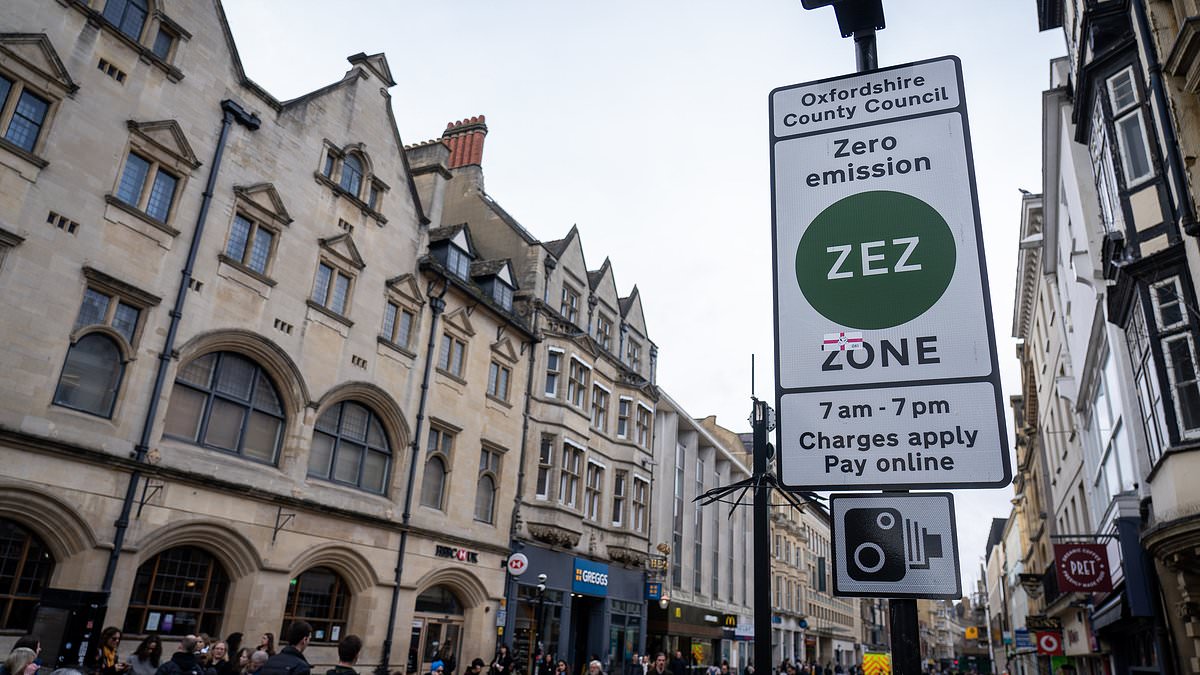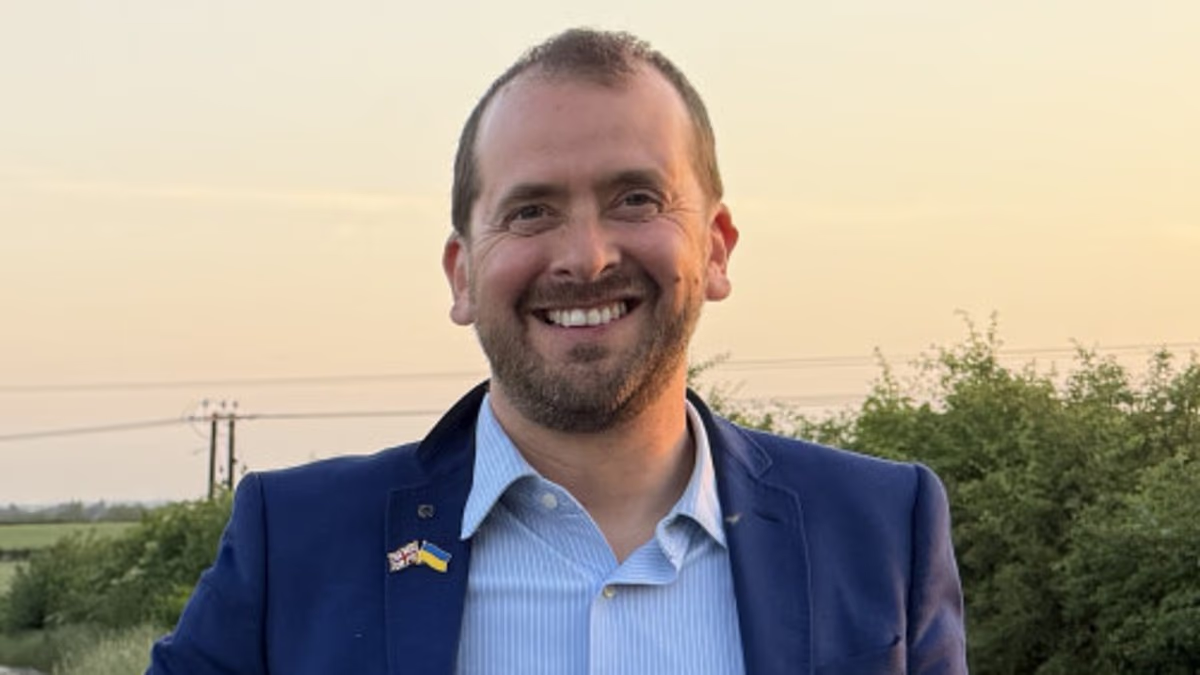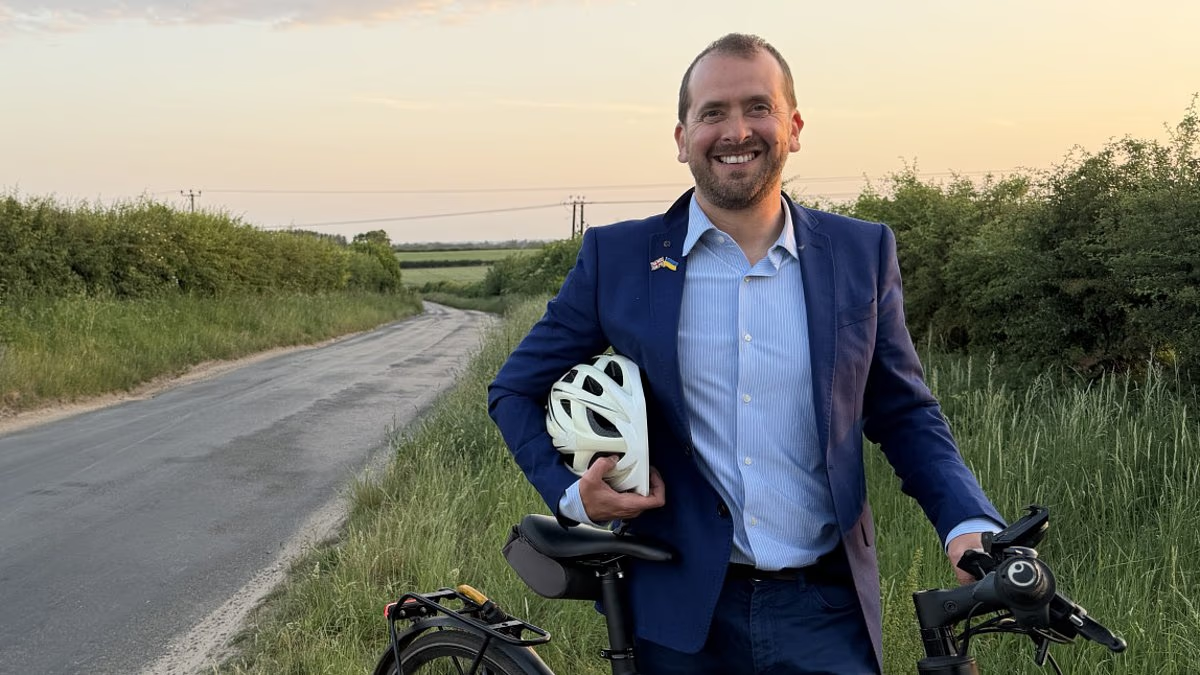
A Liberal Democrat-run council's 'gimmick' plans to introduce LTN-style 'quiet lanes' on some countryside routes have been described as an 'anti-car experiment'. Oxfordshire County Council has approved a pilot scheme that would see 'physical measures... such as gates and bollards' installed to stop through traffic. Identified roads that usually operate at the national speed limit of 60mph could be potentially reduced to 20mph, and 'quiet lane' signage would also be installed.While many quiet lanes already exist in the county, the council's new scheme will go beyond signage-based lanes, which the local authority describes as 'a step further than the existing Department for Transport policy'. Council leader Tim Bearder asked 'what's not to love' about the scheme, but it has sparked furious backlash from opposition politicians.Tory councillor Liam Walker, leader of the Oxfordshire Alliance Group at the council, said locals 'don't want gimmicks and anti-car experiments'.While fellow Conservative Thomas Ashby said he would not be backing the proposal. The shadow cabinet member for highways construction and repair said: 'Residents don't want ideological anti-car experiments; they want practical infrastructure that keeps traffic moving.' Leader of Oxfordshire County Council Tim Bearder has sparked backlash after announcing a pilot scheme for quiet lanes in the county The LTN-style routes would have 'physical measures... such as gates and bollards' installed to stop through trafficSeveral roads across at least six counties, including North Yorkshire, Suffolk, Cambridgeshire and Oxfordshire, are said to have been subjected to 'quiet lanes' rules.Introduced by New Labour, the Quiet Lanes and Home Zones (England) Regulations 2006 mean authorities can impose speed orders in relation to any designated road under the Act.They usually act as a way to 'encourage considerate use of the road', rather than restrict vehicles on rural roads. But the council said evidence from the Department for Transport on existing quiet lanes showed that signage alone 'have little to no influence on reducing traffic volumes or vehicle speeds'.In 2023, cyclist Ben Jacobs died when he was hit by a car on a designated quiet lane in Suffolk.Accountancy chief Thomas Gibbs was found not guilty of causing the father-of-three's death following a trial at Ipswich Crown Court in December last year. Horse riders have also derided quiet lanes as being 'pointless' as 'other than seeing a sign' there is no information as to what they actually mean. Cllr Bearder told the BBC that many people 'want to go out and enjoy the rural landscape but they're just put off by dangerous roads'.But Cllr Walker said: 'Just when you think Oxfordshire County Council have finally run out of ways to inconvenience motorists… they surprise us again.'He said that 'residents don't want gimmicks and anti-car experiments. They want sensible infrastructure that keeps our towns and villages better connected and traffic moving'.'It sometimes feels like County Hall sits around asking: "How can we make the school run, commute, and daily life just that little bit harder?" Mission accomplished', he added. Cllr Ashby said that he 'won't support this. There's been no engagement and we cannot have people's lives disrupted even more'. He said: 'West Oxfordshire is one of the most beautiful, rural areas in the UK, defined by historic market towns and stunning ancient villages. 'We sit on the edge of the Cotswolds, and because we live in a genuinely rural community rather than a city, driving isn't a luxury, it's a daily necessity for most of us.'Edmund King, the president of the AA, thinks Oxfordshire council's plans to cut off roads under the 2006 act go further than the initial intent of the scheme. But he said the AA supports and understands the original concept of quiet lanes. He said: 'If these lanes are well signed, they are generally also understood and respected by drivers. 'Most weekends I take to quiet lanes and bridleways in Hertfordshire on a bike wearing an AA cycle helmet. In my experience, most drivers respect these lanes and do give priority to cyclists, walkers, and horse riders. In 2023, cyclist and father-of-three Ben Jacobs died when he was hit by a car on a designated quiet lane in Suffolk 'The original concept was not to shut these lanes to traffic but to make it clear that drivers should slow down and respect the rights of walkers, cyclists or horse riders.'Locals have also raised concerns about the introduction of quiet lanes, with a farmer, Steve, worried about machinery which requires access to certain lanes.'I just think it's madness - you can't just close roads to vehicles when you've got HGVs delivering to and collecting from farms,' he said.The council added, however, that HGVs might be required to take 'an alternative and more appropriate route' while also clarifying that they will not be 'cut off' from their destination.Two pilot Quiet Lanes projects were introduced in Norfolk and Kent in 1998 as part of a Countryside Agency initiative responding to a lobbying campaign by Campaign to Protect Rural England.Their purpose was to give precedence to those riding, cycling or walking as well as local access over through or fast traffic, Mr King elaborated.He believed they work 'well', adding that most motorists respect these lanes and give priority to horse riders, walkers, and cyclists - in his experience.'There may be some exceptional cases where motor vehicles could be restricted without compromising access to farms, fields or homes, but these are likely to be few and far between,' he said.'As someone who walks, cycles, and drives and uses the current quiet lanes regularly, I think they work well.'Of the Oxfordshire scheme, Rebekah Fletcher, the county's Cabinet Member for Transport Management, said: 'Quiet lanes are about making sure local roads work for the communities that live there, not as cut-throughs for traffic they were never designed to carry.'This new approach will help us to prioritise walking, wheeling, cycling and horse riding, and give us a clear and consistent way to provide quiet lanes where there is strong local support.'A Local Government Association spokesperson said: 'Councils recognise the impact that traffic has on their different communities and work hard to tackle it, working with communities to deliver the best results.'Residents also expect local government to deliver cleaner air and safer streets in the places where they live and work, in order to improve quality of life in their locality, and to support more affordable means of travel. Their local transport plans will set out how they intend to achieve this.'
Fury at Oxfordshire council bid to 'ban' cars on rural roads
Oxfordshire County Council has approved a pilot scheme that would see 'physical measures... such as gates and bollards' installed to stop through traffic.
1,065 words~5 min read