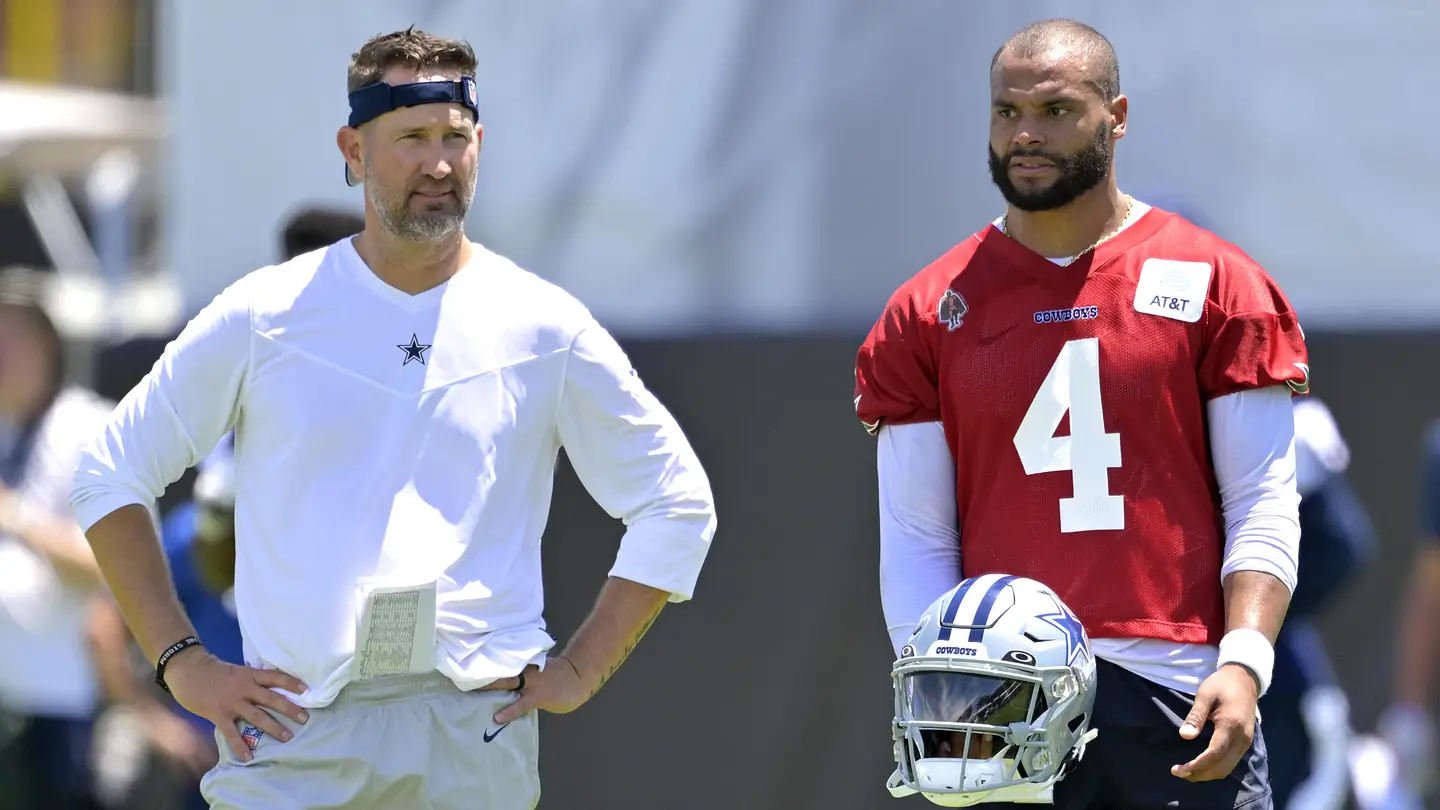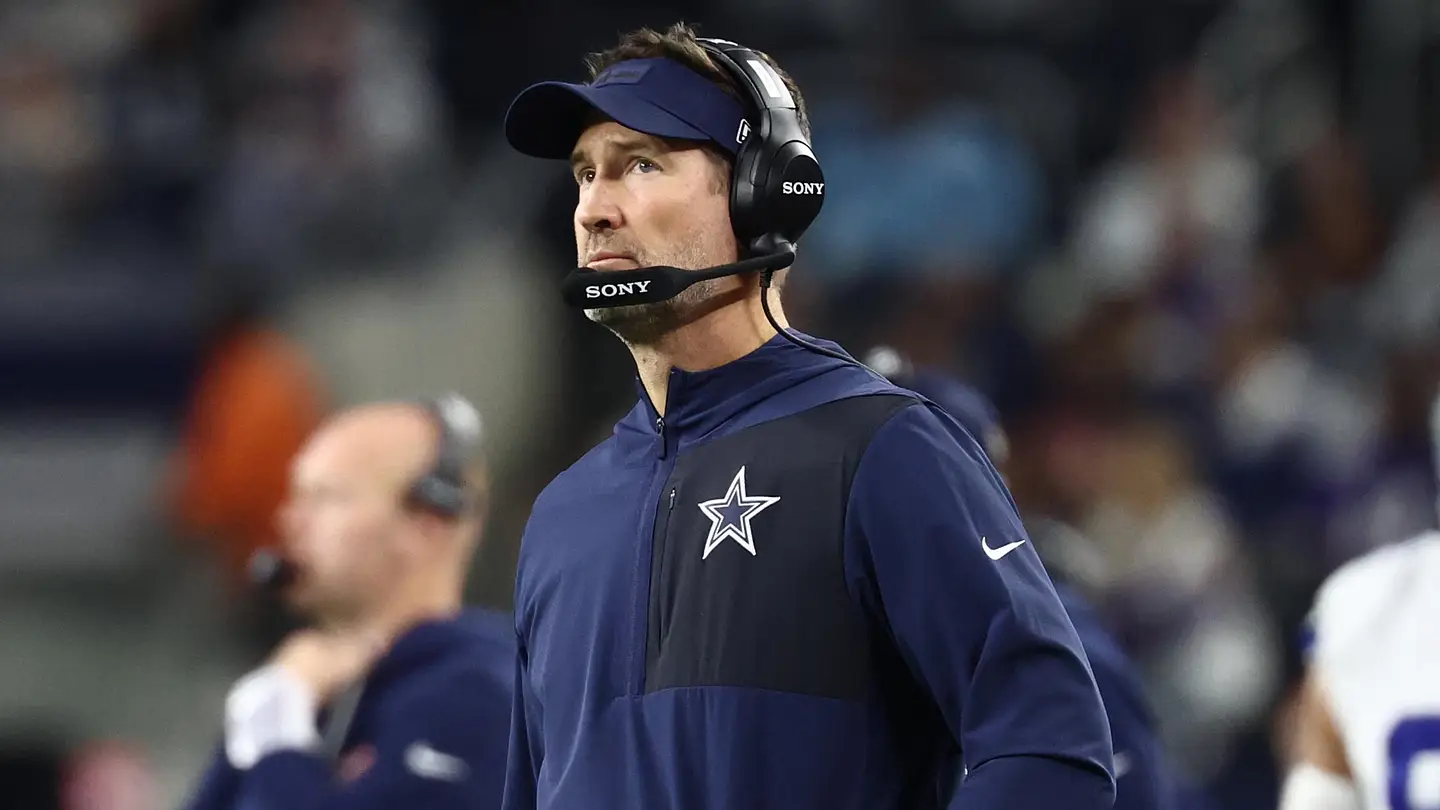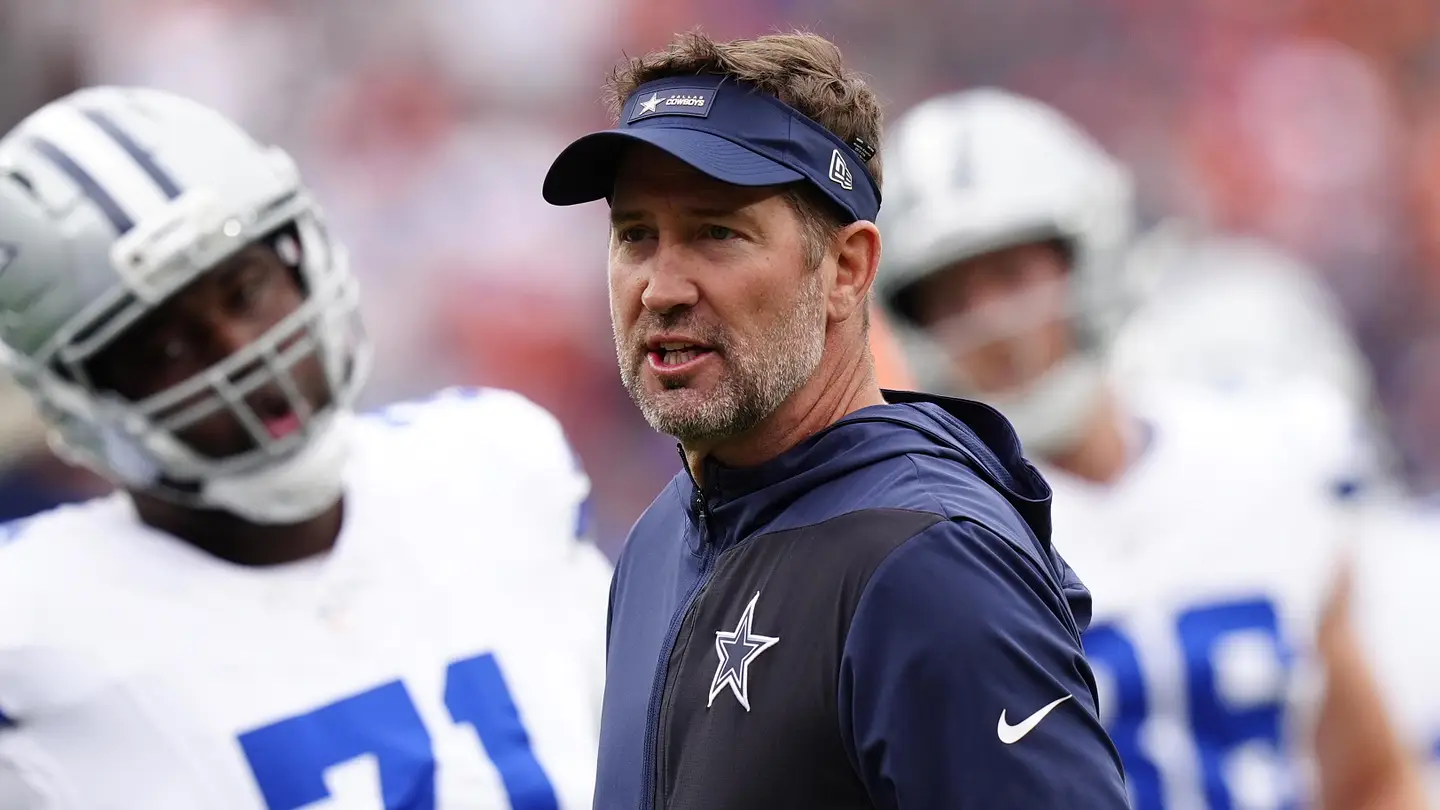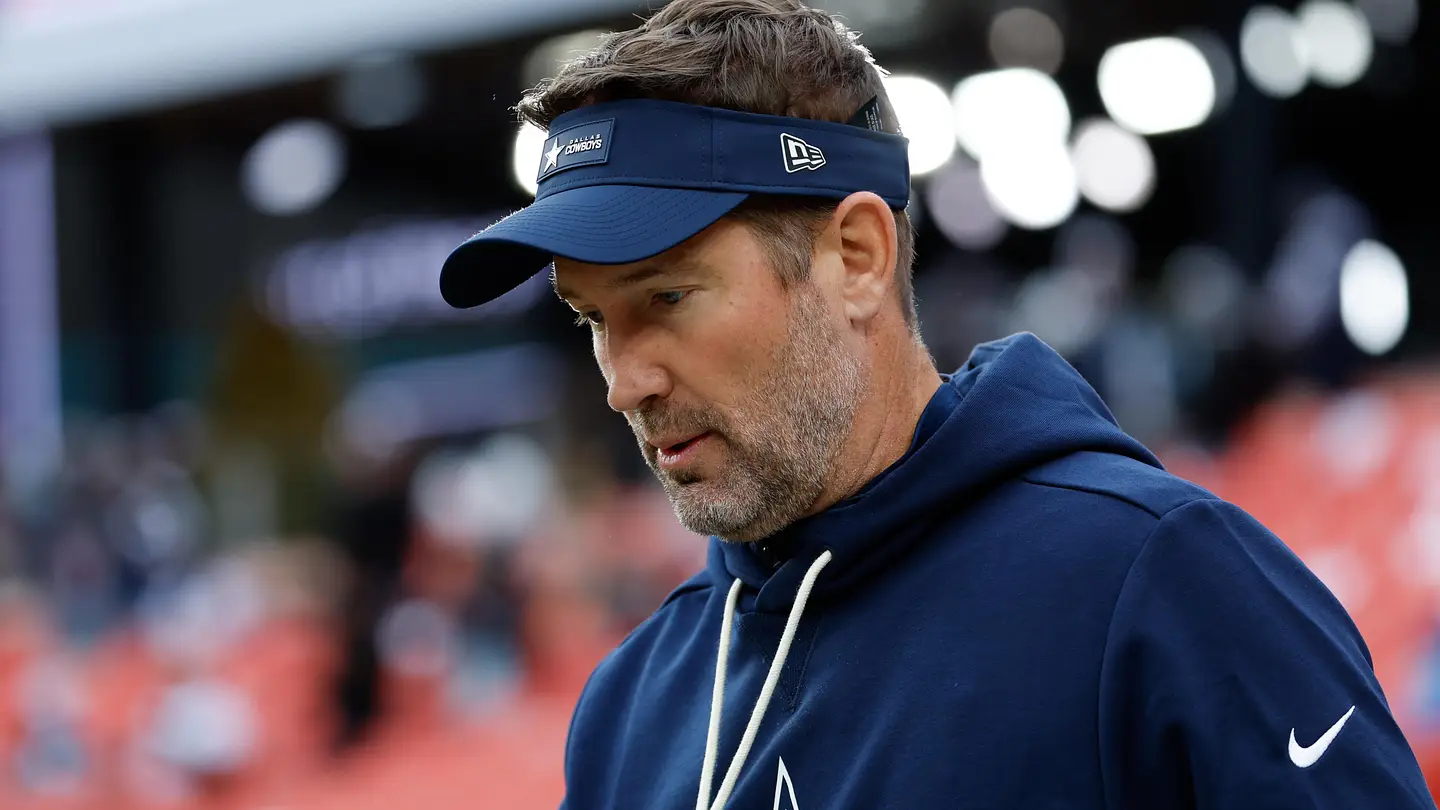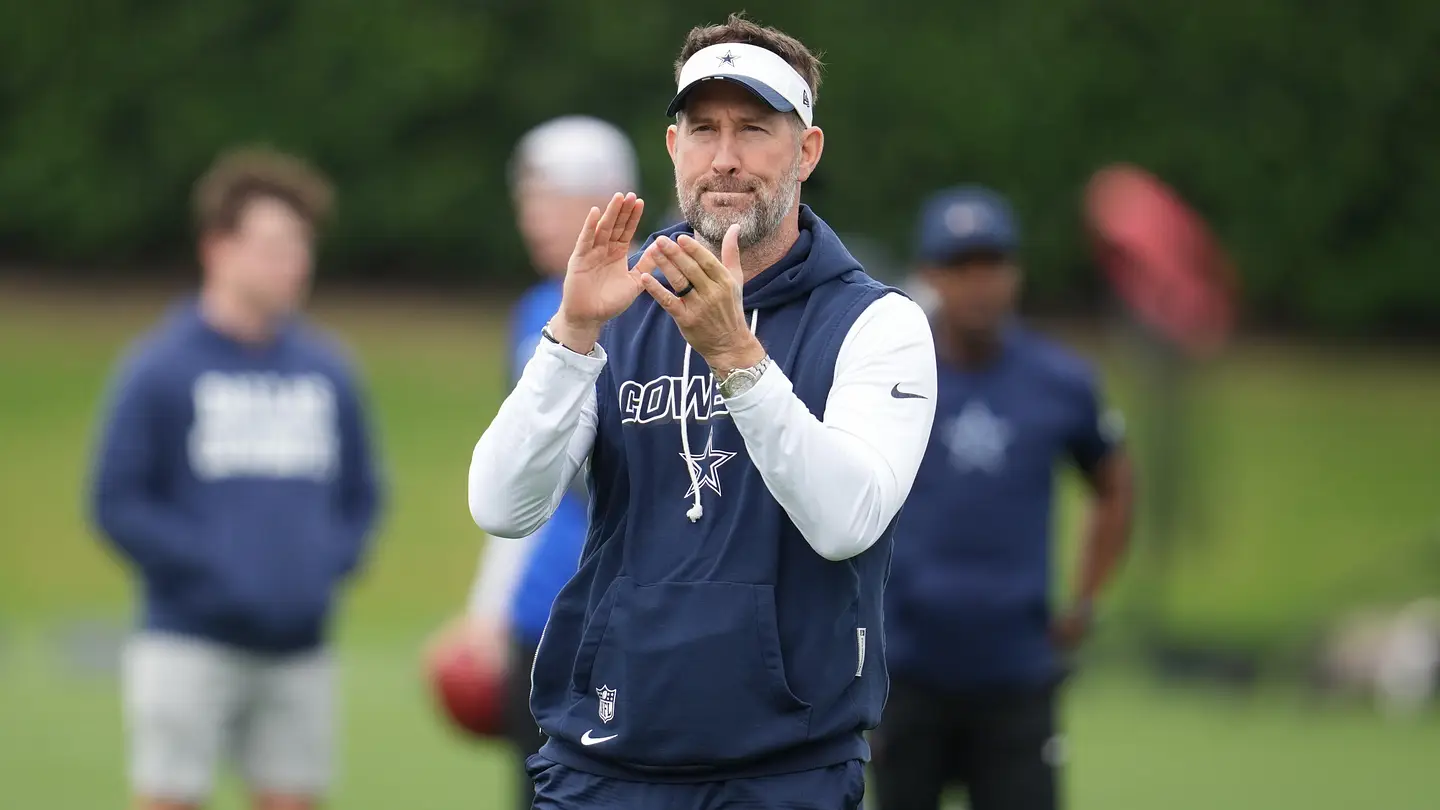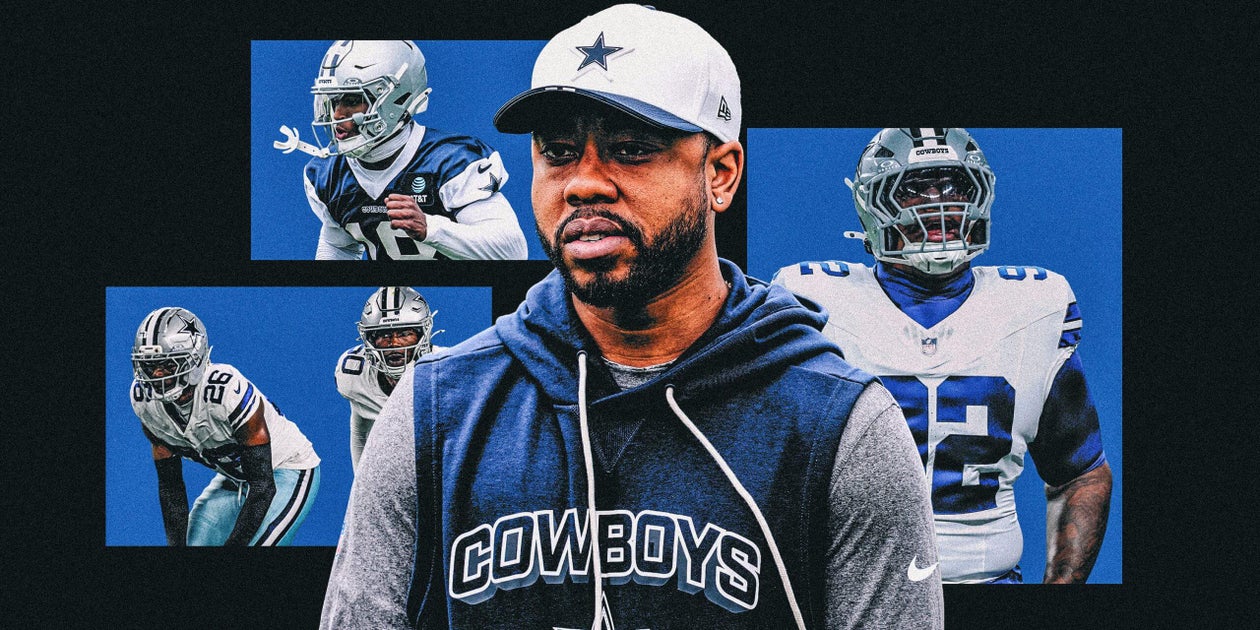
Dallas Cowboys head coach Brian Schottenheimer deserves some praise for putting his team on the right track in his first season, when things could have fallen off the rails after All-Pro defensive end Micah Parsons was traded in late August. Hiring former Arizona Cardinals offensive line coach Klayton Adams as his offensive coordinator was one of the best hires last season, and his run game was one of the reasons that the Cowboys offense was so prolific.However, hiring Matt Eberflus as defensive coordinator may have seemed like the “safe” choice, but it didn’t work out. Eberflus has experience and success in the league as a defensive coordinator, but his lack of creativity and scheme diversity made a unit that lacked talent predictable, and ultimately, it became one of the league’s worst defenses.Schottenheimer will try to rectify that mistake with the hire of Christian Parker, who has a distinctly different resume than Eberflus’. Parker has never called plays before, but he’s a young coach who has worked under Vic Fangio, the originator of the league’s hottest defensive trends. Parker will be tasked with turning around a defense that ranked last in defensive DVOA, an efficiency metric that factors in strength of schedule.Though Eberflus isn’t from the Pete Carroll tree, he called Cover 3 at one of the highest rates in the league, didn’t blitz and didn’t mix his personnel usage.On this chart, you'll notice that Fangio's Eagles are just ahead of the Cowboys in defensive diversity, which measures how often a team switches up its coverages, personnel, and blitzes. Fangio has never been a high-volume blitzer, and last season, he called more Cover 3 than he usually does. The difference is how he disguised his coverages, changing up the rules of coverage and rotating the safeties from depth (prioritizing taking away deeper passes).The Eagles disguised at the league's highest rate, while the Cowboys ranked 27th. Parker will get the Cowboys to commit to disguising. Also, they'll likely diversify their coverages more than Fangio did last year because they don't have the corners to hold up in single-high coverages. The Eagles have a shutdown corner in Quinyon Mitchell, but they still had issues defensively when teams picked on their second corner.The Cowboys' biggest weakness is at corner. DaRon Bland's best trait is his ability to create turnovers, but on a down-to-down basis, he gives up too many explosives. He'll now play in a defense that is predicated on stopping explosives. He's going to have to make massive adjustments to fit into Parker's scheme. Bland, in 12 games played, allowed the fifth-most yards in zone coverage among corners last season.Cobie Durant, who is expected to start opposite Bland, signed with the Cowboys after the Rams chose not to re-sign him. The Rams' corners were exposed in the playoffs last season, so they prioritized upgrading the position this offseason.Second-year corner Shavon Revel Jr. could be in the mix to start. Revel Jr. was a highly touted prospect before tearing his ACL in the final season of his college career. He played in seven games last season but didn't look fully recovered and wore a brace all year. He offers a higher ceiling than Bland and Durant if he is healthy.A realistic goal for the Cowboys this year is to look like the Rams defense last year. The Rams had to play a lot of nickel and dime personnel and keep two safeties deep to protect their corners. Their front credibly defended the run, but whenever they were forced to play base defense (four defensive backs on the field), they gave up explosive plays at a high rate. They were outmatched when facing a team with a lot of receiving talent.Despite their issues at corner, the Rams finished fourth in DVOA during the regular season. That might be an unrealistic jump to expect from the Cowboys, but if they can at least be an average unit, their offense will be good enough for them to win a lot of games.The biggest question for the Cowboys is: Have they done enough to shore up their run defense? They ranked 31st in defensive rush success rate (54.3 percent) in 2025, and this season, they'll be challenged to defend the run from light boxes. Their run defense greatly improved after trading for defensive tackle Quinnen Williams in Week 9. They ranked 16th in defensive rushing success rate (60.3 percent) from Weeks 9 to 18.This offseason, the Cowboys traded for defensive end Rashan Gary, who has been an inconsistent pass rusher but has the size and strength to set the edge against the run. They also traded for linebacker Dee Winters, who isn't a star, but he's an upgrade and could start next to DeMarvion Overshown.Third-round pick Jaishawn Barham should have a shot to win a starting spot, too. Barham fits the mold of a Fangio linebacker. Like Zack Baun, Barham has the versatility to line up at edge, which is important because one of the main tools that Fangio uses to defend the run from light boxes is to stem his fronts, or in other words, shift the front right before the snap, which can cause confusion or miscommunication in the blocking scheme.In the diagram above, the top images show the initial front the defense shows before shifting into the final look at the bottom of the images.On this play, the Eagles initially showed a 3-4 front with edge Jalyx Hunt lined up on the strong side in a two-point stance with Baun lined up off-ball behind him.Right before the snap, Hunt shifted inside and got into a three-point stance, while Baun moved up the line of scrimmage to play the edge. The defense formed a 6-1 front.The Giants ran a toss play. Hunt and Baun occupied the tight ends. The blocking scheme required the guard and tackle to double the defensive tackle and then kick out to Nakobe Dean, but it was a difficult task and angle to get a blocker on Dean on a toss. Dean was able to get to the running back unblocked.The techniques the Cowboys defensive line uses will be different from what Eberflus and even Dan Quinn asked. They won't be shooting gaps as often as they did. Instead, they'll play more gap-and-half technique, meaning they'll play a more controlled style and attempt to control a primary gap and then fall back to a secondary gap. Because they won't always have an extra defender in the box, there will be times when players must control more than one gap. This is one of the reasons the Cowboys traded defensive tackle Osa Odighizuwa, who was more of a gap shooter.The skeleton key to making Parker's defense work fell into Dallas' lap in the first round when Caleb Downs slid into position for the Cowboys to draft him. With the Eagles, Cooper DeJean took an unexpected fall in the draft and became a pivotal part of the defense as a nickel who is lights out against the run and a savant in the passing game. DeJean is a corner with high-level man skills who can play in the slot. In base (four defensive backs) packages, DeJean played outside corner for the Eagles — he'll play safety in base next season.Downs is a safety in base who will play in the slot in sub-packages, which will be called on a majority of snaps. He didn't play much man coverage, but that doesn't mean he can't do it. Modern coordinators shape their defenses around their nickels' skill sets, so it'll be interesting to see what direction Parker takes his unit, but it should be very zone-heavy. Fangio would play man in high-leverage situations, but we'll see if Parker will trust his defensive backs to call plays similarly.We know that Downs plays the run with physicality, and he'll essentially be a third linebacker. His ability to take on blocks and bring ball carriers down will help the Cowboys defend the run with light boxes. We also know that he has a phenomenal understanding of how opposing passing games try to stress defenses, and he will be a menace in zone coverage.Here's an example of the Eagles playing Cover 3 from their two-deep alignment. Both safeties start between the hash and the numbers and don't rotate until the ball is snapped. The safety to the strong side (three-receiver side) rotates to the middle of the field to play a deep third, while the safety to the weak side doesn't drop and plays the weak "hook" zone. Depending on the call, he can also have different reads and play different assignments in Cover 3 variants. One of the most difficult parts about reading a Fangio defense is figuring out what the weakside safety is doing. It'll be Jalen Thompson or Malik Hooker in this role for the Cowboys.On this play, the Cowboys tried to run a "sail" concept, but the Eagles played Cover 3 with match technique and had both Baun playing underneath and DeJean dropping there from the flats as well.The commitment to disguising and showing your hand as late as possible creates uncertainty, so even when the defense is playing "vanilla" coverages, quarterbacks can't be sure until they see the safety rotation. Even then, it's not always black and white.On this play, the Eagles again showed two-deep, but Mitchell, who was lined up on the weak side (one-receiver side), showed press coverage. However, quarterback Justin Herbert couldn't be sure he had a one-on-one because of the presence of the safety to his side. On this snap, the weakside safety would "poach" or look to help on the strong side, but Hebert couldn't tell from the pre-snap alignment.After the snap, the defense on the strong side (three-receiver side) dropped into a Cover 2 zone. DeJean played a match technique and had to run with slot receiver Ladd McConkey, who has 4.3 speed. On the other side, Mitchell had a one-on-one with the weakside receiver.Herbert correctly tried to attack the seam, but DeJean had the route smothered and nearly picked off the ball. We'll see if Downs can cover like DeJean and whether the Cowboys have a corner whom Parker can trust to play one-on-one as Mitchell did on this play. If not, the Cowboys might have to play more full-field Cover 2. It makes passing windows a lot tighter when you can have the weakside safety play poach coverages like in the example above."This is our defense. I don't want it to be called the Eagles defense or Vic (Fangio's) defense," Parker said. "This is going to be ours. We've been really intentional about going about that process from the language that we use, the workflow that we have and everything else. It's been real fun."There are tenets of the Fangio defense that Parker will bring with him, but he can't take a cookie-cutter approach. How will they adjust if they can't stop the run from light boxes? What are his answers if they are having issues with their outside corners? Also, one of Fangio's best traits is his ability to game plan and alter his defense when necessary. We'll see if Parker can do those things when it's his show to run.The Cowboys could have more than five new starters on their defense, and Parker got a lot of his personnel wishlist in the draft, but they have a long way to go to improve from being one of the worst units last year. I don't expect them to be a top-10 unit off the bat, but if Parker can get them to just average, this could be a very dangerous Dallas team.
Inside the Cowboys’ massive defensive overhaul after the Micah Parsons trade
The new coordinator learned under Vic Fangio and will try to fix a group that ranked last in defensive DVOA in 2025.
TL;DRAI
Dallas replaced DC Eberflus with Fangio disciple Christian Parker after finishing last in defensive DVOA the season Parsons was traded. His disguise-heavy scheme must fix corners ranked bottom-5 in zone and a run defense that sat 31st in rush success rate.
1,936 words~9 min read