Kim Hoo-ran
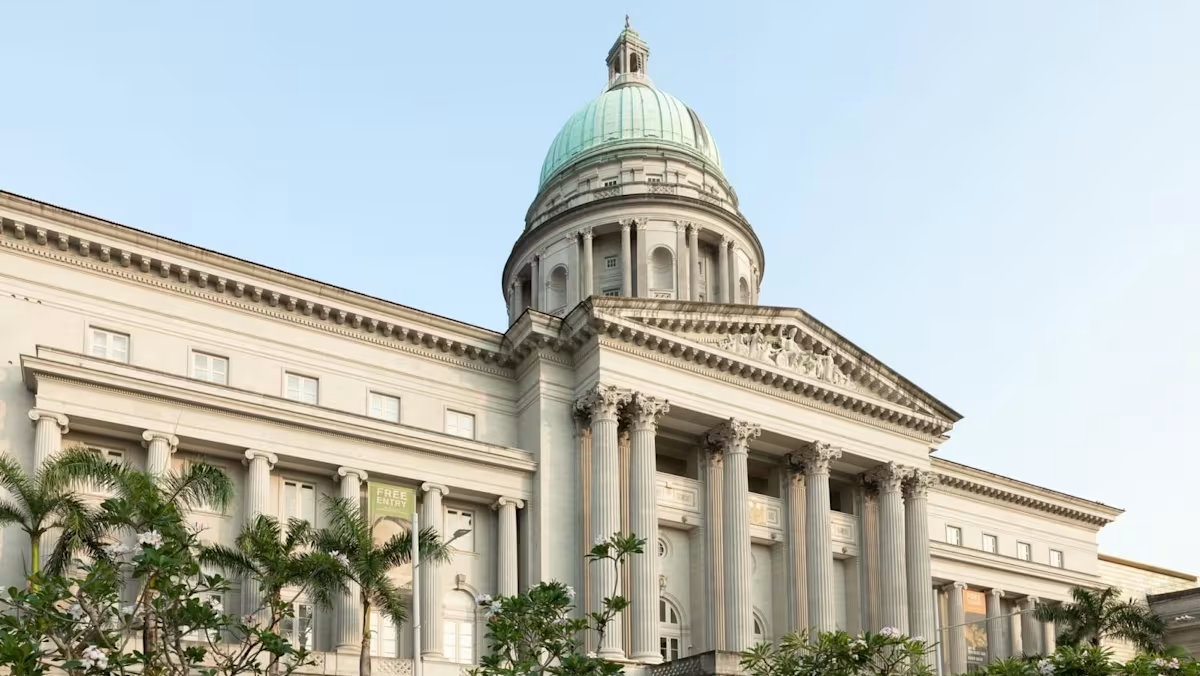
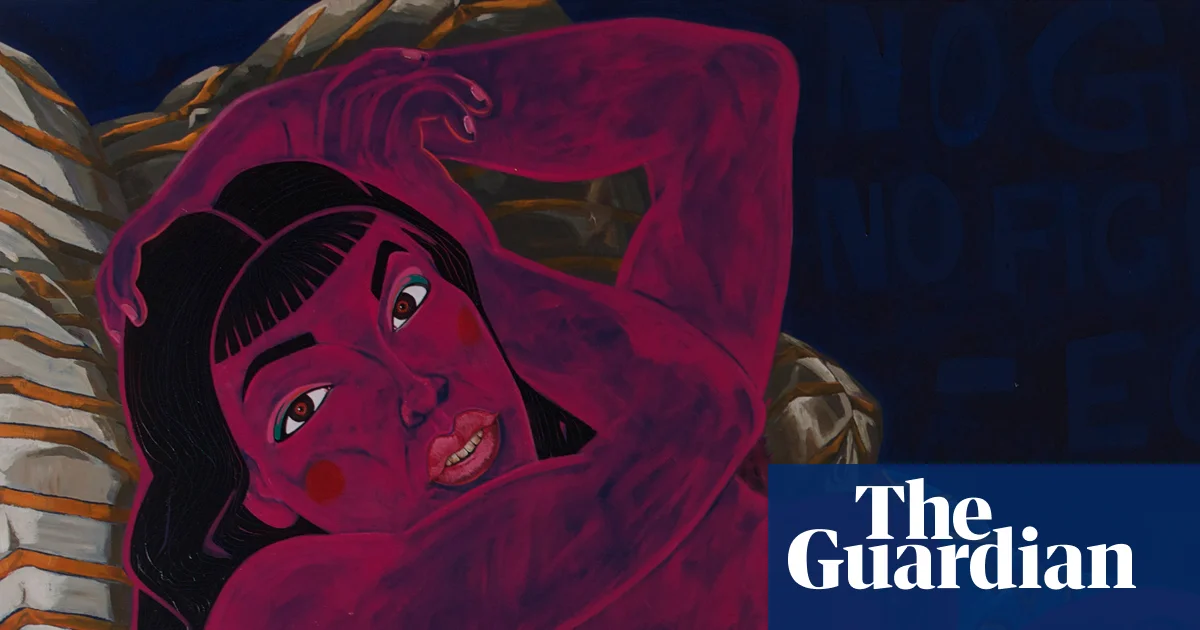
'Passion is Volcanic' explores sexuality in Southeast Asian art in age-restricted, photo-banned show Installation view of "Passion is Volcanic: Desire in Southeast Asian Art" at National Gallery Singapore (NGS) SINGAPORE — The entrance to the exhibition tucked away on Level 4 of the sprawling National Gallery Singapore is closed, its doors covered in what appears to be red tape printed with the exhibition title: “Passion is Volcanic: Desire in Southeast Asian Art.”It is an effective marketing ploy; when something is prohibited, people often desire it more.As you open the door to the museum’s first-ever age-restricted exhibition (rated 18), a guide gives you a cursory look to check if you are eligible for admittance. Visitors may be asked to show their IDs to confirm their age.Running through Aug. 30, it brings together over 70 works spanning the pre-modern to contemporary. About half of them come from National Gallery Singapore’s own collection and the rest from regional collectors. Each piece was selected to offer a new perspective on Southeast Asian art: revealing how pre-modern cultural narratives continue to shape contemporary artistic practices around sexuality and the human condition.That an exhibition with such a title could open in Singapore, at a government institution no less, is a cause for wonder. In this island state of multiple ethnicities where religious and racial harmony is one of the foremost values and goals, anything seen as rocking the boat is generally frowned upon.“It is still strict,” said the show's co-curator Adele Tan, speaking with The Korea Herald at National Gallery Singapore on May 15.Realizing the show involved determined and strategic calculations about what is considered appropriate, according to Tan.“There are some gambits that have been constructed so that (the exhibition) can land well with the audiences,” she added.Tan did not intend for the exhibition to be provocative or sensational. “The intention was actually much more, I think, scholarly and curatorial, which was ‘Why is it for all of the works in the collection, could we not have a frame to talk about the body, to talk about sex and desire?’ And then also to talk about beauty and love that are very fundamental concepts to art,” Tan said.Most of the work on show had never been exhibited despite being part of the gallery’s collection. Installation view of "Passion is Desire" at National Gallery Singapore (NGS) Highlighting exhibits on loan from the Asian Civilization Museum in the first section of the exhibition, “Asian Mythos and Ritual,” Tan said, “I was also making a civilizational argument that it’s actually part of daily life.”Commenting on the age restriction, Tan said, “Maybe it’s just a necessary step in the confidence-building of the larger system or bureaucracy because I think we just have to be candid that cultural liberties aren’t always a given.”The exhibition title, “Passion is Volcanic,” is drawn from well-known China-born Singaporean artist Liu Kang’s 1953 essay, “Trip to Bali,” in which he likens the passions of Balinese women to volcanoes. More significantly, the artist noted that erotic forms of desire could act as creative forces for questioning and change. Installation view of "Passion is Volcanic" at National Gallery Singapore (NGS) Taking photos is not allowed at the exhibition, effectively taking the show out of the social media sphere where the right photos can tell not only a thousand words but also draw thousands.“People are almost experiencing art online, but with this show, you’re going to have to experience it here,” said Kathleen Ditzig, co-curator of the show.Tan was even more optimistic. “It actually turned out to be kind of a good thing because people just have to be in the space and not be distracted. If they come with friends, they can have that conversation in a cushioned enclosure with Pinaree’s ‘Noom-Nom’ cushions,’” said Tan.The final work in the exhibition, “Noon-Nom,” an interactive sculptural installation by Thai artist Pinaree Sanpitak, invites visitors to remove their shoes and interact with the large breast-shaped cushions.Presented in three sections, the exhibition opens with “Asian Mythos and Ritual,” which explores how the erotic has been embedded in spiritual and cosmological narratives. Here, “Vajradhara and Prajnaparamita,” a small sculpture from the 14th to 15th century, shows how the erotic has long been embedded in spiritual and cosmological narratives. "Scene in Bali" (1953) by Liu Kang (NGS) The “Conventions of the Erotic” section includes “Scene in Bali” (1953) by Liu Kang — a leading figure in the Nanyang school, a movement that sought to combine the artistic idioms of East and West in dealing with Southeast Asian subject matter — shows naked women bathing in a river in a lush, green landscape in a composition reminiscent of East Asian painting.The concluding section, “Public Arenas/Private Interiors,” explores how artists bring intimate and often marginalized experiences into the public discourse. Here, Singaporean artist Lavender Chang’s “Dissolving into the Same Breath” (2024), a series of three blurred time-lapse photographs of couples in intimacy, created to market Viagra in China, catches fleeting moments in a voyeuristic glance, laying bare the very private. "Dissolving into the Same Breath" (2024) by Levander Chang (NGS) The section, which also highlights the presence of diverse voices in Singapore’s art history, has an entire corner dedicated to Grace Quek. Quek won instant notoriety as Annabel Chong, an adopted performance persona, in the 1995 film “The World’s Biggest Gang Bang.”Rather than treating her as a provocative porn star, the exhibition places Quek’s gender-challenging act in the mode of performance art. Entrance to "Passion is Volcanic" exhibition at National Gallery Singapore (NGS)