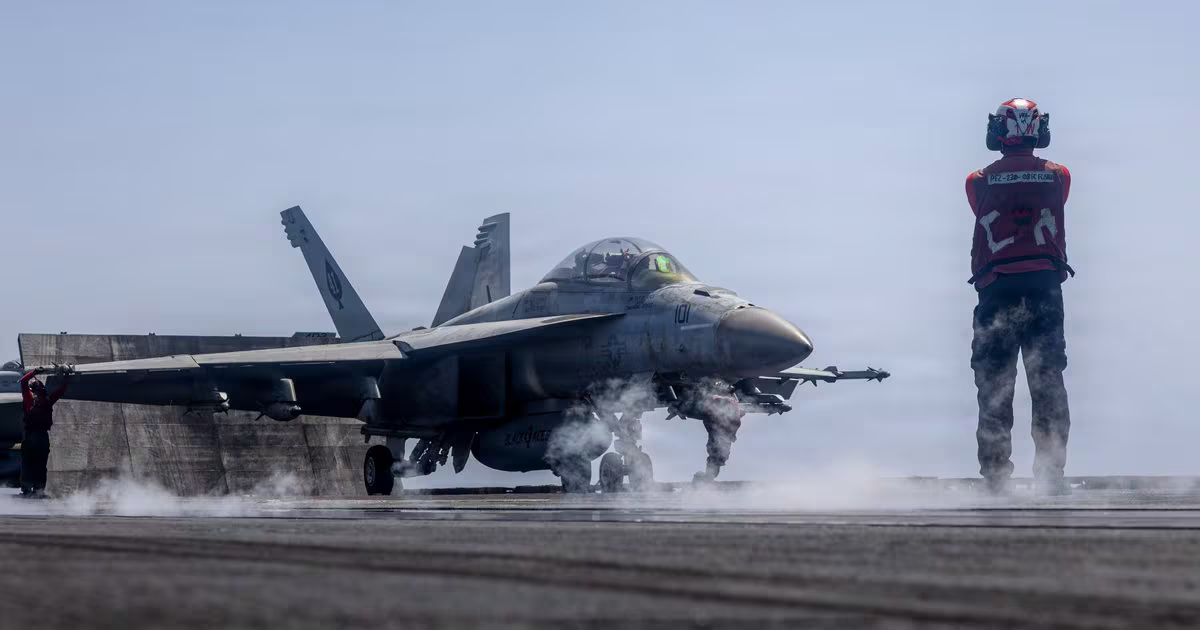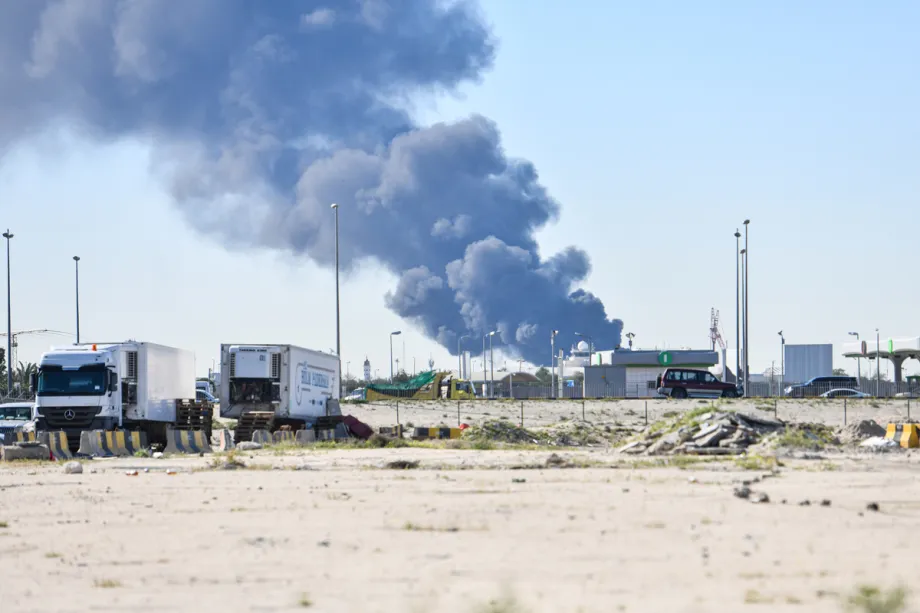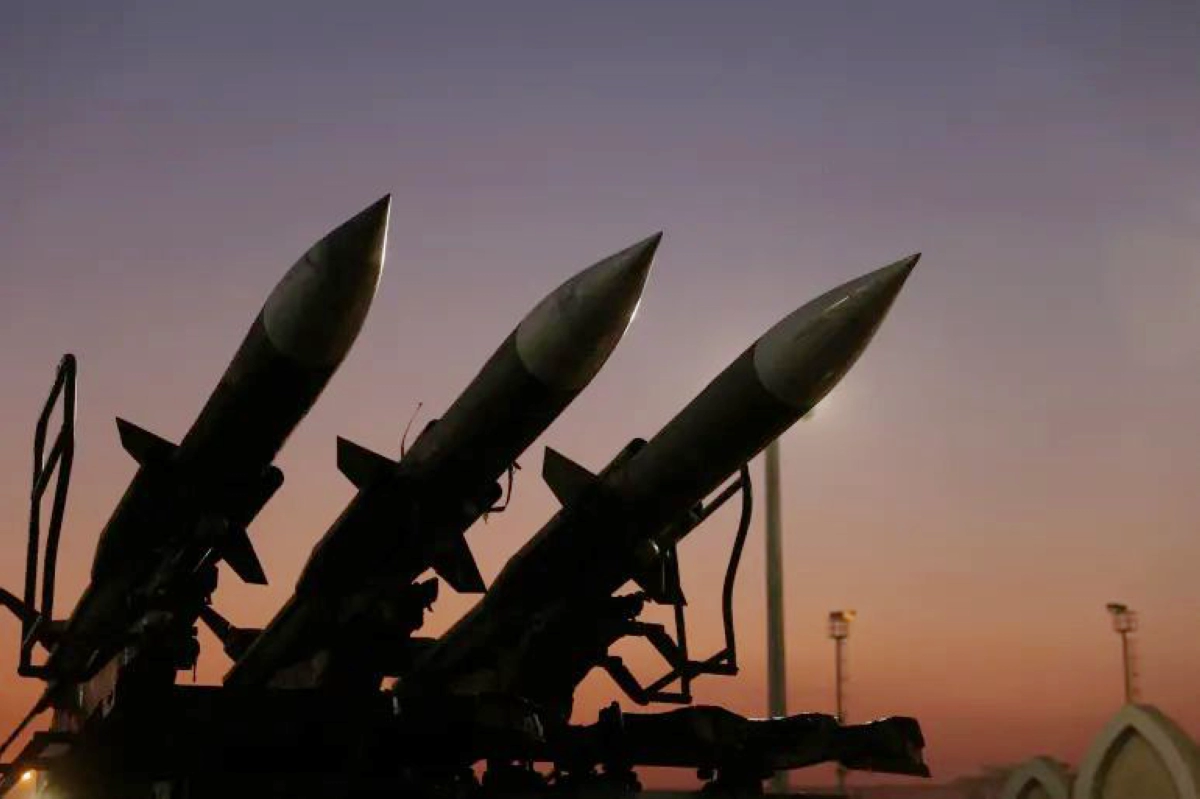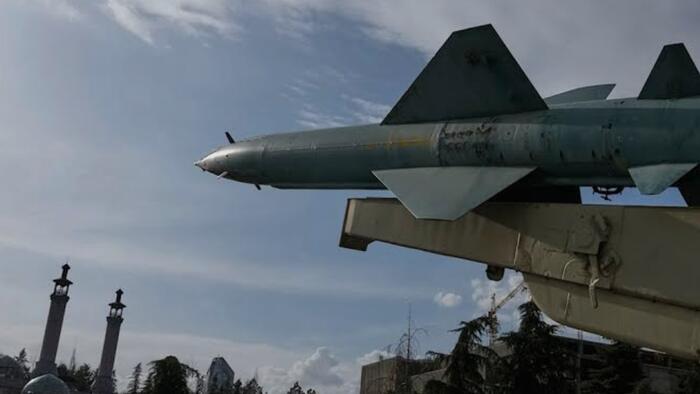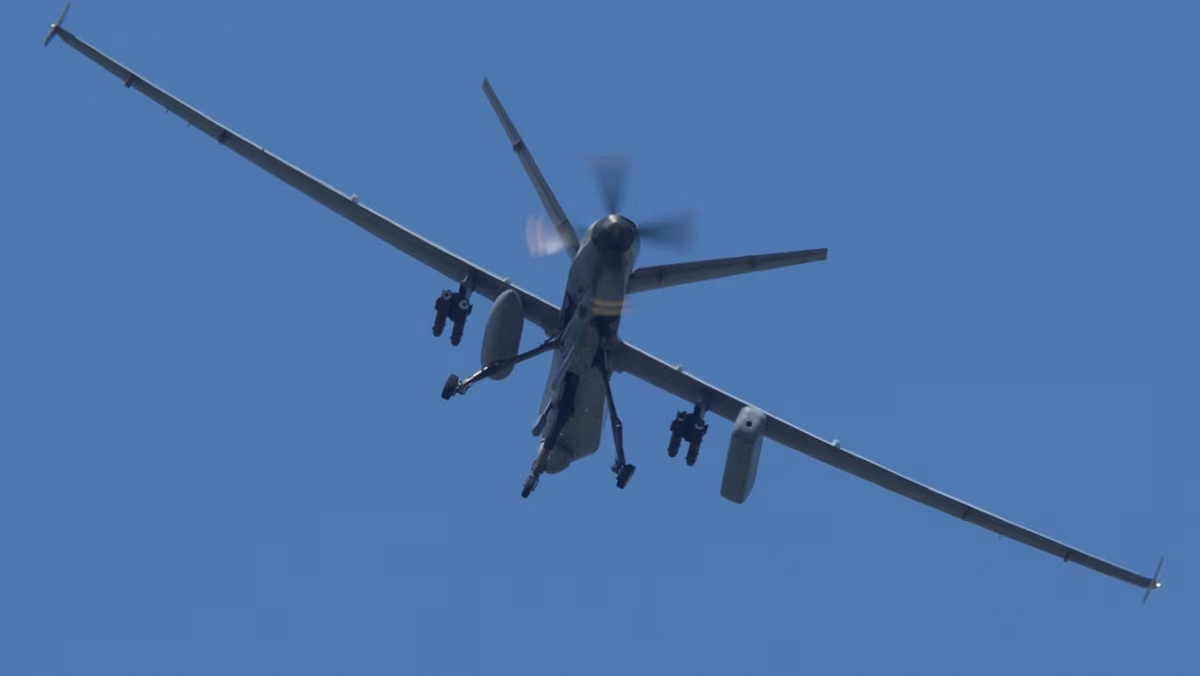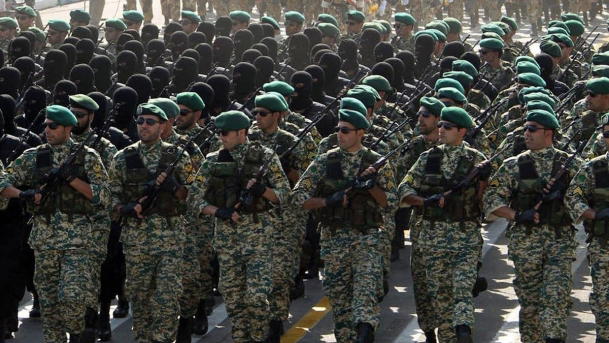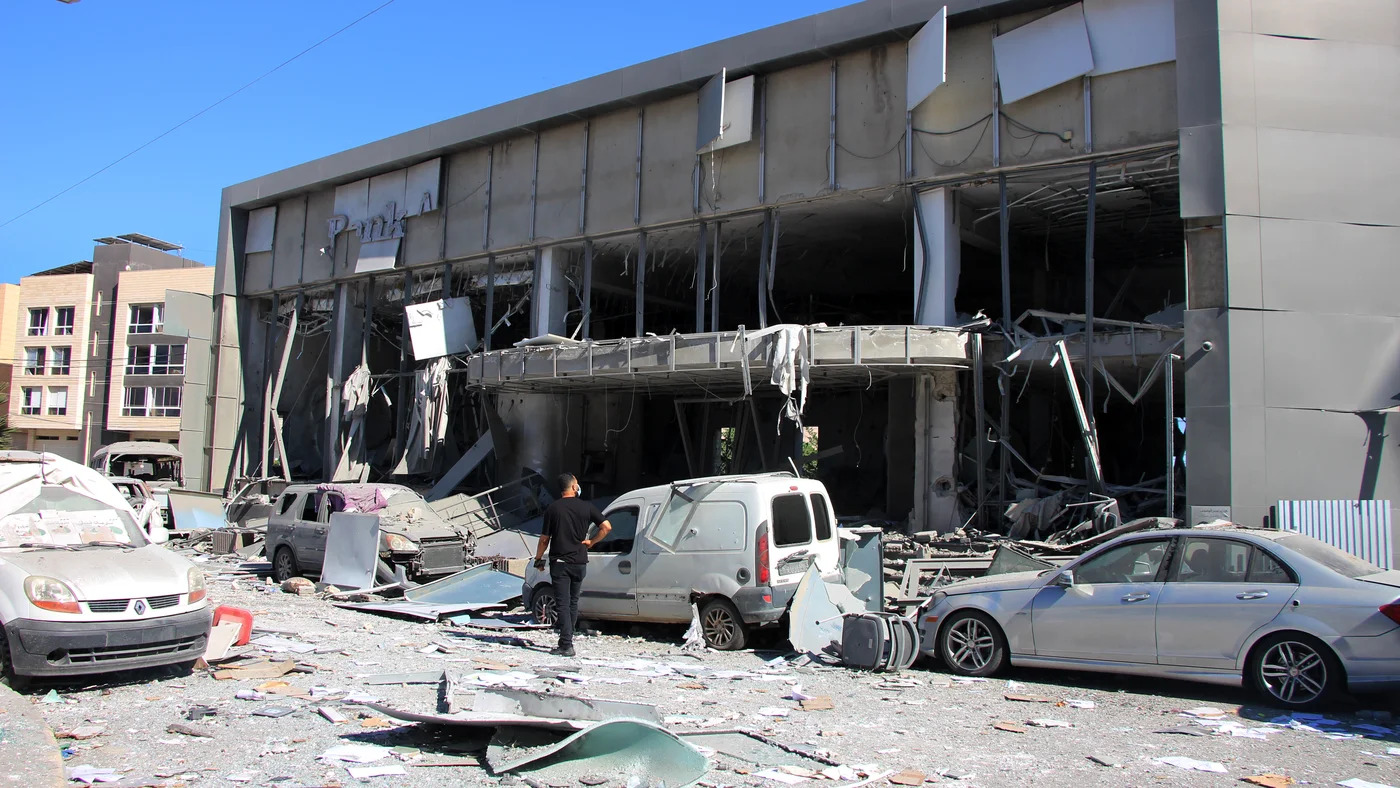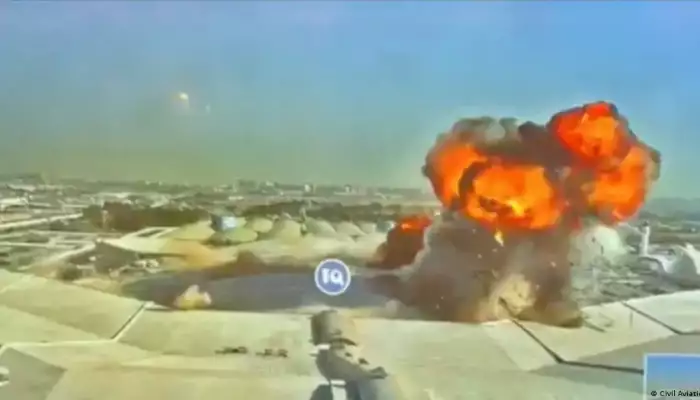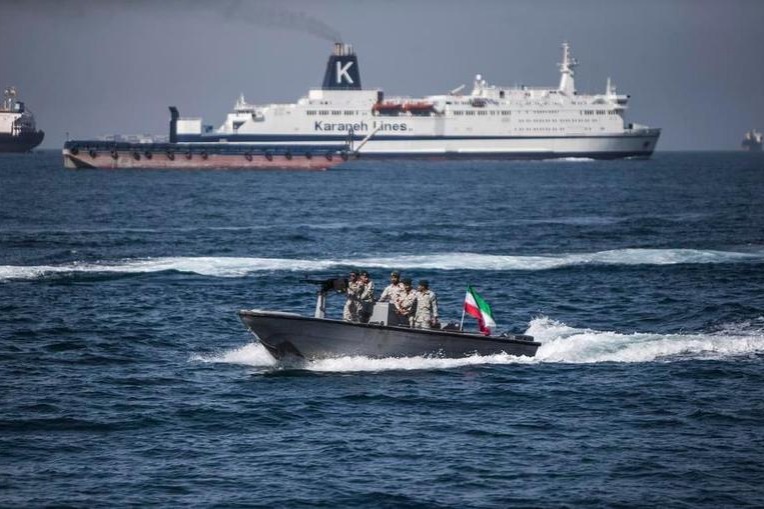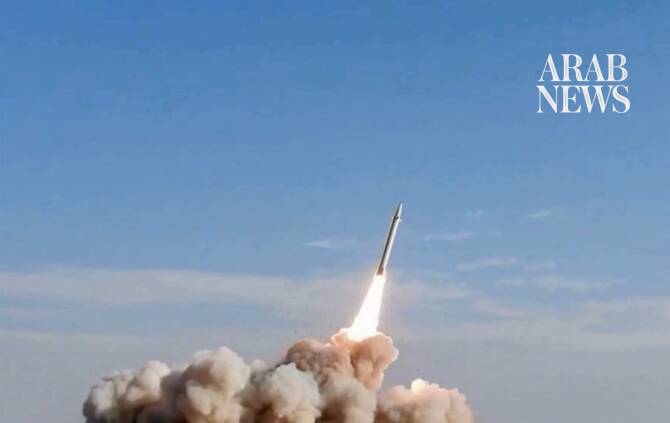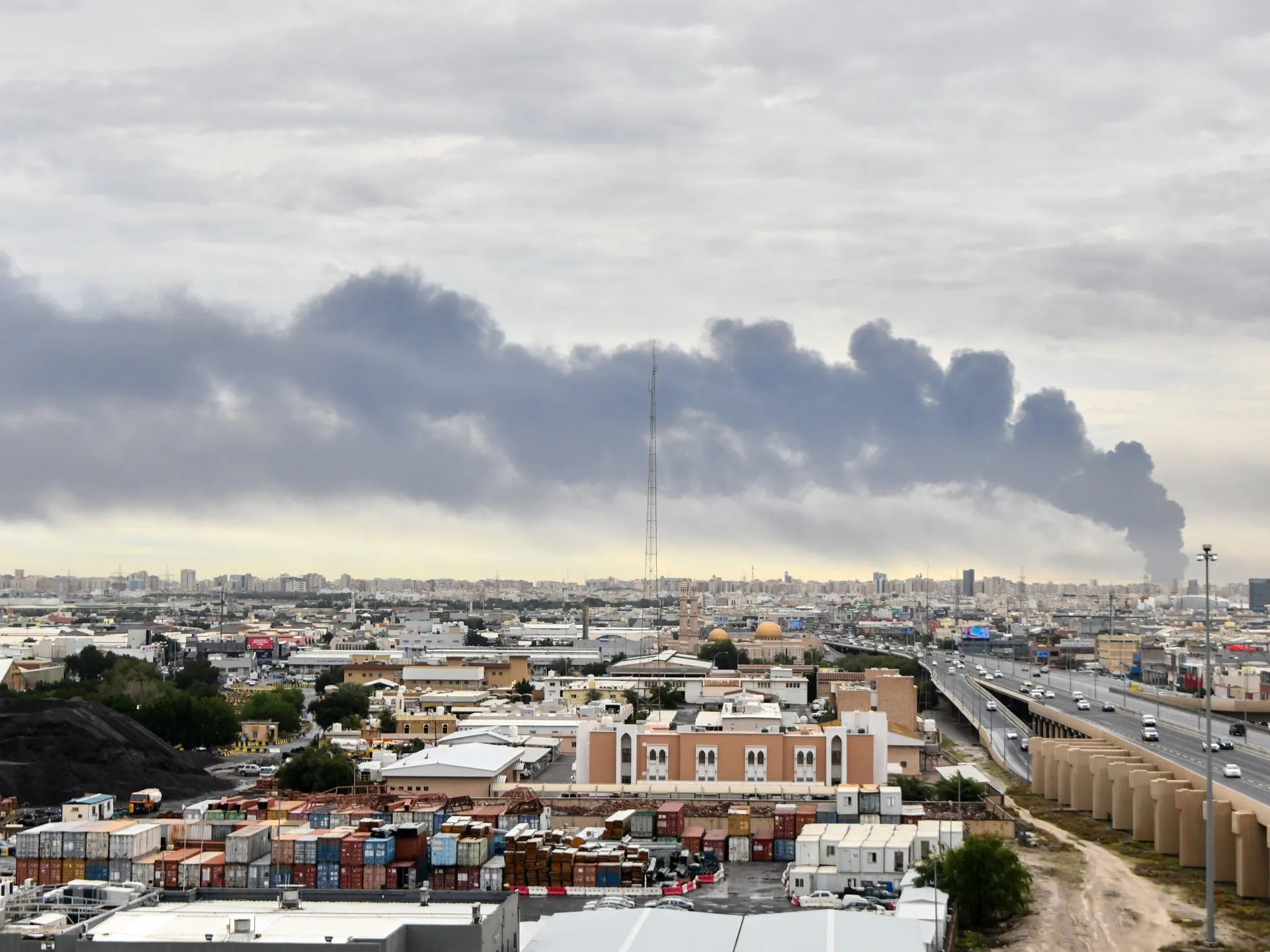
Kuwait, which hosts US forces, says its defence systems intercepted missiles and drones amid sirens across the country.Iran’s Islamic Revolutionary Guard Corps (IRGC) says it launched a retaliatory strike on a base used by US forces that it claims was used for an attack on an Iranian communications tower, with Kuwait saying it intercepted air attacks.“Following the aggression of the US army on a communication tower on Sirik Island in Hormozgan Province an hour ago, the IRGC Aerospace Force fighters targeted the airbase where the aggression originated, and the predicted targets were destroyed,” the IRGC said in a statement cited by the semi-official Fars news agency on Monday.Recommended Stories list of 4 itemslist 1 of 4Iran reasserts control over Hormuz Strait as deal with US remains elusivelist 2 of 4Iran war day 93: Trump won’t ‘rush’ deal; Israel expands Lebanon invasionlist 3 of 4Iran reinstates some internet access but restrictions remain for mostlist 4 of 4Iran restores some gas production at South Pars facilityend of listAir defences in Kuwait, where the US base is located, intercepted missiles and drones as sirens sounded across the country, the state news agency KUNA reported.In a statement, Kuwait’s Ministry of Foreign Affairs condemned Iranian attacks on its territory.“The Ministry affirms that the continuation and repetition of these aggressions undermine efforts aimed at de-escalating tensions and threaten security and stability in the region,” the statement said.The attacks come after the United States said it carried out strikes on Iran this weekend in response to “aggressive Iranian actions that included the shootdown of a US MQ-1 drone that was operating over international waters”.“US fighter aircraft swiftly responded by eliminating Iranian air defences, a ground control station, and two one-way attack drones that posed clear threats to ships transiting regional waters,” the Central Command (CENTCOM) said in a post on X, adding it will continue to protect US assets and interests during the ongoing ceasefire.CENTCOM said no US troops were hurt in the attacks.Fragile ceasefireThe attacks, the latest in several exchanges of fire in recent days, come as indirect negotiations between the US and Iran to formalise a fragile ceasefire that took effect in April continue.There have been mixed signals about whether the two sides are close to an agreement to extend the fragile truce.The two sides have reportedly been reviewing a potential memorandum of understanding (MoU) that would extend the ceasefire for a further 60 days and begin negotiations to end the war permanently.According to US media reports, the MoU will state that shipping through the Strait of Hormuz is to be “unrestricted”, meaning there will be no tolls, no “harassment”, and that Iran will have 30 days to remove all sea mines.The MoU will also reportedly include a commitment from Iran not to work towards building nuclear weapons.During the 60-day window following the start of the new agreement, the first issue to be discussed in peace talks will be Iran’s uranium enrichment programme, and how to dispose of its stock of highly enriched uranium.The New York Times newspaper reported that Trump has since “toughened the terms” of the potential framework, while media outlet Axios said the president asked for “several amendments” to the preliminary agreement his envoys reached with Iran.Iranian state media reported on Saturday that the proposed MoU with the US included an agreement to release $12bn in frozen assets.The report cited an “unofficial” draft of the memorandum, and a similar item carried by state TV earlier this week was dismissed by the White House as a “fabrication”.Tehran warns of ‘mistrust’Iran’s Foreign Ministry spokesperson Esmaeil Baghaei said on Monday that any delay in the diplomatic process to end the war can be explained by a lack of trust, Washington’s contradictory positions and Israel’s attacks on Lebanon.“Negotiations have started amid severe suspicion and mistrust, and the exchange of messages is taking place in this atmosphere,” Baghaei said.“The other party is constantly changing its views and putting forward new or contradictory demands … it is natural that this situation will prolong negotiations,” he said, adding that Tehran viewed Israeli actions in the region, including in Lebanon, as inseparable from the US.Foreign Minister Abbas Araghchi told Iran’s IRNA news agency on Sunday that “dialogue and an exchange of messages are ongoing” with the US.“It is not possible to judge until a clear conclusion is reached,” Araghchi said amid the recent speculation about the negotiations. “Everything that is being said now is speculation and should not be taken seriously until it is certain.”Trump claims Iran ‘really wants to make a deal’US President Donald Trump said in a statement on his Truth Social platform late on Sunday, Tehran “really wants to make a deal” and that whatever deal is reached will “be a good one” for the US “and those that are with us”.He lashed out at domestic critics for “negatively ‘chirping’” about his handling of the war but made no mention of the US strikes on Iran.“Just sit back and relax, it will all work out well in the end – It always does!” he said.
Iran’s IRGC launches retaliatory strike after US attacks
Kuwait, which hosts US forces, says its defence systems intercepted missiles and drones amid sirens across the country.
838 words~4 min read