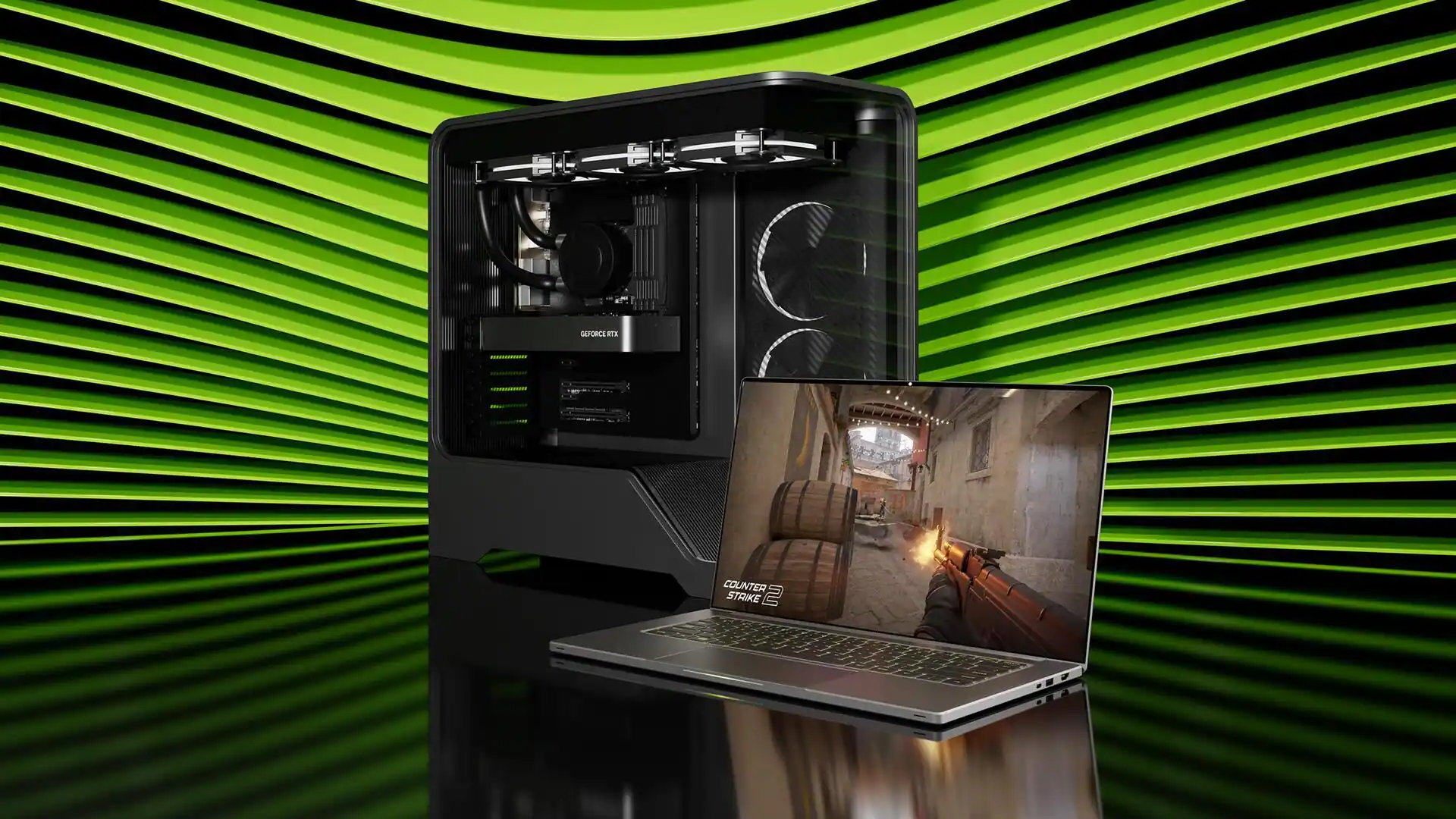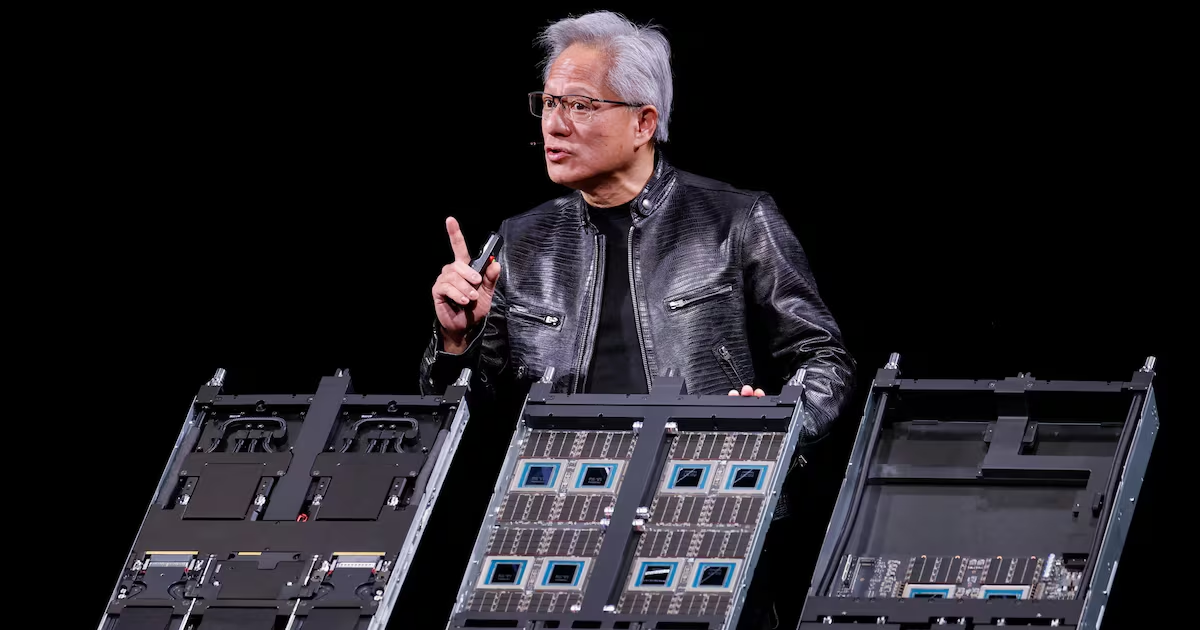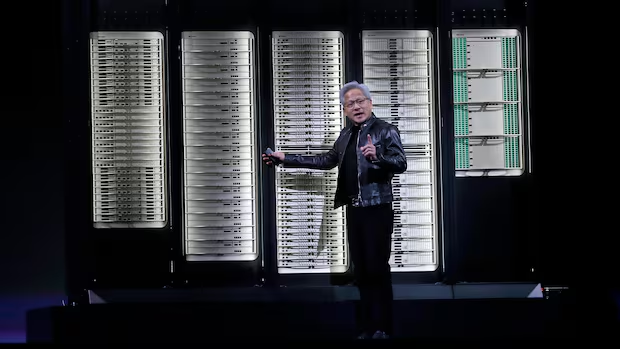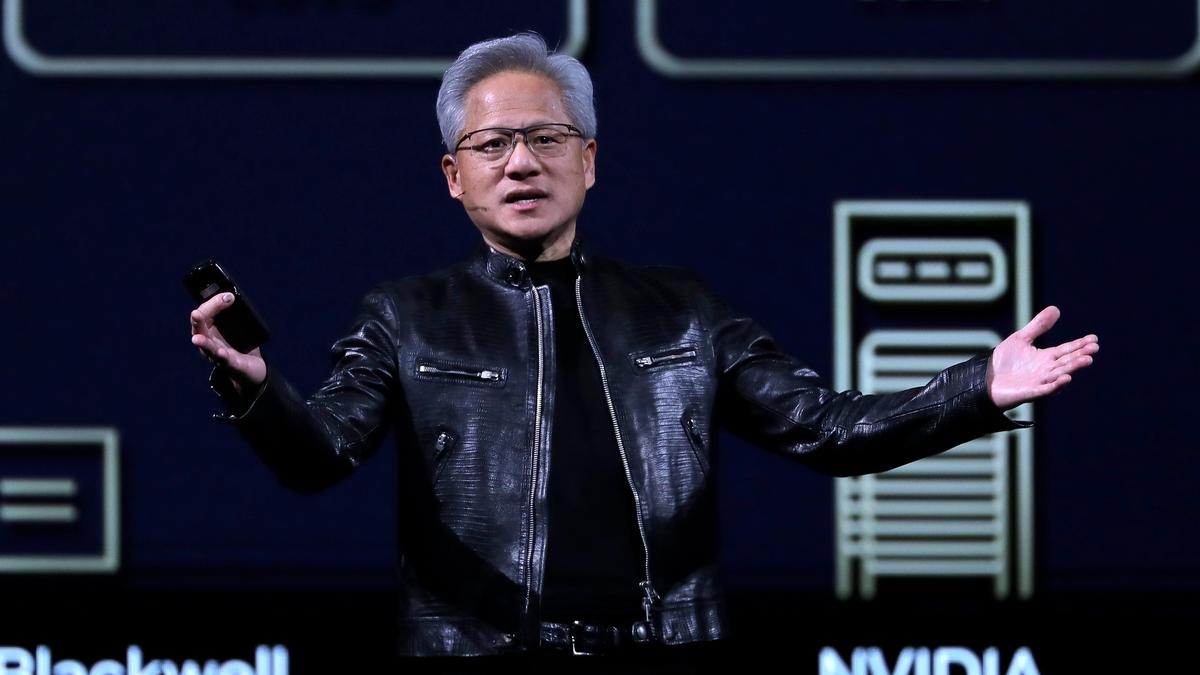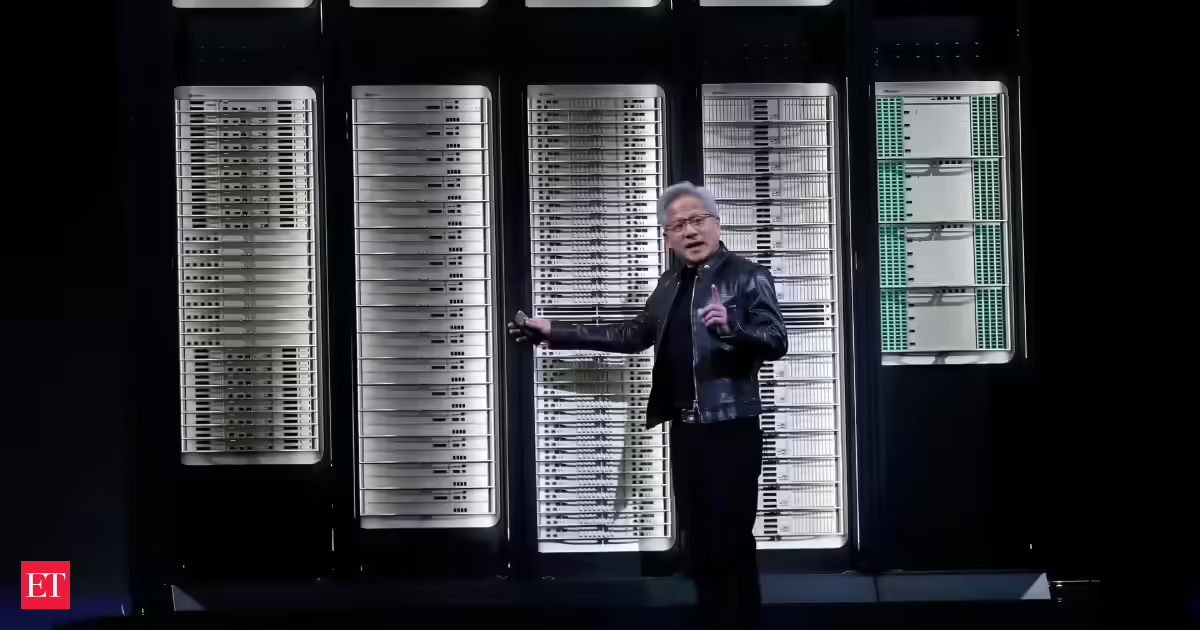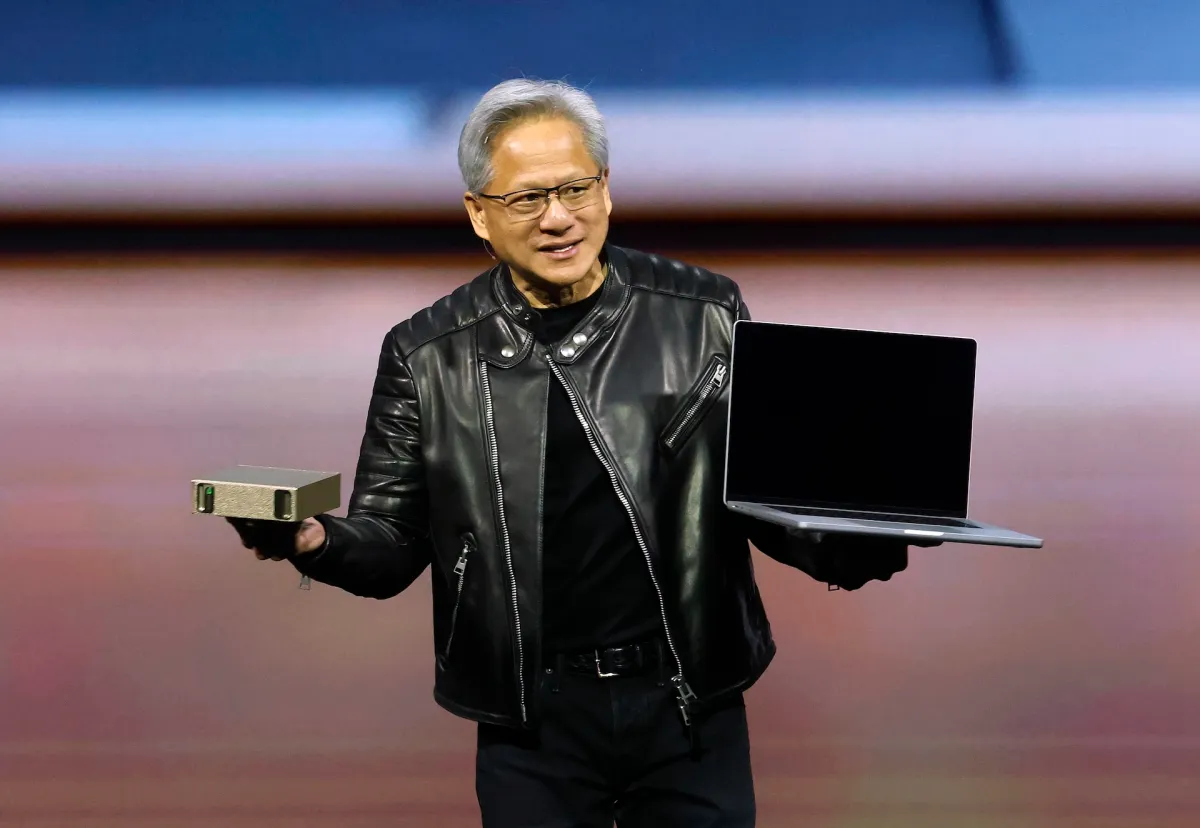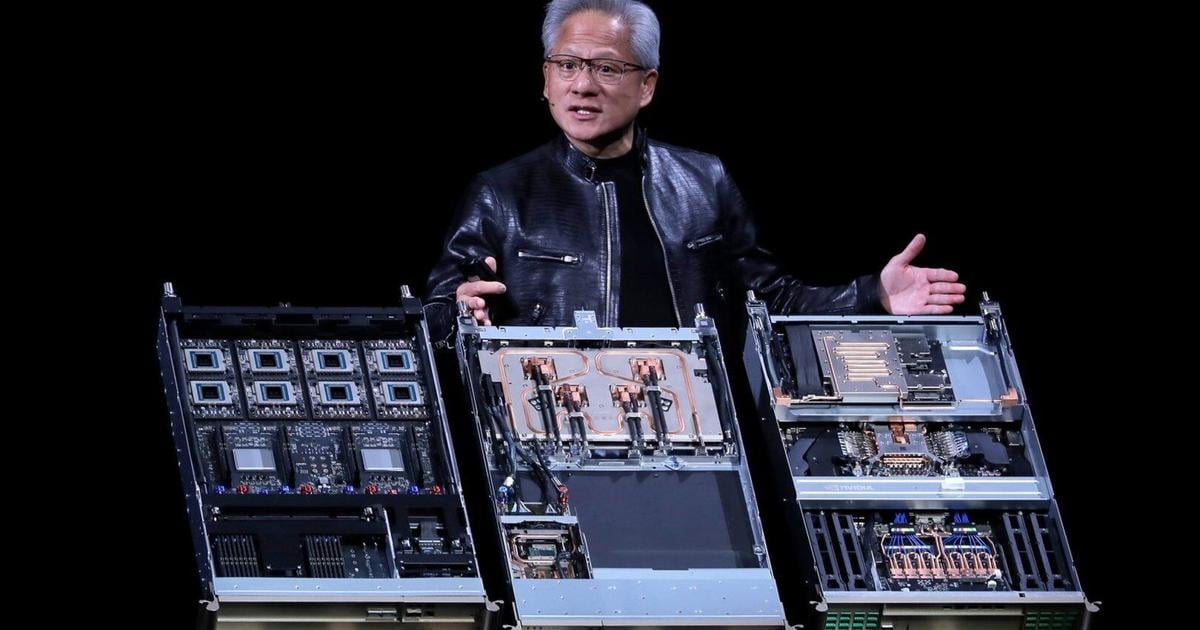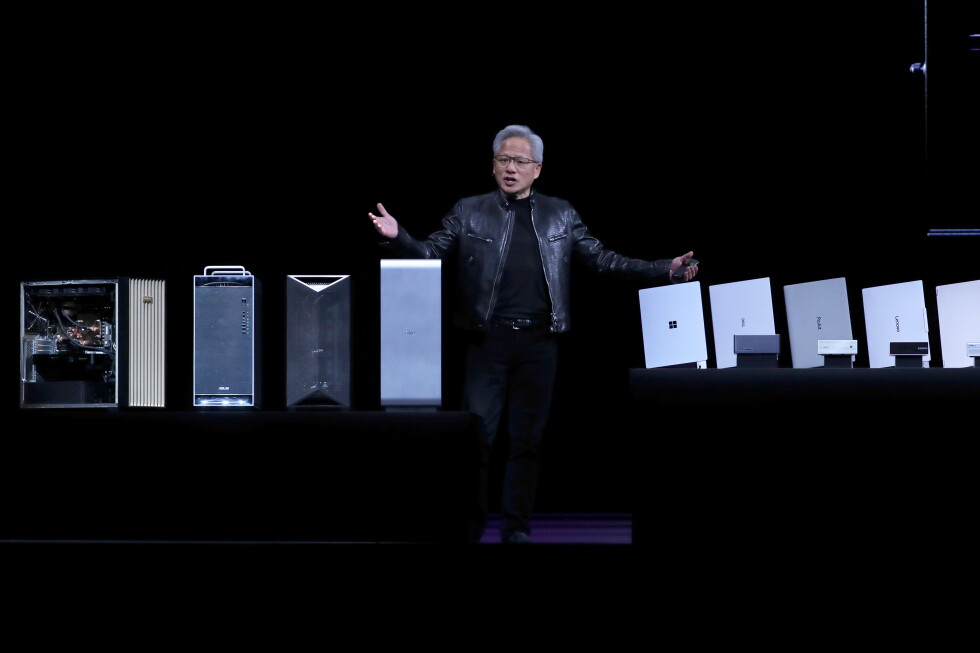
Nvidia unveiled the first personal laptop computers designed for running artificial-intelligence “agents,” using a newly designed version of the company’s signature AI chips.Nvidia CEO Jensen Huang introduces laptop models using RTX Spark GPUs during a keynote speech on the sidelines of the Computex trade show in Taipei (REUTERS)The new PCs will be as slim as 14 millimeters thick, and the lightest will weigh less than 3 pounds. To start, Nvidia will work with six manufacturers—Dell Technologies, Lenovo Group, Microsoft, HP, Asus and MSI—to build the laptops.To power the new computers, Nvidia is introducing the RTX Spark, which it described as “the most efficient PC chip ever built.” Eventually, there will be 30 laptop models and about 10 desktop models using the new chips, developed from Nvidia’s graphics-processing unit.PCs that use the chip will be “targeted at creators, AI developers and gamers” and priced at the premium end of the market, said Mark Aevermann, Nvidia’s senior director of product development.The announcement, made during the Computex conference in Taipei, underscores how so-called AI agents are upending nearly every part of the tech industry only a few months after they became widespread.Nvidia couched the new PC announcement as part of a broader shift in AI computing. In recent years, large AI labs have focused first on training large language models and then, once they are mature, running them efficiently using a process known as inference, which allows models to respond to user queries.Now, AI is moving away from the world of human users. The proliferation of tens of millions of AI agents—or autonomous bots that are capable of doing many tasks—has changed how companies like Nvidia design and market their silicon products and other tools.Although demand for GPUs to train AI models made Nvidia the world’s most valuable company, agentic computing leans heavily on central-processing units, or CPUs. Nvidia expects these types of tasks to largely replace AI usage in the form of consumers having conversations with chatbots such as OpenAI’s ChatGPT, Google’s Gemini and Anthropic’s Claude.“That era is ending,” said Kari Briski, Nvidia’s vice president for generative AI software. “Agents are the new workload. They will run everywhere, from the data center to the edge.”Nvidia executives briefed reporters Sunday morning on its new suite of AI-computing hardware, known broadly as Vera Rubin, which they said is in full production and will begin shipping to customers in the third quarter.This new generation of products includes not only the company’s most powerful GPU yet, the Rubin, but also servers consisting only of Vera CPUs and a system that incorporates chips customized for inference and designed by Groq. Nvidia paid $20 billion last year to license Groq’s technology and hire its top leadership.Ian Buck, Nvidia’s vice president for hyperscale and high-performance computing, said that the rise of agentic AI has made it impossible to address customer needs using just powerful chips or even custom servers. It requires advanced networking hardware, software libraries that developers can use to program chips and design models, and large data-center clusters that can knit together tens of thousands of processors and process data quickly and cost-efficiently.“AI is moving from answering questions to doing real work,” Buck said.Write to Robbie Whelan at robbie.whelan@wsj.com and Amrith Ramkumar at amrith.ramkumar@wsj.com
Nvidia Introduces First PCs Designed for AI Agents
The chips giant will work with manufacturers including Dell, Lenovo and HP to make the laptops, designed to support agentic computing. | Technology News
TL;DRAI
Nvidia unveiled the RTX Spark — described as its most efficient PC chip ever — powering a new line of laptops as thin as 14mm, built by Dell, Lenovo, Microsoft, HP, Asus and MSI, explicitly designed for running AI agents at the edge. The shift from chatbot inference to agentic workloads is reshaping Nvidia's silicon roadmap and signals that enterprise edge hardware — not just data center GPUs — is becoming a primary deployment target for AI teams building autonomous systems.
537 words~2 min read