The war in Iran has done what years of policy papers could not. It has forced an honest reckoning with American military readiness. While commentators focus on vulnerabilities in industrial capacity and weapons procurement, they consistently omit a critical dimension of readiness: the uniformed medical and technical workforce that makes sustained military operations possible.
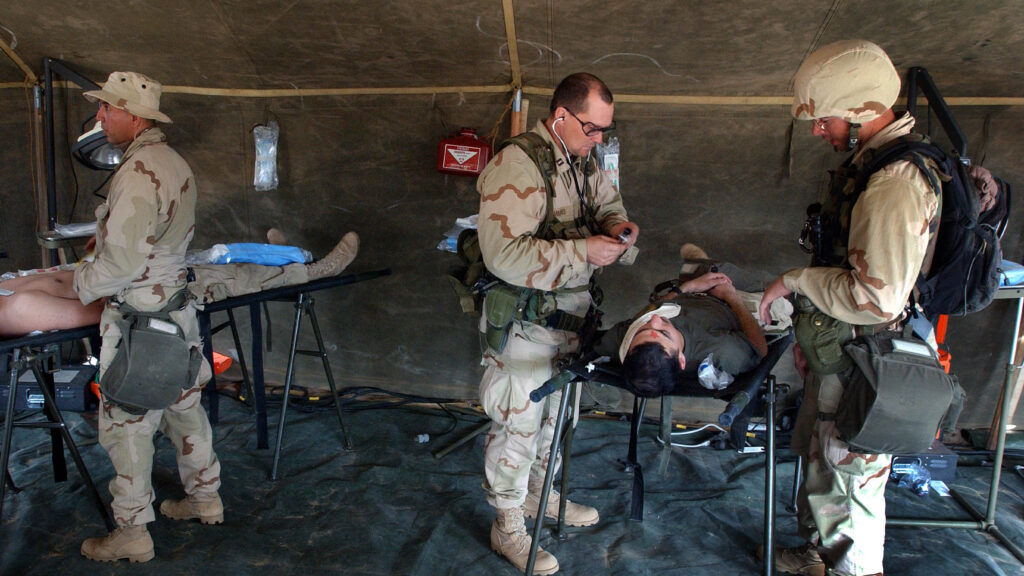
Across the tri-service medical corps, encompassing the Army, Navy, and Air Force, the rate of recruitment has consistently struggled to keep pace with separations. A 2024 RAND Corporation study found that a larger-than-expected proportion of physicians are leaving after fulfilling their service obligations, citing pay disparity, administrative burden, and clinical skill degradation as key drivers.
The compensation gap is the most frequently cited driver, and the most intractable. A 2020 Government Accountability Office study found that military physicians in two-thirds of specialties cannot reach even the 20th percentile of civilian compensation. While exact figures fluctuate, as a ballpark estimate, the gap between military and civilian earnings for procedural specialists can exceed $400,000 annually.
Furthermore, clinical skills are degrading at garrison hospitals. A Department of Defense Inspector General report released in June 2025 found that emergency medical officers in critical wartime specialties were assigned to locations without direct patient care, degrading their clinical skills below readiness standards.