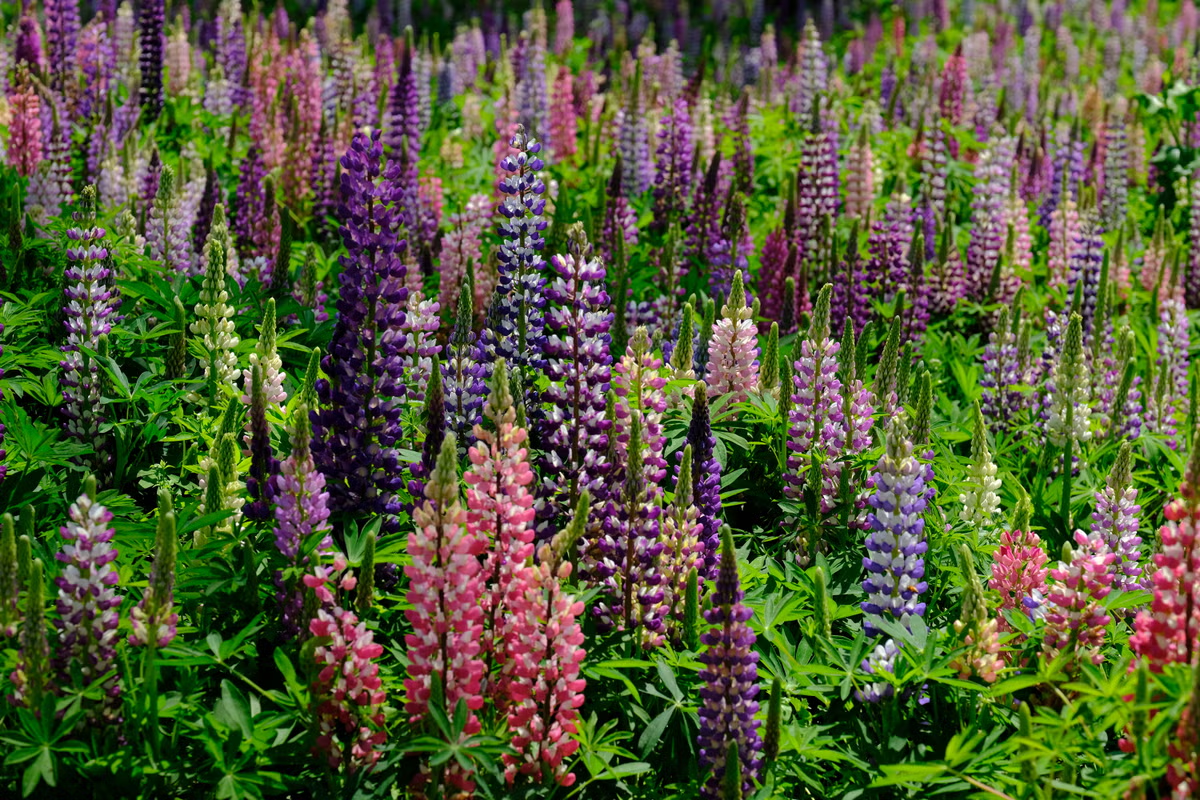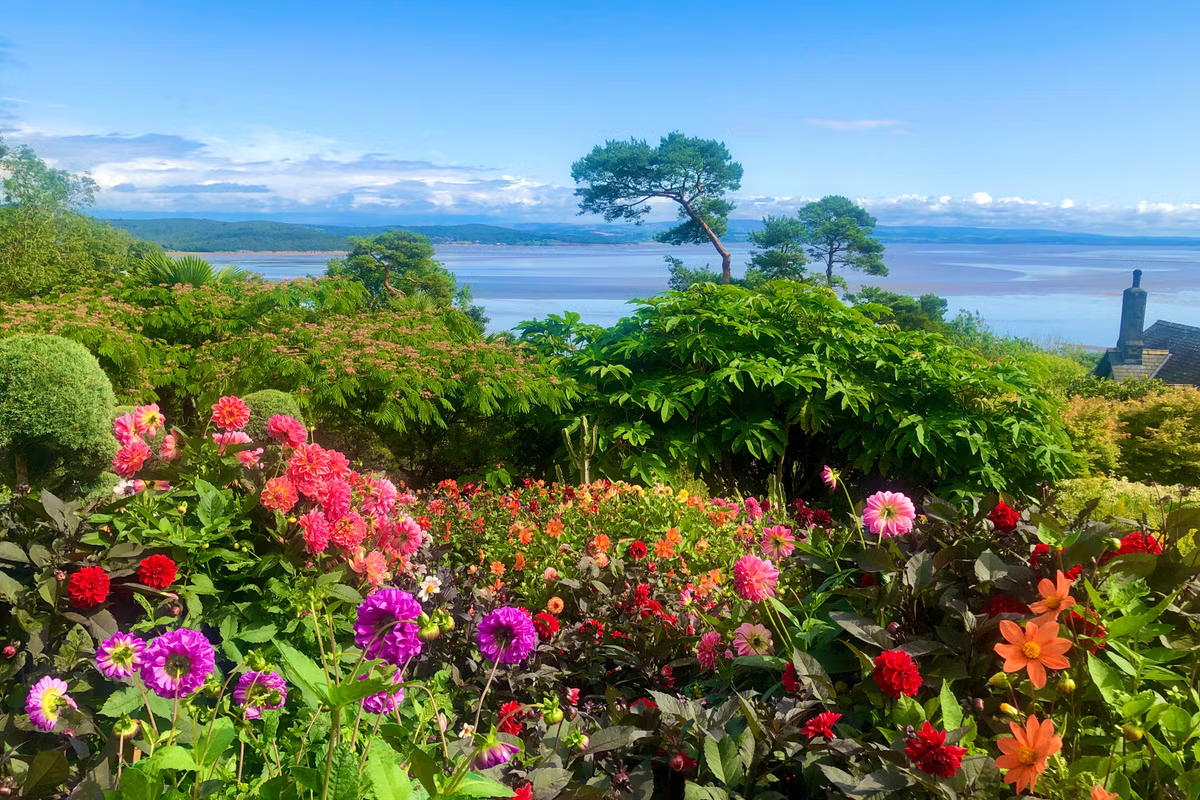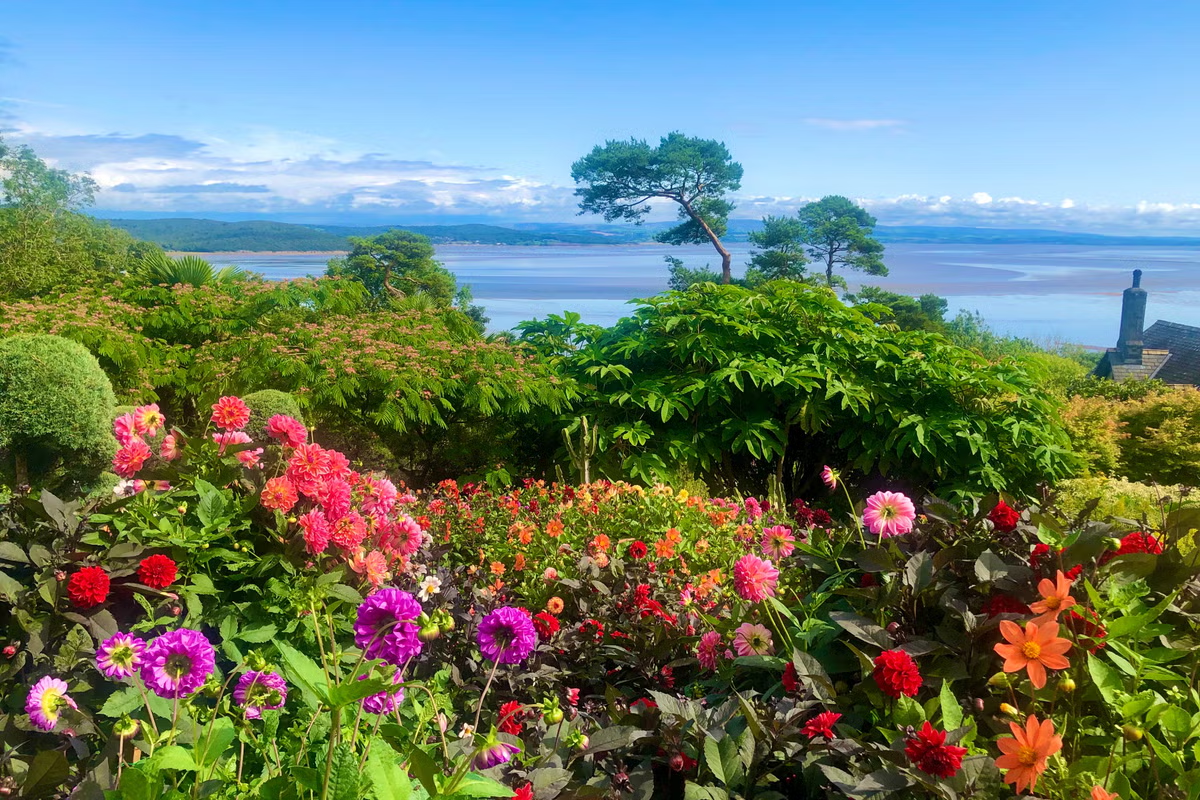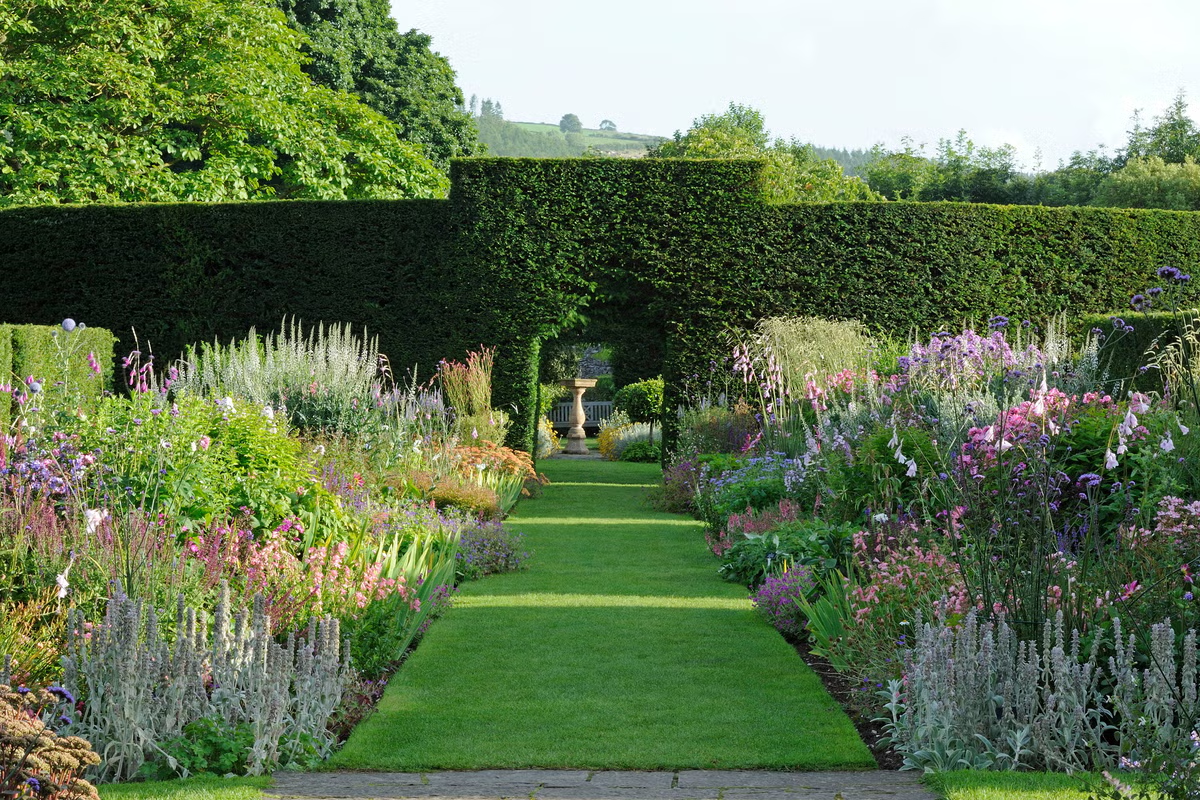
As summer begins, it’s time to get a date in your diary for days out and garden visits to enjoy the great outdoors and be inspired by the planting, design and sheer beauty of the most beautiful gardens.Here are a variety of gardens to visit this summer for the perfect day out.1. Bowood House and Gardens, Wiltshire(Anna Stowe/Bowood/PA)The new Walled Garden opened up to the public last year and can be seen in all its glory now as it showcases striking double borders planted in soft hues of white, cream, and all shades of green (particularly lime green), reflecting the design of the famous chintz fabric found inside Bowood House. A contrasting display of red, orange, and blue blooms appear along the south-facing wall, adding vibrant, contrasting colours.There’s a new sensory garden, allowing visitors to engage with natural features representative of sight, sound, touch, and scent. This year there’s also a new Dry Garden dedicated to drought-tolerant plants which adapt to sun-baked climates, including a selection of Mediterranean plants, succulents and grasses.2. Malleny Garden, Balerno, near Edinburgh, ScotlandOn the outskirts of Edinburgh, visitors can escape to this peaceful National Trust for Scotland haven which covers nearly 10 acres, with more than a third of that making up the formal walled garden where heritage roses sit alongside 400-year-old yew trees. Featuring 150 varieties of rose – it holds a National Collection of 19th century shrub roses – and other fragrant favourites including lavender and philadelphus in summer. Don’t miss a colourful summer display of pelargoniums, salvias and auricula primulas in the large Victorian glasshouse.3. The Old Rectory, Pulborough, West Sussex (open on June 13 and 14 for the National Garden Scheme)If you prefer a more intimate garden setting, take in some of the many gardens which open on certain days for the National Garden Scheme, which raises money for nursing and health charities. Explore The Old Rectory’s formal front garden with a sunken centrepiece and rose and flower beds, approximately half an acre in size, before venturing to the large rear garden which incorporates a small wood, a croquet lawn with beds, a natural swimming pond and a large summerhouse. There is also a small orchard and meadow, along with interesting trees including a 500-year-old sweet chestnut.4. Cliveden, Buckinghamshire(Alamy/PA)This 80-acre garden within the historic estate famous for hosting royalty, the ‘Cliveden Set’ and the infamous 1960s Profumo affair features a maze, a water garden and its showstopping 200m long garden, which has had a National Trust make-over. It is now completely restored to adopt more sustainable practices, integrating biodiverse plantings of pollinator-friendly species and reducing soil disruption with a no-dig system. The new design aims to create a resilient, long-term planting scheme that addresses today’s environmental challenges.Gardener-led tours run through the season, offering a different glimpse into the estate’s planting, history, and ongoing conservation work, shaped by what’s looking its best on the day.5. Littlethorpe Manor, Ripon, Yorkshire (open for the National Garden Scheme, July 5)Lupins at Littlethorpe Manor, Ripon (NGS/PA)This garden is on two levels – an upper level of four acres around the house, fairly formal in layout, with seven acres of parkland below a large retaining wall. At the heart of the estate is the walled garden, relating the four seasons to the cycle of life, where roses and perennials bloom in summer. In the centre is Yggdrassil, the Norwegian World Tree – the symbolic tree of life. There is also a sunken garden where you can see ornamental plants and herbs, a formal lawn with a fountain pool, hornbeam towers, yew hedging and a contrasting Contemporary Physic garden featuring a rill, raised beds and medicinal plants. For group visits contact the manor direct.6. Dyffryn Fernant, Pembrokeshire (open daily; and on June 7 for the National Garden Scheme)Set in the Pembrokeshire Preseli uplands in an area of historically small and isolated farms lies this six-acre garden, created from a piece of land left over from a once prosperous, productive place, created to be at totally at home in its rural surroundings.Different elements emerge in a series of small gardens. Seasonal container planting is showcased in the walled Front Garden, peonies and agapanthus contrast with structured topiary in the Rickyard display and in the courtyard there’s a mix of exotic architectural foliage. Visitors can also enjoy the lush bog garden, and in Nicky’s Field there’s a geometric display of ornamental grasses within a natural meadow.7. Glenarm Castle & Garden, County AntrimThe recent winner of the Historic Houses Garden of the Year Award, this beautiful five-acre walled garden – originally created in the 1820s to grow a vast array of fruit, vegetables and cut flowers for the household – in recent years has been fully re-imagined and re-designed by Lord and Lady Antrim to create a garden full of colour, scent and beauty.Today, divided by beech hedges into different ‘rooms’, highlights include dazzling herbaceous borders, ornamental fruit gardens with espaliered and formal lines of fruit trees, a potager-style vegetable garden, a wildflower meadow and plenty of topiary cones and balls, plus many sculptures by Irish artists. Don’t miss the imposing Victorian glasshouse, one of Ireland’s largest still in use.This year, it’s free entry for children under 12 to the Walled Garden, Woodland Walk and Heritage Centre.8. Fullers Mill Garden, Suffolk(Abigail Sillence/Perennial/PA)If you have a passion for lilies, this summer garden will be for you as they are prolific in this seven-acre creation on the banks of the River Lark. It combines a beautiful site of light dappled woodland with a plantsman’s collection of unusual shrubs, perennials, lilies and marginal plants. Created by the late Bernard Tickner, who spent over 50 years transforming the garden from rough scrub and woodland, it was gifted in 2013 to the charity Perennial, which helps to support retired and struggling professional gardeners, for its long-term preservation.9. Beth Chatto’s Gardens, Colchester, EssexBeth Chatto’s gravel garden (Julie Skelton/PA)The eponymous legendary plantswoman, designer and author transformed an overgrown wasteland deemed unfit for fruit farming into a series of informal gardens with widely differing soils. She created five distinct areas, choosing the plants which would flourish in each particular natural situation – from heavy clay to boggy, to sandy soil – and concentrated on finding the right plant for the right place. What has resulted is something all gardeners can take away with them, whatever their soil. Visitors might be particularly interested in the gravel garden, especially when climate change is leading us all towards more drought-tolerant plants.
Glorious summer gardens to visit
Plan days out with trips to some of the UK’s most beautiful gardens.
1,079 words~5 min read