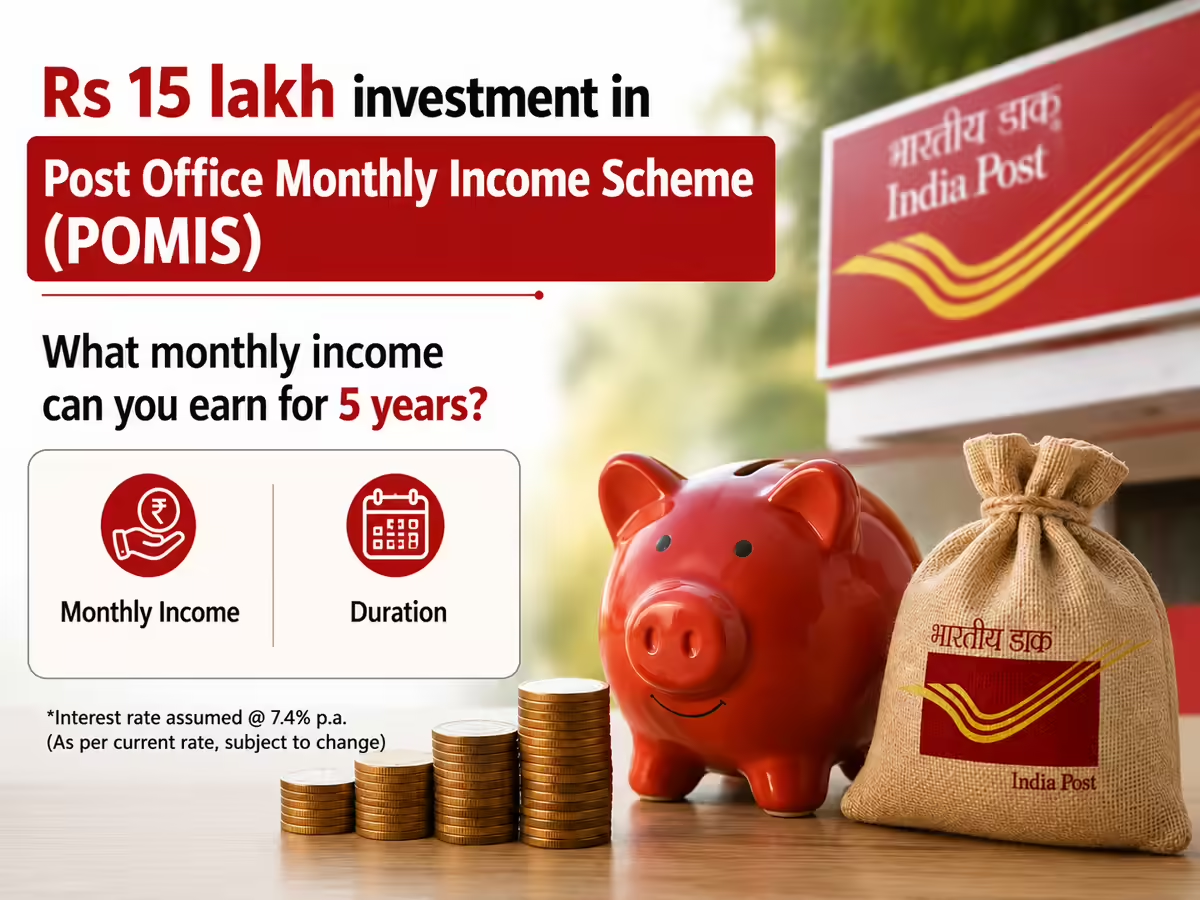
As interest rates remain attractive and market volatility continues to make some investors cautious, traditional savings products such as the Post Office Monthly Income Scheme (POMIS) are once again drawing attention. Designed to provide a steady stream of monthly income, the scheme is particularly popular among retirees and conservative investors seeking regular cash flows without taking market-linked risks. However, before investing, it is important to understand both its benefits and limitations and how it compares with other income-generating investment options.One such query came from Shishir Tripathi, a viewer of The Money Show on ETNow, who wants to know if it is a good time to invest in post office MIS and what are the drawbacks and advantages of investing in this kind of an investment instrument. Also Read | International funds top return charts, but overseas investment limits persist. Should you continue SIPs or explore alternatives? The expert, Shweta Rajani from Anand Rathi Wealth, POMIS is a government-backed savings scheme where investors deposit a lump sum amount and receive a fixed monthly income in return.According to Rajani, the scheme works similarly to a fixed deposit that pays interest every month. An investor deposits a lump sum and receives regular monthly payouts directly into a bank account. The returns are currently around 7% annually, distributed as monthly income.Advantages of Post Office MISRajani highlighted several positives of the scheme. One of the biggest advantages is the predictability of income. Investors know exactly how much money they will receive every month, regardless of market conditions.Another benefit is safety. Since the scheme is backed by the government, investors do not face credit risk, making it a relatively secure option for conservative savers. The monthly payouts are also not affected by fluctuations in equity or bond markets, providing stability for those who depend on regular income.Drawbacks investors should considerDespite its benefits, Rajani pointed out that investors should also be aware of certain limitations. The first concern is taxation. The monthly interest received under the scheme is taxable according to the investor's income-tax slab, which can reduce the effective return.Secondly, the returns may not be sufficient to beat inflation over the long term. While investors receive a fixed income, the purchasing power of that income may gradually decline as living costs rise.Another drawback is the lock-in and withdrawal process. Although premature withdrawal is permitted under certain conditions, it may involve penalties and procedural requirements, making access to funds less convenient compared to some other investment products.Rajani also noted that the scheme primarily focuses on income generation rather than wealth creation, which means investors may not see significant growth in their capital over time.Alternative approach for investorsInstead of allocating all savings to the Post Office Monthly Income Scheme, Rajani suggested that investors consider a combination of debt-oriented and equity-oriented investments.Also Read | Best mutual fund SIP portfolios to invest in June 2026According to her, investors can earmark the amount required for regular income and invest that portion in relatively low-risk options such as arbitrage funds. These funds may offer returns comparable to the Post Office MIS while providing greater liquidity.For the remaining corpus, she recommends investing in equity mutual funds to create long-term wealth and help combat inflation.On the debt side, Rajani suggested considering funds such as SBI Arbitrage Fund and Bandhan Arbitrage Fund. For long-term growth through equities, she recommended schemes including Quant Large Cap Fund, Kotak Multicap Fund, Canara Robeco Multicap Fund, and DSP Large & Mid Cap Fund.The Post Office Monthly Income Scheme can be a suitable option for investors seeking predictable, government-backed monthly income with limited risk. However, those looking to grow their wealth and beat inflation over the long term may need to complement it with equity-oriented investments. A balanced mix of income-generating and growth-oriented assets can help investors meet both their short-term cash-flow needs and long-term financial goals.(Disclaimer: Recommendations, suggestions, views and opinions given by the experts are their own. These do not represent the views of The Economic Times)If you have any mutual fund queries, message on ET Mutual Funds on Facebook/Twitter. We will get it answered by our panel of experts. Do share your questions on ETMFqueries@timesinternet.in along with your age, risk profile, and Twitter handle.
Post Office MIS vs mutual funds: Which is better for income-seeking investors?
Post Office Monthly Income Scheme (POMIS) offers predictable, government-backed monthly income, attracting retirees and conservative investors. While safe, its returns may not beat inflation, and interest is taxable. Experts suggest a balanced approach, combining low-risk options like arbitrage funds for income with equity funds for long-term wealth creation.
697 words~3 min read