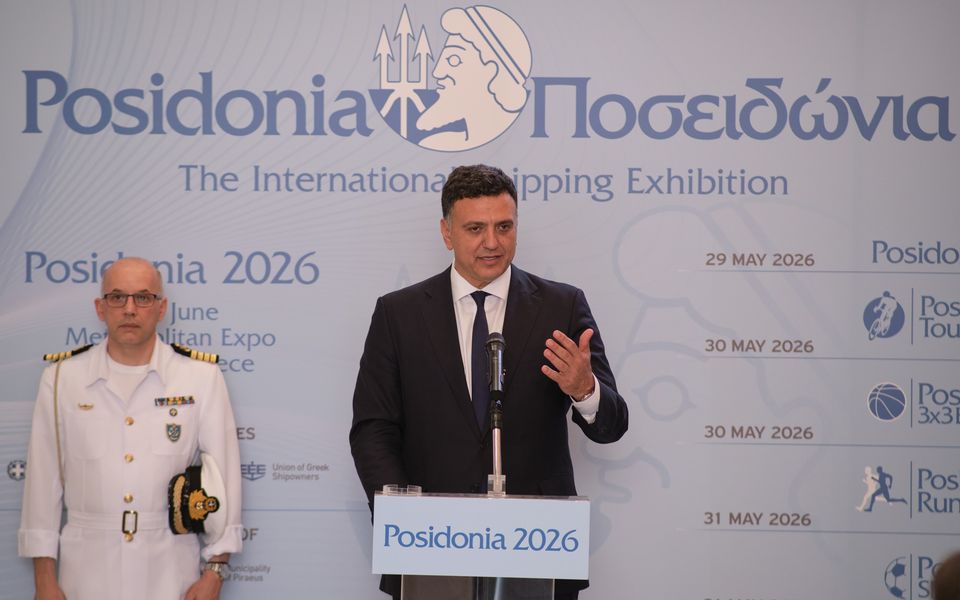
By Vasilis Kikilias, Minister of Maritime Affairs and Insular PolicyGreek shipping has always been one of Greece’s strongest assets, both geostrategically and economically.Over time, the shipping industry has developed as one of the most thriving sectors of the country’s economy. Shipping boosts the country’s reputation while it contributes decisively to growth, advances the welfare of citizens, and ensures territorial and social cohesion. In fact, shipping is at the forefront during this era of great upheavals, as supply chains are tested, energy security gains attention, and the green transition alters the conditions of the global economy. And this means that Greece, being the leading shipping power in the world, must be at the forefront of decisions.The huge Greek-owned fleet does not merely move goods; it transports energy, food, raw materials, and other goods that millions of people around the world need on a daily basis. It supports the European economy while solidifying Greece’s position in a world where the strategic significance of maritime transportation is once again being recognized.Shipping remains the backbone of international trade and global prosperity, despite the challenges it faces. The unprecedented worldwide pandemic, followed by a succession of geopolitical conflicts and reshuffles, as well as an impending energy crisis, have all had an impact on international shipping activities. Nonetheless, Greek shipping has demonstrated its resilience and capacity to adapt, endure, and lead while still serving the needs of the global community. It has done so in times of crisis, war, economic turmoil, pandemics, and energy uncertainty. And such success did not occur by chance. It happened because the Greek fleet’s power is based on expertise, experience, seamanship, entrepreneurial courage, excellent insight, and global perception.Today, however, challenges are complex. Competition is intensifying, and costs associated with financing and compliance are increasing. Maritime transportation is facing additional hazards as a result of geopolitical tensions. The debate on new fuels, zero- or low-emissions technologies, and refueling infrastructure remains ongoing. At the same time, the shipping industry is being urged to invest now despite the unclear technology landscape.As the Ministry of Maritime Affairs and Insular Policy, we have a clear stance: the green transition of shipping is essential, of course, but it must be carried out realistically and in accordance with international regulations. It must be technologically neutral, economically viable, and socially fair. Therefore, fragmented regulations that generate unequal circumstances of competition benefit neither the environment nor the economy.In this context, Greece firmly supports a transition based on workable solutions: safe and competitive alternative fuels, modern port infrastructure, access to finance, innovation, education, and human resources. Setting lofty objectives is insufficient. We also need to ensure that we have the tools to accomplish them.Europe now has to make a crucial decision. It must treat European shipping as a strategic industry and boost its competitiveness if it hopes to maintain its position as a powerful maritime power.It must also protect European know-how, provide incentives for fleet renewals and green investments, and facilitate the connection between shipping, energy, ports, shipyards, and fuel producers. Above all, Europe must realize that shipping is not a regional policy sector but a key pillar of strategic autonomy.For Greece, the specific discussion is even more important: our country is located in a geographical point of particular significance, as it is a key hub of the Eastern Mediterranean and the Middle East. Upgrading our ports, enhancing infrastructure, developing the supply chain and energy interconnection, and reviving shipbuilding and repair activity can create a new, strong, and productive model.Insularity occupies a special place in this model. For Greece, the sea represents more than just a field of economic activity; it is the way in which the country is connected. The sea is the islanders’ everyday life, their access to health, education, work, tourism, and growth. This is exactly why coastal shipping must be supported on its path towards the green transition without the cost of such a transition being passed on to citizens and island societies.In this context, the organization of the International Shipping Exhibition “Posidonia 2026”, which is under the auspices of the Ministry of Maritime Affairs and Insular Policy and the entire Greek maritime community, serves as further evidence of our nation’s unwavering connection to the sea and shipping. In the wake of today’s challenges, “Posidonia 2026” is seen as a major international gathering for the shipping of the future. But it means much more for Greece. It provides an opportunity to highlight the power, dependability, and strategic importance of Greek shipping.This event provides an opportunity for us to present our positions, advocate for realistic solutions, and integrate tradition with innovation. At the same time, the massive participation of major exhibitors and attendance of high-ranking visitors from all over the world will, in turn, highlight the importance and the leading, long-standing role that Greece plays in global shipping.In summary, Greek shipping is global but has deep Greek roots. Although it is an extroverted industry, it is intrinsically and timelessly connected to the nation’s national economy and evolution. It may be competitive, but it is based on people, expertise, and values, to the advantage and benefit of Greece, of course. And it is our responsibility to safeguard, bolster, and pass this very edge on to future generations.
Vasilis Kikilias: Current challenges and prospects of Greek shipping
By Vasilis Kikilias, Minister of Maritime Affairs and Insular Policy
900 words~4 min read