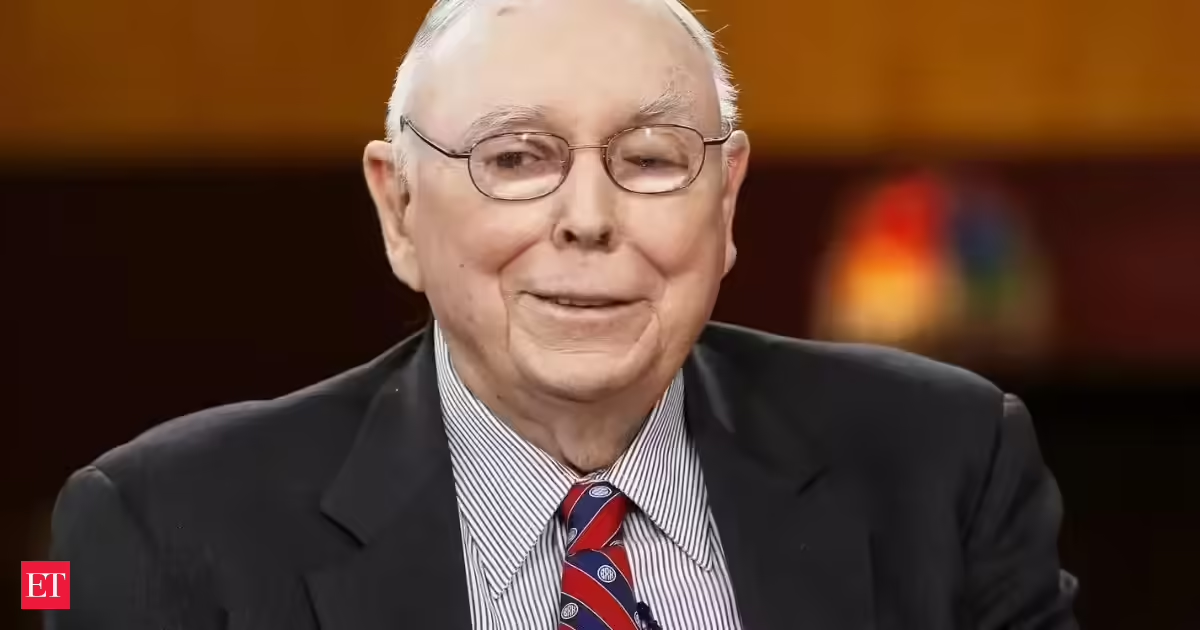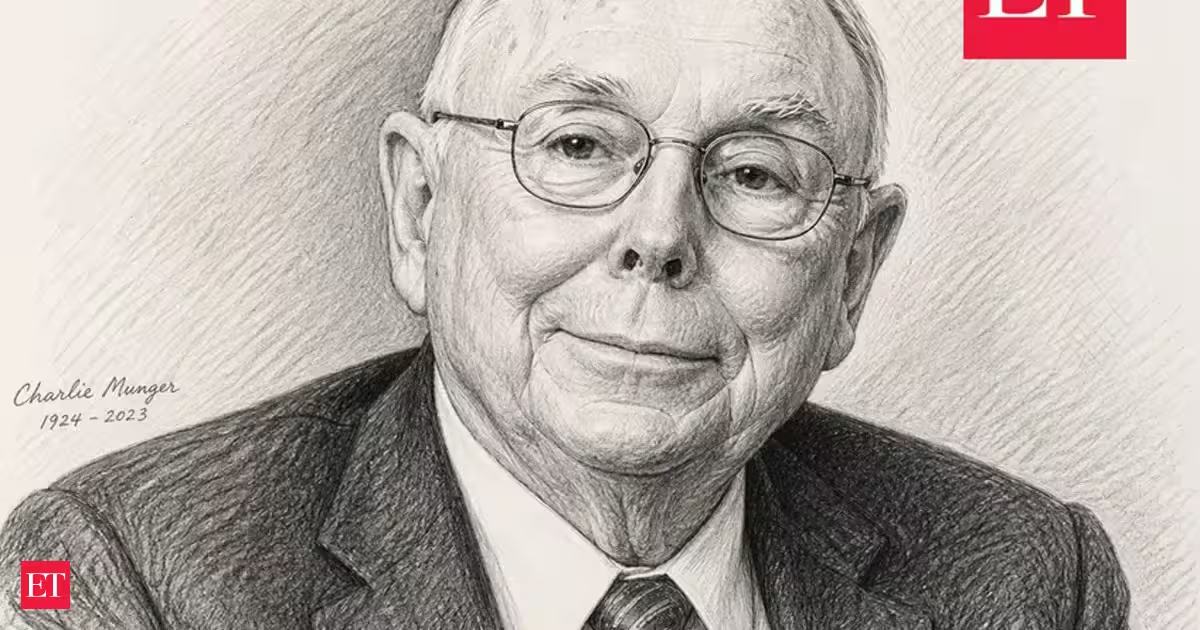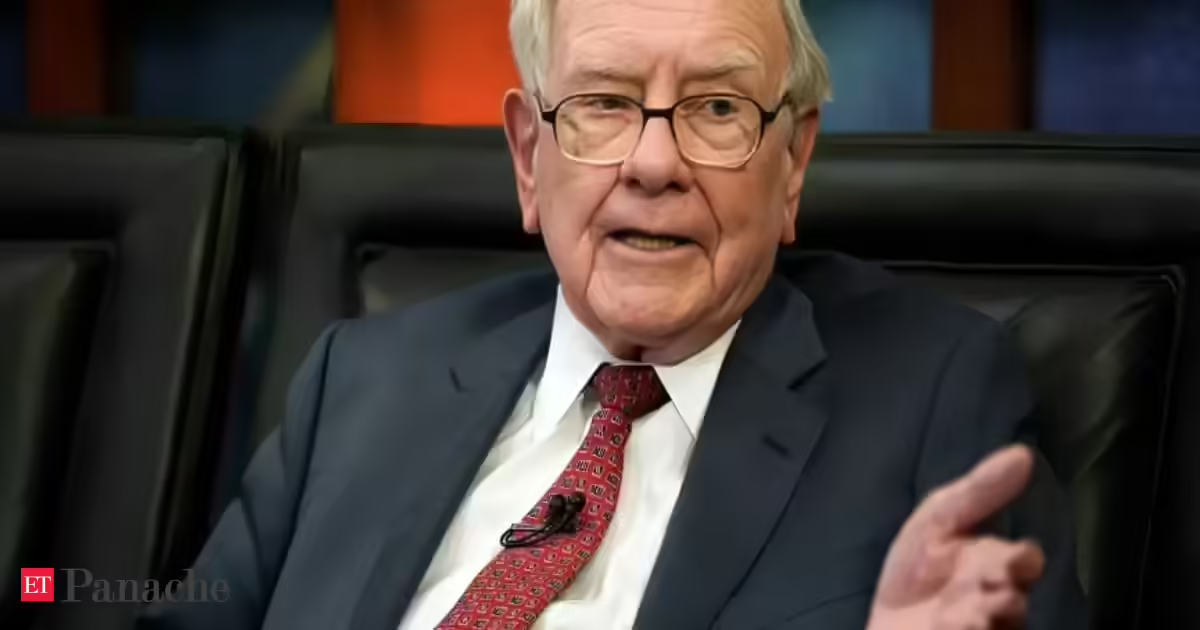
Success is often imagined as a chase, something you run after with speed, strategy, and luck. But Charlie Munger offers a very different lens, one that feels almost counterintuitive in a world obsessed with shortcuts. Instead of focusing on grabbing opportunities, he suggests focusing on becoming someone who naturally earns them. His idea is simple, but it quietly challenges how most people think about achievement, trust, and long-term success in both work and life. Charlie Munger at a commencement address at the University of Southern California, explained this philosophy in his own words, sharing how it shaped his approach from a very young age. He said, “At a very early age, I got the idea that the safest way to try and get what you want is to try and deserve what you want. It’s such a simple idea. It’s the golden rule, so to speak.”A philosophy built on doing things the right wayMunger expanded on the idea by focusing on how one should approach work and relationships. He explained that the real principle is to act in a way where you would be satisfied even if you were on the receiving end of your own decisions. Further in his speech, he added, “You want to deliver to the world what you would buy if you were on the other end.”You Might Also Like:He believed this mindset applies strongly to professionals in every field, especially those who deal with trust, responsibility, and long-term reputation. In his view, there is no better guiding principle for a lawyer or any working professional than this approach.Why this mindset works in the long run Munger also pointed out that people who follow this ethos tend to succeed consistently, not just in terms of money, but in respect and trust. He noted that those who follow this way of thinking “win in life,” and not just in financial terms or honours, but in something deeper and more lasting. According to him, such individuals earn “the respect and the deserved trust of the people they deal with,” and that trust brings a form of satisfaction that money alone cannot buy.What the quote really means in simple terms At its core, Munger’s message is about alignment between action and outcome. Instead of chasing success directly, he suggests building yourself in a way that success becomes a natural result. In simple terms, if you consistently act with honesty, quality, and fairness, you increase the chances of being trusted and valued. Over time, that trust compounds into opportunities, relationships, and stability.About Charlie MungerCharlie Munger, vice chairman of Berkshire Hathaway and longtime partner of Warren Buffett, passed away in November 2023 at the age of 99. According to Forbes, he was born in Omaha and initially studied at the University of Michigan before leaving to serve as an Army meteorologist during World War II. He later completed his law degree at Harvard Law School. His path eventually led him to Buffett, whom he met at a dinner party in 1959.You Might Also Like:When they met in 1959 at an Omaha dinner party, Munger was practising law in California while Buffett was running an investment partnership in Omaha. That meeting marked the beginning of a partnership that would reshape global investing. They stayed closely connected through phone calls and long letters, as noted in Poor Charlie’s Almanack: The Wit and Wisdom of Charles T. Munger. Munger joined Berkshire Hathaway in the 1970s and went on to become one of the most influential figures in modern investing. Warren Buffett and Charlie Munger together transformed Berkshire Hathaway into the massive conglomerate it is today. As per AP News, both grew up in Omaha, Nebraska, just a few blocks apart, yet did not meet in childhood due to their age difference. Interestingly, both had worked at the grocery store run by Buffett’s grandfather and uncle, though their paths only crossed decades later.Warren Buffett about Charlie Munger Buffett, in his annual letter written after Munger’s passing, reflected deeply on their relationship. He described Munger as the “architect” of modern Berkshire Hathaway, while calling himself the “general contractor” who executed that vision. Buffett wrote that Munger “never sought to take credit” and instead allowed him to receive recognition. He further added that their bond felt like “part older brother, part loving father,” highlighting how Munger guided him with patience and trust, never reminding him of mistakes even when he was clearly right.
Quote of the day by Charlie Munger: 'The safest way to get what you want is to try to deserve what you want'; Warren Buffett's ex-associate shares his life lesson on how he succeeded
Charlie Munger advocates for earning what you want by deserving it, a philosophy he adopted early on. He emphasizes acting in a way that you would be satisfied if you were on the receiving end of your own decisions. This approach, focused on integrity and quality, builds deserved trust and leads to lasting success beyond mere financial gain.
736 words~3 min read