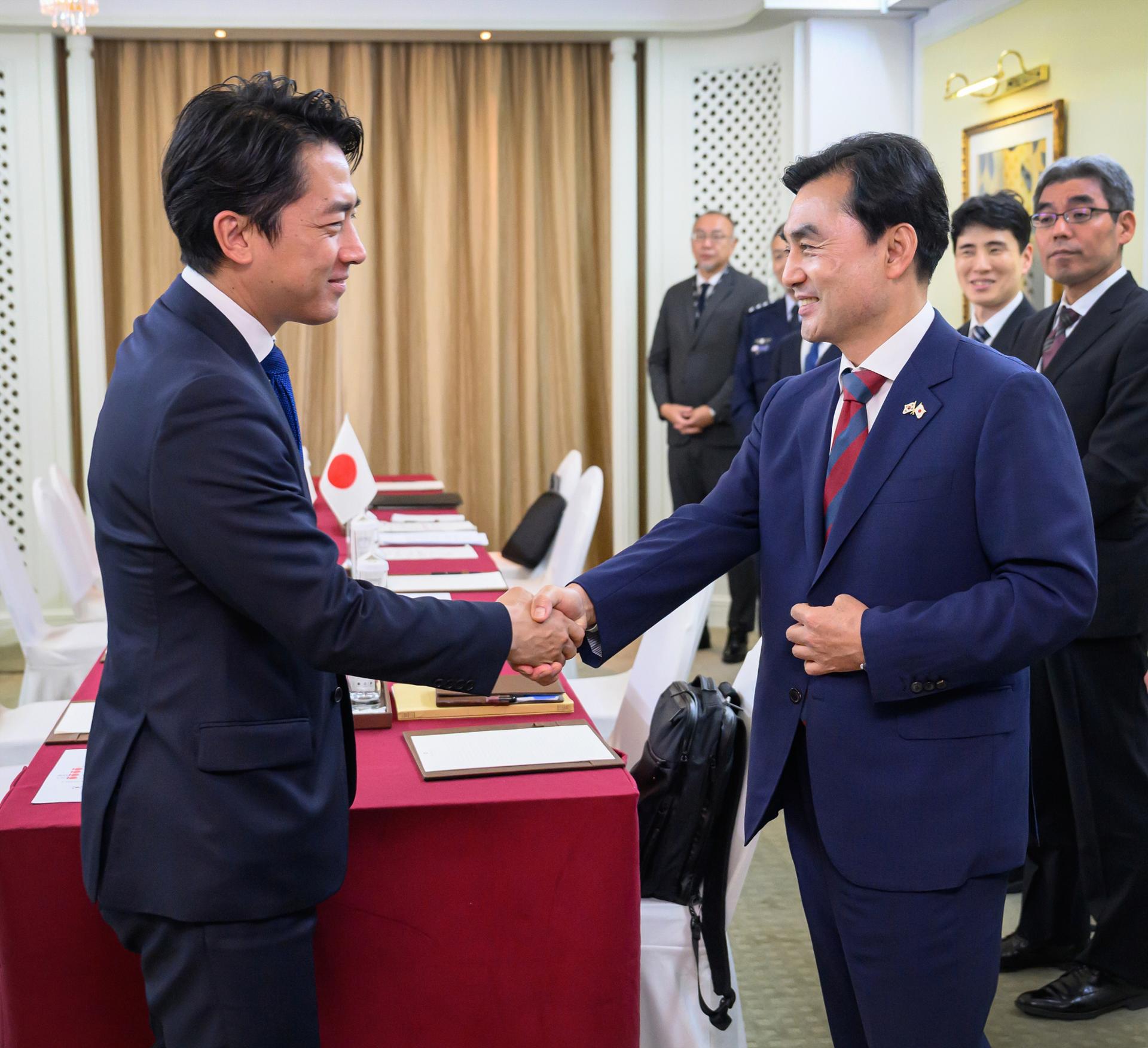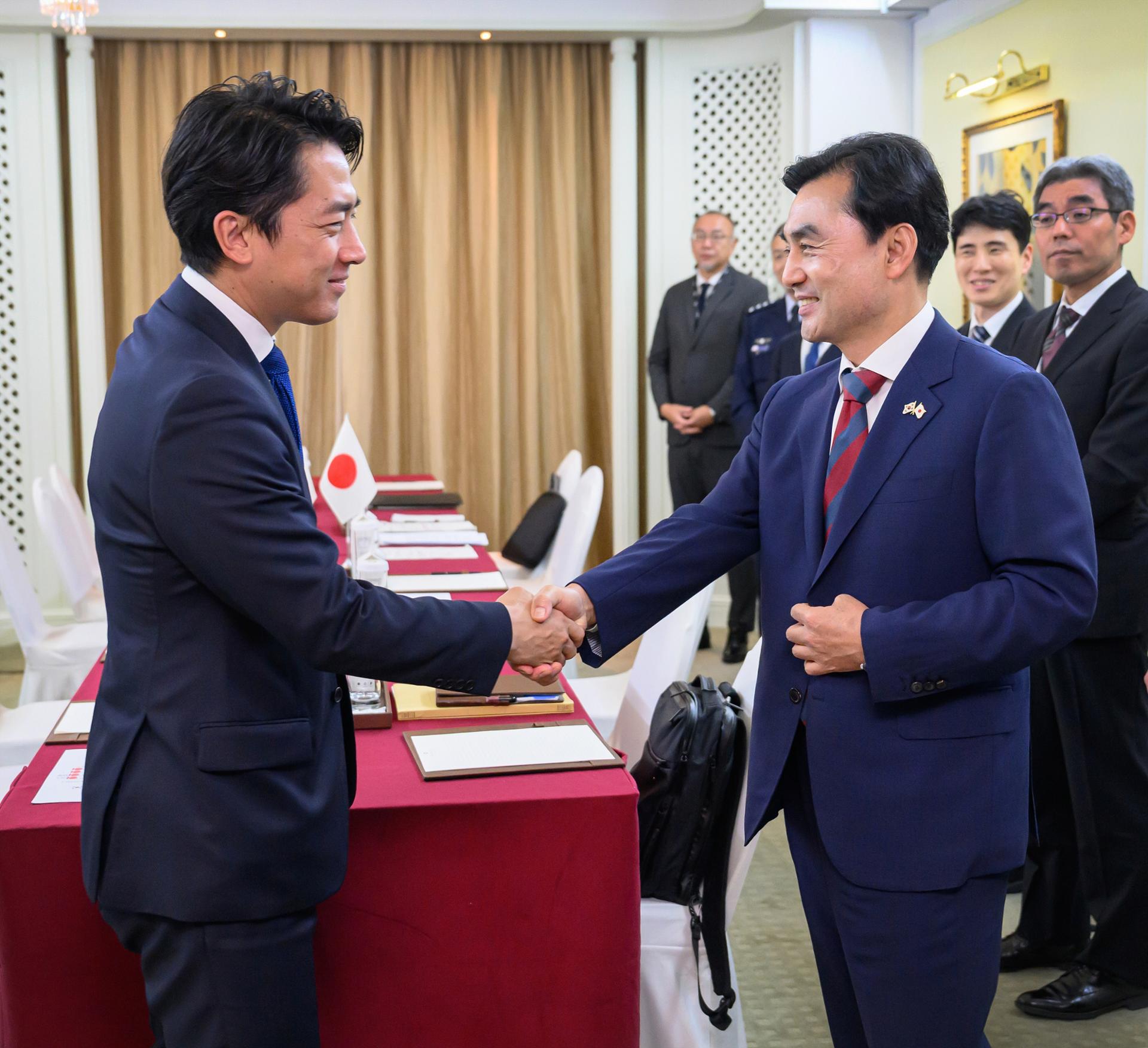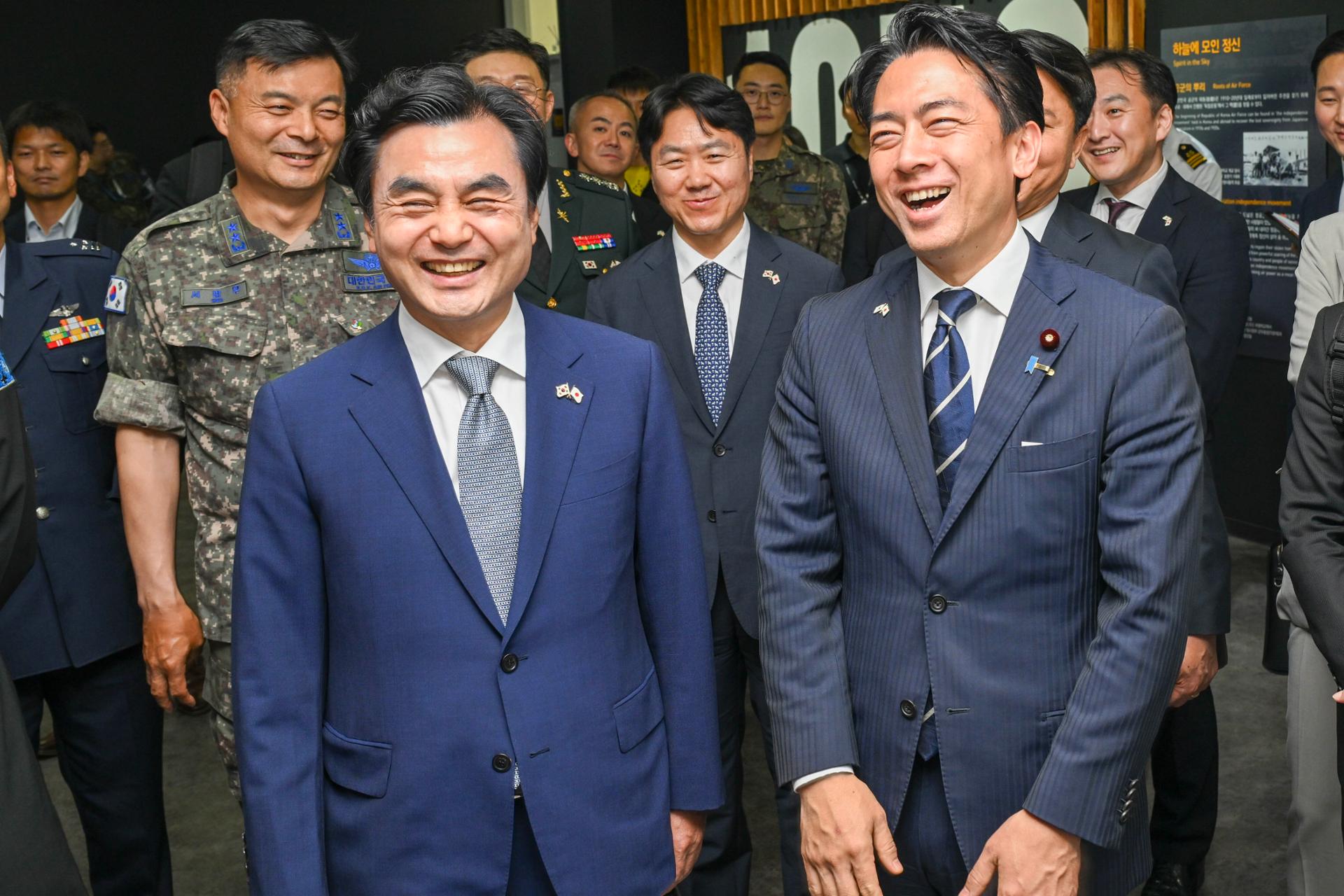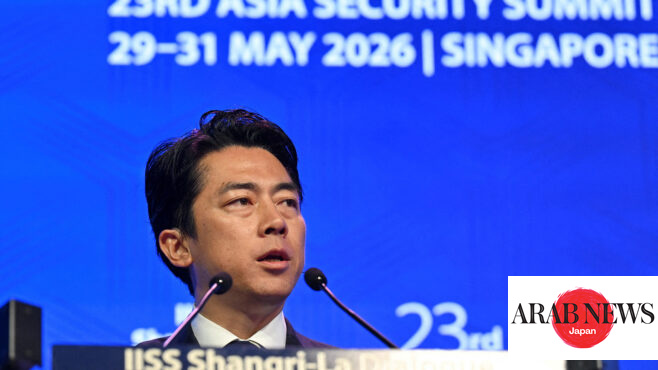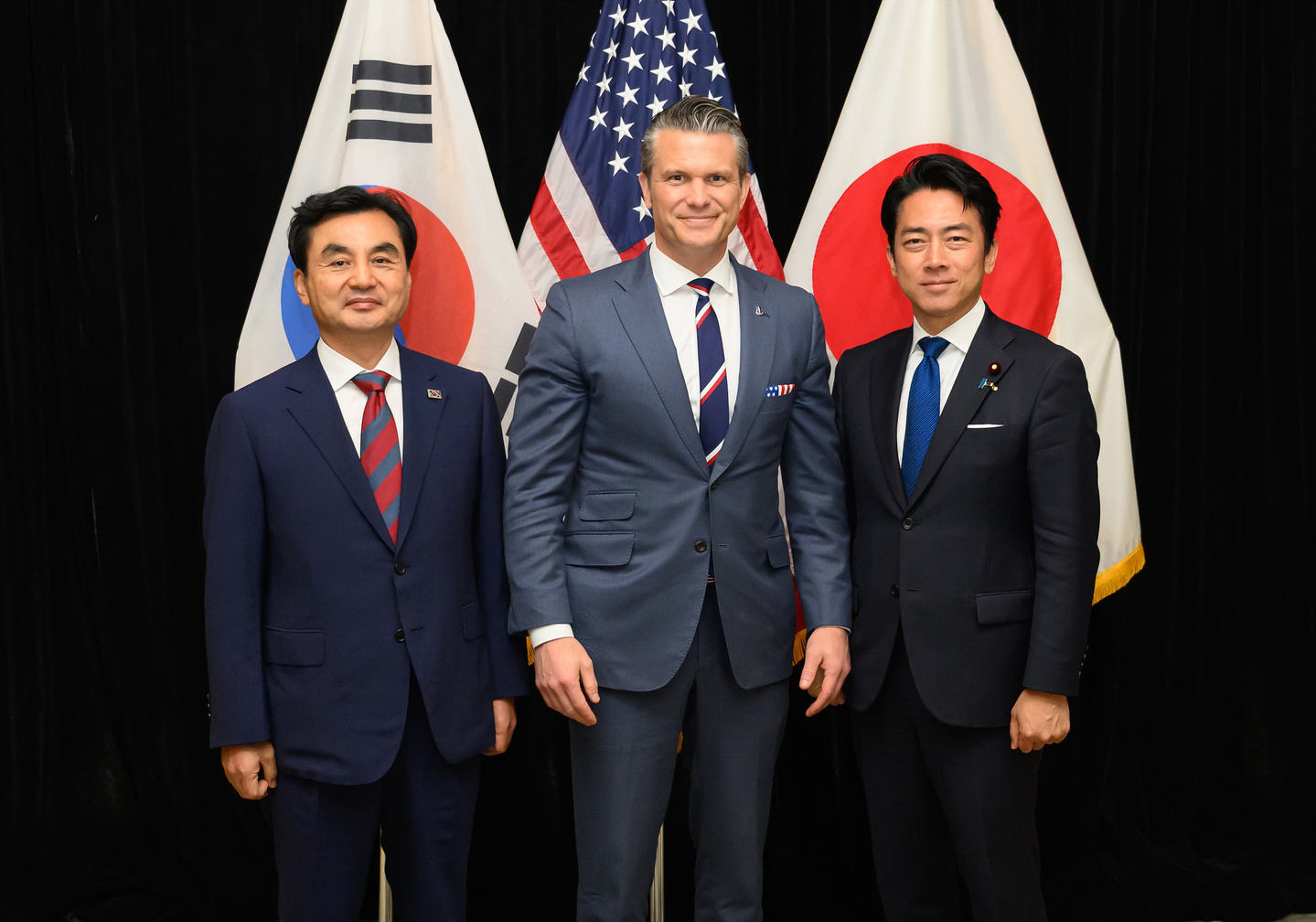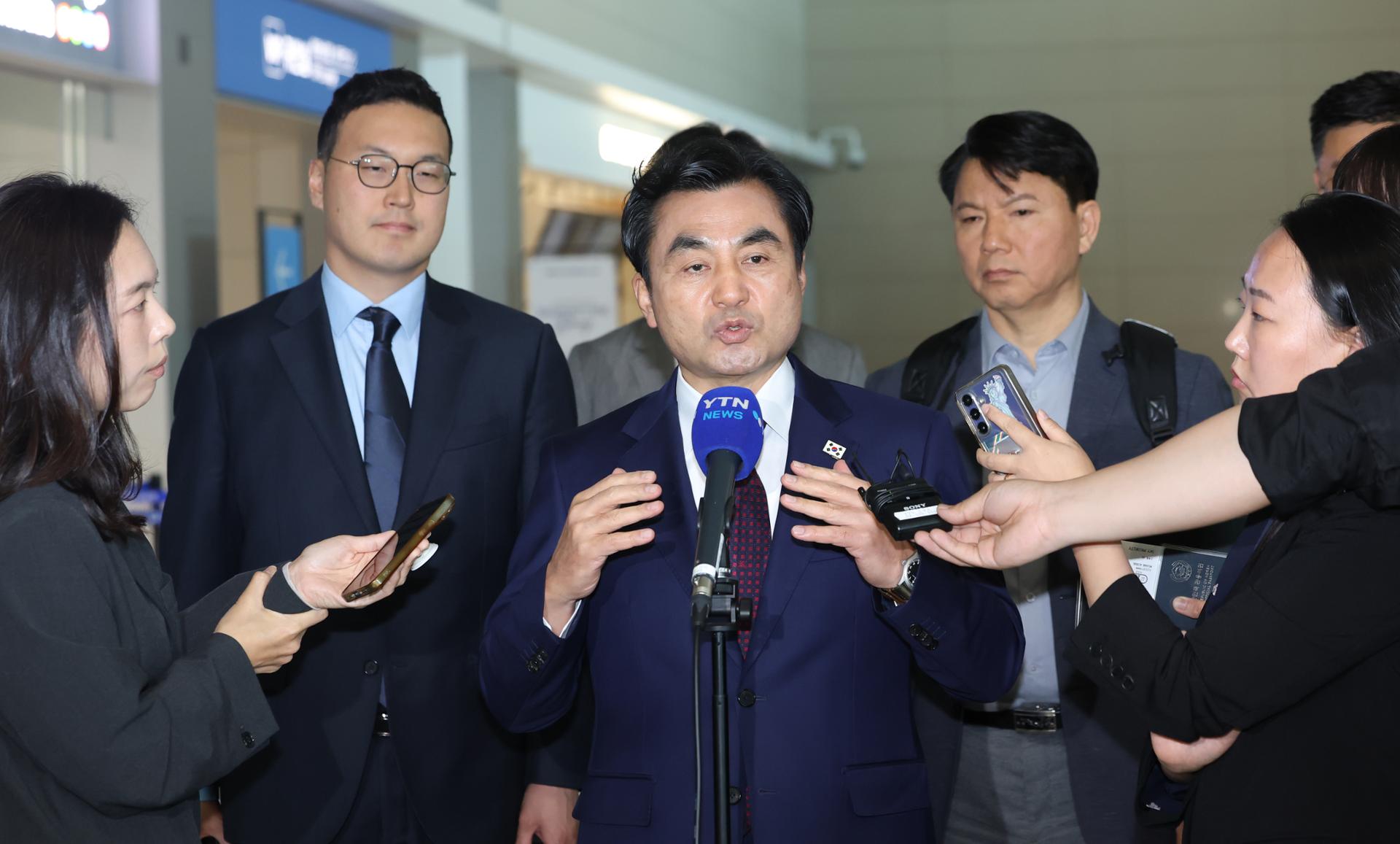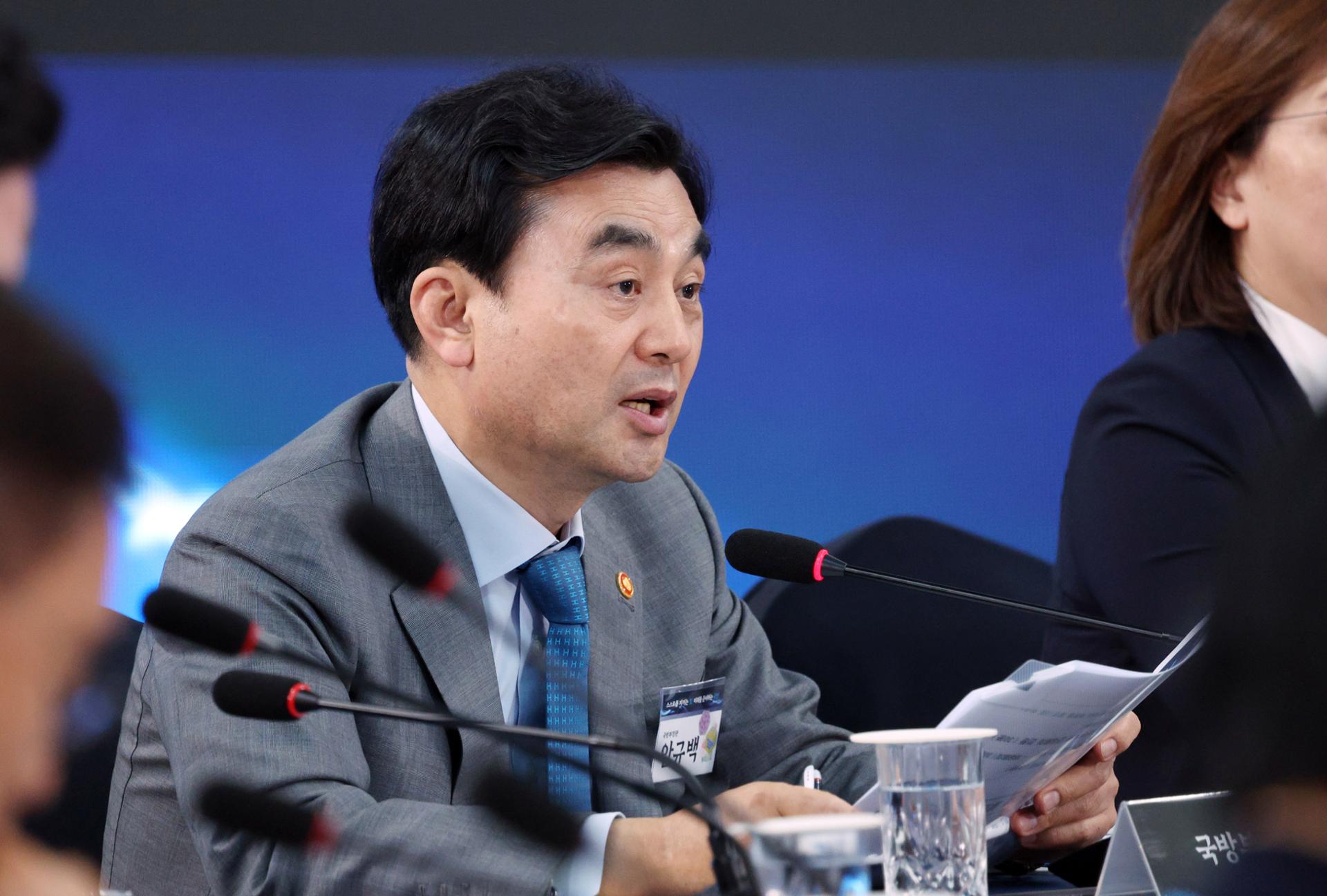
South Korean Defense Minister Ahn Gyu-back (right) shakes hands with Japanese Defense Minister Shinjiro Koizumi during their meeting on the sidelines of the 23rd Shangri-La Dialogue in Singapore on Saturday. (Defense Ministry) South Korea and Japan have discussed the possibility of a military logistics-sharing agreement, according to Seoul's defense minister, hinting at growing momentum for deeper defense cooperation despite lingering public unease over unresolved historical issues with Japan.South Korean Defense Minister Ahn Gyu-back revealed the discussion during a press briefing on Sunday in Singapore, where he was in attendance at the Shangri-La Dialogue security forum.The issue was raised during Ahn's meeting with Japanese Defense Minister Shinjiro Koizumi on the sidelines of the forum Saturday, according to the minister.The meeting resulted in an agreement to resume bilateral search-and-rescue exercises for the first time in nine years. The exercises have not been held since 2017 following a dispute over Japan's refusal to forgo the Rising Sun flag — widely seen in Korea as a symbol of Japanese imperialism — at an international fleet review at Jeju Island in 2018 and a subsequent maritime patrol aircraft row.Asked whether the ministers discussed an Acquisition and Cross-Servicing Agreement, or ACSA, Ahn acknowledged that the issue had been raised."There were discussions," Ahn said, while reiterating Seoul's position that the matter requires a cautious approach.An ACSA allows participating countries to provide military logistical support to one another, including ammunition, fuel, food and transportation services during operations and emergencies.The issue has increasingly emerged in bilateral security consultations as Japan seeks to institutionalize defense cooperation with South Korea. Tokyo views an ACSA as a means of strengthening trilateral security coordination with the United States and already maintains similar agreements with countries including the US, Australia, Britain, Canada, France, India and Germany.South Korea, however, has remained cautious.The issue remains politically sensitive due to public concerns stemming from Japan's 1910-45 colonial rule of the Korean Peninsula and broader unease over military cooperation with Tokyo.Some critics in Seoul have argued that such an agreement could be viewed as providing a basis for the deployment of Japanese Self-Defense Forces to the Korean Peninsula during a contingency. They contend that the prospect evokes memories of how Japan used the Korean Peninsula as a military staging ground for its expansion into China and other parts of the Asian mainland in the late 19th and early 20th centuries.The ACSA was first discussed in 2012 alongside the General Security of Military Information Agreement, or GSOMIA, which was designed to enable South Korea and Japan to share intelligence related to North Korea's nuclear and missile programs.However, both initiatives stalled after domestic opposition derailed the planned signing of GSOMIA. While the intelligence-sharing pact was eventually signed in 2016, discussions on an ACSA never regained momentum. South Korean Defense Minister Ahn Gyu-back (center left) holds talks with Japanese Defense Minister Shinjiro Koizumi (center right) alongside officials from both countries in Singapore on Saturday. (Defense Ministry) Despite Seoul's reservations, the issue appears likely to remain on the bilateral agenda.According to diplomatic and defense sources, Japan raised the need for an ACSA during a vice ministerial-level security policy dialogue involving the foreign and defense ministries of both countries earlier this month.If concluded, an ACSA would represent a further institutionalization of security cooperation between Seoul and Tokyo, while also aligning with broader US efforts to strengthen trilateral security cooperation among Washington, Seoul and Tokyo amid growing strategic competition with China.Ahn said any future progress would require greater public understanding and support in both countries.Koizumi likewise acknowledged the political sensitivities surrounding the issue."Japan is ready to further expand cooperation with South Korea," he said during a Shangri-La Dialogue session Saturday. "At the same time, I understand that any next step must also have the support of the South Korean people."The Japanese defense minister is also expected to visit South Korea later this month, according to diplomatic sources, a trip that could provide another opportunity for the two sides to discuss the issue.
Will military logistics pact become next step in South Korea-Japan defense ties?
South Korea and Japan have discussed the possibility of a military logistics-sharing agreement, according to Seoul's defense minister, hinting at growing moment
659 words~3 min read