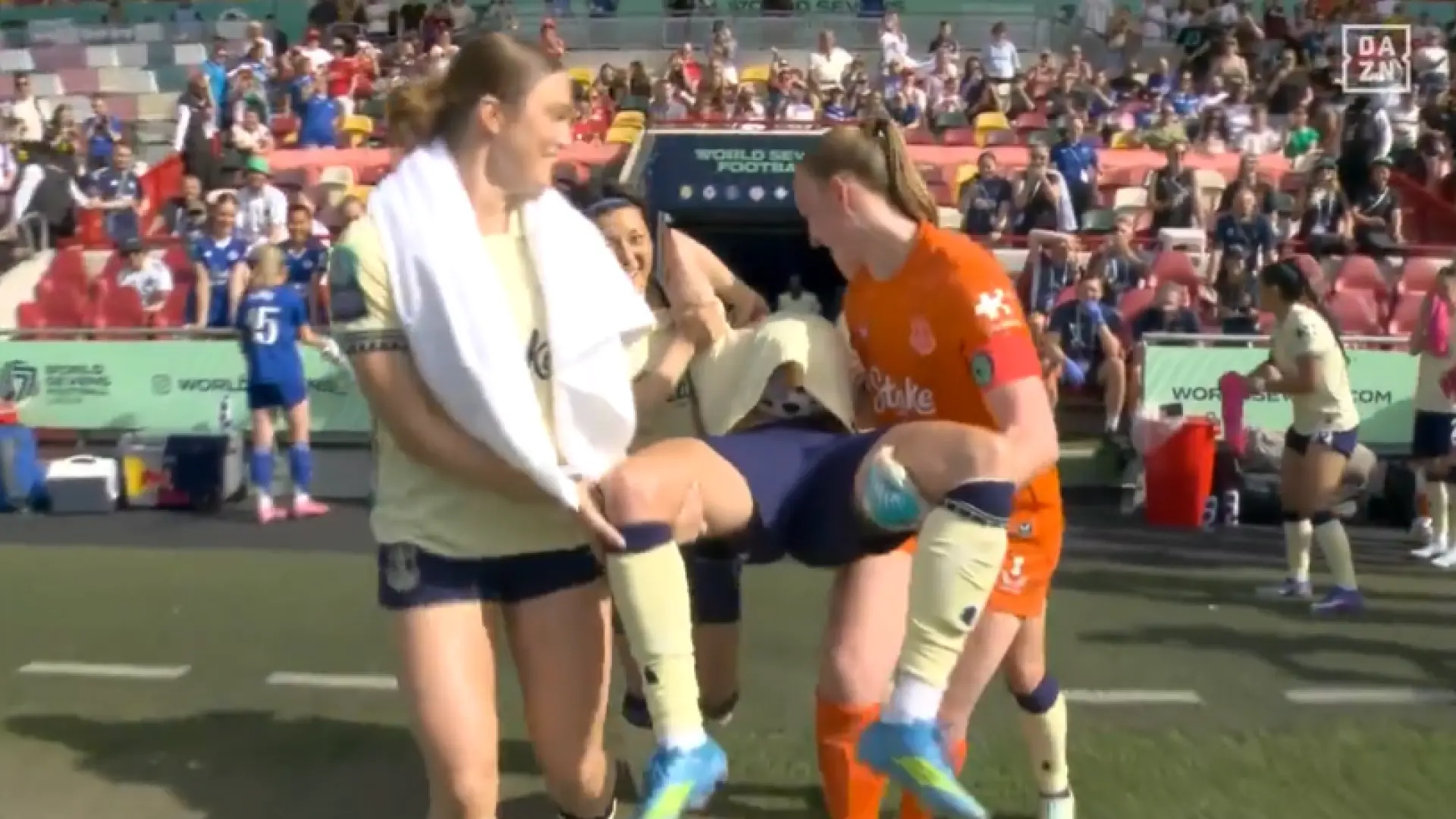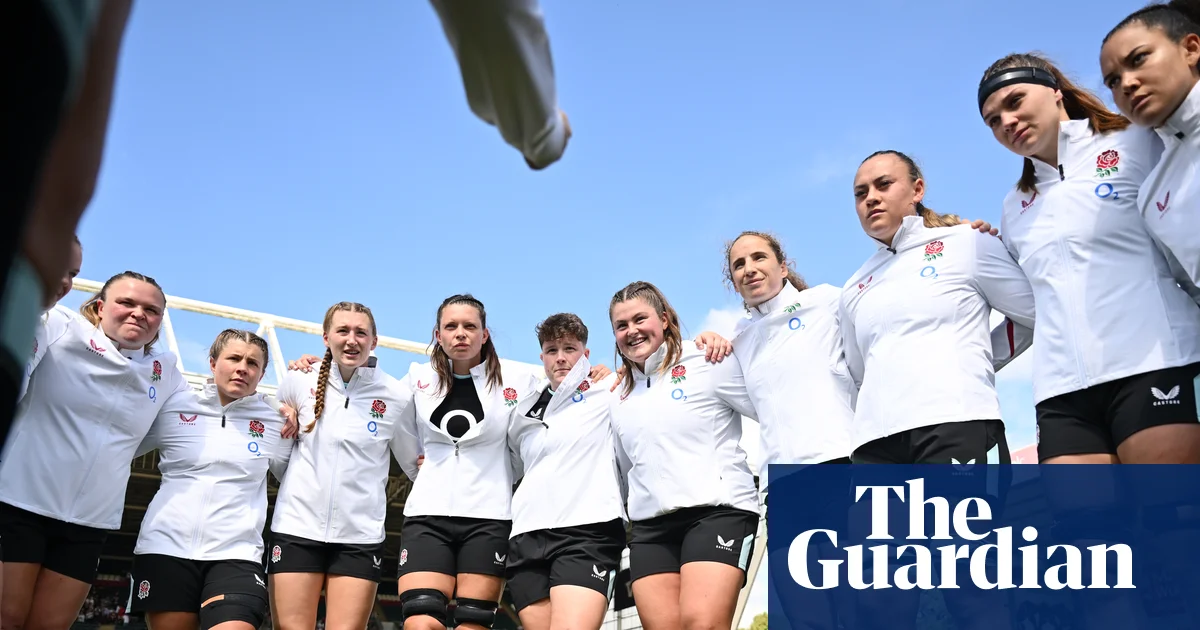
Women’s football will never recover. This will set it back years.This, of course, not being the 50-year ban that actually set women’s football back years, but Everton Women carrying on-loan Manchester United full-back Hannah Blundell out in a suitcase-cum-coffin before their World Sevens semi-final against United on Saturday and resurrecting her. Or Everton giving birth to a football with the faces of the injured players on it 24 hours earlier, not long after Aston Villa’s team danced the can-can and Chelsea’s squad turned themselves into a corporeal skittles board, and the Sky Sports television cameras forgot that they were meant to actually record Leicester City’s goal against London City Lionesses.According to certain pockets of the internet who caught a glimpse of the third iteration of the global seven-a-side tournament, World Sevens, at Brentford’s Gtech Stadium over the weekend, all of that and some of other stuff that occurred over this three-day whimsical jaunt of cartwheeling referees, no offsides and the revelation Manchester United manager Marc Skinner might actually know who Bad Bunny is marks the dead end for women’s football. This was an irredeemable insult to the great pantheon that is Elite Professional Football.World Sevens, co-founded by American entrepreneurs Jennifer Mackesy and Justin Fishkin touched down in west London last Wednesday. Only in its second year of existence, the third iteration of the competition, with its 15-minute halves on a pitch half the size of that of a traditional 11-a-side pitch but still (at least before last week) spiritually in the testing phase of existence, made plenty of noise.As Chelsea lifted the World Sevens trophy, along with half a million U.S. dollars in prize money following their 6-5 win against Manchester United, an overwhelming majority of that noise, on the ground, was positive. Players spoke about how much they had enjoyed it. Staff spoke of a sense of freedom and bonding that they aren’t generally privy to in the more demanding, high-stakes environment of club football. Directors of football and decision-makers spoke of the valuable opportunity to showcase their clubs as more than just women’s versions of their men’s teams, as original entities with personality in an increasingly personality-driven financial and media landscape.Marc Skinner dressed as Bad Bunny (Molly Darlington/World Sevens Football via Getty Images)Which, of course, got some people really, really angry online.The majority of the criticism aimed at World Sevens zeroed in on its supposed unseriousness. Which, in an age of dedicated set-piece coaches, field tilt and referees with Go Pros on their heads, might as well be a capital offence.Looking beyond the most obvious irony that men’s footballers do plenty of unserious things too, like have dedicated YouTube channels showcasing all of the raw milk they drink and name their dog Win, the bigger irony speaks to the ongoing challenge facing women’s football, specifically that at times it can feel like it cannot win.
There is cynicism about the World Sevens — but this is why women’s football needs it
There was a lot of criticism around World Sevens and a perceived lack of seriousness, but it was still elite sport — and enjoyable
1,103 words~5 min read