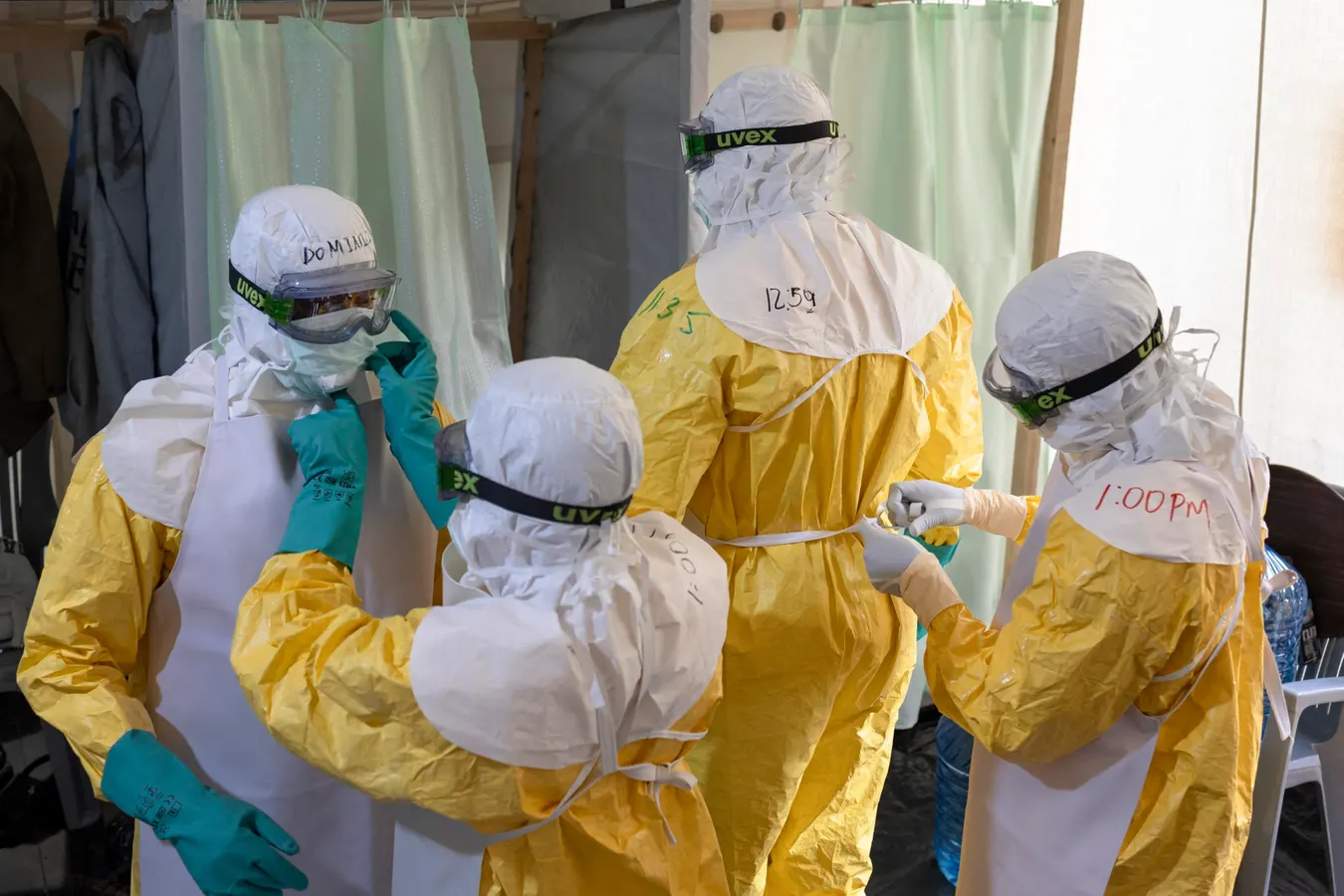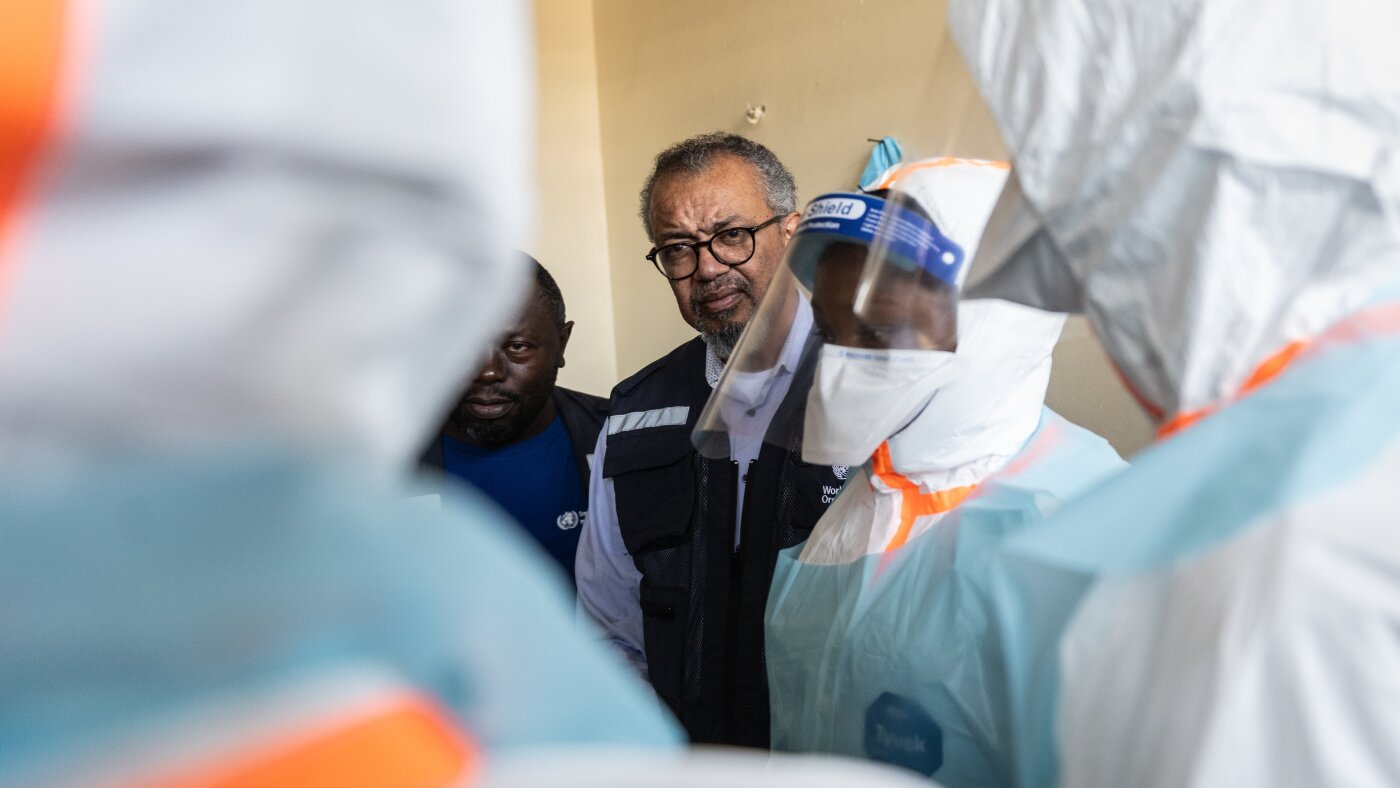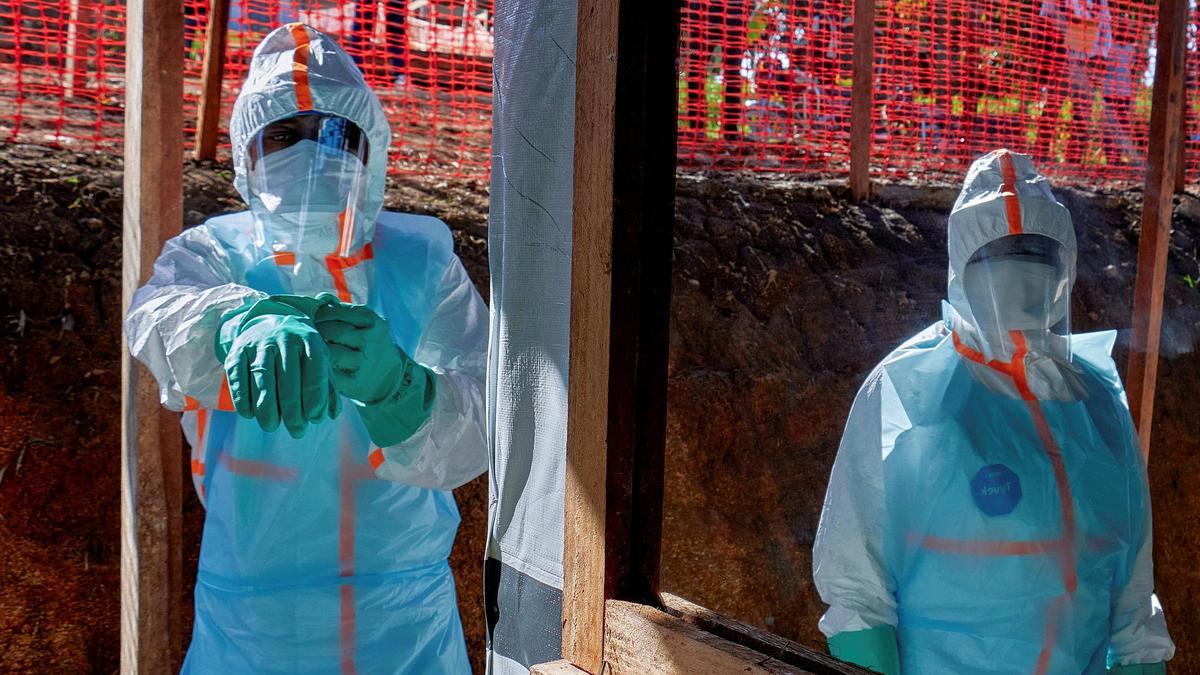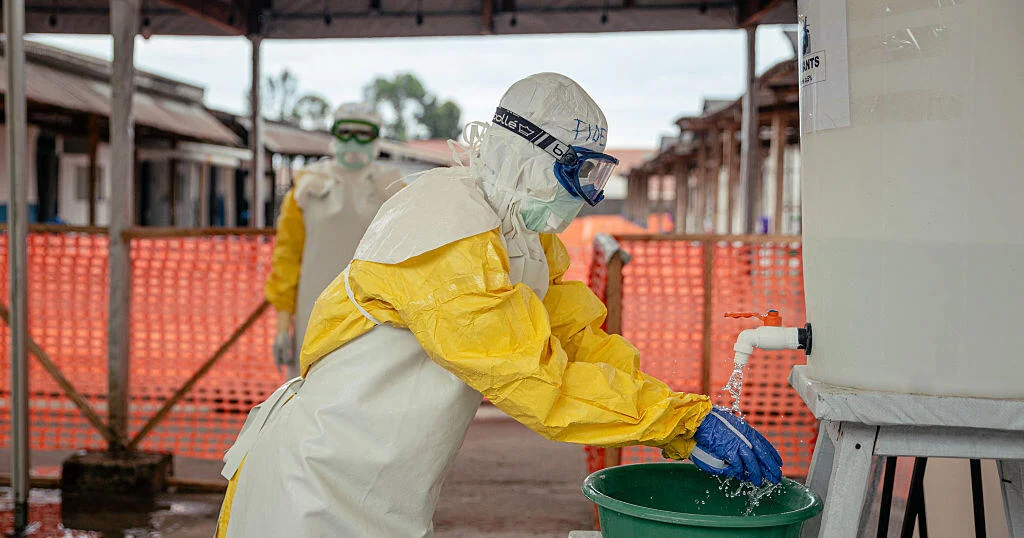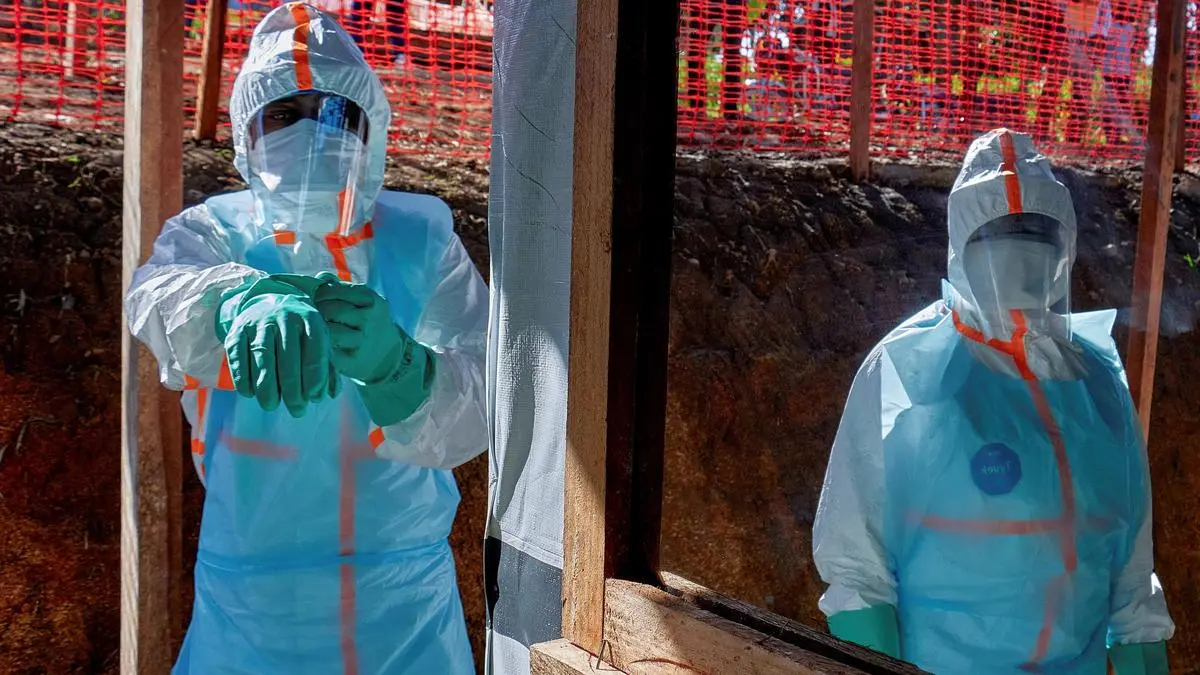
Health workers get dressed in personal protective equipment (PPE) at the Evangelical Medical Center, one of the facilities at the forefront of the response to the Ebola outbreak
| Photo Credit:
Gradel Muyisa Mumbere
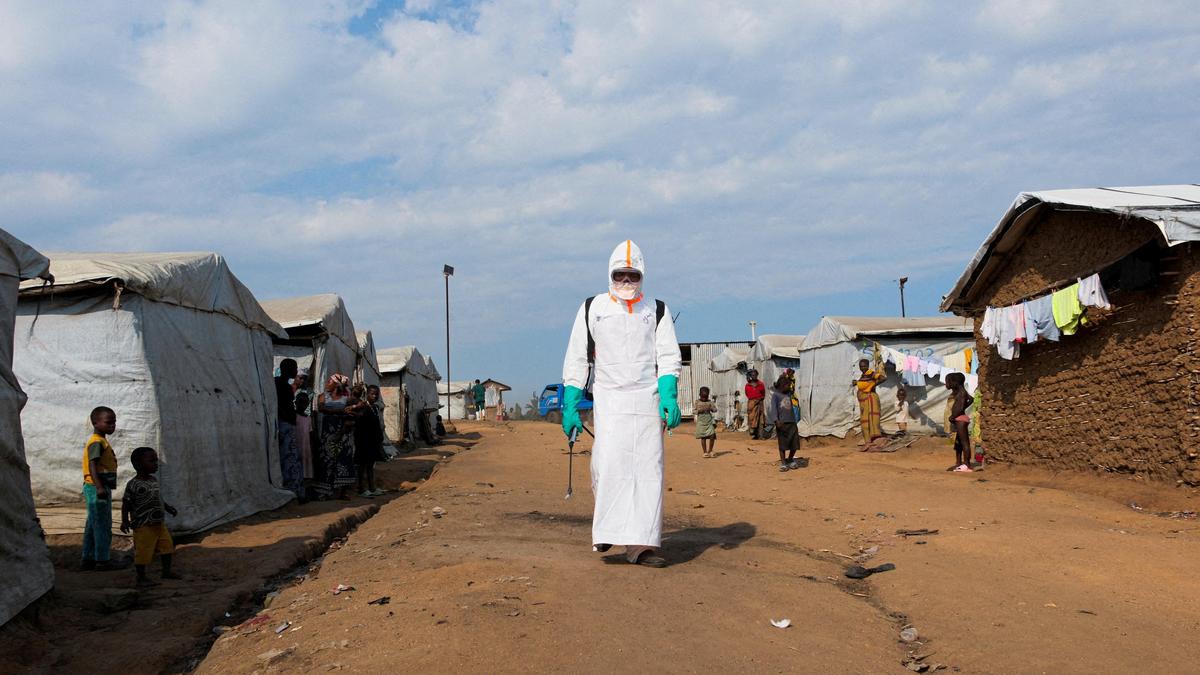
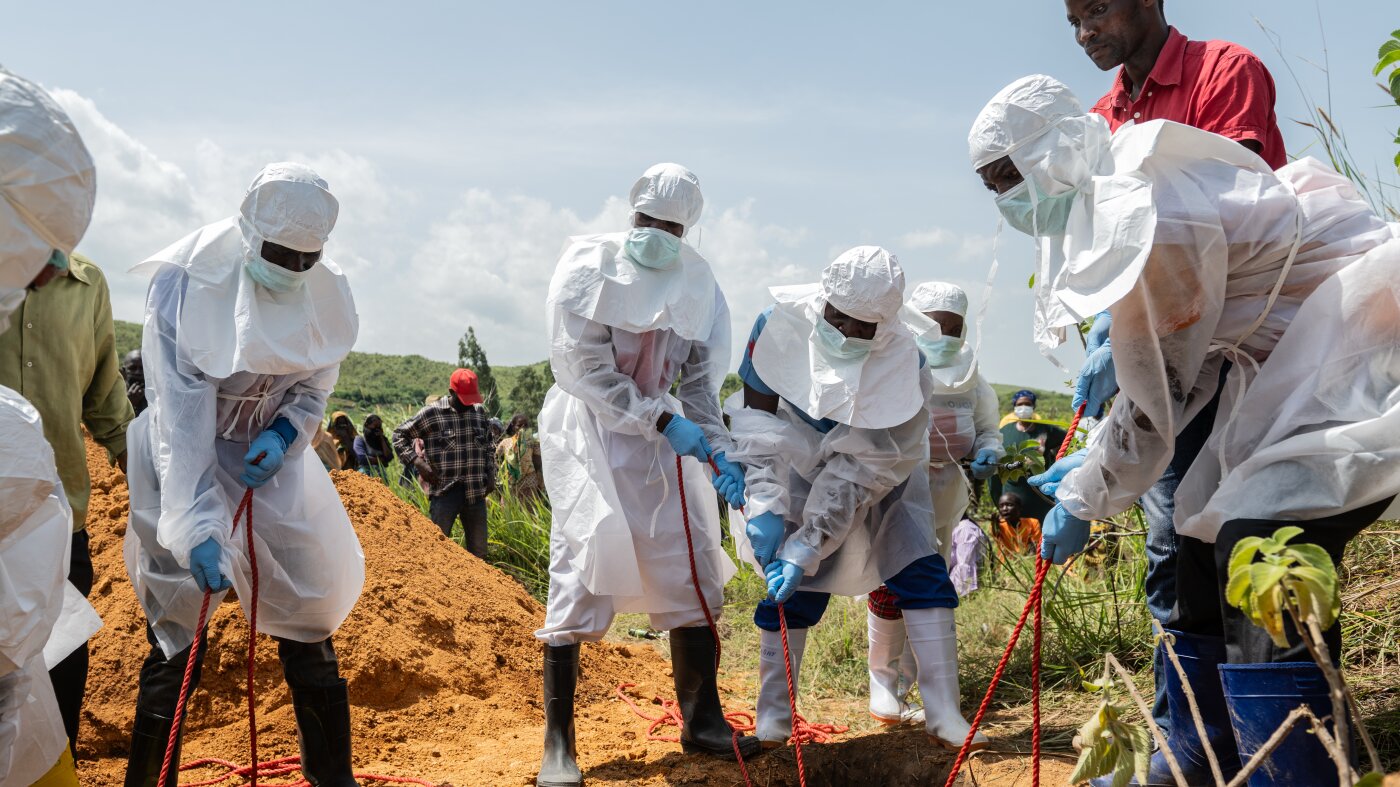
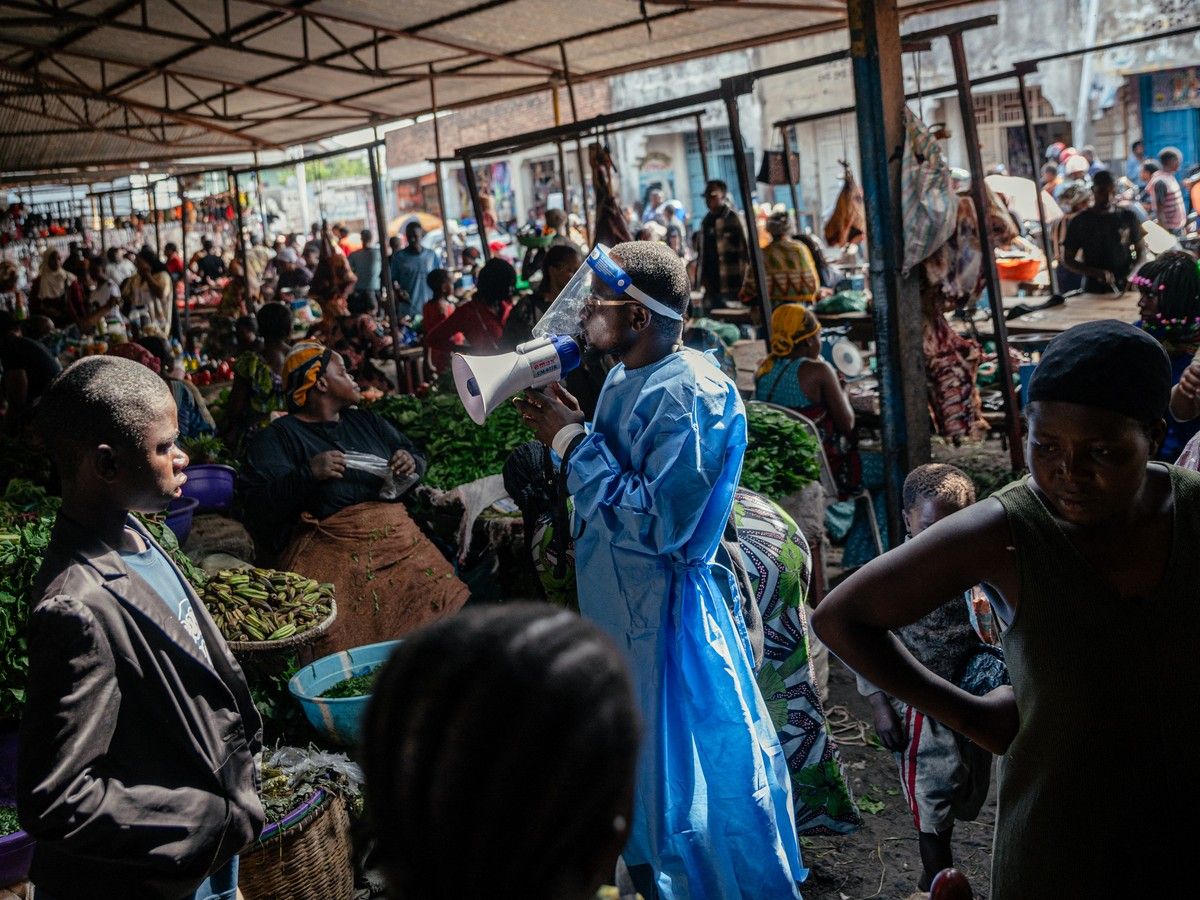
Congo’s Ebola outbreak is being detected across a widening swath of the country’s conflict-hit east as health authorities struggle to trace exposed contacts and determine the true scale of the epidemic.The outbreak’s apparent geographic footprint expanded to 22 affected health zones across three eastern provinces — from 13 reported just days earlier — according to government data. Health officials are simultaneously clearing testing backlogs and reclassifying hundreds of suspected cases, making it difficult to determine how much of the increase reflects new transmission and how much reflects improved detection and surveillance.The rapidly growing epidemic has become one of the most complex Ebola outbreaks in years, unfolding across areas impacted by armed conflict, mass displacement and weak health infrastructure. The Bundibugyo strain responsible has no approved vaccine or treatment and has also infected nine people in neighboring Uganda.Authorities increasingly view community cooperation as central to bringing the outbreak under control. Success will depend on “the trust, engagement and leadership of local communities,” the Congolese government and World Health Organization said in a joint statement Sunday.Escaped PatientsCongo recorded a total of 282 confirmed cases and 42 confirmed deaths as of May 30, according to the latest situation report from Congo’s National Institute of Public Health. Nineteen new confirmed infections were reported that day alone.Responders are losing visibility over transmission chains as the virus spreads through insecure areas, with contact follow-up rates of just 45%. Families are refusing diagnostic swab testing on corpses in morgues, while shortages of medicines, protective equipment and funding continue to hamper response efforts. Eleven suspected patients fled a hospital in Bambu on Friday because of inadequate nutritional support, while five more patients escaped isolation facilities on Saturday, according to official reports.The outbreak now spans 14 health zones in Ituri province, seven in North Kivu and one in South Kivu. Mongbwalu, considered the epidemic’s point of origin, lies in Djugu territory where multiple armed groups operate — and where frequent population movements occur toward Uganda.Those difficulties have persisted even as surveillance improves. Earlier reports showed suspected case totals exceeding 1,000 before investigators reviewed historical deaths, cleared testing backlogs and ruled out large numbers of non-cases. Authorities have said they would rather over-count potential infections than miss transmission chains.The Bundibugyo strain has proven especially difficult to detect as early symptoms can resemble malaria, typhoid and other common illnesses in eastern Congo. Health officials have warned that the outbreak likely circulated for weeks before laboratory confirmation identified the virus.Published on June 1, 2026