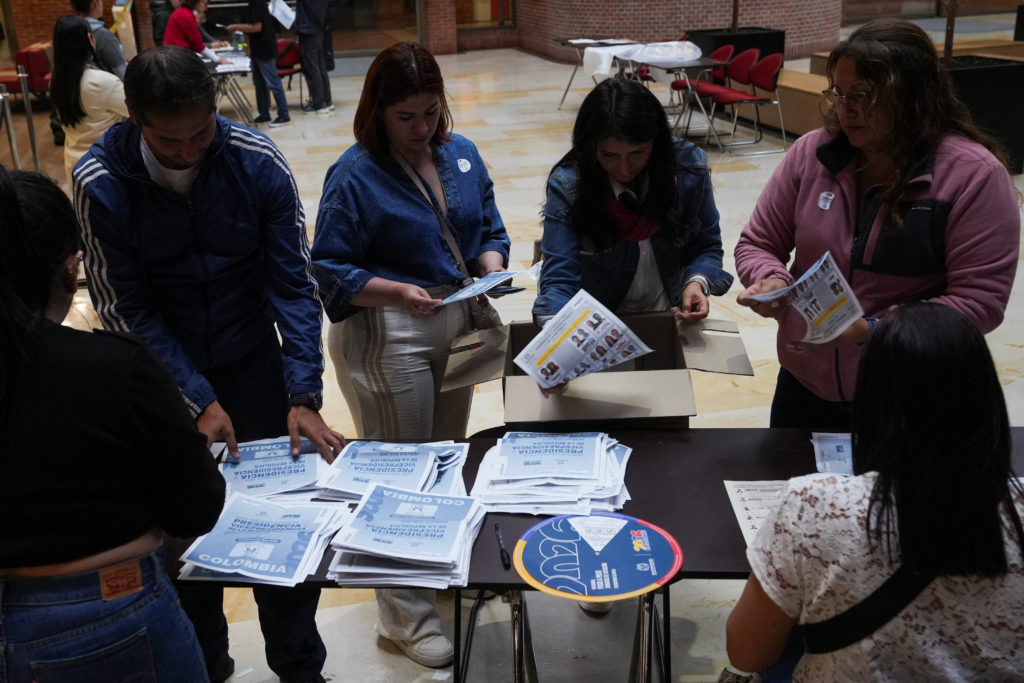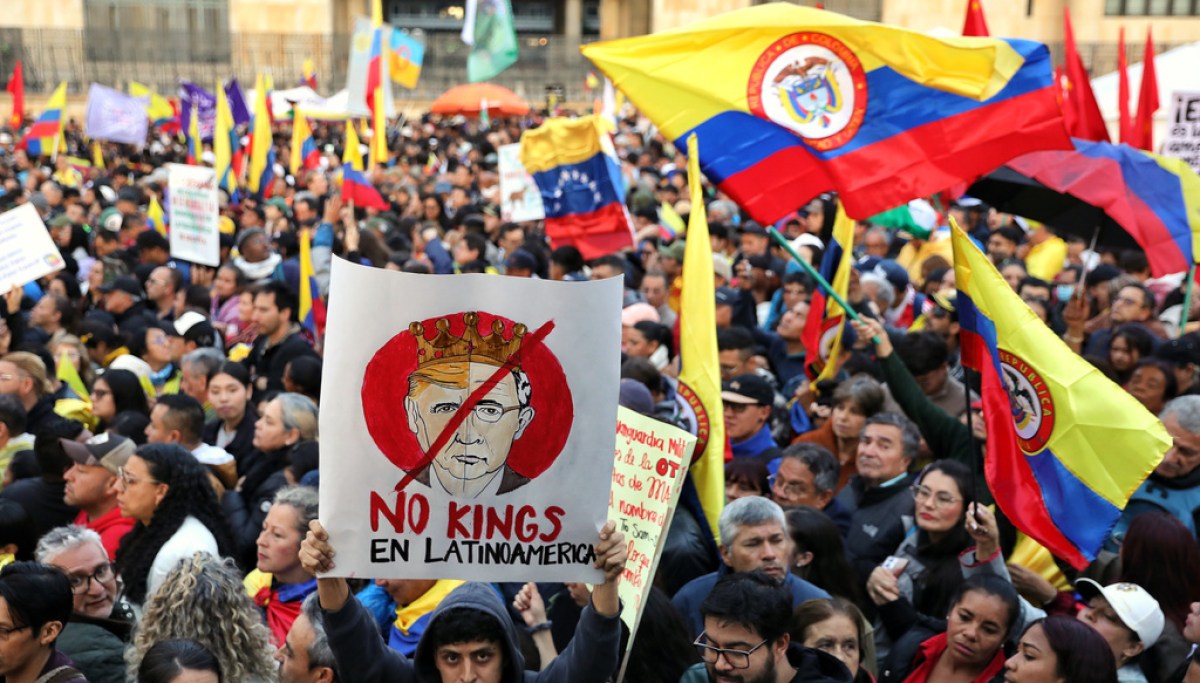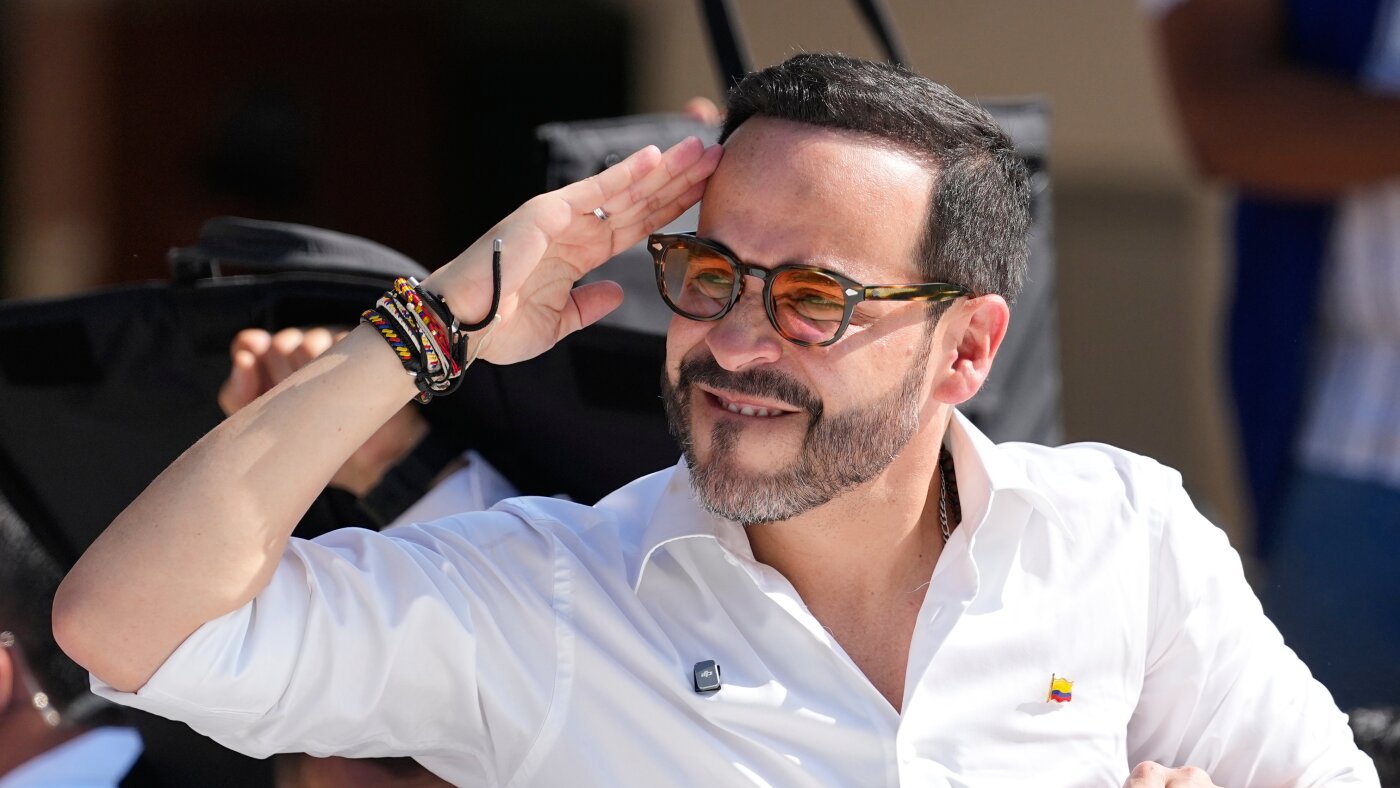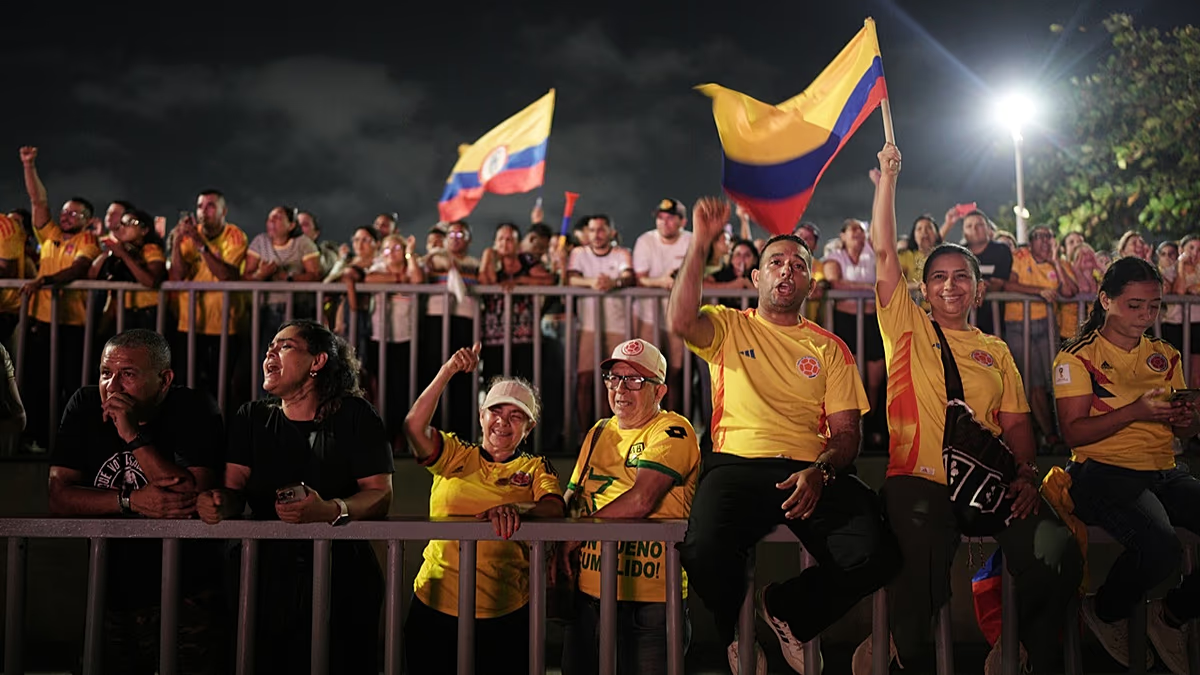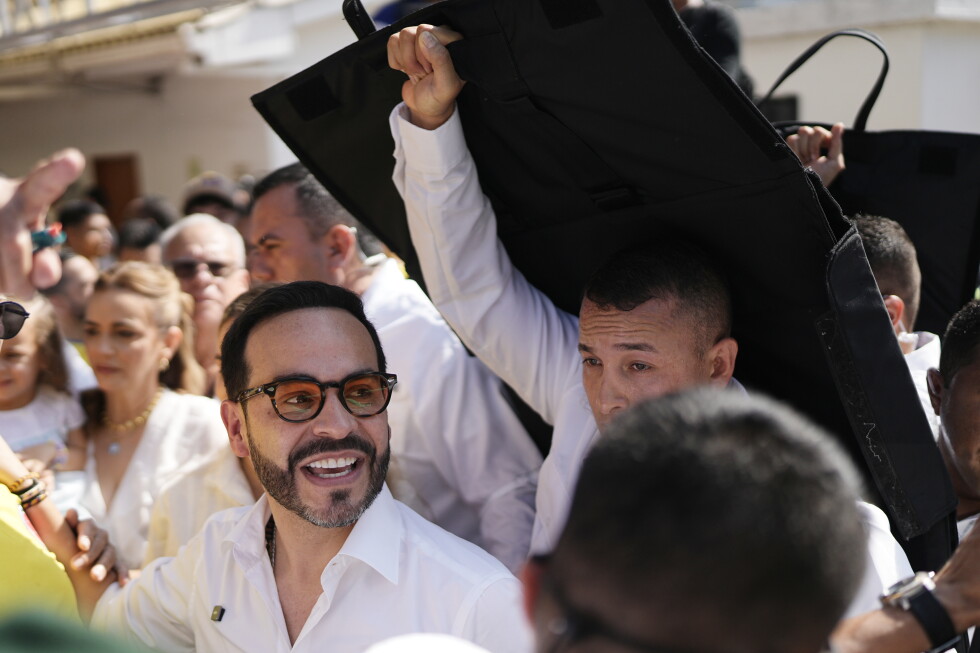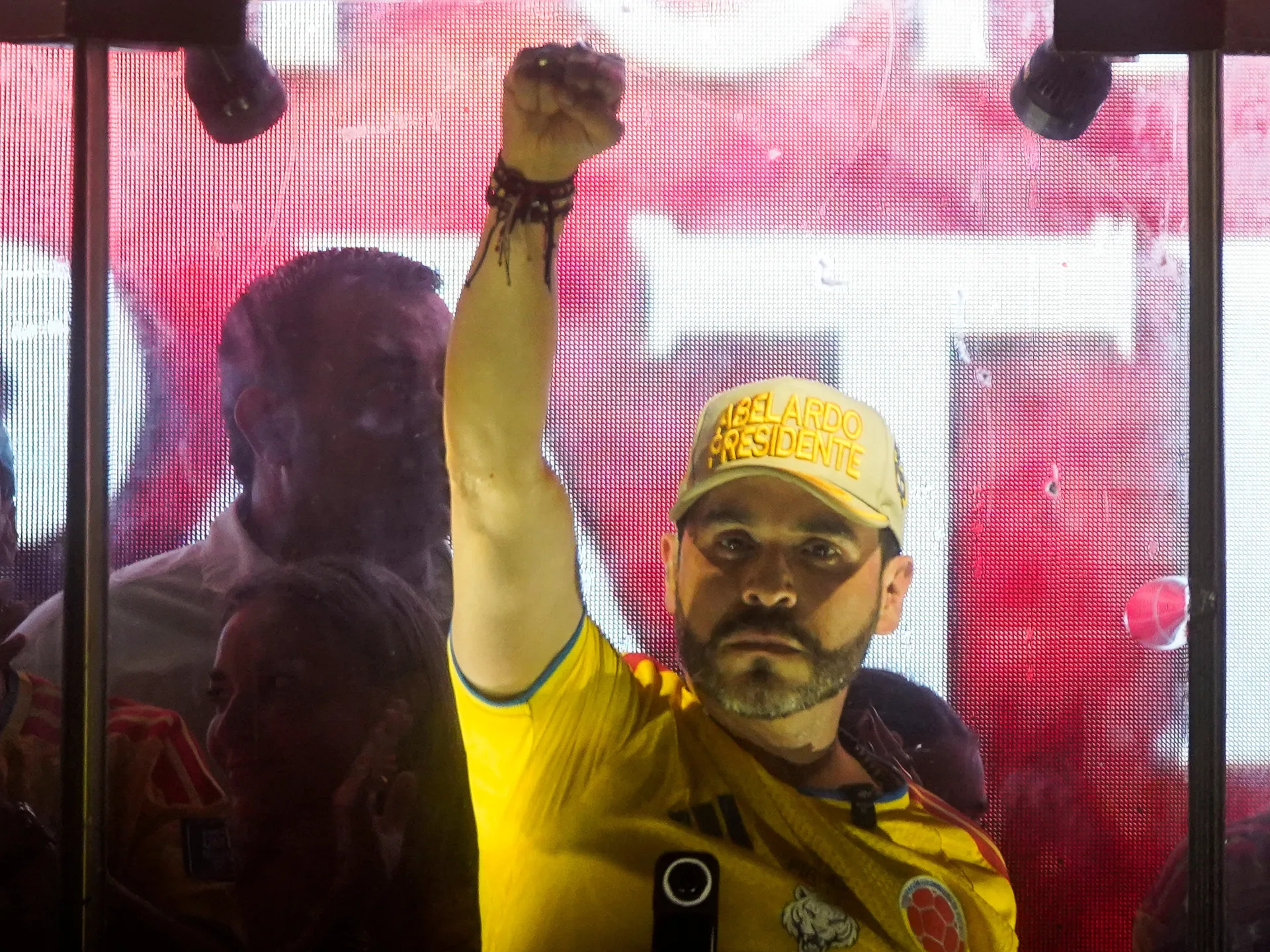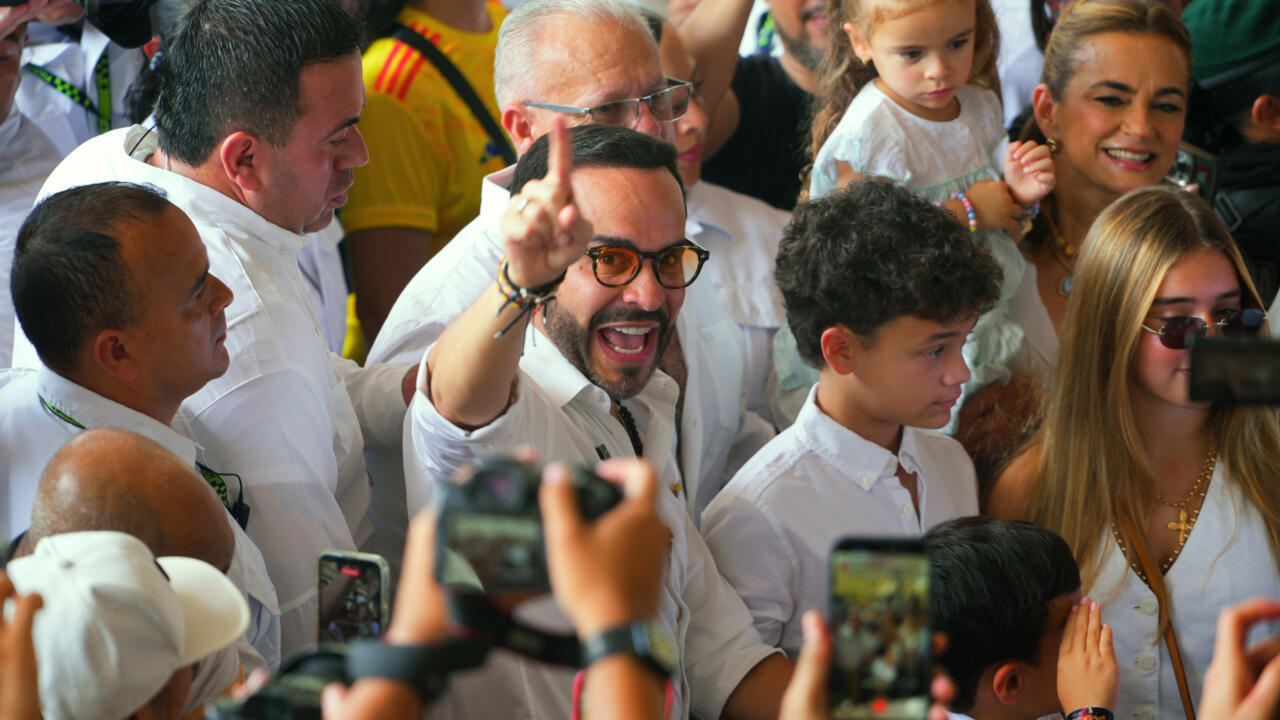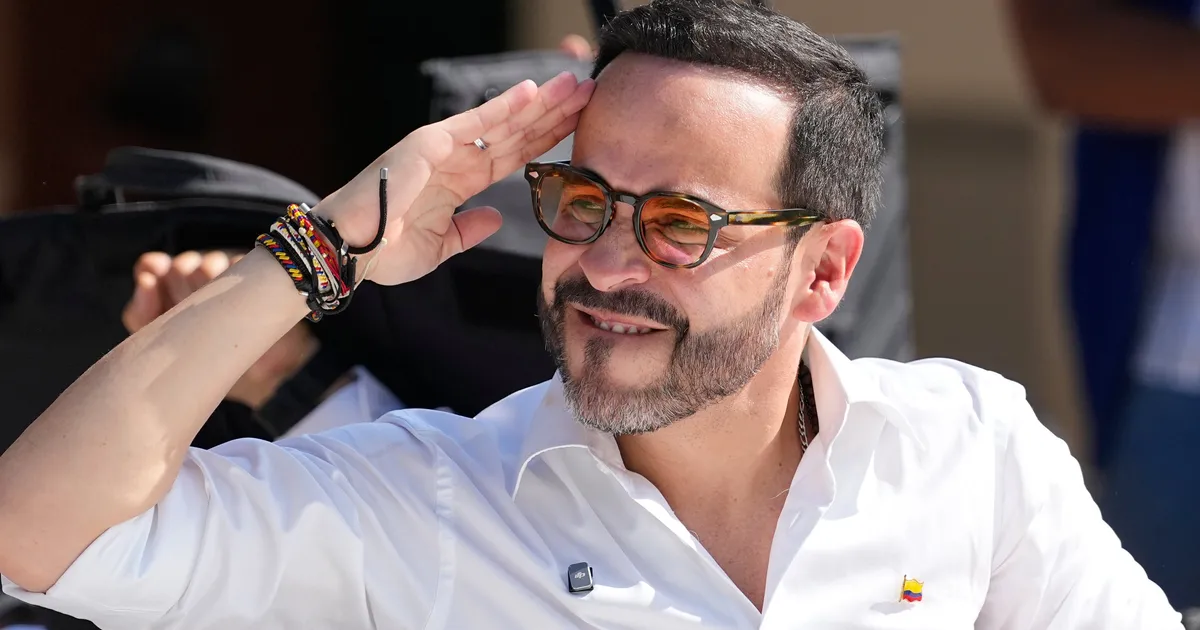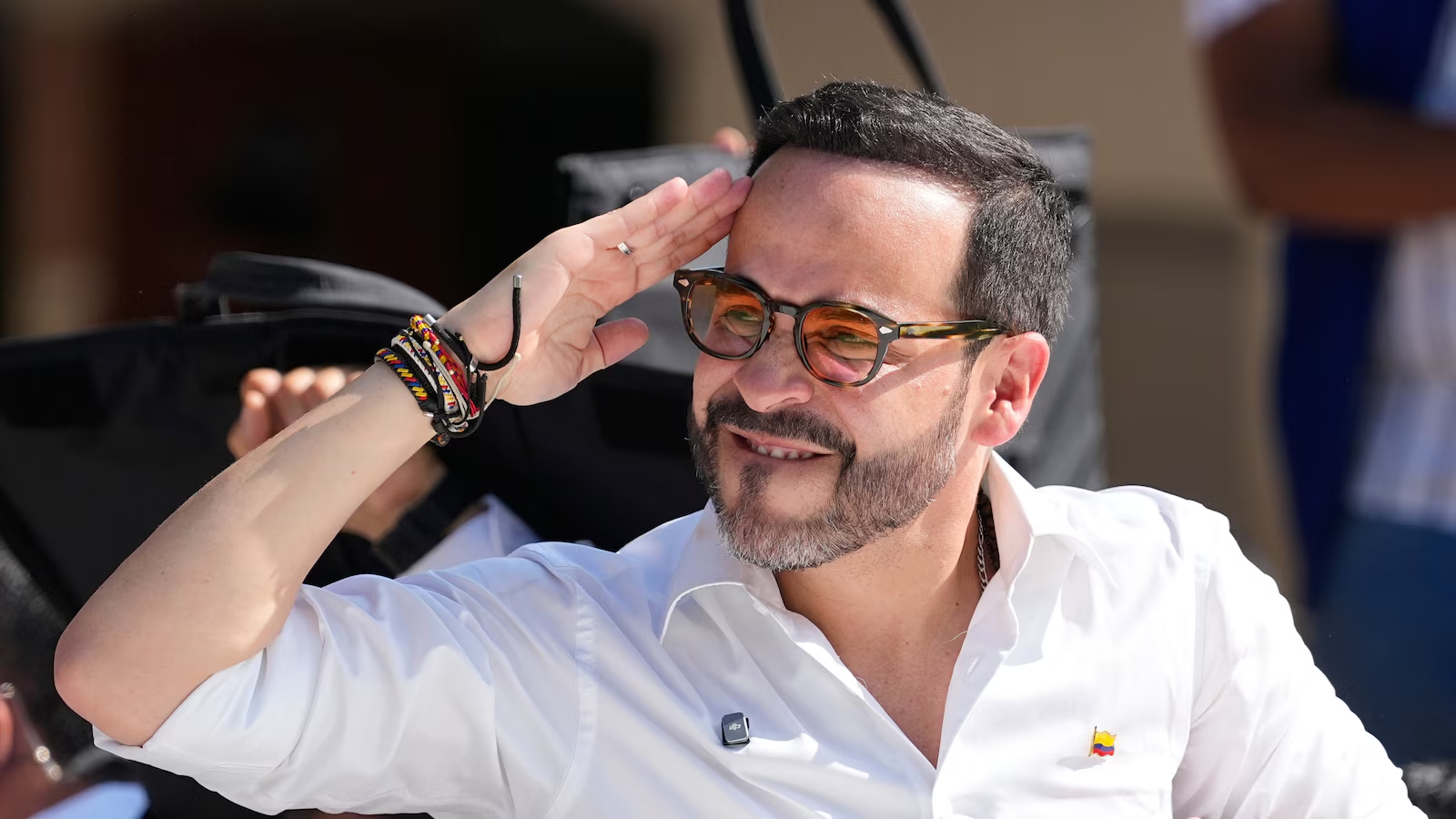
Colombia's presidential candidate Abelardo de la Espriella greets supporters in Barranquilla, Colombia, Sunday. (AFP-Yonhap) Tough-on-crime lawyer Abelardo de la Espriella and peace-builder Ivan Cepeda were leading the vote count in the first round of Colombia’s presidential election Sunday, and are to face off in a runoff in the South American nation later in June.De la Espriella — a newcomer known as “El Tigre, or “The Tiger” — has sought to portray himself as a supporter of US President Donald Trump, vowing to crack down on criminal groups.He leads the race with nearly 44 percent of the votes, Colombia’s electoral authorities said late Sunday, but fell short of the 50 percent needed to win in the first round.Second is Cepeda, a progressive senator and an ally of Colombia's outgoing President Gustavo Petro who has promised to carry on a fraught push for “total peace.” Cepeda scooped up just under 41 percent of the vote.Paloma Valencia, a candidate for Colombia’s establishment party who pitched herself as a centrist, got less than 7 percent of the vote.While Cepeda coasted comfortably ahead in polls throughout the campaign, he was neck-and-neck with de la Espriella on Sunday night, which is likely to spell trouble for the June runoff, where de la Espriella is likely to scoop up many of the voters that threw their support behind Valencia.De la Espriella and his supporters celebrated Sunday night at their campaign headquarters in the coastal city of Barranquilla.“In 21 days we’re going to change the history of Colombia,” he said triumphantly.Voters across Latin America are increasingly ditching leaders that pitched progressive policies aimed at addressing the root issues of conflict, such as lack of opportunities for young people and corruption. Instead, voters have increasingly turned to candidates promising heavy-handed security crackdowns.The polarized vote comes as the Trump administration is playing a more aggressive role in Latin America than any US government in decades, placing mounting pressure on countries like Colombia, Mexico, and Ecuador to crack down on crime.The election has also underscored two sharply diverging visions for the future of peace in a country marked by years of conflict.On one side, Cepeda has promised to continue Petro’s progressive agenda and a largely failed effort of trying to negotiate peace pacts with armed groups, following a plan that’s likely to sharply contrast with Trump’s vision for Latin America.On the other side, de la Espriella has promised to fiercely crack down on criminal groups and build 10 mega-prisons, following in a similar vein as El Salvador’s President Nayib Bukele in his war on gangs, which has fueled accusations of human rights abuses.“Today’s election isn’t just important for us, it’s important for all of Latin America,” said Juan Acevedo, a 62-year-old sociologist walking out of a voting station in Colombia’s capital Sunday morning. “Whoever wins here will suggest to the region if progressive policies will continue or if things are going to return to the right.”The election — 10 years after Colombia signed an historic peace pact with guerrillas of the Revolutionary Armed Forces of Colombia, or FARC — as seen as a referendum on Petro’s policies.The deal a decade ago had offered hope to break the nation’s vicious cycle of fighting between rebel groups and the government. But violence has since roared back, in part because armed groups have taken advantage of peace negotiations with Petro's government to make territorial gains.That came to a head in the lead-up to the election. Criminal groups have increasingly launched drone strikes, armed attacks have plagued the race and last June, 39-year-old politician and presidential hopeful Miguel Uribe Turbay was fatally shot at a political rally. Still, Cepeda and Petro have maintained strong support among many because of progressive policies pushed forward under Petro, such as boosting the minimum wage.Both de la Espriella and Valencia have touted their affinity for Trump, though Valencia’s electoral loss dealt another blow to a once powerful political current known as Uribismo, indicating that conservative voters are turning away from more traditional political parties in favor of Bukele and de la Espriella’s punitive populism.Maria Eugenia, a 57-year-old seamstress who was stitching a pair of jeans on Friday in downtown Bogota, Colombia's capital, said she welcomed an all-out offensive on an expanding slate of criminal groups, regardless of the human cost.While she approved of Petro’s pushes to improve the country's medical infrastructure, she said she was voting for de la Espriella because violence in rural areas of the country has gotten out of hand. She said negotiating peace pacts was simply “rewarding” armed groups.“Of course, whenever you come down with a heavy hand, there’s always going to be debate,” she said. “But some people are going to have to fall to clean up what needs to be cleaned.”Others, like Acevedo, the sociologist, said a security crackdown such as the one promoted by de la Espriella meant a return to past military campaigns that he said only reinforced Colombia's cycle of violence.He said he supports Cepeda, adding that while the government hasn't done a perfect job — failing to pass ambitious reforms and follow through on promises to reduce violence — it was better to continue pushing forward with their political coalition's efforts to take a different approach in addressing the country's violence.He added that his main critique of Petro's administration was the power grabs made by criminal groups as they negotiated with the government. He said he hoped that if Cepeda won, he would strike a better balance between negotiating peace and maintaining control over those groups.“We're a country that has lived through 60 years of conflict,” Acevedo said. “The danger here is that we return to the times where everyone is saying that the only way to solve our problems is with bullets and more war.” (AP)
Trump fan through to Colombia runoff
Tough-on-crime lawyer Abelardo de la Espriella and peace-builder Ivan Cepeda were leading the vote count in the first round of Colombia’s presidential election
TL;DRAI
Trump-aligned outsider De la Espriella leads Colombia's first round with 44% vs. progressive Cepeda's 41%, forcing a June runoff. The result mirrors Latin America's shift to punitive populism, raising geopolitical and supply-chain risk for firms operating in the region.
958 words~4 min read