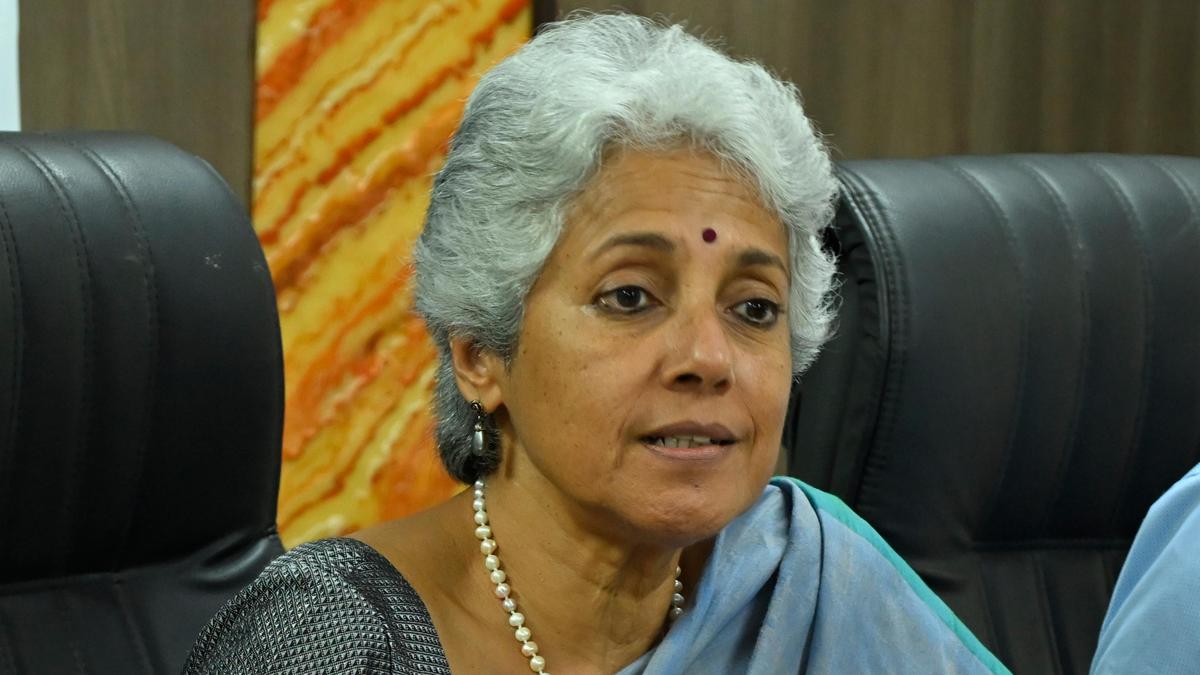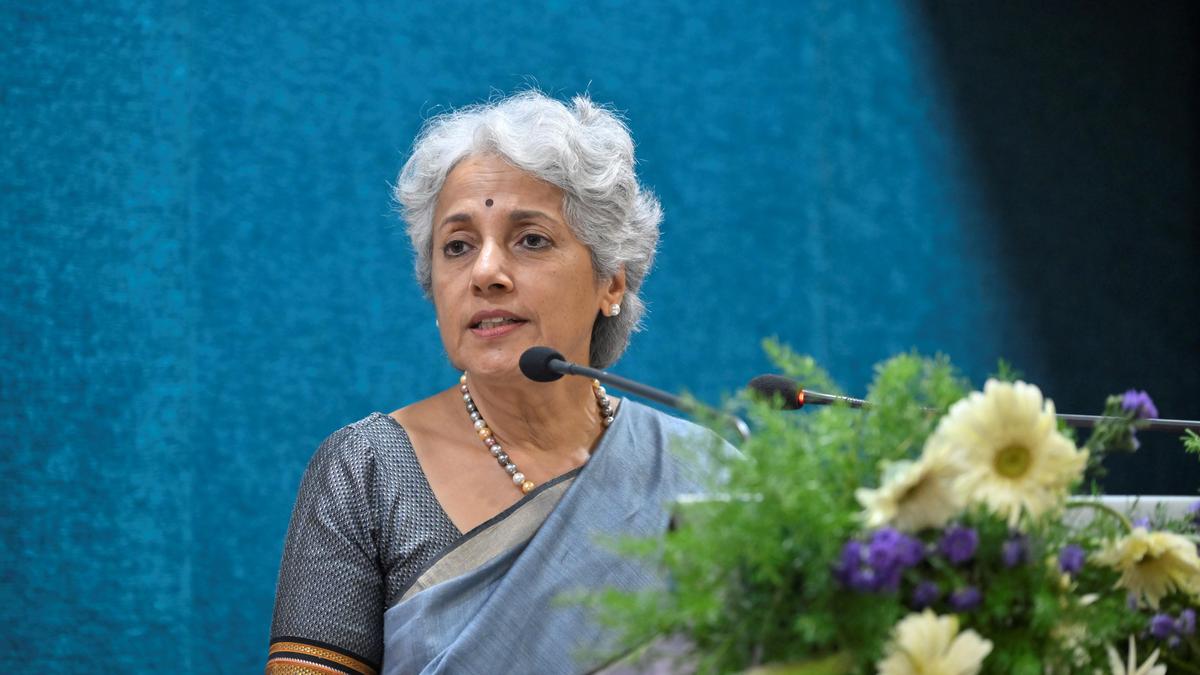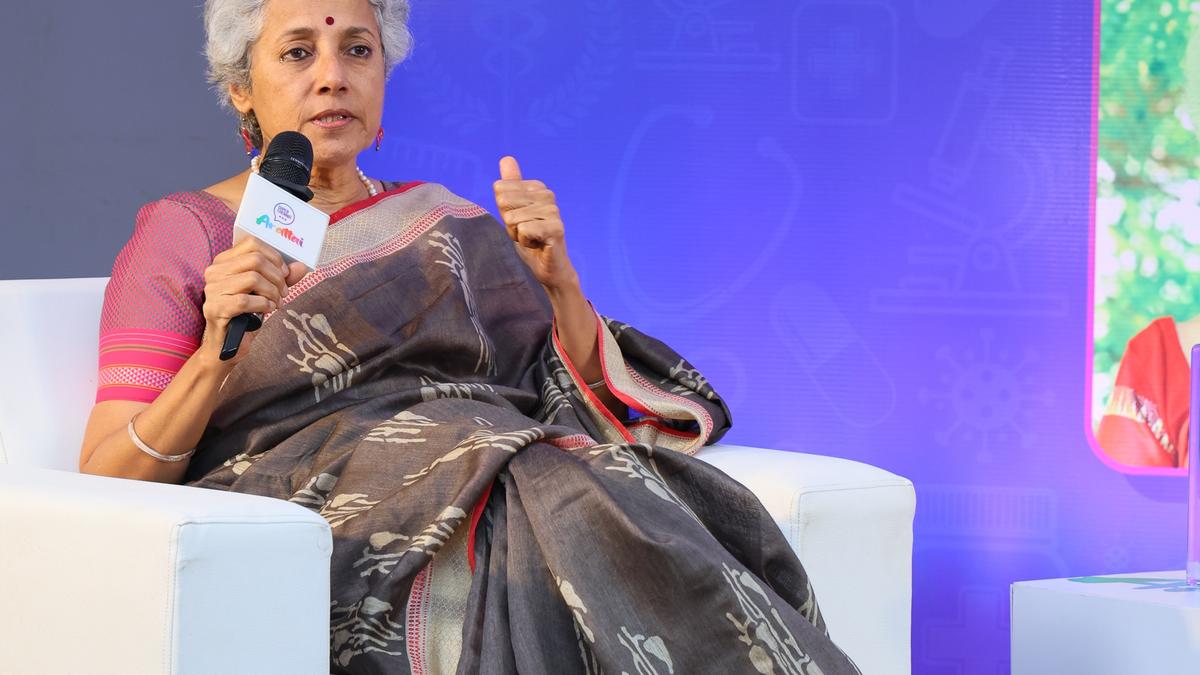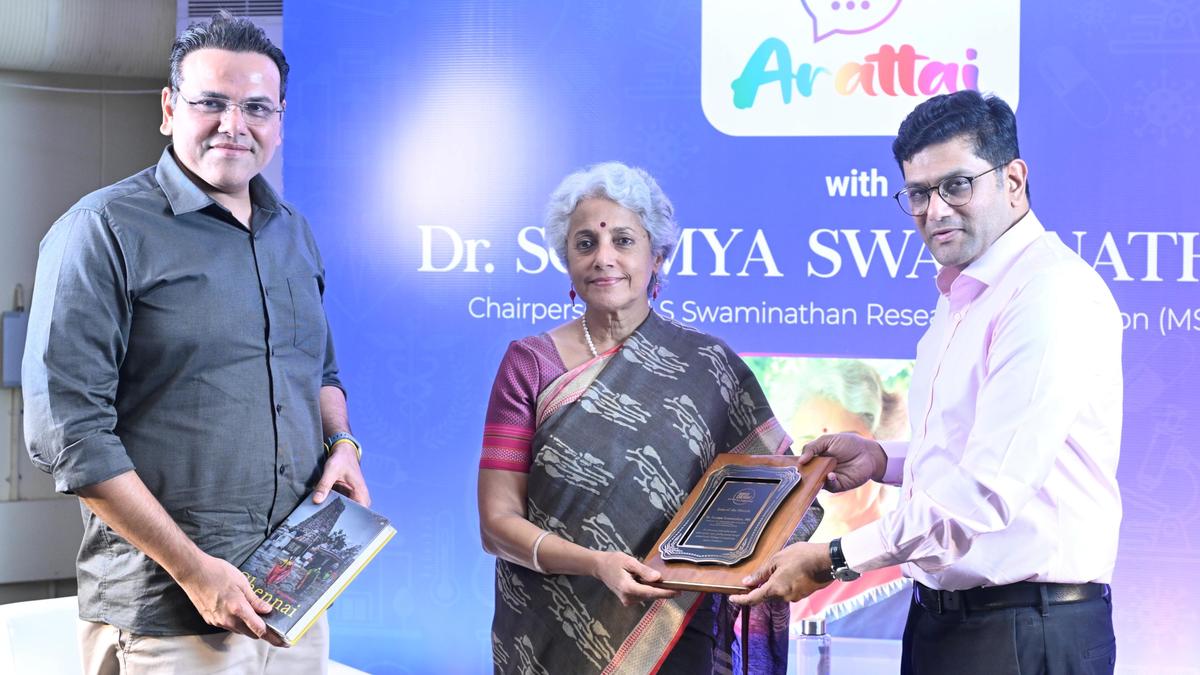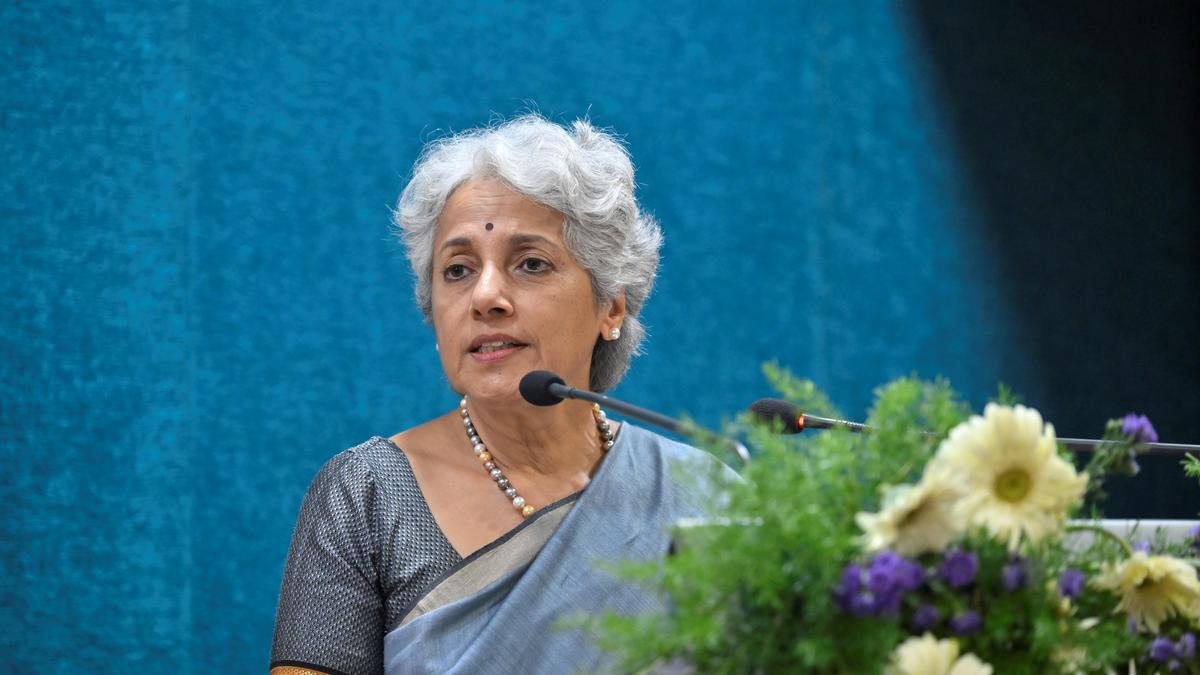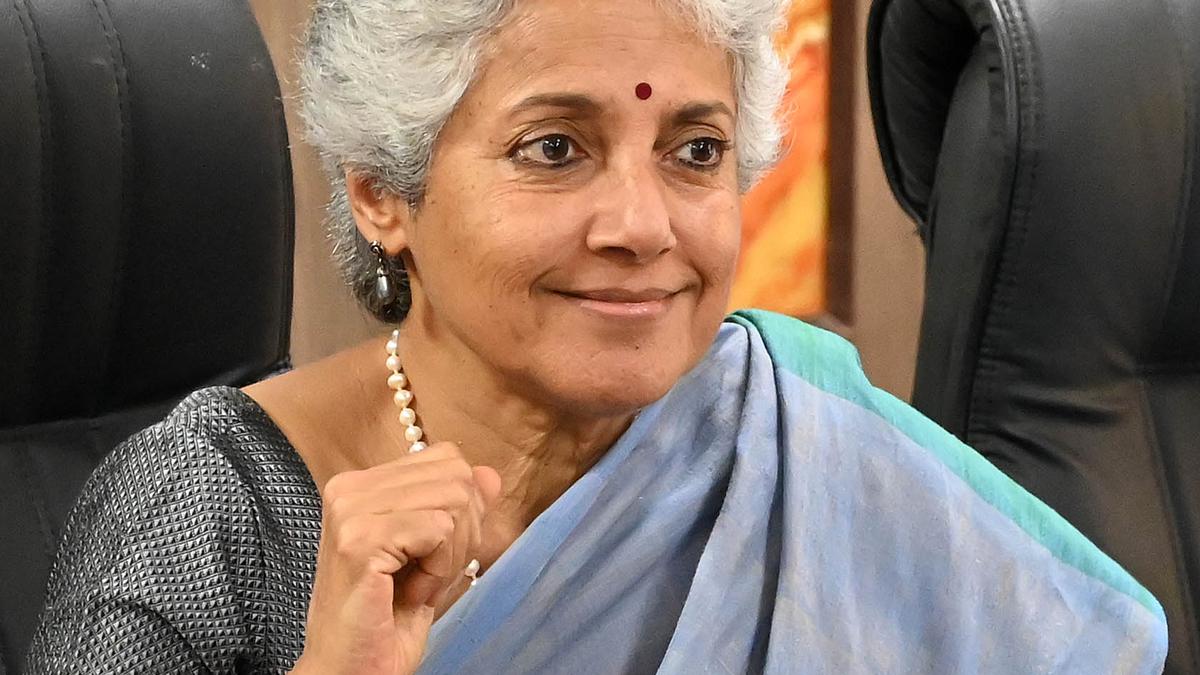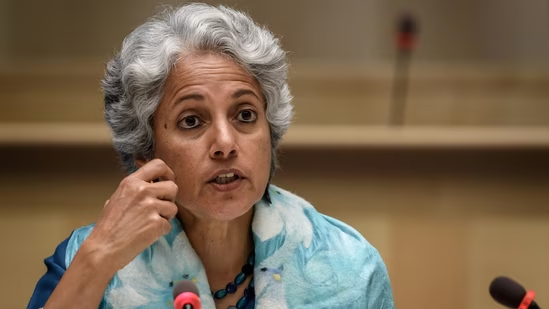
One of two Indian women to be elected Fellow of the Royal Society, Dr Soumya Swaminathan on patriarchy, science and why representation matters Only two Indian women have ever been elected Fellows of the Royal Society, the world’s oldest scientific academy with more than 400 years of continuous existence. Coincidentally, both Gagandeep Kang and Soumya Swaminathan became household names during the Covid-19 pandemic. As chief scientist at the World Health Organisation, Swaminathan was the familiar, measured, reassuring voice of science on television screens around the world.Pic courtesy: Dr Soumya SwaminathanA paediatrician by training, Swaminathan began her career researching tuberculosis and HIV. She bears the legacy of her father M.S. Swaminathan—widely regarded as the architect of India’s Green Revolution—and also of her mother Mina Swaminathan, a pioneer in early childhood development who helped shape important welfare programmes including Integrated Child Development Services.I spoke with Swaminathan on the phone while she was returning from a field trip to Arunachal Pradesh’s Keyi Panyor to study progress at India’s first “bio-happy district” a concept imagined by her father that focuses on human well-being through conservation and bio-diversity.With the child of a fisherwoman in Cuddalore district, Tamil Nadu at a meeting to discuss occupational health issues. (Pic courtesy: Soumya Swaminathan)As a newly minted Fellow of the Royal Society, what does the honour mean to you personally and to women in science everywhere?The first thing is the recognition of the quality of the scientific work that one has done. Quite often when you live and work in a developing country, it is that much harder to get your work published. It’s also more difficult to do research and science because of the bureaucracy and complex procedures. For example, in the US where I have worked, if you need a reagent for your experiment, you order it and the next morning it arrives on your table. In India, it would take weeks.If you want to travel abroad to present a paper at an international conference, you have to take so many permissions. These could come one day before the conference so you cannot plan or buy your ticket or get a visa. So many scientists miss these opportunities to go to international meetings where you learn and people learn about your work.So to come back to your question, the Fellowship is basically a global recognition by your peers of the quality of the science and its impact on the world. A very small group of people from all around the world get elected every year. In a way, it’s very disheartening to know that only two Indian women, myself and Gagandeep Kang before me have been elected.When I look back over the last century, so many Indian women scientists havecontributed tremendously. And yet, they have not been recognised, probably because nobody thought of nominating them.You have spoken about the patriarchy in our institutions and of how, early in your career in a government research institution, you experienced a culture of a very male dominated committee room. Can you expand on this and on the extent to which it still exists?Patriarchy and male domination still exist. Maybe in the medical field, less so because you have a large number of women doctors and scientists. But when you look at directors of institutions and leadership positions, you’ll find there is still an imbalance with far fewer women than men.Ultimately, leadership counts because decisions are made by leaders. If you have poor representation of women, then the decisions will be uninformed by the experiences of women.Mina Swaminathan, (picture courtesy M.S. Swaminathan Research Foundation)For example my mother, Mina Swaminathan, a feminist and activist for women’s rights, used to say that men don’t think about issues like breastfeeding or childcare because it doesn’t occur to them that these could be important for working women.That’s just one example, but a lot of studies have proven that if you have gender balance on a committee, whether it’s a private company board or government, the debate would be much better informed and betterdecisions would be taken.There’s been a great deal of interest recently on women's health issues, from menstrual health and menopause to the recognition of women's pain and, most recently, the renaming of PCOS. To what do you attribute this growing interest, given that the leadership remains overwhelmingly male?I think it’s because of the efforts of women all around the world, especially the work of NGOs and civil society groups in different countries that have consistently raised these issues. Some of the challenges related to gender disparities are still to be overcome and the struggle continues. More awareness that has led to some policy changes—maternity leave benefits, greater flexible working hours, and prevention of sexual harassment, for instance.In India, Dr Rohini Godbole, who is no more, was one of the women who really fought for women in science and authored several reports making recommendations. But, it is an ongoing struggle because there are many hidden and unseen ways in which these biasescreep in.Such as?The chief secretary of a state told me about how there was a vacancy for a collector’s post. She wanted to post a woman there but when she asked her officer to send a list of eligible candidates, it had no women. So she asked, “Where are the women?” And he replied, “Women are not willing to go.”She then picked up the phone and spoke to a woman she had in mind and the woman replied unhesitatingly, yes.Often, it’s a question of a preconceived notion—women cannot do this or that—when the fact is that women can do any profession that a man can do. And this has not yet been fully accepted by society.Representative photoGetting girls in India to study STEM (science, technology, engineering, maths) subjects is not the struggle it is in many western countries. But, in the elite institutions, the numbers fall. In leadership, the women disappear. So there are two challenges—how do we get women to stay and not drop out, and how do we get them into leadership positions?You need a multi-pronged approach. On the one hand you need progressive policies. I’m not saying that women should be given any extra consideration. But if you have an interview and find that all shortlisted candidates are men, then this should automatically be a reason to review the list, so that you have women candidates for the final selection, particularly for senior positions.The second is flexible policies because women do have to take time off for childbearing. So when women are in their 20s and 30s, the men are really pursuing their careers but we are supposed to take some time off. This needs to be compensated by some flexibility in your career: The fact that you took time off for child-rearing or family reasons should not be held against you.During COVID, men advanced in their careers by writing more papers and doing more research. But women scientists fell back because they had to take care of the children who were at home. So many women scientists took career breaks of one to two years.The third thing which needs to happen are leadership building courses, especially for early and mid-career women. From my own experience, I know that as a young researcher, I was not putting myself forward for promotions or awards, whereas my male counterparts would always be applying for them. I would tell myself I’m not yet good enough, I needed to do some more work before I could apply. It was my male mentors who in fact encouraged me and said, “No, you have all the minimum requirements. Why are you not applying?”M.S. Swaminathan (File pic)I want to ask you about the ways in which your father, the late M.S. Swaminathan influenced you, and also about the impact your mother, Mina Swaminathan had on you.We grew up in the Indian Agricultural Research Institute, my sisters and I, surrounded by scientists and PhD students. My father was always busy and, so, we understood early on that science was hard work and also very exciting.At the same time, my mother’s influence was very important because I find that a lot of scientists do not have the social science perspective because in our education system you have to choose very early on—science or humanities. One doesn’t really learn much about the other subjects.My mother would take us to Mobile Creches that she had helped set up for children whose parents worked in construction sites to provide a safe environment for those babies, so they could be looked after, fed, be given play things and the early childhood stimulation.We travelled a lot with my parents to villages and went to the farmers’ fields where my mother would talk to the women abouttheir problems. So, I actually learned, I think unconsciously, from her about the role of women and their invisible and unpaid labour and struggles, which is unaccounted for even today.Namita Bhandare writes on gender and other social issues and has 35-plus years of experience in journalism. She has edited books and features in a documentary on sexual violence. She tweets as @namitabhandareRead MoreGenderWomenSoumya SwaminathanSocietyIndiaHivChildDevelopment PlanStudentsSee Less
In her words: Dr Soumya Swaminathan
One of two Indian women to be elected Fellow of the Royal Society, Dr Soumya Swaminathan on patriarchy, science and why representation matters
1,517 words~7 min read