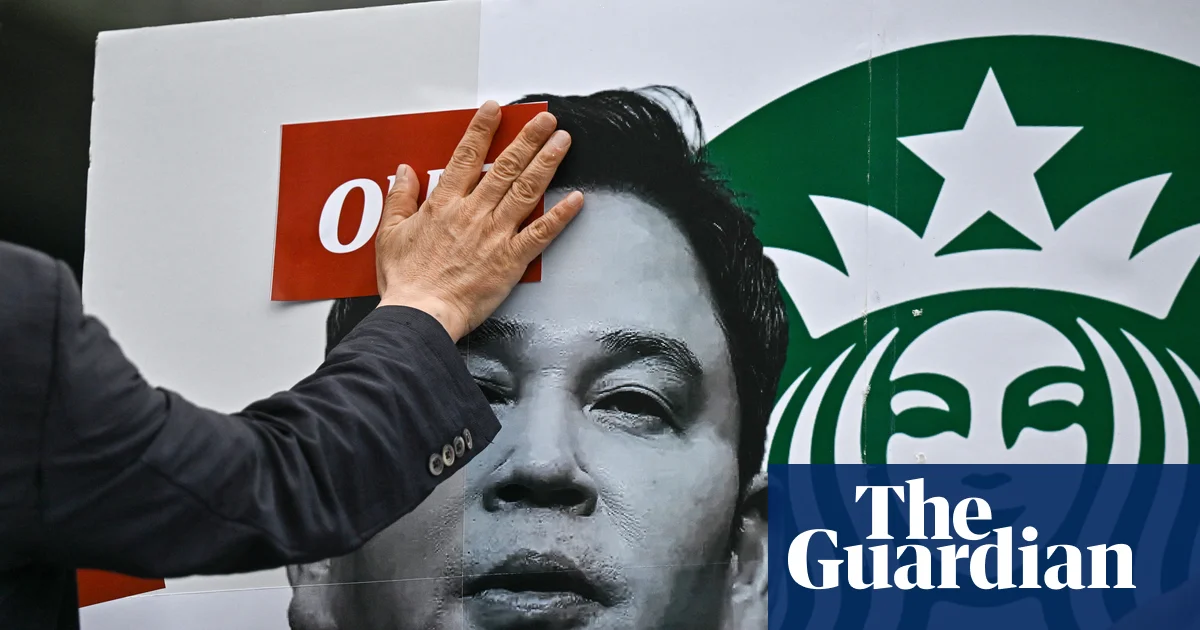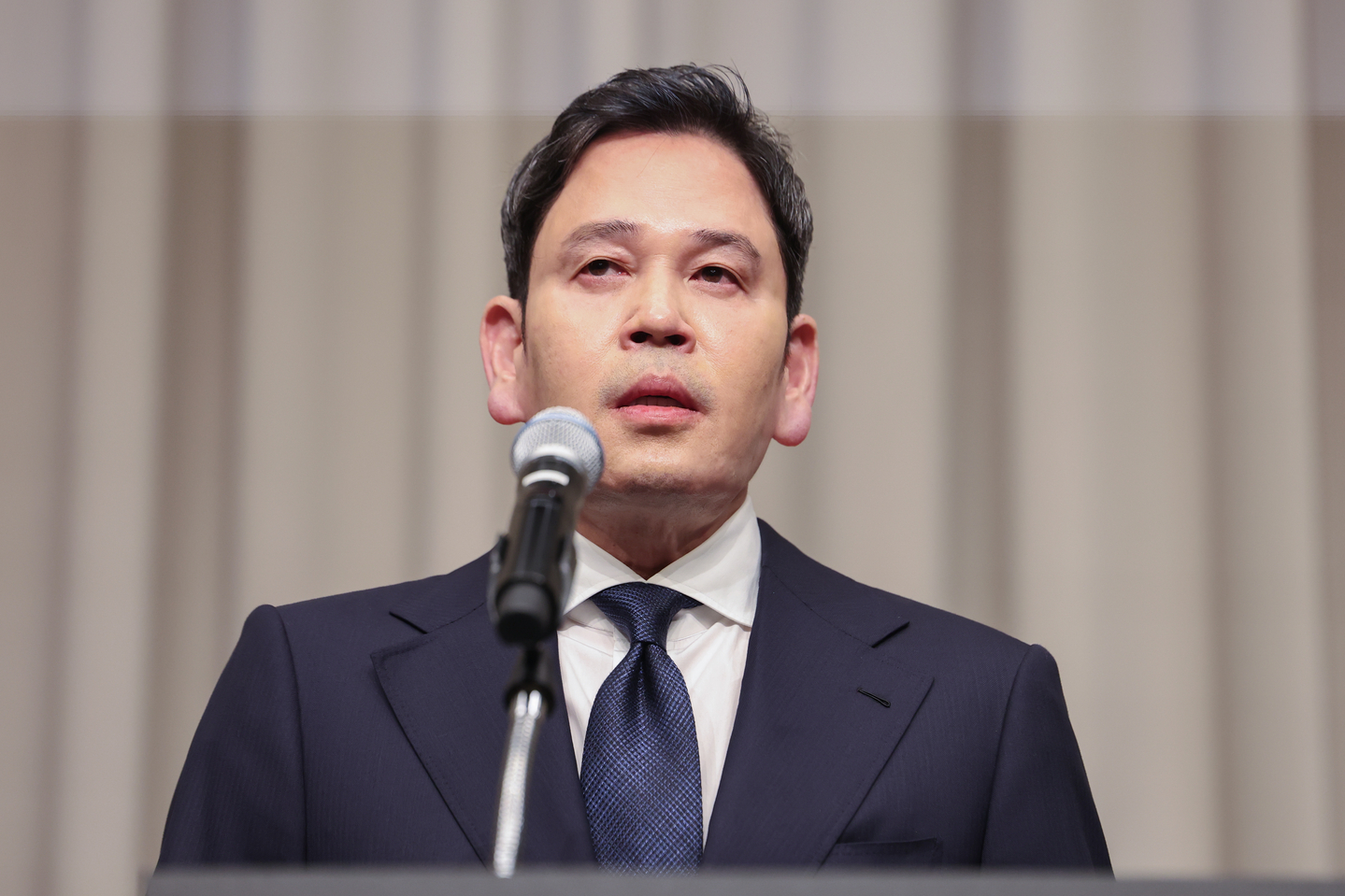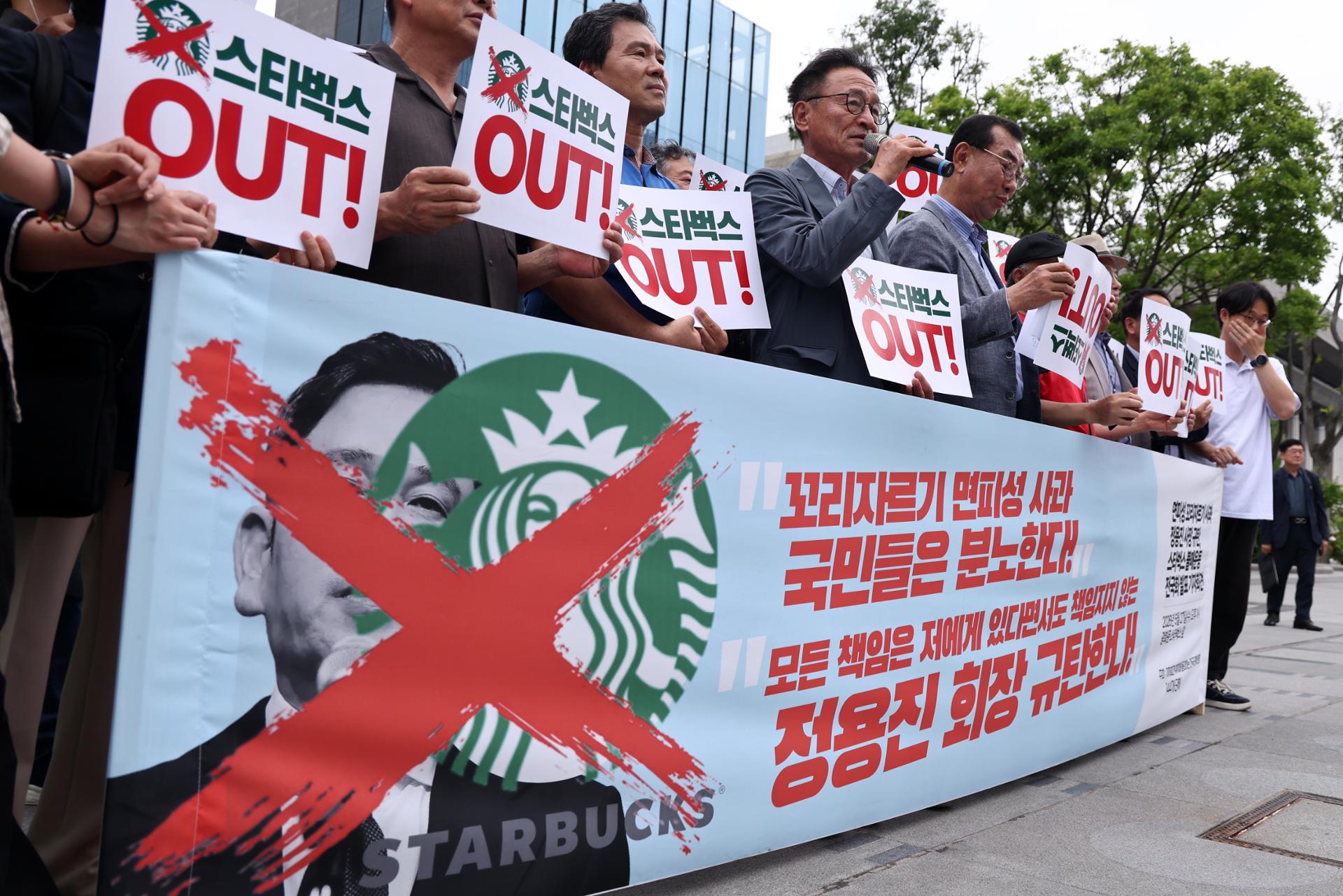
Activists holding signs reading "Starbucks Out" launch a consumer boycott on the coffee chain in Gwanghwamun Square, Wednesday. Yonhap Korea’s latest Starbucks controversy is not only about a badly judged marketing campaign. It is about a recurring political habit: When public outrage gathers force, powerful actors treat collective denunciation as a substitute for due process and proportionate judgment. The result is a modern form of “meongseokmari”-style justice.Meongseokmari literally means “rolling someone in a straw mat.” Historically, it referred to rough private punishment after an informal public trial by village or interest-group leaders. In modern Korea, the image captures how quickly moral accusation can become collective punishment.Starbucks Korea’s “Tank Day” promotion was part of a sequence of tumbler promotions: “Dante Day,” “Tank Day” and “Nasu Day.” Promotional images included phrases such as “Perfect for One Hand!,” “Tak on the table!” and “Fits Right in Your Bag!” Activists declared the May 18 “Tank Day” event insensitive because May 18 is the anniversary of the 1980 Gwangju Uprising. They associated “5/18,” “Tank Day” and the phrase “Tak on the table!” with state violence and the Park Jong-chul torture-death case.Starbucks Korea withdrew the campaign, its parent company Shinsegae issued apologies and the local Starbucks Korea CEO was fired.A free society allows criticism. The question is whether criticism becomes punishment without proportion, evidence of intent or due process, and whether the government, which retains a monopoly on legitimate coercive power, should get involved.The symbolic controversy requires disaggregation. The Gwangju Uprising occurred on May 18, 1980. The Park Jong-chul torture-death case occurred on Jan. 14, 1987, when police falsely claimed that the student activist died after a desk was struck with a “tak” sound. The controversy therefore did not rest on a single direct historical correspondence. It fused separate memories of authoritarian violence: tanks and military repression associated with Gwangju, and the “tak” phrase associated with Park Jong-chul's death. That distinction does not excuse the marketing failure. It strengthens the case for asking whether offense was intentional and whether outrage merged distinct memories into a single moral accusation.President Lee Jae Myung publicly denounced the company, and the interior ministry announced that it would stop offering Starbucks products or vouchers at official events. The controversy therefore moved from consumer criticism to state-amplified punishment. The pattern recalls the 2019-2020 anti-Japan boycott under the Moon Jae-in administration, when a consumer campaign became a nationwide “No Japan” movement while official rhetoric gave the boycott quasi-official endorsement.Punishment also spread beyond Starbucks. Actor Jeong Min-chan, who posted photos from a Starbucks visit, stepped down from the musical "Diaghilev" after the controversy expanded. Jeong later apologized, saying he had been too busy to keep up with current affairs, and that ignorance was also a mistake. The case shows how quickly moral punishment can spread from a corporation to people tangentially associated with it, even when the alleged offense is a later act of consumption or social media.A key question remains largely unexamined: intent. Did Starbucks Korea, or its CEO, deliberately mock the victims of Gwangju, or did an ordinary corporate marketing calendar produce an offensive coincidence through historical blindness and inadequate review? Both would be blameworthy, but they are not the same offense. Liberal societies punish intentional cruelty more severely than negligent stupidity because culpability matters. Meongseokmari collapses that distinction. It asks only whether the crowd has found a morally satisfying target.The arbitrariness becomes clearer when one compares another case. On March 26, 2010, North Korea allegedly sank the South Korean naval corvette Cheonan, killing 46 sailors. Yet Starbucks Korea launched “Dear20” this year on March 26, a program for Starbucks Rewards members in their 20s, and Shinsegae Group also announced Starbucks Landers Shopping Festa promotions that day. If one applies the most punitive logic, this might be called offensive because many of the dead sailors were young men. Yet Korea’s political class did not mobilize against Starbucks on March 26.This does not mean Cheonan and Gwangju are identical. The point is that public punishment often depends less on consistent principles than on which memory is politically activated, which faction controls the state and media, and which target is socially safe to punish.Consumers have every right to boycott. Victims’ groups have every right to protest. Journalists have every right to criticize. But presidents and ministers hold coercive authority. Their words signal which private actors deserve exclusion from public life. The Jeong case shows how that signal can travel beyond the original corporate actor to celebrities, employees, customers and others whose connection to the controversy is indirect.South Korea’s democratic achievement is real. Yet its public culture retains an illiberal temptation: to treat collective denunciation as civic virtue. Conservatives have their own versions around anti-communism, national security, gender conflict and anti-China sentiment. The danger grows when the ruling party, whichever party it is, dresses communal punishment in the language of justice.Writers, academics and public intellectuals should reject double standards. It is easy to criticize illiberalism when caused by right-wing governments. It is harder, but more necessary, to criticize illiberalism when one’s own preferred camp uses moral memory to discipline companies, citizens, celebrities or dissidents.The Starbucks campaign may have deserved criticism. It certainly did not justify a ritual of ever-expanding punishment from the company to its customers, public partners and associated celebrities. Democratic memory should teach restraint as well as indignation. If Gwangju means anything politically, it should mean resistance to arbitrary power, not its reproduction through state-amplified meongseokmari.Joseph Yi is an associate professor of political science at Hanyang University. Born in Gwangju, South Korea, Yi writes on democracy, civil society, and open inquiry. Lee Won-dong is a research professor at the Center for International Studies, Inha University.
Starbucks furor revives an illiberal habit - The Korea Times
Korea’s latest Starbucks controversy is not only about a badly judged marketing campaign. It is about a recurring political habit: When public outr...
942 words~4 min read