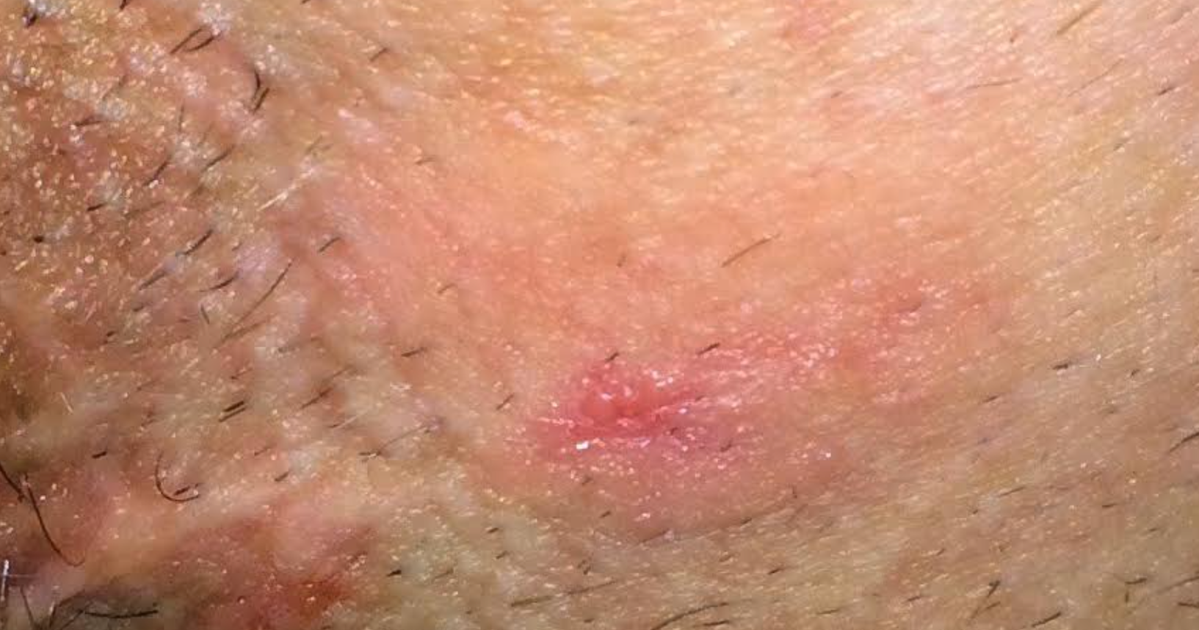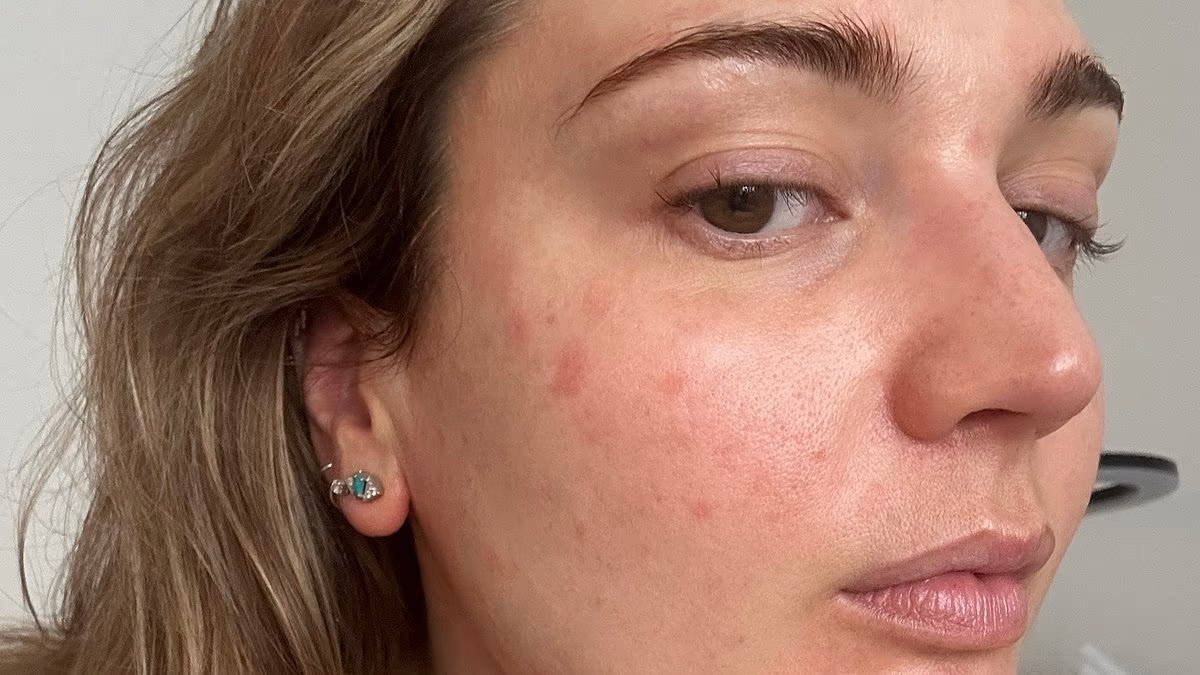
My sister noticed it before I did; the creeping, red rash around my right ear. We were at a concert and she looked so concerned, I went to the bathroom to check it myself during the interval.I was shocked by the huge loop of itchy, red spots making its way from my ear, down my jawline and on to my neck.Within two days, it had grown more extensive and was now visible across my chest and back, leaving red bumpy patches all over my skin.I switched all my skincare to bland, fragrance-free formulas but it continued to get worse.Next, my left eye swelled up overnight and I woke unable to open it properly. It was hot, red and slightly sore to the touch.At that point, I knew something more serious was going on. I booked an appointment with my GP, and with Ali Mearza, an ophthalmic surgeon who had corrected my short-sighted vision years earlier.Mearza confirmed I had a big stye on my eye, which ‘commonly develops when one of the eyelid’s oil glands becomes blocked’. He said fine dust particles can disrupt the normal tear film and inflame the eyelid margin, making blockages more likely.I left the appointment with steroid and antibiotic eye drops, as well as instructions to use a warm compress on my eyes several times daily.After a couple of days, the swelling started to subside – but my skin was still covered in the rash. Madeleine Spencer's skin condition started as a creeping, red rash around her right ear... ... before spreading across her chest and back, leaving red bumpy patches all over her skin She narrowed down the likely cause to being an allergic reaction to MDF dust kicked up by builders doing a refurb at her homeBy the time I saw my GP, my legs and arms were dotted with it too. She thought it likely that something external was aggravating my skin and that I was suffering from contact dermatitis of the irritant variety – meaning there was something in my environment bothering my skin and disrupting its protective layer.I racked my brain, trying to work out if I’d encountered anything unusual.Could it have been the washing I was doing at the launderette? I didn’t have a machine at home, owing to a five-month refurbishment, which was nearing its end, but I’d been using the local launderette for weeks, well before the appearance of this ghastly rash, and hadn’t changed detergent.Could something in my house have triggered the alarming skin condition – and, if so, what?My builder was the one who nailed it, no pun intended. Medium-density fibreboard, aka MDF, could be to blame, he said.‘I’ve seen this sort of thing before from MDF,’ he told me.I remembered that the carpenter had been sawing MDF in my sitting room to make shelves. The dust settled in a fine powder across all the surfaces every time he worked on it, and despite our best efforts, I kept finding new pockets of dust in my open-plan sitting room and kitchen.I started to read about MDF and its potential hazards, and what I found was concerning.MDF is composed of a mix of residues from wood production, including different sorts of sawdust, along with glues and formaldehyde resin.According to the Health and Safety Executive (HSE), when MDF is sanded or cut, the wood dust ‘may cause dermatitis’ and ‘can cause asthma’.After reading that, I suddenly remembered the constant sore throat and coughing fits that had flared up around the same time that MDF was being worked on in the house. At the time, I’d just assumed I’d had a cold.My suspicions raised, I posted a photo on social media to ask if anyone had experienced similar effects and, if so, what they’d done to reduce it. At this point, skin and beauty expert Caroline Hirons, founder of Skin Rocks, messaged me to say she was allergic to dust and, like me, her symptoms primarily manifested on her skin.When the allergy strikes, she turns to antihistamines, fragrance-free products and a calming facial oil from her brand called The Support Oil. My doctor agreed with that course of action and added a steroid to bring down the inflammation.Two weeks later, the rash subsided for a couple of days but then flared up when I sat on the sofa, which wasn’t covered when the carpenter was working in the room, as I didn’t realise he’d be cutting so extensively in there.By now fairly desperate, I contacted Andrew Watterson, emeritus professor of health at the University of Stirling and the brains behind the HSE advice on MDF. I asked what his advice would be, in a situation like mine, to offset the risks.‘Installers and contractors should follow occupational hygiene good practice on ventilation and extraction when cutting MDF,’ he says. ‘Painting and sealing-in MDF, where they are not already covered and have exposed fibre surfaces, would help.’My carpenter hadn’t done this, and the rash persisted. I cleaned endlessly using fragrance-free sprays. The sofa was steamed and I mopped the floors nightly.The steroids and antihistamines have helped bring down the redness, but the rash still dotted my skin, so I went to see clinical aesthetician Pam Marshall at her London clinic, Mortar & Milk.While treating my skin with her Byonik facial, a pulse-trigger laser that helps reduce redness, she told me that I needed to think about stress. ‘Skin issues are like a game of Jenga,’ she says. ‘The final block for yours may be the MDF, but the stress of the refurb combined with its propensity to flare up are the tower that was wobbling underneath.’Meanwhile, the rash has improved, but traces still mark my skin. I suspect it’s going to take more downtime before it goes completely. One thing’s for sure, I will not allow anyone to work with MDF in my home ever again.
I had a hot and itchy rash on my face and body - this was the cause
My sister noticed it before I did; the creeping, red rash around my right ear. We were at a concert and she looked so concerned, I went to the bathroom to check it myself during the interval.
975 words~4 min read