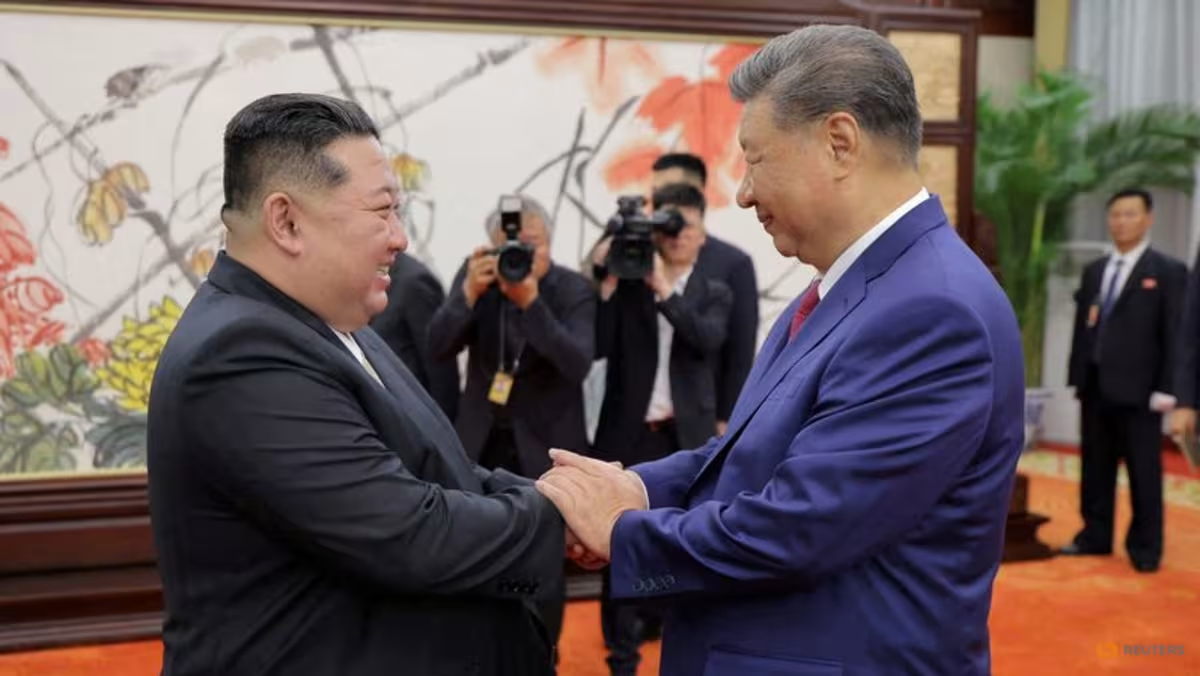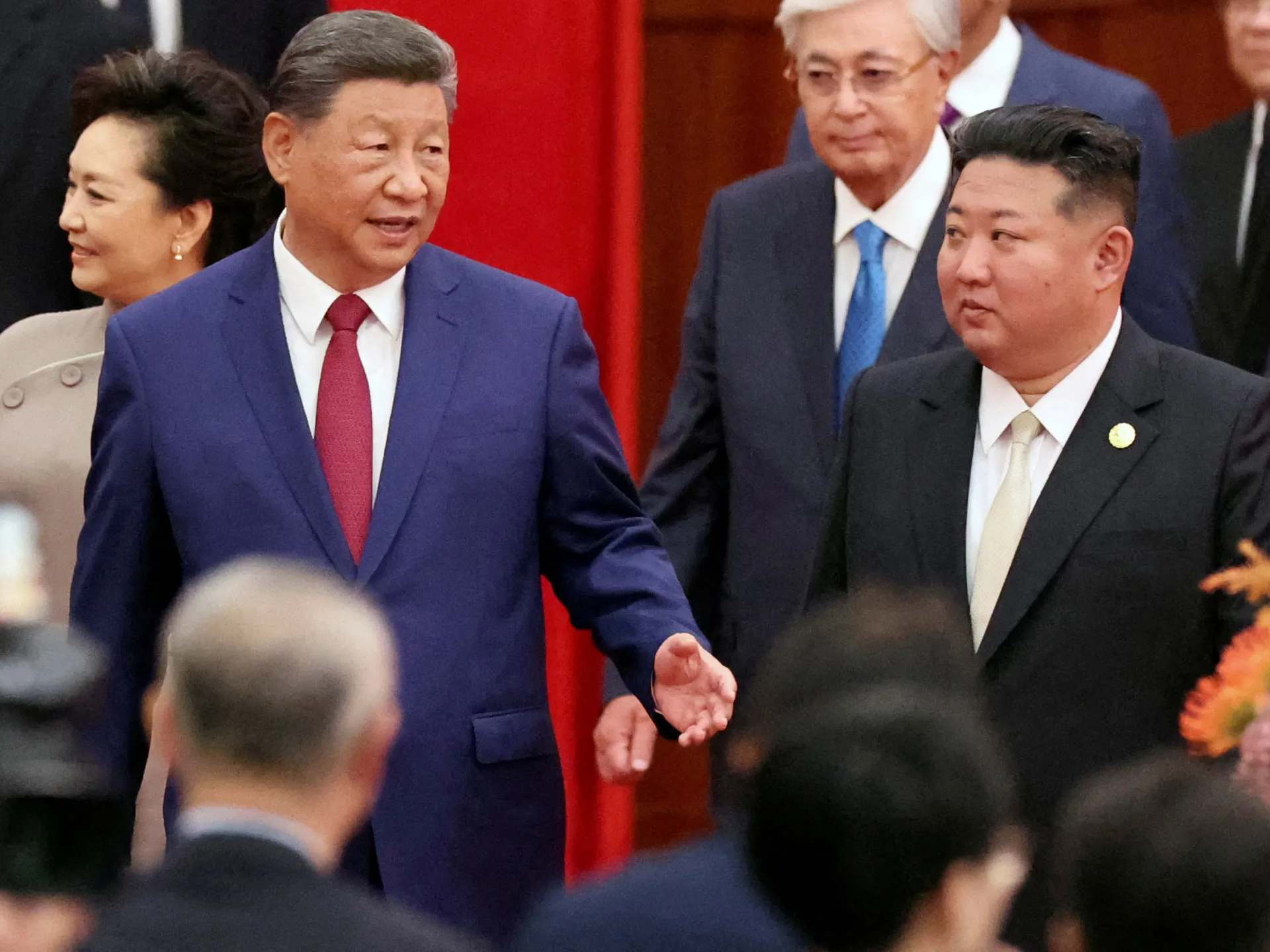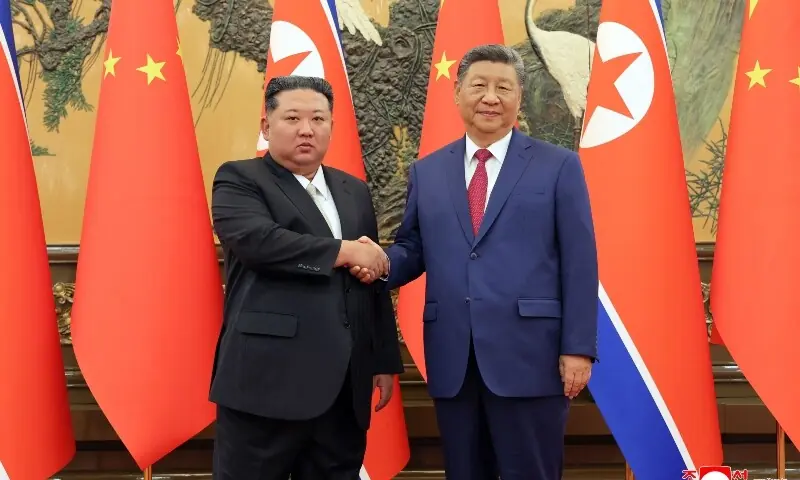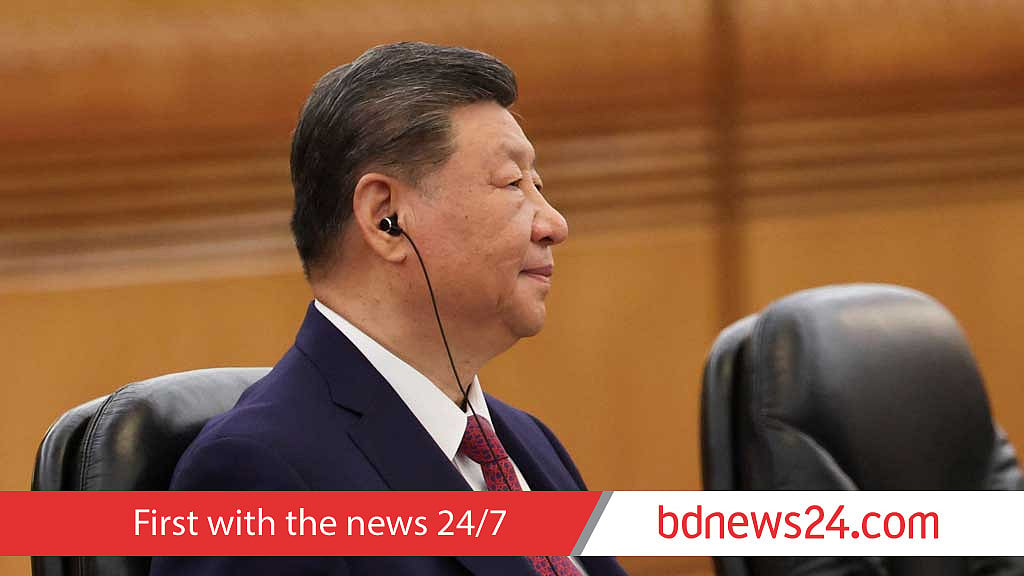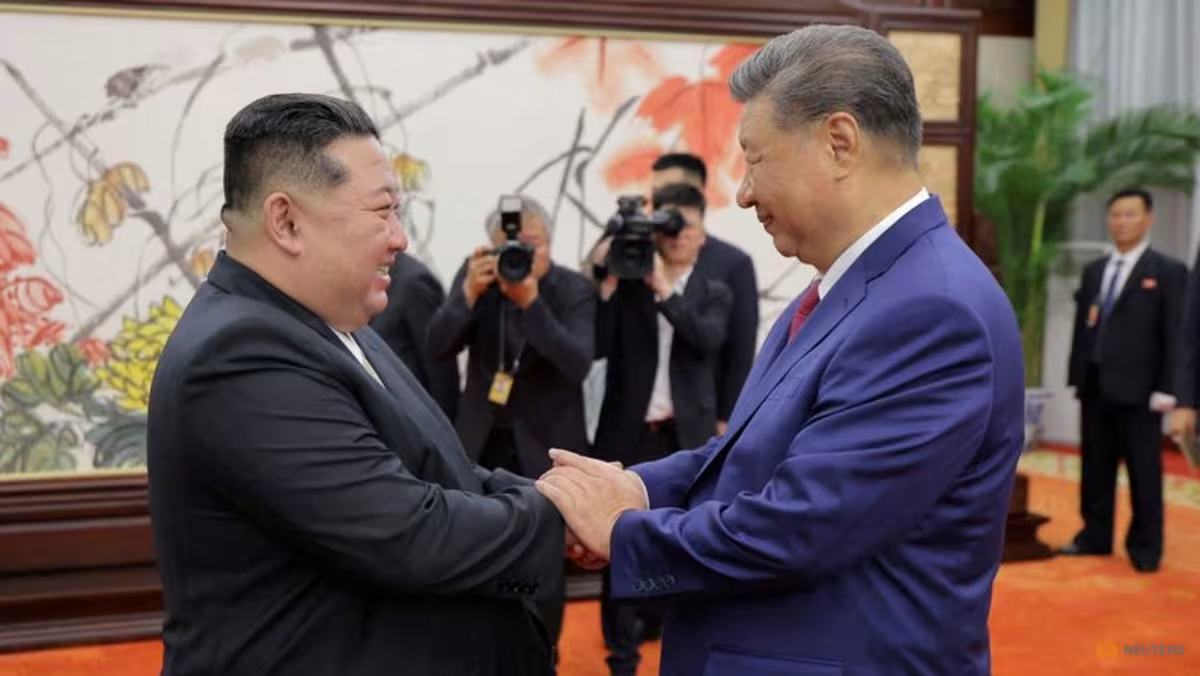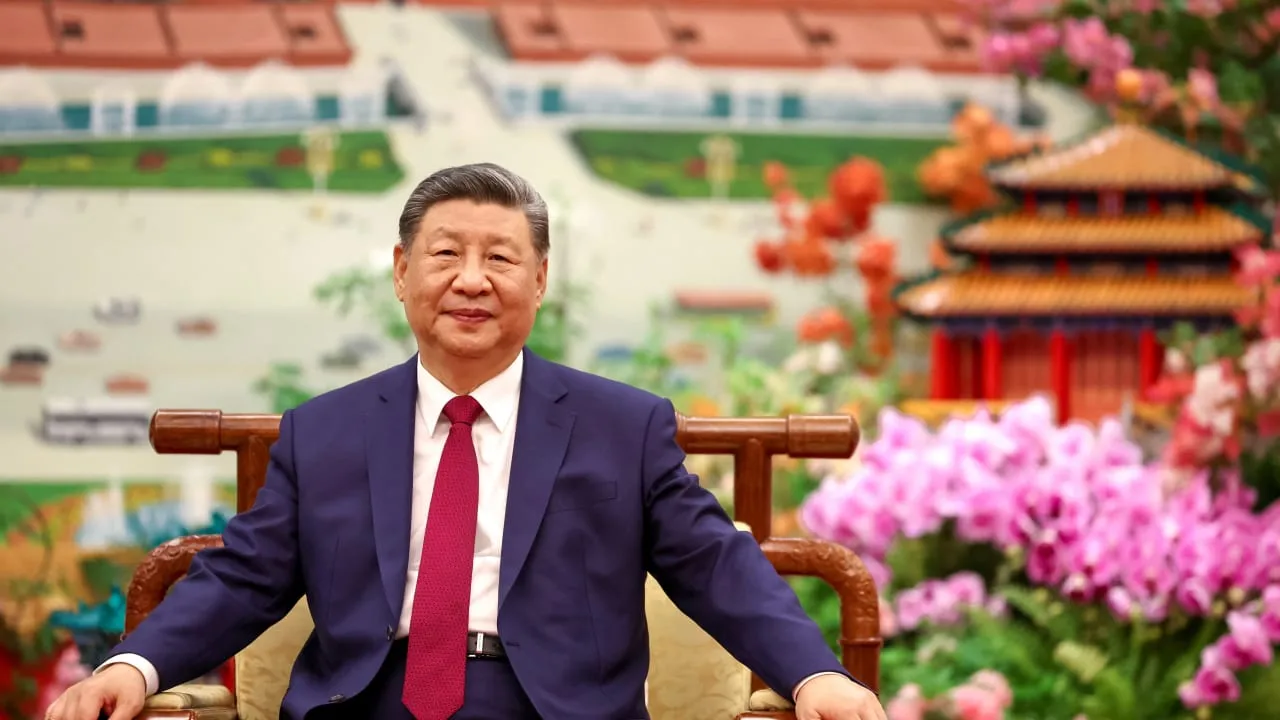
Chinese President Xi Jinping may visit Pyongyang in the near future. Media reports about his prospective state visit to North Korea, following his high-profile summit meetings in Beijing in May with US President Donald Trump and Russian President Vladimir Putin just four days apart, have fueled speculation about the timing and purpose of the trip.While Beijing remains tight-lipped about the possibility, multiple sources have reported that Chinese security and protocol officials have recently been spotted in Pyongyang, suggesting that preparations may already be underway. If realized, it would be Xi’s first overseas trip this year after hosting a succession of foreign leaders in his home turf. Pyongyang appears to be a deliberate choice of destination. What does he hope to achieve there?Xi likely wants to signal that North Korea remains within China’s strategic orbit despite its deepening ties with Russia, while also demonstrating that Beijing retains the diplomatic leverage to assist in addressing regional and international security challenges. He is also positioning China for any future reengagement between Trump and North Korean leader Kim Jong-un, ensuring that developments on the Korean Peninsula do not bypass Beijing’s core interests or reshape the regional security architecture without Chinese involvement.In this context, the bulky, 11,700-word joint statement on “Further Strengthening Comprehensive Strategic Cooperation and Deepening Good Neighborliness and Friendly Cooperation,” signed by Xi and Putin in Beijing on May 20, contains two salient points.First, the joint statement makes clear that “the two sides oppose the use of diplomatic isolation, economic sanctions, force and pressure to threaten the security of the Democratic People’s Republic of Korea, and urge relevant parties to stop escalating regional tensions, stimulating an arms race and abusing politicized means, and take practical measures to eliminate the risk of war on the peninsula.”Second, it declares that “the two sides will continue to strengthen cooperation under the framework of the ‘Greater Tumen Initiative,’ deepen cooperation among its member states in areas such as trade and investment, transportation, energy, digital economy, agriculture, tourism and environment, and promote cooperation in Northeast Asia.”Separate from the Greater Tumen Initiative, the joint statement also notes that “the two sides reiterated that they would continue, together with the DPRK, the tripartite consultations on the issue of the Tumen River going out to sea.”This is where China’s strategic interests both converge with and diverge from those of Russia and North Korea. Despite its extensive coastline, China lacks direct maritime access to the East Sea from its three northeastern provinces. It lost that access when large parts of historical Manchuria were ceded to Russia under the treaties of Aigun (1858) and Beijing (1860).To connect its landlocked northeastern region to the East Sea, thereby significantly shortening shipping routes from China’s rust belt to markets in Japan, South Korea and the Americas, Beijing has long sought navigation rights along the lower Tumen River. While most of the river forms the border between China and North Korea, its final 17 kilometers before reaching the sea run between North Korea and Russia.The GTI is a multilateral intergovernmental cooperation framework, which began in 1991 as the Tumen River Area Development Program under the auspices of the United Nations Development Program. It currently has four members: South Korea, China, Russia and Mongolia. North Korea withdrew in 2009 to protest economic sanctions following its nuclear tests.The development of the Tumen River delta has since remained largely confined to rhetoric, producing few tangible results. Since 2015, however, the framework has increasingly aligned with China’s Belt and Road Initiative, supporting Beijing’s long-term effort to secure a northeastern maritime corridor.With its skilled and low-cost labor pool and rich in natural gas, oil and mineral resources, the Greater Tumen Region possesses remarkable potential for investment and economic growth. The GTI covers China’s three northeastern provinces of Jilin, Heilongjiang and Liaoning, and Inner Mongolia; Mongolia’s eastern provinces of Choibalsan, Bayandun and Bayantumen; the Primorsky Territory of the Russian Federation; and South Korea’s four eastern coastal cities of Busan, Pohang, Ulsan and Sokcho.During his bilateral talks with Xi in Beijing on Jan. 5, President Lee Jae Myung asked for China’s mediating role in reactivating the GTI as a regional framework for economic cooperation involving North Korea. Lee also asked China to help facilitate inter-Korean dialogue and freeze the North’s nuclear and missile programs in exchange for corresponding benefits, thereby reducing tension on the peninsula.Xi reportedly acknowledged Lee’s overtures positively but said that de-escalating the situation would require long-term patience.Xi’s visit to Pyongyang, whenever it takes place, will attract close attention as observers assess whether it yields more than a display of predictable “socialist solidarity.” With North Korea’s denuclearization now widely viewed as a long-term objective, Xi may seek a more practical breakthrough by revitalizing the GTI as a platform for regional economic cooperation, common prosperity and, ultimately, a more durable foundation for peace and security in Northeast Asia.Lee Kyong-heeLee Kyong-hee is a former editor-in-chief of The Korea Herald. The views expressed here are the writer's own. -- Ed.
[Lee Kyong-hee] Tumen delta development for geopolitical impetus
Chinese President Xi Jinping may visit Pyongyang in the near future. Media reports about his prospective state visit to North Korea, following his high-profile
826 words~4 min read