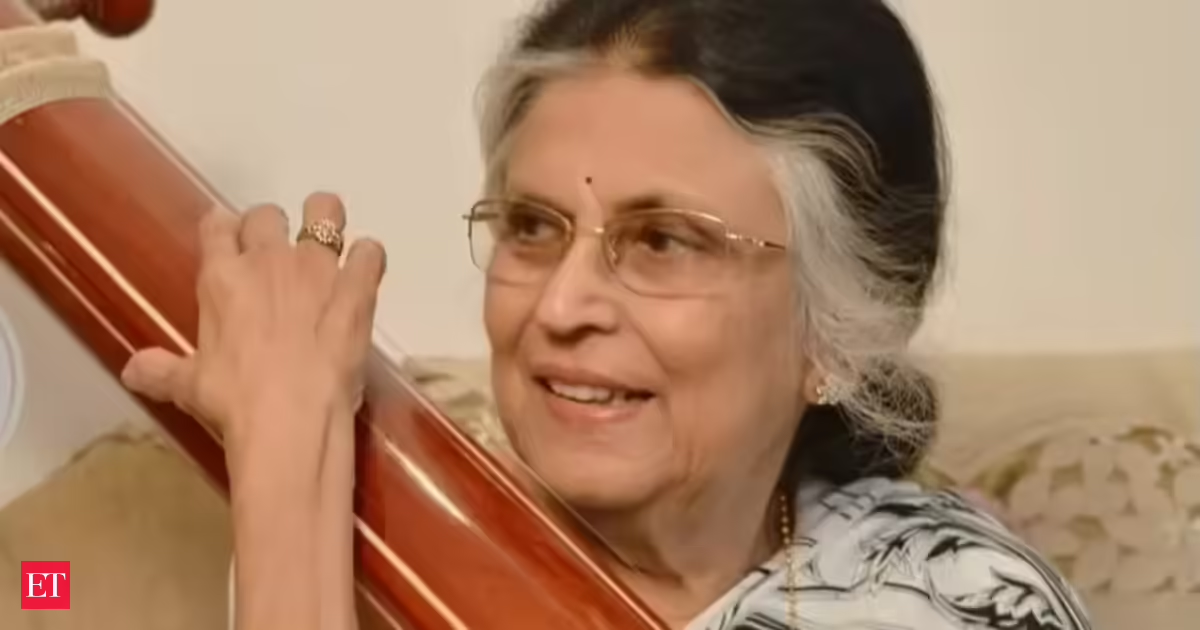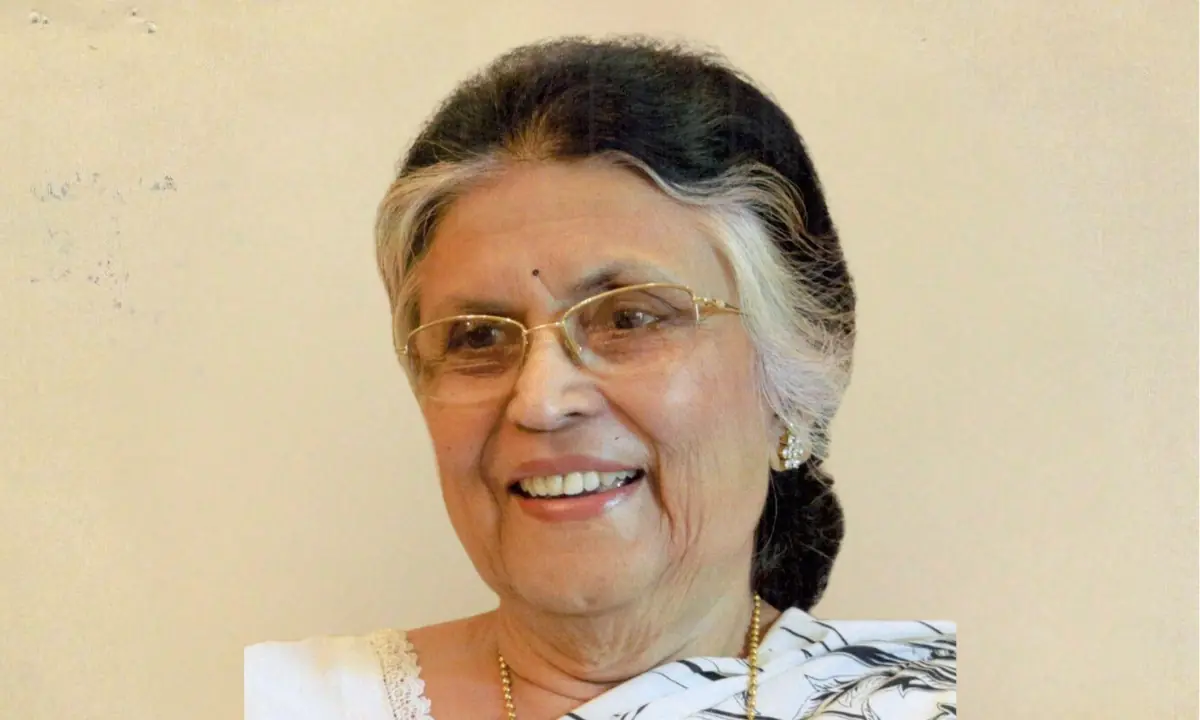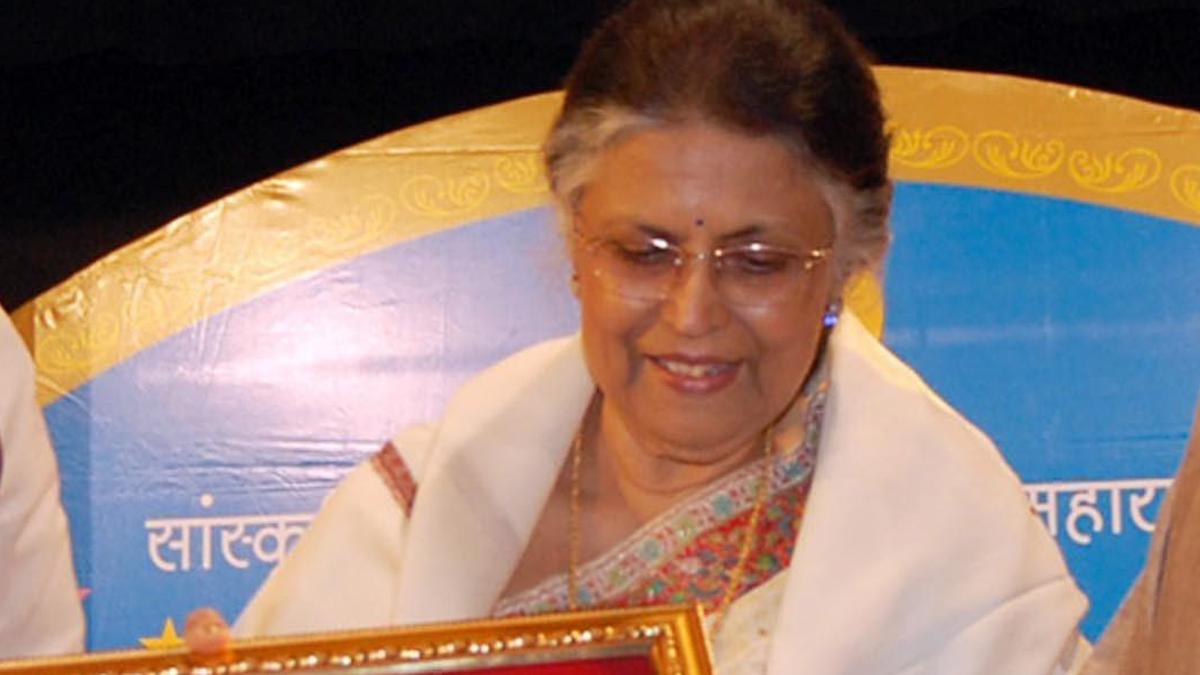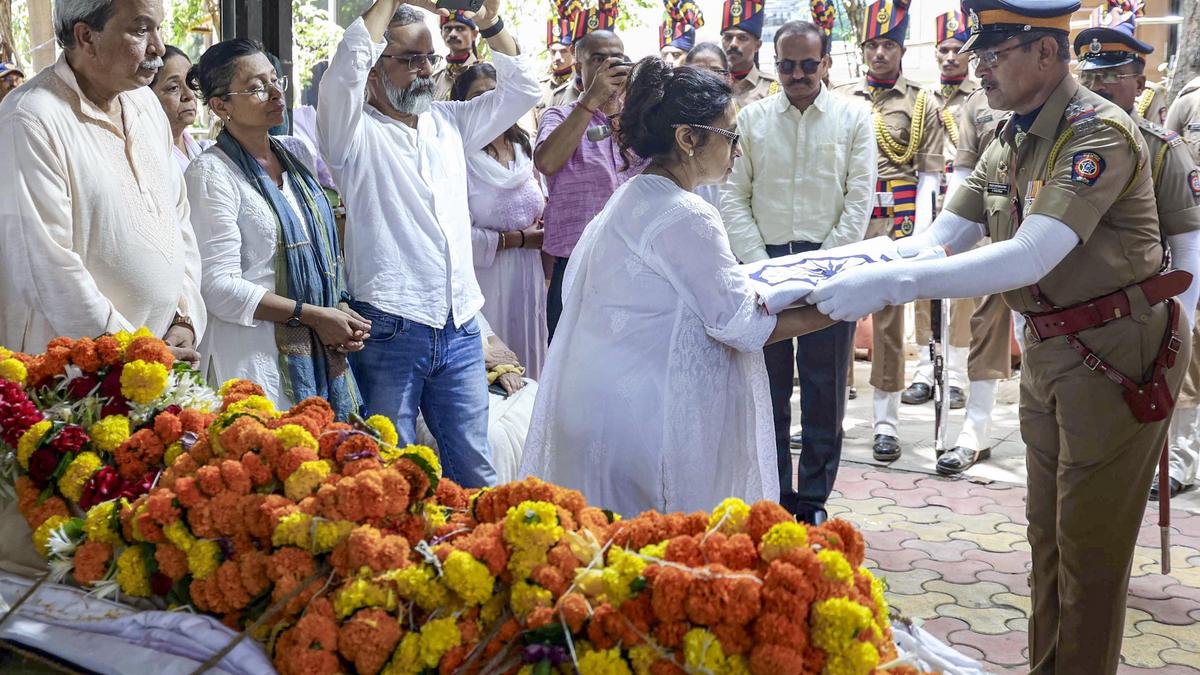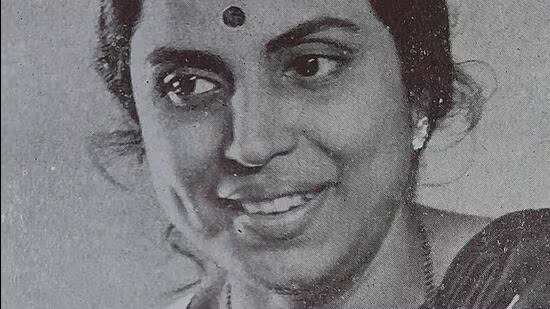
MUMBAI: Renowned playback singer Suman Kalyanpur, who carved a special niche for herself in Hindi filmdom regardless of the supremacy of the Mangeshkar sisters, died in Mumbai on Sunday evening following age-related ailments. She was 89.Dulcet-voiced playback singer Suman Kalyanpur passes away at 89Gifted with a sonorous voice, which often sounded a lot like Lata Mangeshkar, Kalyanpur recorded mellifluous ditties through the 1950s and ’60s under the baton of greats such as Naushad, S D Burman, Roshan, Shankar-Jaikishan and Kalyanji-Anandji.Her ditties such as ‘Tumse o hasina kabhi mohabbat na maine karni thi’ (‘Farz’), ‘Dil ek mandir hai’ (‘Dil Ek Mandir’), ‘Na na karte pyaar tumhi se kar baithe’ (‘Jab Jab Phool Khile’), ‘Mere sang ga koi geet suhana’ (‘Jaanwar’) and ‘Mere mehboob na ja’ (‘Noor Mahal’, embellished by famous qawwal Jaani Babu’s brilliant musical score) continue to tug at the heartstrings of countless connoisseurs of Hindi cinema.Cinema experts said that Kalyanpur’s range was incredible. Her feather-soft voice and slightly nasal tone would sparkle, whether in a peppy number (‘Aaj kal tere mere pyaar ke charche har zabaan par from ‘Bramhachari’) or a soul-stirring one oozing with the majesty of Raag Bhairavi (‘Ajahun na aaye balma sawan beeta jaaye’ from ‘Saanjh Aur Savera’). Both duets continue to be a big draw at retro music concerts.Born in January 1937 in Dhaka, where her father worked in a bank, Kalyanpur belonged to the Gaud Saraswat community known for its flair for music and the arts. Kalyanpur, nee Hemmady, had a strong liking for painting and had, in fact, enrolled herself at the iconic J J School of Art.However, it was music which immensely enthralled the family, steeped as it was in the Maharashtrian tradition of ‘bhaav geet’ and ‘natya sangeet’. In a rare interview, Kalyanpur recalled how the radio was a revered guest at the Grant Road apartment of the Hemmadys.After matriculation from the prestigious St Columba high school, Kalyanpur began to learn classical music from Keshavrao Bhole, the legendary musician and a family friend. She also took music lessons from Ustad Khan Abdul Rahman Khan and Master Navrang.After delivering a hit on All India Radio, Mumbai, Kalyanpur made her debut with three songs for ‘Mangoo’, a 1954 film produced by thespian Sheikh Mukhtar. However, only one song of Kalyanpur, a lullaby, was retained in the film’s final cut after the producer dropped Mohammad Shafi as music director and opted for O P Nayyar.Filmdom abounds with stories of how Kalyanpur was often pushed to the sidelines and how many songs knocked on her door but vanished under mysterious circumstances thanks to a ruling clique which had a firm grip on the music industry.Yet, Kalyanpur persisted with courage and quiet dignity, turning each song that came her way into a gem. Singing a duet with the great Talat Mahmood for ‘Darwaza’ (1954) came as a rare compliment which the cinema industry was quick to take note of. So impressed, it is said, was Mahmood, who back then reigned over the music scene, with young Suman’s dulcet voice that he promptly agreed to sing the duet set to tune by Naushad Ali.In a career spanning over seven decades, Kalyanpur sang duets with Mohammad Rafi, Talat Mahmood, Mukesh, Kishore Kumar and Hemant Kumar. ‘Na tum hamein jaano, na hum tumhe jaane’, a Kalyanpur-Hemant Kumar duet, is considered an all-time great by music buffs.Kalyanpur earned a considerable fan following in Maharashtra, thanks to her ‘bhav geets’ and ‘bhajans’. Her devotional song ‘Keshava Madhava tujhya naamaat re godwa’ is sung as a prayer in many schools across Maharashtra. Kalyanpur married Ramanand, a well-known businessman, in 1958.The singer won numerous awards, including the Maharashtra government’s prestigious Lata Mangeshkar award and the Mirchi Music Lifetime Achievement award, among others. She was honoured with the Padma Bhushan, the country’s third-highest civilian award, in 1923.
Dulcet-voiced playback singer Suman Kalyanpur passes away at 89
Born in January 1937 in Dhaka, where her father worked in a bank, Kalyanpur belonged to the Gaud Saraswat community known for its flair for music and the arts. Kalyanpur, nee Hemmady, had a strong liking for painting and had, in fact, enrolled herself at the iconic J J School of Art | Mumbai news
TL;DRAI
Suman Kalyanpur, legendary Hindi playback singer with a 70-year career alongside Rafi, Kishore Kumar, and Hemant Kumar, died in Mumbai at 89. Despite systematic industry gatekeeping that sidelined her work, she earned the Padma Bhushan—her catalog a benchmark of craft persisting over market power.
633 words~3 min read