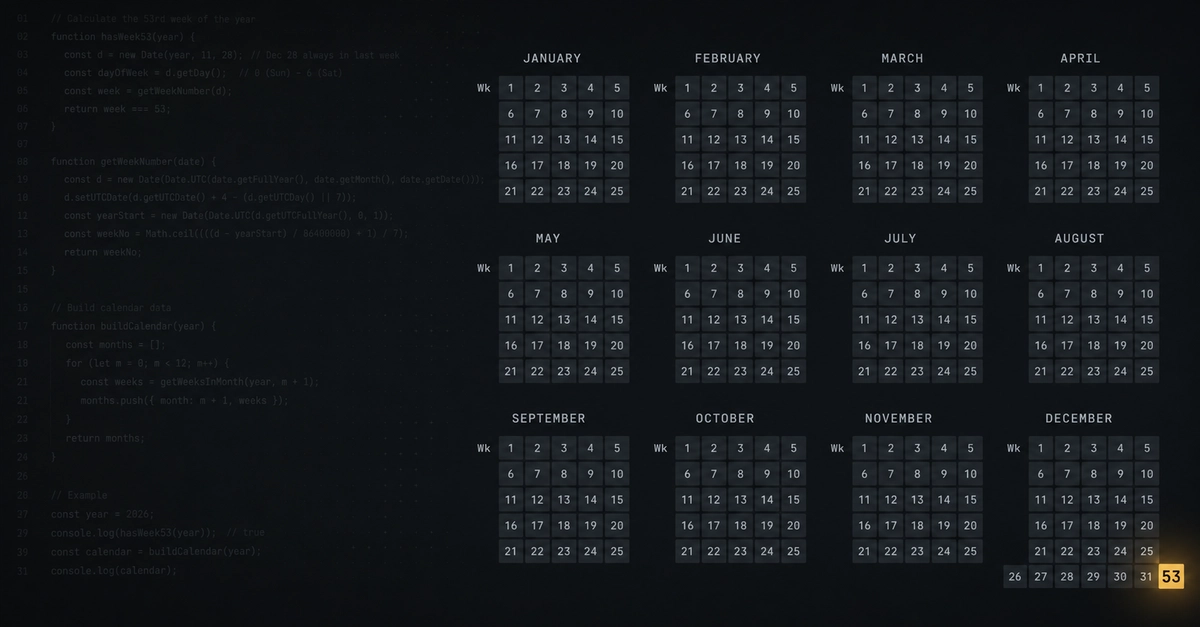
TL;DR 2026 is a 53 week year (ISO 8601). If anything in your stack assumes a year has 52 weeks a % 52, a fixed length array, a chart axis, a weekly aggregation it has a latent bug that this year will trigger. Don't hard code 52. Here's how to spot it and fix it.
Quick gut check before you read on: how many weeks are in a year?
If you answered 52, you're right about 80% of the time. The other 20% of the time there are 53, and the code that assumed 52 does something quietly wrong drops a week of data, wraps a counter, throws an index error, or labels two different weeks with the same number. 2026 is one of those years, which makes this a good moment to go find that bug before it finds you.
Wait, how can a year have 53 weeks?
ISO 8601 weeks start on Monday, and a week belongs to whichever year holds its Thursday. Stack 52 of those and you get 364 days one short of a normal year, two short of a leap year. That leftover day accumulates, and every so often the calendar pays off its debt with a 53rd week.