Imagine you are building an AI software engineer. Over weeks of continuous operation, this agent accumulates thousands of pages of context: user preferences, custom architectural guidelines, API keys, error logs, and previous debugging sessions.
One afternoon, you run into a cryptic bug and ask the agent: "How did we fix that 'TypeError: cannot unpack non-iterable NoneType object' error in the payment gateway last month?"
If your agent relies solely on standard vector search, it might fail you. It will look for the semantic meaning of your query, fetching general articles about Python unpacking errors or payment gateway integrations. But what you actually need is a surgical, exact-match lookup of that specific error string and the precise commit hash associated with the fix.
Conversely, if your agent relies solely on keyword search, asking "What does the user prefer when writing database migrations?" will return nothing unless the exact words "prefer," "database," and "migrations" appear together in a past log.
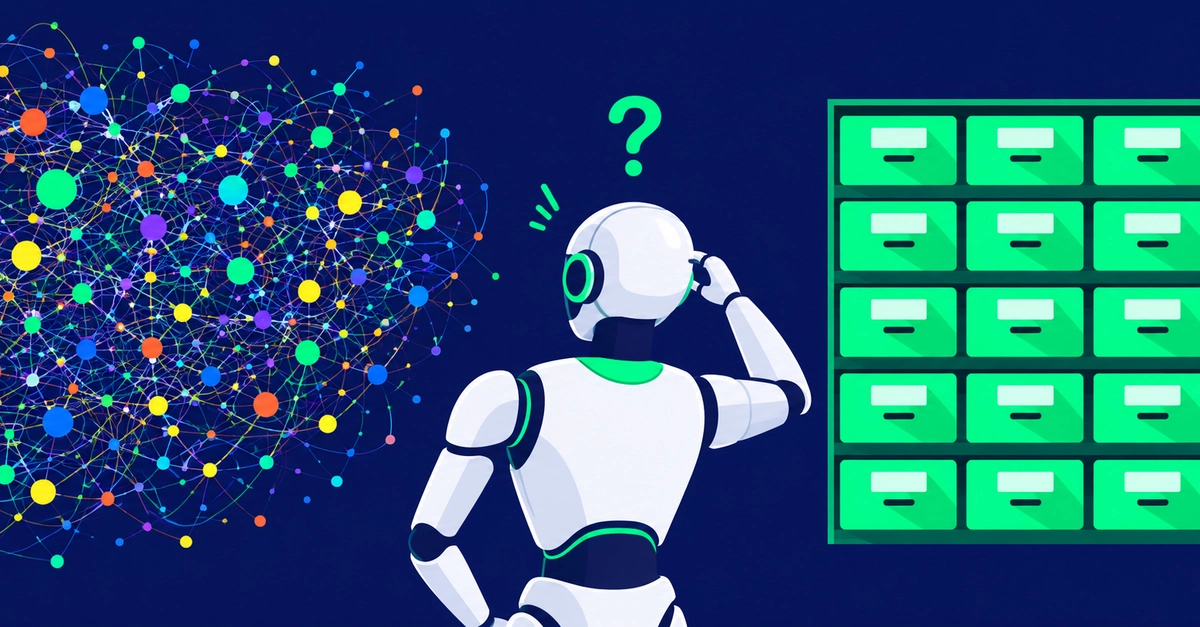
To build an AI agent that feels truly intelligent, persistent, and reliable, you cannot rely on a single retrieval mechanism. You need a hybrid memory system that marries the conceptual intuition of semantic search with the character-level precision of full-text keyword search.