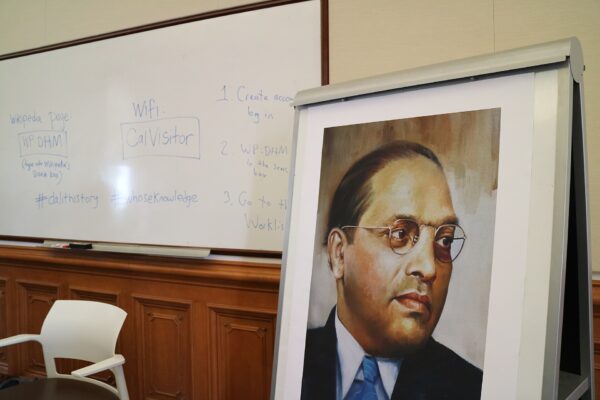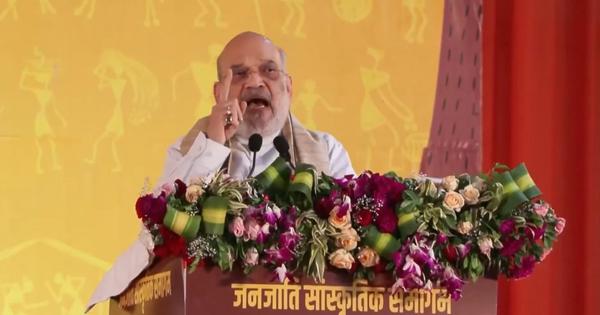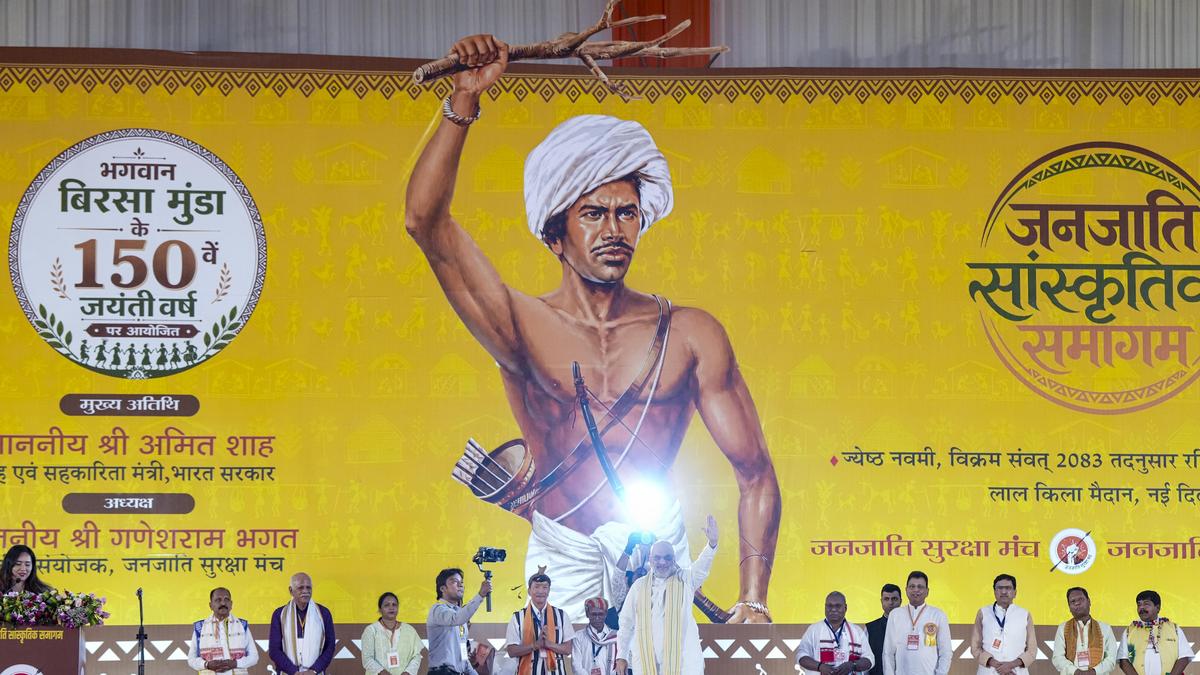
Last week, the Janjati Suraksha Manch (JSM) and Vanvasi Kalyan Ashram, both Rashtriya Swayamsewak Sangh (RSS) progeny, held a conclave in Delhi — “Janjati Sanskritik Samagam” — attended by thousands of Adivasis from across the country The stated occasion was the 150th anniversary of legendary hero Birsa Munda. In the vote of thanks, the organisers acknowledged the extensive official machinery behind the gathering — from the Railway Ministry to Union Ministers, Chief Ministers, and senior officials. With Union Home Minister Amit Shah as the chief guest, the event was effectively semi-official. This is precisely why the speeches, demands raised, and the Home Minister’s response deserve far closer scrutiny than an ostensibly cultural gathering would normally invite.The JSM’s core agenda against Christian conversions is well known, its main demand being the delisting of all Adivasi communities that have converted to Christianity and the stripping of their constitutional and legal protections on the grounds that they no longer subscribe to Adivasi beliefs. The organisation has run violent campaigns in several States in central India, particularly Chhattisgarh, targeting Adivasi families who have converted to Christianity — campaigns that have gone so far as the forcible exhumation of bodies from graves on privately owned land belonging to Christian Adivasis in tribal villages. In February this year, in a case pending before the Supreme Court of India, the Court issued interim orders restraining such exhumations. Yet, these incidents continue under the patronage of Bharatiya Janata Party State governments.A foundational distinctionAt the conclave, the demand for delisting was framed with reference to the recent Court judgment upholding the Presidential Order of 1950, which holds that persons belonging to Scheduled Castes (SC) who profess a religion “other than Hinduism” do not qualify for constitutional or legal benefits meant for SCs. The JSM’s demand is that this principle be extended to Scheduled Tribes (ST) — a move that would require removing what one of its leaders described as “a weakness in the Constitution.” What the JSM considers a weakness is, in fact, a foundational distinction: unlike in the case of SCs, neither the Constitution of India nor the law links the identity of STs to religion.On the conclave stage, alongside portraits of Birsa Munda and a Hinduised image of “Bharat Mata”, was a portrait of the late Kartik Oraon — a Congress Member of Parliament who once filed a petition challenging the candidature of two members of the Oraon community from an ST-reserved seat on the grounds that they were Christians. The Patna High Court, in its ruling in 1963, rejected his petition categorically, holding that “tribal identity is not religion-based,” that it rests on ethnic and community kinship ties, and that “an Oraon remains an Oraon” regardless of whether he is Hindu, Christian, or Buddhist. The High Court further observed that, by and large, converted Adivasis continued to participate in community festivals and celebrations, and joined others in raising concerns common to all Adivasi communities. This judgment remains the governing legal precedent. The JSM seeks to overturn it, and its method for doing so is chillingly cruel: isolating converted families, forcibly preventing them from attending community festivals, and then using that coercively imposed exclusion as proof that converts have abandoned Adivasi culture, promoting their expulsion from traditional gram sabhas. Exclusion is engineered, then presented as evidence.A campaign of cooptionSimultaneously, the JSM has been pushing the assertion that Adivasis belong to the broader “sanatan parivar”. At the conclave, the organisation’s national convenor declared: “They say Adivasis are not Hindus. What is this game? We are Ram’s children — this is a conspiracy against us.” Another leader proclaimed that “Adivasis exist in the shade of the great tree of Sanatan”. The nature of the JSM’s “ghar wapasi (homecoming”) for converts is unambiguous — functions marked not with Adivasi symbols but those of Hindutva. In the JSM’s worldview, Adivasis are “vanvasis” — forest dwellers defined by their service to Lord Ram, subordinate to upper-caste deities, and redeemable only through their blessings. The building of temples with Hindu idols in tribal villages, the rebranding of local deities as forms of Vishnu, Shiva or Durga, and the installation of Hanuman idols at village entry points are all part of this hegemonic cooption campaign.Adivasis are fully entitled to choose their religion under Article 25 of the Constitution, which guarantees freedom of conscience and religion. There are laws, some quite draconian, to deal with conversions which are “fraudulent”. Adivasis may choose to be Hindu, Christian, or of any other faith. But whether an Adivasi worships Ram or Jesus has no bearing on their identity as an Adivasi; this is a fundamental constitutional principle. What cannot be accepted is the distortion of this principle to suggest that an Adivasi who worships Ram is expressing Adivasi culture, while one who worships Jesus is betraying it. Adivasis have long demanded formal recognition of the distinctiveness of their beliefs, of their worship of nature, their animist traditions and practices. The Jharkhand Legislative Assembly, for instance, adopted a resolution calling for a separate column in the Census enumeration of religion for Adivasis to register their own beliefs, a demand reiterated by Adivasi intellectuals and numerous organisations across the country. But this has been unfairly ignored by the government, insulting Adivasi faith.The urgent issues Adivasis faceIt is this majoritarian agenda that Mr. Amit Shah endorsed going even further by describing the JSM’s campaign as a contemporary “Ulgulan”. Birsa Munda’s Ulgulan was a revolt against colonial rule — and notably, he broke with Christian missionaries precisely because he saw them as instruments of that rule. Mr. Shah’s political lineage, by contrast, never fought the British — it compromised with them. To invoke hero Birsa’s name and the historic Ulgalan to legitimise a sectarian campaign against converted Adivasis is a grave betrayal of his legacy. Mr. Shah also declared that sanatanis too are nature worshippers, and that jal, jangal, pahad (water, forests, mountains) “is the centre of our beliefs”.His words ring hollow. Even as Mr. Shah spoke, tribal communities in Sijimali and Rayagada in Odisha were fighting to save their sacred mountain from bauxite mining operations approved by his own government. In the Hasdeo region of Chhattisgarh, thousands of Adivasis have spent years fighting against their forests being handed over to private mining companies — forests that were previously declared a “no-go zone,” until the current regime decided otherwise. Lakhs of trees have been felled against the decisions of the gram sabhas, among them the sal and karam, the sacred trees around which Adivasi festivals and rituals are organised. The nature worshippers in Delhi have been remarkably efficient destroyers of nature.The urgent issues before Adivasis are the sabotage of the Forest Rights Act, the virtual elimination of the rights of the gram sabha, the subversion of the Panchayat (Extension to Scheduled Areas), or PESA, the huge backlog in employment in reserved posts, the pathetic condition of Adivasi student hostels and arrears in scholarship payments, and the continuing lack of civic and health facilities in Adivasi areas, to name a few. And through all of this — not once, not in a single instance — has the JSM raised its voice in defence of Adivasi rights against government-enabled corporate takeovers of jal, jangal, and zameen. On the contrary, by splitting Adivasi communities along religious lines, it has served the interests of the very companies that are dispossessing them. Dividing the dispossessed is, after all, the oldest trick in the book.For those committed to the defence of Adivasi rights, the JSM gathering and the Home Minister’s endorsement are indications of the challenges ahead, which can and must be met by the united will of Adivasi resistance and democratic forces in the spirit of the great Adivasi heroes.Brinda Karat is a senior leader of the CPI(M)
The majoritarian shadow over Adivasi identity, faith
Adivasis are fully entitled to choose their religion under Article 25 of the Constitution
1,291 words~6 min read