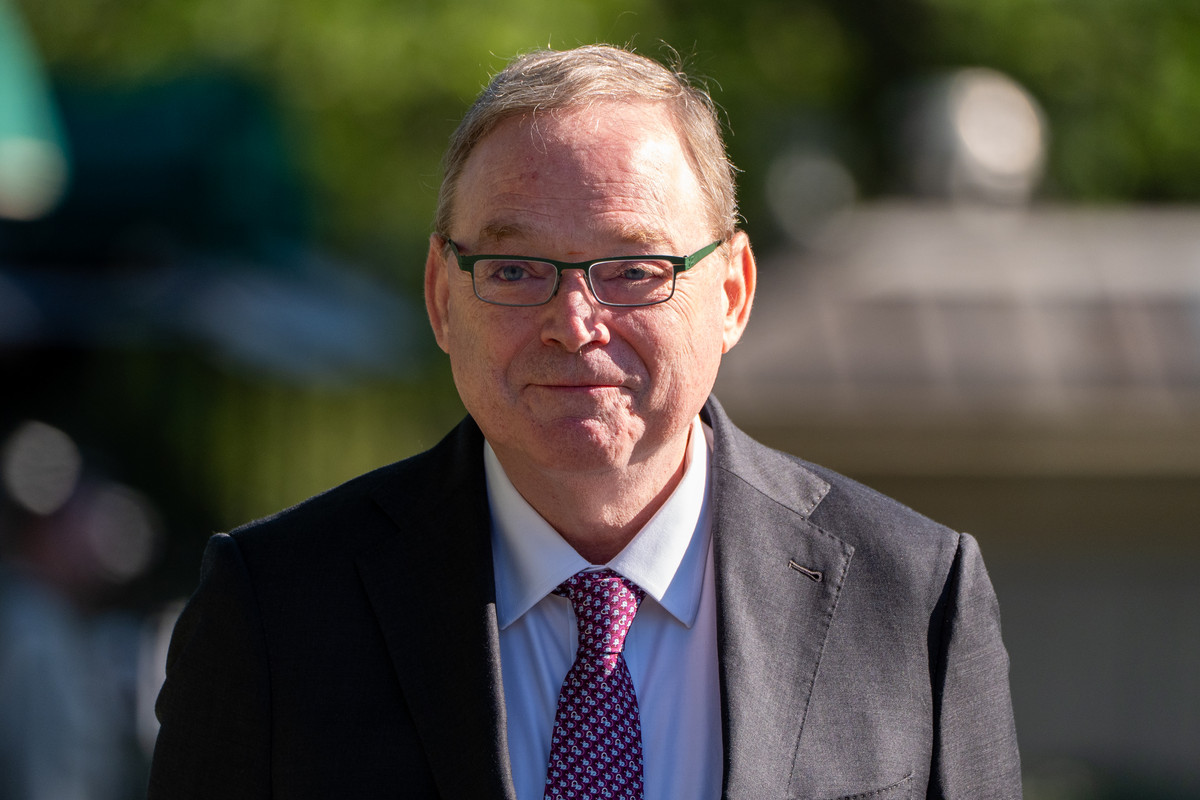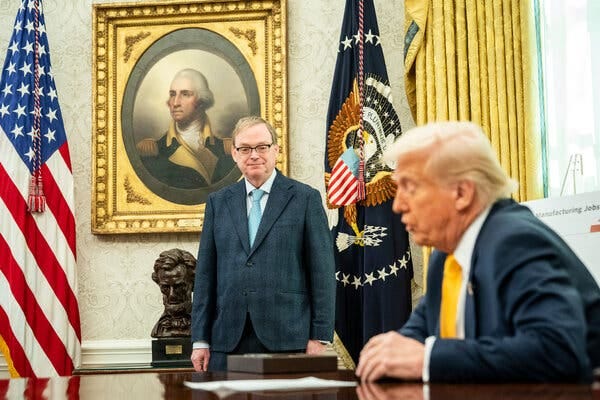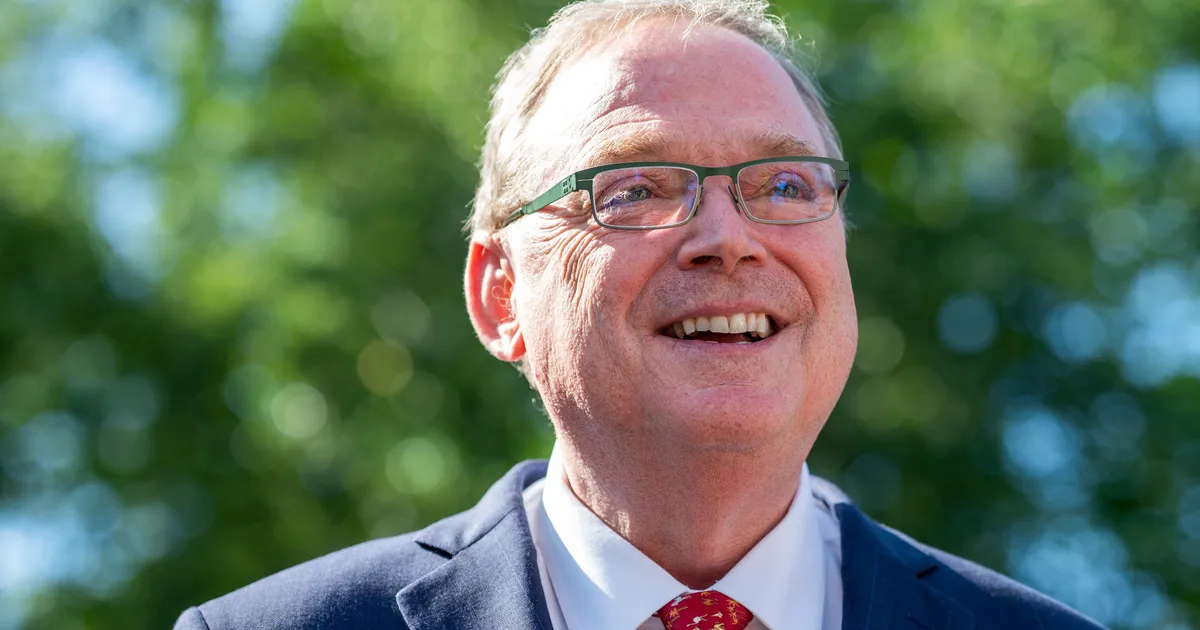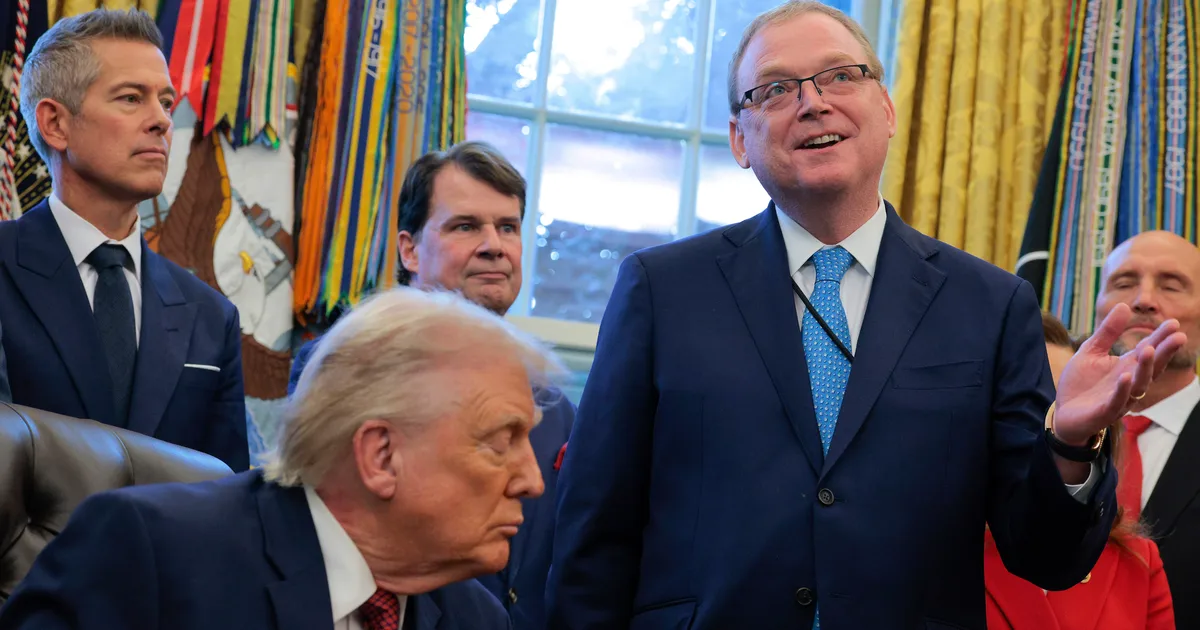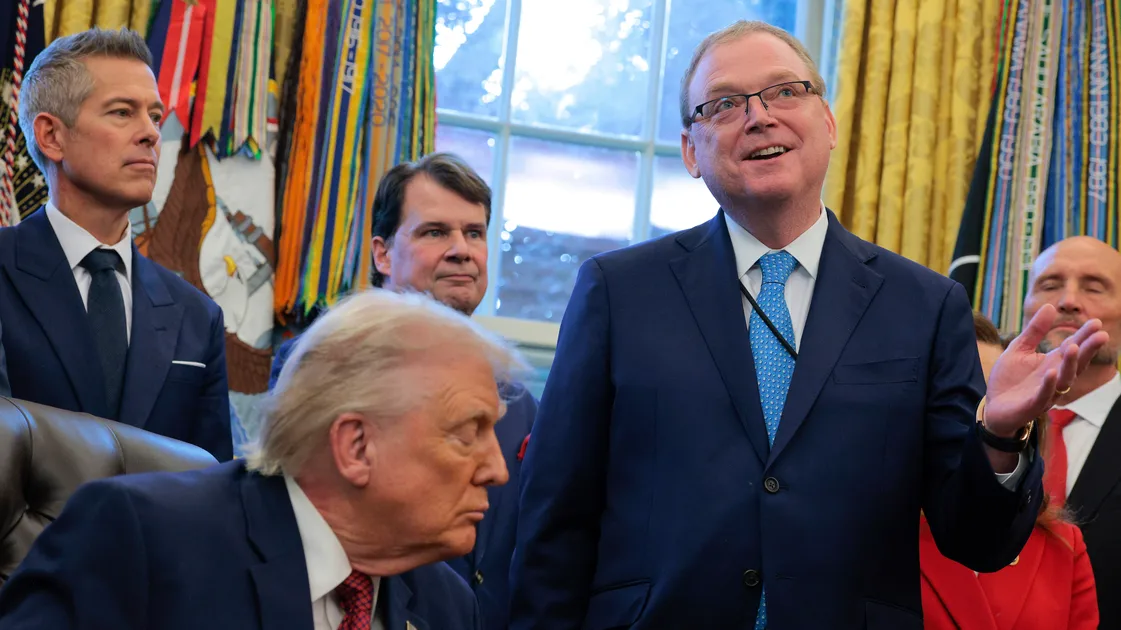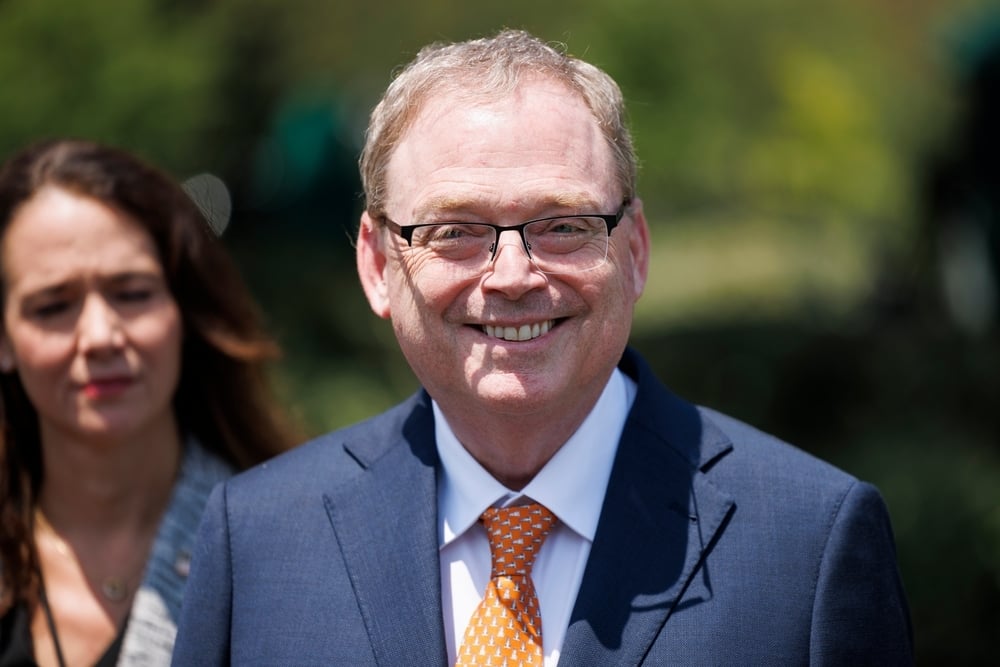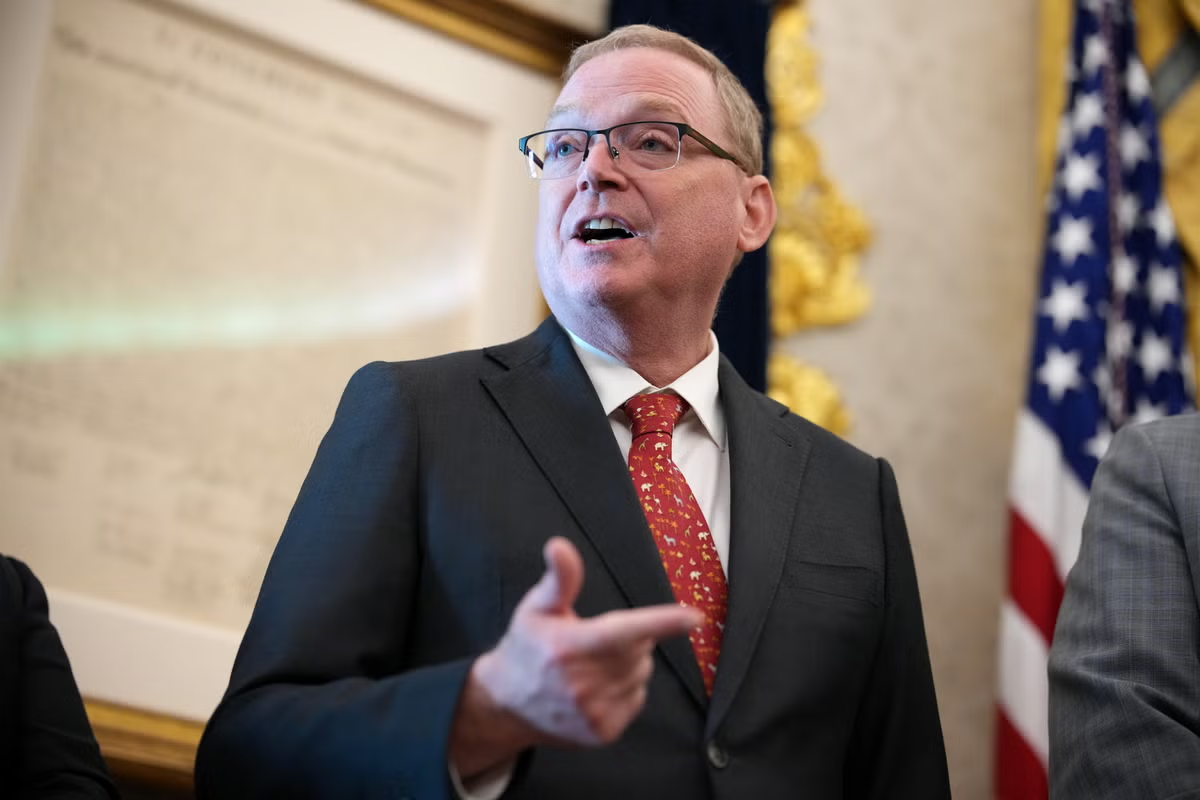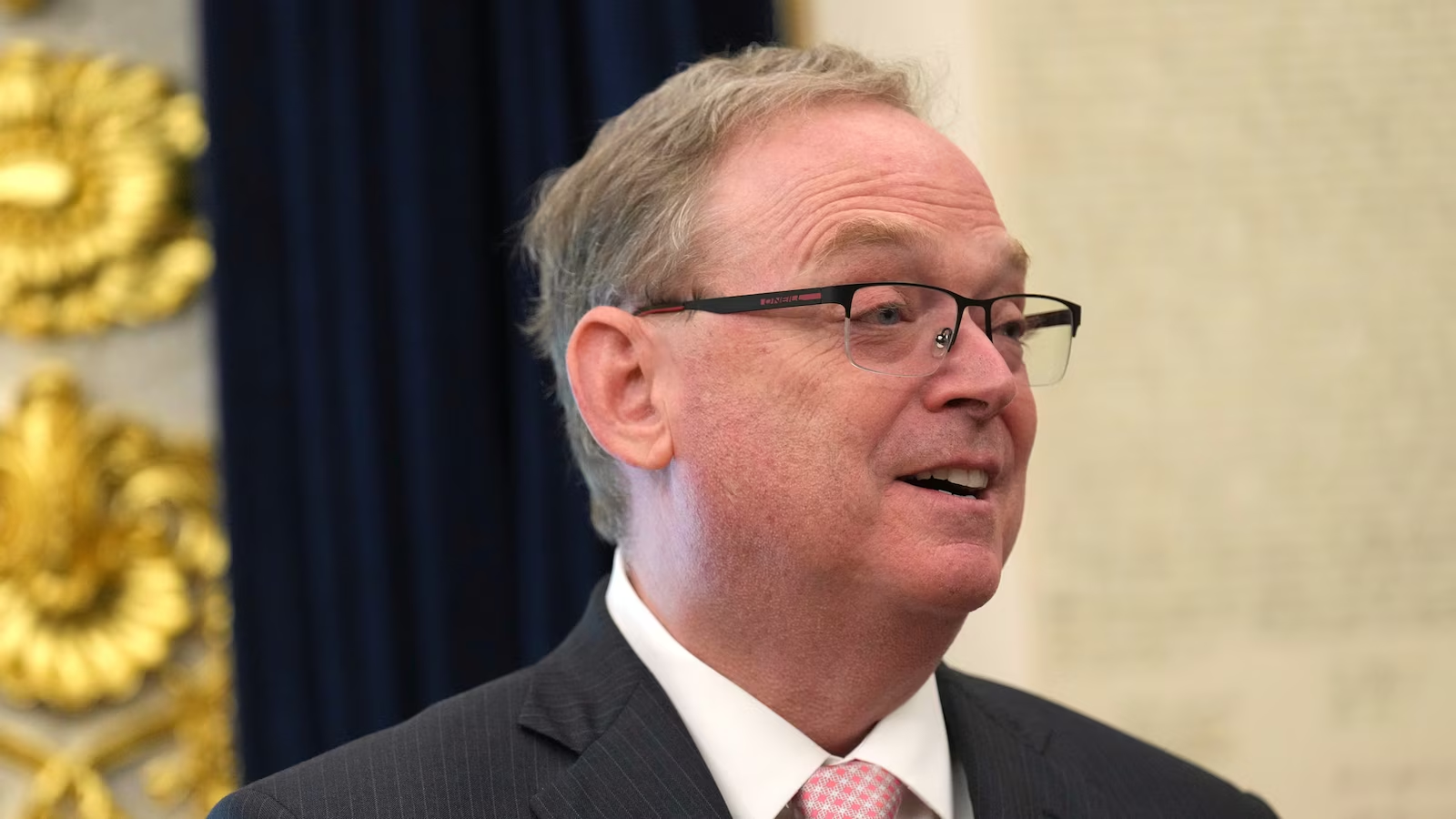
A rush transcript of "This Week with George Stephanopoulos" airing on Sunday, May 31, 2026 on ABC News is below. This copy may not be in its final form, may be updated and may contain minor transcription errors. For previous show transcripts, visit the "This Week" transcript archive.JONATHAN KARL, ABC “THIS WEEK” CO-ANCHOR: All right, I'm joined now by Trump White House economic adviser Kevin Hassett.Kevin, thank you for joining us.WHITE HOUSE NATIONAL ECONOMIC COUNCIL DIRECTOR KEVIN HASSETT: Good morning, Jon.KARL: Are you concerned about that disconnect that we saw there between, you know, the stock market is on fire, hitting new records every week it seems and Americans struggling with high gas prices, high inflation?HASSETT: Well, I think that the report that we just listened to did put its finger on the scale of negativity, ignoring a lot of really positive news. But, for sure, gas prices are high. They’re not quite as high as they were peak under Joe Biden, but they’re high. And a lot of other things are going down.But, you know, one of the things I've noticed here at the White House is, whatever piece of consumer price that is looking like it’s a little bit disappointing, it’s the only thing we talk about. So, you guys, that first month that I came here, the only thing you wanted to talk about was egg prices because they were high because of the Avian flu. Egg prices are down 85 percent.What you need to do is smooth through the ups and downs, look at what’s happening to real wages. And that was actually a factual error in the report, because I actually, you know, printed out the latest real-wage numbers here. But if you look at it, because there are more people working and because the stock market’s moving, profits are high, and that’s feeding through into wage and salaries -- workers’ salaries, that we’ve got like the typical manufacturing worker. So, for their real income adjusted for inflation is up $2,268, for a manufacturing worker, it’s $3,000, for a mining worker, it’s $4,500. And so, so on balance, real incomes, real wages are going up.KARL: But are you saying Americans are not hurting? I mean we’re hearing that, not just I mean -- a whole bunch of economic indicators, but just talking to people.HASSETT: Well -- well, there’s -- actually --KARL: I mean, people seem anxious and uneasy about the economy, don’t they?HASSETT: Well, look, in the end, people look at their wallets. They decide how to vote. And if they look at their wallets and look at how much money they have after, you know, the increase in prices, they’re going to find that they have a lot more money. And the one -- other thing I could say is that the consumer sentiment index that was cited is a Michigan survey that’s extremely partisan. We talked -- I talked about this on TV last week, that basically -- when Joe Biden was there, the Democrats in the survey had -- they were euphoric. Their index was way above 100 percent during stagflation. Right now it’s the lowest on record, something like 30 percent.And so, when you say that American consumers are really down in the dumps, what it is, is Democrats are in the dumps. Republicans have actually stayed around 80 percent on that survey all the way through. And so, there’s another measure, consumer confidence, which the conference board puts out, which is about an all-time high. So, if we’re going to say, oh, Americans are this or Americans are that, we should at least like truthfully look at the data and think about what the different signals are for the different data.KARL: Well, I mean, recounting what I'm hearing and what a lot of people are hearing.But let me ask you about inflation, because we had the Bureau of Economic Analysis came out this week. This is the Fed’s go-to gauge for inflation. Saying that inflation increased to 3.8 percent in April. Are you -- are you concerned about that? I mean, we’re seeing, you know -- and, obviously, a lot’s going to depend on what happens in the Middle East. But are you concerned about this nagging inflation and it might actually force the Fed to increase interest rates?HASSETT: No. You know, first of all, you know, you’re exactly right, the energy prices are high, and they’re high around the world. Gas prices are high, and that’s extremely frustrating, and it’s something that we’re working on doing lots of different things to minimize the disruption, and hopefully again the problem of the Gulf will be over soon, and then things will go back to normal.Absolutely true that the top line number, which includes energy, is a high number. But if you look at core, the history of this is, the energy shocks don’t usually peak through the core. That’s why, at the Fed, you know how they always talk about, well, core inflation this, core inflation that. Well, actually, as a consumer, you care about overall inflation. But the reason they talk about core is that’s the central tendency of what’s going to happen over the next year or two.And if you look, at the Cleveland Fed, you probably go here all the time, Jon, but if you don’t, the Cleveland Fed has an nowcaster (ph) or CPI, what they think the next month is going to be. And they’ve got core CPI at 0.23, which I think is about right, because that’s what our experience is, is that these energy stocks, painful while they happen, do not feed through to core.KARL: So, I know you’re hoping that there’s going to be a deal to reopen the Strait, and maybe that will come really soon. We’ve been hearing for a while that it’s coming soon, but maybe it’s going to happen soon. But let me ask you, if it doesn’t happen, if the Strait of Hormuz remains closed and those tankers aren’t getting bad, how -- what do you think happens to gas prices and oil prices?HASSETT: Well, what’s going on, I think that you would agree, is that oil and gas prices have surprised, if by not being nearly as high as a lot of people forecasted, because in part people have found ways to adjust, you know, there’s a big pipeline in Saudi Arabia that’s piping out more oil without having to go through the Gulf.KARL: Right.HASSETT: And that kind of adjustment has made it so that the price hasn’t gone to the 150s or the 200s, as some people forecasted.You know, I expect that the way to think about it is, when we get the Straits open and now there is actually a lot more traffic going through the Straits than there was two weeks ago. When you get the Straits open, then it’s about 300 nautical miles per day for one of those big tankers. And so, the people in Pakistan and India that have refineries that are mostly shut down --KARL: Yes.HASSETT: They’re going to get their oil. They’ll turn the refineries up, and then refined product prices will go down globally, and then it will spread from place to place. But, you know, really, it’s like a month or two until everything gets back to -- to the refineries.KARL: I mean -- I mean that’s if the Strait reopens, and actually the International Energy Agency said it could take several months before the flow really gets going and prices come down. But the ExxonMobil senior vice president, Neil Chapman, I'm sure you saw what he said to investors on a conference call this week. He said, “We’re approaching unheard of inventory levels. I mean really, really low levels. You can debate whether it’s going to hit those really low levels in two weeks or three weeks. But once you get to that point, you’ll see the price shoot up.”So, I mean, the concern here is, I'm sure you must share it, that if this -- if a deal isn’t struck, we could actually see those significantly higher levels of not just oil prices but, of course, gas prices.HASSETT: Right. Well, we track inventories every day. We started out with billions -- billions of barrels of private and government inventories and we still are in the billions. And so there’s plenty of runway. But also, you know, there’s a lot of pressure on Iran to finally agree to the president’s terms.You know, one way to think about it is that if you look at the rial, you know, a half a dozen years ago, then one would -- if 4,000 of them would by $1 right now, it’s something like 1.4 million of them buys one (ph).KARL: The Iranian currency.HASSETT: Yes. Yes.KARL: Well, their inflation is higher than ours.HASSETT: Yes. But it also puts a lot of pressure on them. Like, the people on fixed incomes and so on are really suffering.KARL: Well, Kevin Hassett, you remain ever optimistic. Thank you for joining us this morning.HASSETT: Great to be here, Jon.KARL: Up next, with just five months until the November midterms, which Senate seats are most likely to flip? The roundtable takes that on.Popular ReadsWe’ll be right back.//KARL: All right. Let's bring in New Jersey Democratic Senator Cory Booker.Let's start right there with these rulings against the president. What is your belief of the significance here, and Sarah's point there, that it's Congress that should be providing the oversight on this, but Congress hasn't been doing that?SEN. CORY BOOKER, (D) NEW JERSEY: Yeah, I agree with her. The Republican-controlled Congress keeps laying down for this president.Let's take this slush fund, for example. It's not a $2 billion slush fund. It is a $1.776 billion slush fund. And what that means is he's harkening back to our founding.Now, we fought a revolution to stop exactly this, a ruler from taking public funds and doing whatever they want with no checks and balances. This president is giving us a master's class in our own democracy by tearing it down.This is ridiculous that a president should be able to appropriate money to himself, Congress's job, and then give it out to people who beat police officers on January 6th.So I'm going to be doing what I've been doing the last couple of weeks, which is reaching out to my Republican colleagues. I'm in good conversations right now about doing things in a bipartisan way. We've had a Republican Congress that has laid down, bent over for this president for too long.And as he harkens and tries to drag up the memories of 250 years ago, this is the very reason why every American should be rallying together to stop him from trashing our Constitution.KARL: And just before Congress went on the Memorial Day recess, we did see some Republicans standing up on this, particularly those that aren't coming back largely because they've been frozen out, you know, by Trump. Cassidy lost his -- his Republican primary in Louisiana. I mean, now Cornyn is going to be coming back. He's now a lame duck as well.Are you -- are you expecting that there's going to be more Republican opposition? What are these conversations you're having?BOOKER: I am absolutely expecting that. And look, in private conversations, people are -- Republicans will express how aghast they are at the behavior of -- galled they are. I mean, look at this. The president took one of our sacred memorials to an assassinated president and slapped his name on it.What's next? The Trump-Lincoln Memorial? God bless America.He’s putting his name on our -- he wants to put his name on our money, on our passports, on our park passes. And when it's not, when the courts stop him, he acts like a petulant child and literally says in a rant that “I'm going to take my marbles and go home”. And in other words, “I already wrecked this institution by almost bankrupting it because acts were pulling out and now I'm going to do nothing with it and let it languish.”We have to stop him, and it's about time that Republicans realize that they took an oath to the Constitution and not to Donald Trump.KARL: Well, let's pick it up there, because there are two things there. One is the Kennedy Center, and he seems to be saying, “Okay, I'm going to push it. It's Congress's problem now.”What does that mean? Do you have any idea what this means for the Kennedy Center leadership right now?BOOKER: Yeah, it's what Trump has done. We've seen it in New Jersey. This guy has wrecked businesses, wrecked casinos. This president's life is a testimony to failures.And now he took an institution that had lots of acts scheduled and alike, and when he slapped his name on it, it started having severe financial problems. And then he says, OK, it is dwindling to a close. I'm going to close it anyway, and I'm going to raise money to do something about it.And so, this is who we have at the head of our nation right now, somebody who is acting like an out-of-control child and not somebody who has thoughtful, bipartisan ways, democratic ways of getting things done.KARL: And --BOOKER: And the reason why this is happening, you said this, is because of a Congress that is letting him do so. We have the power to check him, and we're not using it.KARL: And on this issue of the 250th anniversary of America, you know, you had these performers that have canceled. They don't -- they didn't want to -- they -- perform at the celebration on The Mall. And now Trump is saying he’s going to turn it into a Make America Great Again rally, where the entertainment’s going to be Donald Trump.What are you telling people? What should be -- how should this anniversary -- it’s a huge moment in the country’s -- in the country’s history, how should this be celebrated? What -- how do you prevent this from turning into simply a partisan affair?BOOKER: Yes, I mean, this is the problem with Trump. He’s a divider in chief. And what I’m hoping people are seeing in this is, is not his intention, but reminding us what American history has always been about. It’s been about the power of the people being greater than the people in power. That we’re not a nation of kings, princes, or rulers, but of Americans who, when they see power being used unjustly, whether it’s the labor movement, the abolitionist movement, civil rights movement, the story of America is Americans standing up against authoritarian figures and making our democracy more robust.This is one of those moments where we have a man that is unfortunately reminding us of the dangers of a democracy when you have an out of control president. And what the -- I think the education moment is, is the only way he’s ultimately going to be stopped is if more people stand up and speak up. That’s how this nation was founded.KARL: So --BOOKER: That’s how we’ve advanced through crises before. And that’s what’s needed now.KARL: So, how important is it for Democrats, in your view, to win back control of the Senate, and how involved are you going to be in this effort?BOOKER: Well, you say it's Democrats, but I think in this election a lot of people are seeing more is on this ballot than right or left. It’s really about right or wrong. If Congress is refusing to check the president, if Congress is surrendering its war powers to the president, the powers of the purse to the president. If this president is calling out by name judges that don’t rule against him, attacking the judicial branch, what are we going to do? We need to put people in place in Congress that are going to do our constitutional duty that we swore an oath to do, checks and balances, oversight and accountability.And so, I am going to do everything I can. I’ll be running up and down the state of New Jersey because I’m on the ballot, but all around this country saying, as they are attacking voting rights, as they are doing mid-decade redistricting to try to cheat and create an outcome that preserves power for people that might even be in the minority, but still hold the House. All of this is an assault on what our ancestors fought for.KARL: So --BOOKER: As I said, when I went down to Birmingham and Montgomery, this is our ancestors looking down and asking us, what will we do in a moral moment in our country, like so many of them sacrificed and bled for?KARL: One of the marquee Senate races, of course, is in Maine, where the Democratic nominee, presumptive nominee, is Graham Platner. And a lot of allegations against Graham Platner, including the very latest, a controversy that “The Wall Street Journal” has reported on, alleging that Platner’s wife, Amy, flagged sexually explicit texts between Platner and a half dozen other women to the campaign during the vetting period. And in a video posted on X, his wife Amy said, they love each other deeply, they have a great marriage, and they’ve been getting counseling.But let me ask you, do you have concerns with the weight of all these controversies that it may jeopardize Democratic hopes to get that Senate seat in Maine?BOOKER: Yes, I have concerns. That guy has questions to answer. And that’s what campaigns are for. But when I go all over New Jersey and see hundreds and hundreds of thousands of New Jerseyans losing their health care and millions more seeing their health care costs go up, as I have families who say I can’t afford gas for my car and child care for my children, I know that so much is riding on Democrats taking control of the Senate. That this election, if we do not get the votes necessary to take care of the House and the Senate, we will continue to have an out-of-control president.And I’m going to tell you right now is he is a lame duck president. He’s becoming more and more dangerous. Just look overseas at the war we’re in, the lives being lost, the billions being spent, and now he is shamefully trying to crawl back and try to get us back to where we were before the war even started. This man is dangerous, and it’s time that we take back the Senate. And that’s what I’m focused on.KARL: All right, Cory Booker of New Jersey, thank you for joining us.
'This Week' Transcript 5-31-26: White House National Economic Council Director Kevin Hassett & Sen. Cory Booker
<p><br />WH National Economic Council Director Kevin Hassett & Sen. Cory Booker were on "This Week" Sunday, May 31. This is a rush transcript and may be updated.</p>
TL;DRAI
NEC Director Kevin Hassett argued real wages rose $2,268–$4,500 across sectors and that April's 3.8% PCE inflation is energy-driven, not structural. The Strait of Hormuz closure is the key risk: if sustained, energy spikes could delay Fed rate cuts and compress tech capex.
3,113 words~14 min read