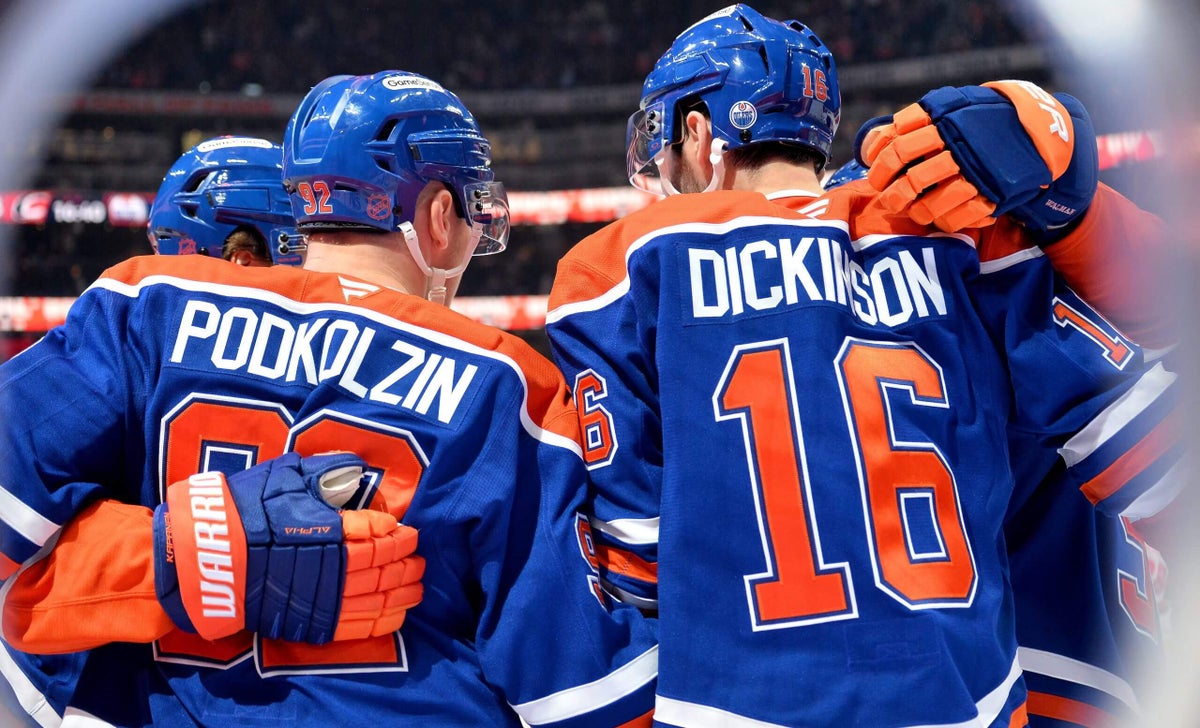
This week, the Edmonton Oilers shuffled the hockey operations staff, increasing the profile of the team’s analytics department. Michael Parkatti, hired in 2023, received a new title in the management tweaks. He’s now vice president of analytics and technology, a vague description but one that suggests a higher profile in important areas.The Oilers were late adopters of “fancy stats,” so any sign of progress should be considered a positive. General manager Stan Bowman, who has been on the job for almost two full years, has delivered an uneven performance in procurement.How much has analytics aided Bowman? What about the acquisitions? Is analytics making things better? Here’s a look.Big dealsI’m counting any trade from August 2024 through today involving a player with a cap hit over $2 million AAV as a major deal. Nine deals fit the description.DateDealAug 18, 2024Dealt Cody Ceci for Ty EmbersonAug 20, 2024Dealt Philip Broberg and Dylan HollowayMar 4, 2025Acquired Trent FredericMar 6, 2025Acquired Jake WalmanJune 25, 2025Dealt Evander KaneJuly 1, 2025Dealt Viktor ArvidssonDec 12, 2025Acquired Tristan JarryMar 2, 2026Acquired Connor MurphyMar 4, 2026Acquired Jason DickinsonBowman was hired on July 24, 2024, and 20 days later, the St. Louis Blues signed Philip Broberg and Dylan Holloway to offer sheets. By the time Bowman made the formal trade with the Blues on Aug. 20, he had acquired Ty Emberson and Vasily Podkolzin (more on him below) as replacements. There’s no way an analytics department would recommend the deal as it went down, and it remains curious why the Oilers didn’t match on Holloway. His AAV ($2.29 million) was far easier to fold into the Edmonton roster than the Broberg ($4.58 million AAV) deal from St. Louis.As a deadline rental, Jake Walman was top drawer. He owned a 54 percent goal share during the long 2025 playoff run for the Oilers and delivered 1.3 points per 60 (both numbers at five-on-five). Trent Frederic was acquired while still injured, and although he owned a 58 percent goal share at five-on-five, his line didn’t move the needle much offensively. The 2026 deadline deals for Connor Murphy and Jason Dickinson had similar results to the Walman acquisition over a much shorter period of playoff games. The only downbeat on these deals was the price paid.The Tristan Jarry trade was made under the stress of a season that appeared to be on the verge of spiralling out of control. Edmonton’s No. 1 goalie, Stuart Skinner, ran hot and cold while the team couldn’t put a winning streak together. In acquiring Jarry, Edmonton didn’t upgrade to the point where the position was sealed tight. Both Shayna Goldman and Dom Luszczyszyn at The Athletic panned the deal at the time. Quoting Goldman about Jarry: “As much as his value has rebounded so far this regular season — with a .909 save percentage and GSAx of 9.09 — this move is incredibly risky. And the Oilers had to give up Kulak and a second-rounder to pull it off.”Taken as a group, it’s impossible to suggest the analytics were in favour of the deals with the Blues or the Penguins. A more reasonable conclusion is that Bowman ignored the recommendations and proceeded based on his own reading of the players. Analytics may have contributed to the Walman, Murphy and Dickinson trades.
Identifying Edmonton Oilers’ recent transactions that were aided by analytics
The Oilers were late adopters of "fancy stats," so any sign of progress should be considered a positive.
1,194 words~5 min read