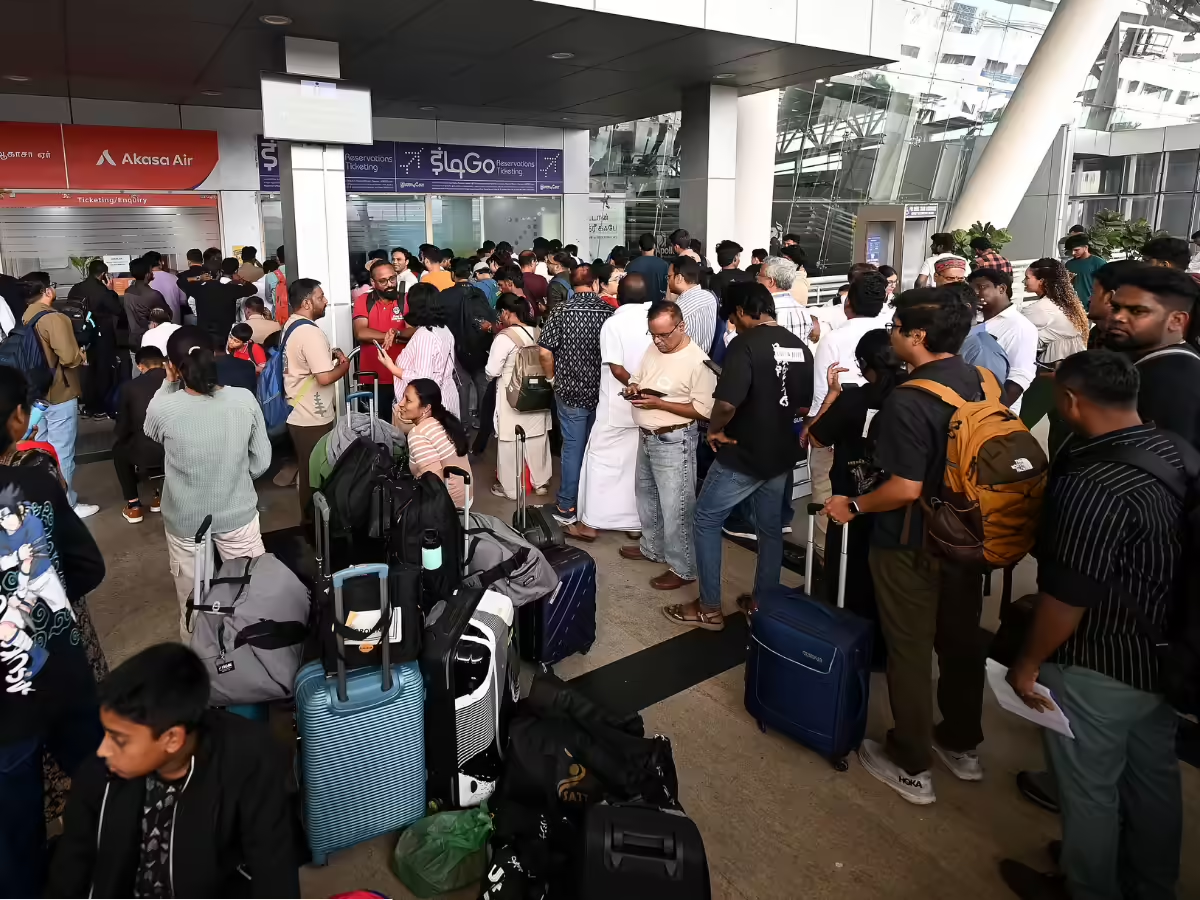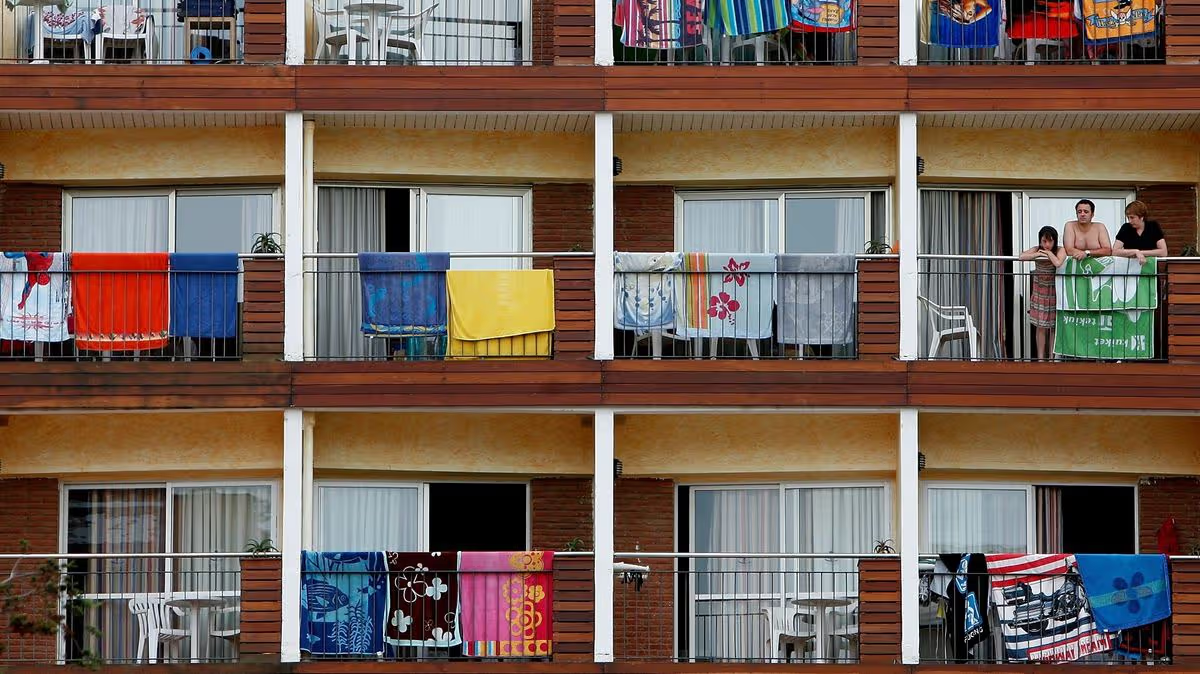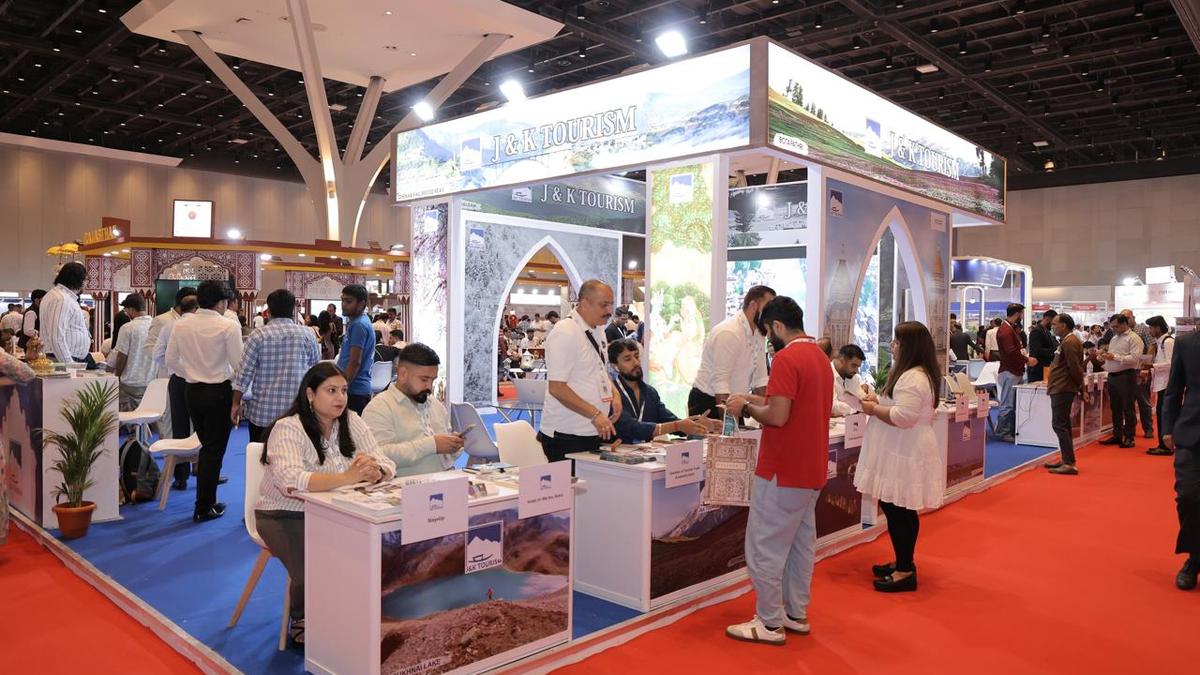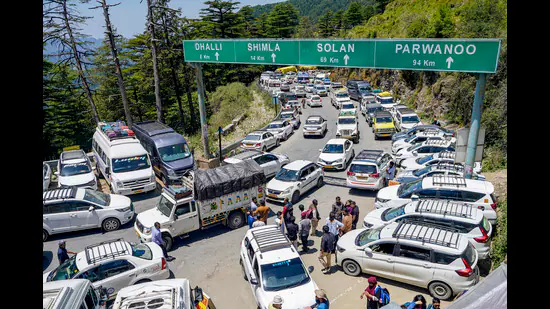
It’s that time of the year. Airfares compete with mercury in soaring higher and higher. I end up spending my summers, year after year, checking flights and hotels from my bed, paralysed by the shocks of heat and dynamic pricing. I have the privilege of air conditioning and an uninterrupted power supply, so maybe I’m not too keen on contributing to Indian tourism’s targeted growth: 7% share of GDP by 2030. Going by the traffic jam reports from all the hill stations this weekend, however, I’m an outlier.The unregulated tourism in India is a Janus-faced monster. Not only do tourists lack civic sense, they are also met with an infrastructure that is either crumbling under its own structural flaws or simply absent (PTI)India’s development conundrum is clearly visible in how we behave during the summer vacations. If we have the means, we jet off for a foreign holiday, trying our best not to encounter another Indian on the streets, at the hotel buffet, in the ticket queues, or even in our dreams. If not, we settle for a domestic getaway, nanny in tow. In either case, the chances of us turning out to be the horror we warn ourselves against are quite high.My brother has a proven theory about traffic jams in Delhi. In most cases, it’s the “Tampu”. The ubiquitous small-sized freight carrier, almost always violating every possible traffic rule, breaking down at will right in the middle of a flyover at the busiest hour, pretending to be a participant in the Formula One race on the narrow market roads, and often found belly up after accomplishing all this. The jams at tourist destinations, however, may not have any such scapegoat. It’s just us.The unregulated tourism in India is a Janus-faced monster. Not only do tourists lack civic sense, they are also met with an infrastructure that is either crumbling under its own structural flaws or simply absent. Two recent social media “storms” exemplify this: Shenaz Treasurywala’s video from Sri Lanka explaining why foreign tourists avoid India (pssst, we are dirty) and the #BoycottUttarakhand “movement” started by Haryana influencers.The latter case is more fascinating, considering Uttarakhand’s reputation as the Devbhoomi. Considering pilgrimage predates vacationing and is more in sync with cultural values, the battle lines between tourists and locals are poignant because of the conspicuous lack of piety. It’s all about having transactional “fun”. It’s rare to find a pilgrim headed to the Char Dham, following the strict niyam and vidhi (precepts and processes). But that’s what happens when a naturally gifted but chronically poor state sees mass tourism as the easiest gateway to income and development.If this isn’t new-colonialism, what is?Tourists, and the new breed of investors in tourism projects, often display behaviours which are “characterized by a sense of often short-term instrumentality”, as noted by religious studies scholar Luke Whitmore in his book, Mountain, Water, Rock, God: Understanding Kedarnath in the Twenty-First Century. The collaborators and native informers abound, and the desi colonisers swoop in with their extractive attitudes. The clashes between tourists and locals erupting anywhere in the world are an outcome of these very extractive attitudes, which govern the idea of tourism now. The paradox of development in tourist destinations is that a significant chunk of the tourism revenue never makes it to the welfare projects and sustainability initiatives focused on local ecologies and people.At this point, if this essay sounds a bit ad hominem, bingo! It doesn’t claim to be stating a fool-proof tested universal truth. Generalisations, however, matter because perceptions matter. And that’s the whole point, when it comes to travelling for leisure. Till we ask ourselves to undertake travels that prioritise human (not just our own) and ecological well-being over shortsighted material metrics, these generalisations will have to be made and reiterated.As I calculate the costs of a much-desired holiday, there’s a lot more that gets added to the skyrocketing air-ticket prices: Carbon emissions, pressure on public utilities, cultural commodification, the list goes on and on. I realise, not without a hopeless sigh, that I cannot afford it any longer. Au revoir, bucket list.
It’s the summer break, but can we really afford to travel?
The paradox of development in tourist destinations is that a significant chunk of the tourism revenue never makes it to the welfare projects and sustainability initiatives focused on local ecologies
682 words~3 min read