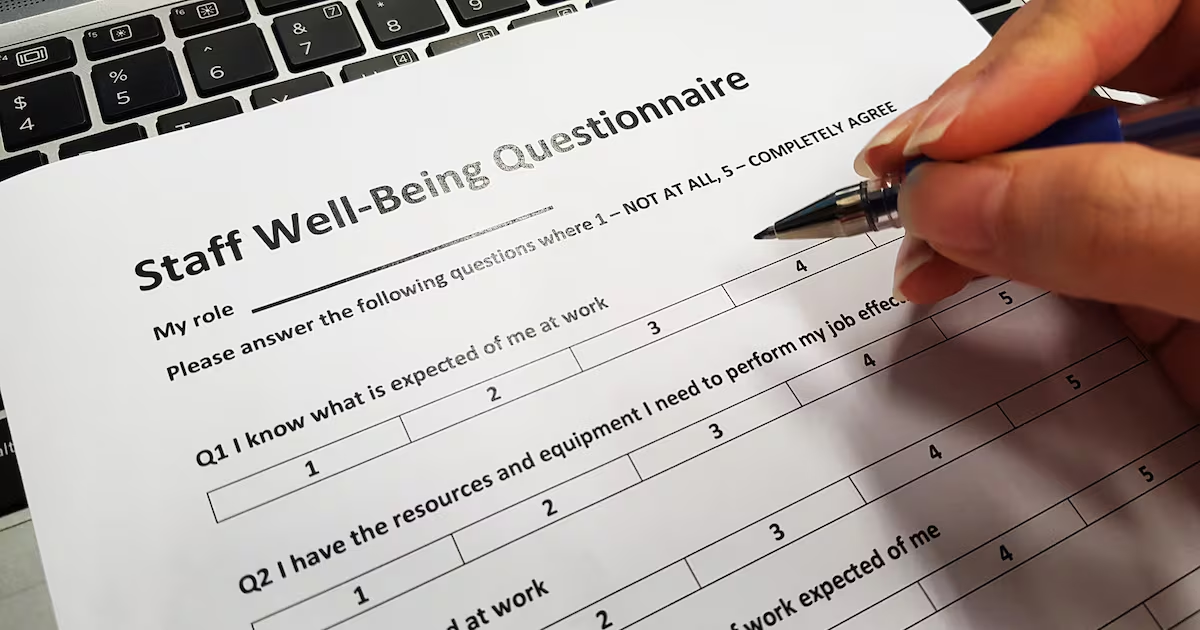
Let me be direct with you. The gym membership subsidy, the mental health awareness week, and the annual health fair are not a risk strategy. They are employee benefits. Useful, yes. But they are not the same thing, and in the current Nigerian business environment, confusing the two is an expensive mistake.
Absenteeism, stress-related illness, poor mental health and weak return-to-work processes are no longer soft issues at the margins of HR. They are operational and financial exposures. Senior leaders should be managing them with the same rigour they apply to treasury risk, cybersecurity or supply chain disruption. Most are not.
For too long, workplace wellbeing in Nigerian organisations has been treated as a bundle of perks, sometimes including some of the following – a few screening events, some motivational talks, a wellness committee that meets quarterly. Those activities may support engagement at the margins. But they cannot tell your board what is driving claims escalation, prolonged absence, declining productivity or talent attrition. That is not a wellness problem. That is an intelligence gap.
Consider what is happening in more mature markets. The CIPD’s 2024 Health and Wellbeing report found that sickness absence in UK organisations reached 9.4 days per employee; up from 7.8 in 2023 and just 5.8 in 2022. Mental health was the leading cause of long-term absence. I am not suggesting Nigerian HR should mechanically copy a British model. What I am saying is that the trajectory is instructive. Organisations everywhere are discovering that wellness activities without data are noise. The question is not whether a programme exists; rather, it is whether it generates the intelligence needed to make better decisions.