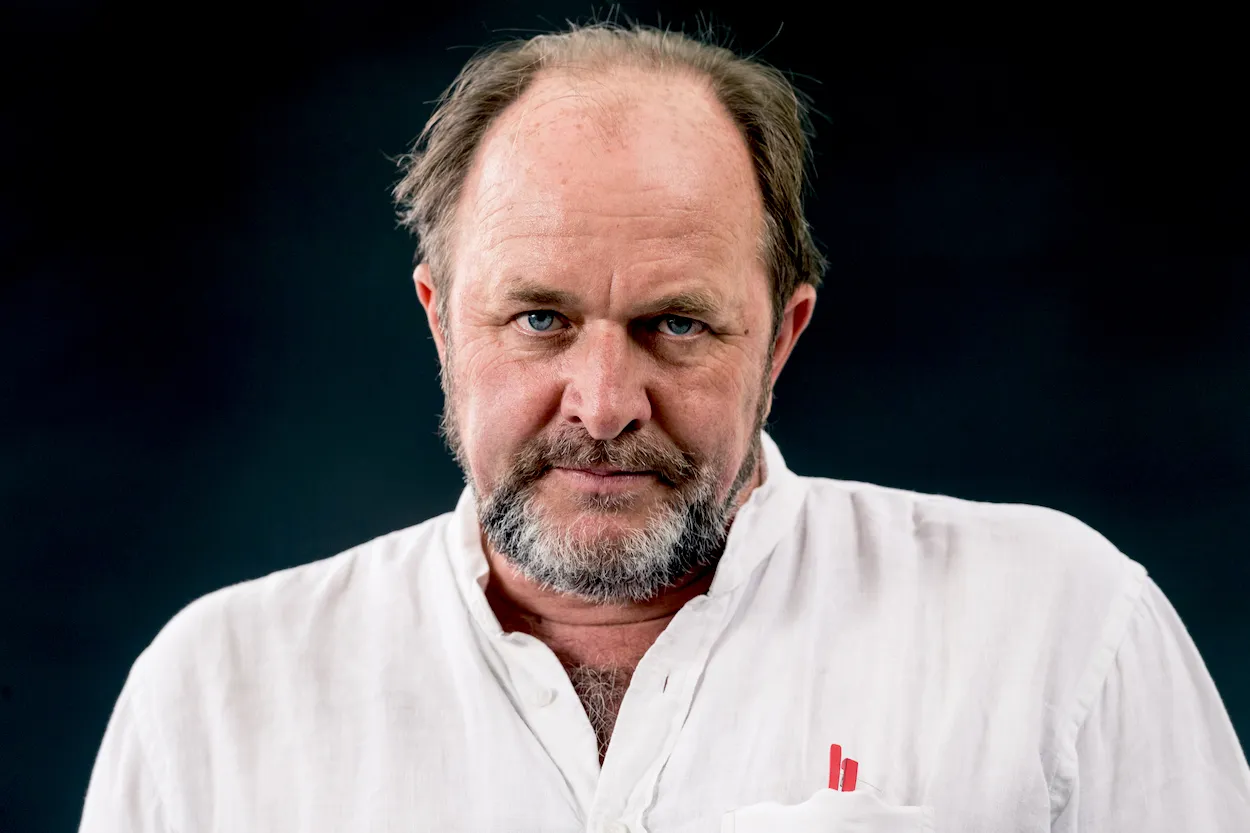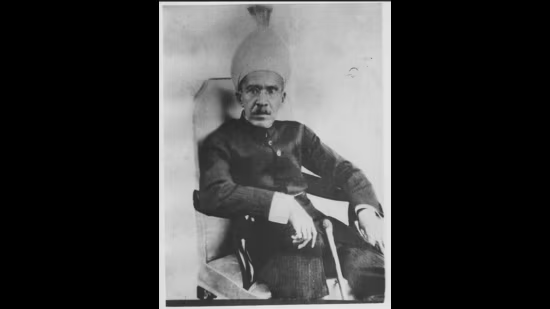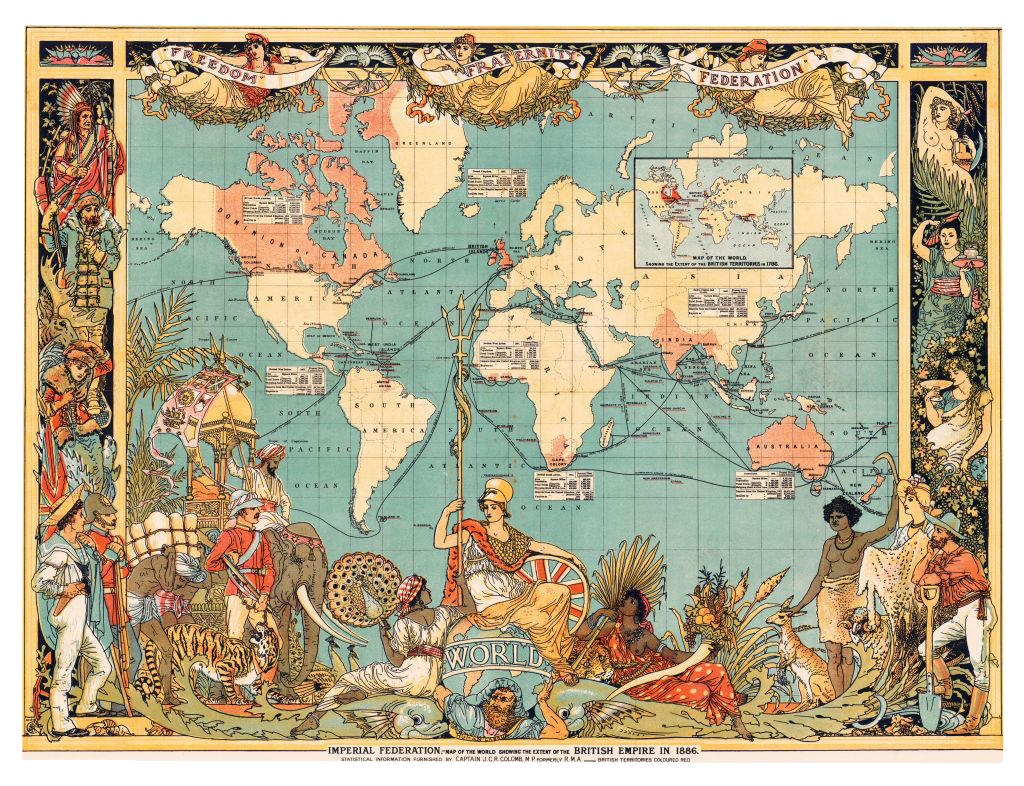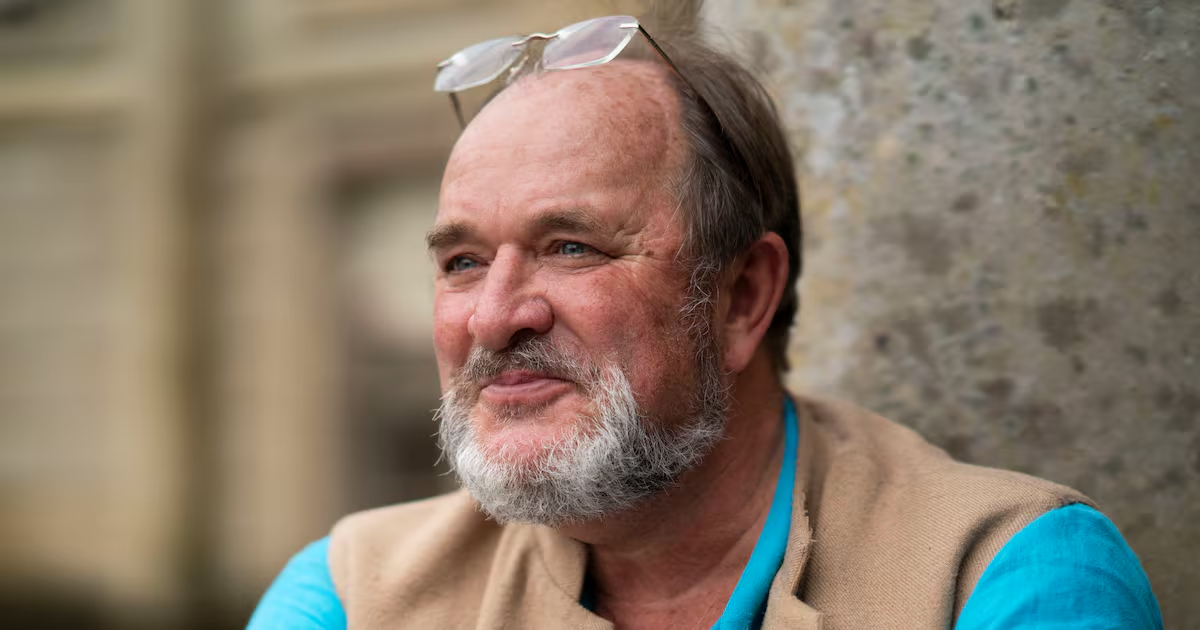
William Dalrymple has been living on and off in India since 1989. His life and work bestride the confluence of two civilisations, East and West, and two countries, India and Britain, with the thread of colonialism between them. He is a respected historian who has written many successful books, most notably The Anarchy: The Relentless Rise of the East India Company, published in 2019. That work took him 20 years and recounts how a privately-funded company came to appropriate and then rule an entire subcontinent. The book sold well but was still niche. In 2022 his profile became global with the start of Empire, the podcast he presents with the BBC journalist and author Anita Anand. Empire was started by Goalhanger, the company owned by former footballer Gary Lineker, which also owns The Rest is History, the podcast and cultural phenomenon presented by Dominic Sandbrook and Tom Holland. Was there enough space in the universe for two history-themed, complementary podcasts? Ninety million downloads and 360 episodes later, Empire is its own phenomenon. Anand, with her clipped tones, and the jovial Dalrymple are perfects foils for each other. He, a British-born man living in India, and she, a British-born woman with Indian parents, are indicative of how the world has been shaped by empires, ancient and modern. The timing of the launch of Empire was propitious. It was the 75th anniversary of Indian and Pakistani independence and two years after the beginning of the Black Lives Matter movement, which refocused attention on empire and the slave trade. This year marks 250 years of the USA, the most economically and politically successful colonial project. Everywhere the ghosts of empire shape the modern world. What we are seeing now are India and China resuming their place in the world which was destroyed by colonialismEmpire examines empires old and new from the Roman Empire to the present. It frequently cites the modern-day phenomenon of companies – most notably Meta, Amazon and Google – who, like the East India Company in its time, are subverting the nation states of the world. “It’s changed my life completely,” says Dalrymple of Empire. “There are things you struggle for and worry about in life that don’t happen.” And then there was this which landed on my plate out of the blue with no particular ambition of mine to have a podcast. It’s kind of a bizarre accident, a very nice one.” [ The Rest Is History podcasters Tom Holland and Dominic Sandbrook: ‘There’s something about our monotonous drone people just love’Opens in new window ]Dalrymple is also a founder member of the Jaipur Literature Festival, now in its 20th year. Established in 2006, it has grown to be one of the biggest literature festivals in the world. “We started with just a group of people in a tiny room and now we are about 500,000 people a year coming to the mother ship in Jaipur in India.”The festival has gone on the road in Ireland, taking in Belfast last week, Armagh earlier this week, Louth last Thursday and Dublin from yesterday until Sunday. We Scots, like you Irish, like to be the anti-colonials and the people who resisted the British Empire, but in both cases we are deeply complicitAlthough there will be many colonial themes, it is primarily a literary festival, with both Irish and Indian authors in attendance, along with musicians from both countries. The idea for an Irish road trip came from a previous festival at which the Trinity College Dublin historian Prof Jane Ohlmeyer and Dalrymple found themselves on the same stage. William Dalrymple, and Anita Anand, will be doing a reprise of their Empire podcast at Trinity College Dublin’s Edmund Burke Theatre. Photograph: David Levenson/Getty Images “Neither of us knew each other until we arrived on stage together, but we’d read each other’s books,” Dalrymple says. “And they couldn’t get us off, because we were just saying, ‘here’s another thing, you know, there’s another thing in common’. It is extraordinary how much it dovetails.” Ohlmeyer’s book Making Empire: Ireland, Imperialism and the Early Modern World demonstrates how Ireland was England’s first colony and many of the practices that led to the British Empire – the appropriation of land, the erasure of native language and the assimilation of people into the colonial project – were adopted elsewhere. Scots-born Dalrymple says Ireland and Scotland have a lot in common. Both have built a national myth around resistance to English imperialism, yet both were complicit in British imperialism. [ Jane Ohlmeyer: How Ireland served as a laboratory for the British empireOpens in new window ]“We Scots, like you Irish, like to be the anti-colonials and the people who resisted the British Empire, but in both cases, we are deeply complicit. “I’d say 80 per cent of Scots are completely unaware of how much a role they played in the suppression of the freedom in India. We all know about Mel Gibson [in Braveheart] shouting freedom from the scaffold, but we don’t hear about the Scottish setting up the scaffolds in India.” Dalrymple’s prime motivation behind getting involved in Empire was to educate the British and other former colonists about their own history. In 2019 Anand published the book The Patient Assassin about the assassination of Sir Michael O’Dwyer, the lieutenant governor of the Punjab in 1940. O’Dwyer was held complicit in the Amritsar Massacre of 1919 in which British troops and Indian sepoys killed hundreds of unarmed civilians. O’Dwyer’s story is all the more complicated for not being that of an Anglo-Irish grandee lording it over the natives. He was a Jesuit-educated Irish Catholic from Barronstown in Co Tipperary, a neighbouring parish to Soloheadbeg, where the Irish War of Independence began in 1919. In his book India As I knew It, O’Dwyer revelled in the service that so many Irishmen gave to the British Empire in India. [ Soloheadbeg ambush: what really happened in January 1919?Opens in new window ]“Till the unfortunate revulsion of feeling that followed the Easter rebellion of 1916, the Jesuit schools prided themselves on the numbers that passed into the service of the Crown, in the army and civil service,” he wrote. “This was, of course, good business, but it was also based on a spirit of loyal support of constituted authority. The Roll of Honour of Clongowes College in the Great War, perhaps surpassed that of any Irish school, Catholic or Protestant, and for the first two years of the war, the spirit was admirable.” [ Sir Michael O’Dwyer, apologist for the Amritsar massacre, was also an Irish nationalistOpens in new window ]Dalrymple and Anand will be doing a reprise of the Empire podcast at Trinity College Dublin’s Edmund Burke Theatre with the historian Caroline Elkins, whose book Legacy of Violence: A History of the British Empire was published four years ago. Dalrymple believes India is returning to its pre-eminent place as one of the great powers in the world, which it held before the British Empire took over. It is the most populous country in the world, taking over China earlier this year with almost 1.5 billion people. It became the fourth largest economy in the world last year and is on course to be the third biggest behind the US and China by 2028, though its people are still significantly poorer than those in the West. “India is the first or second power in history for most of history. Occasionally India outpaces China. India produced 40 per cent of the world’s goods before colonialism,” says Dalrymple. “What we are seeing now are India and China resuming their place in the world which was destroyed by colonialism ... It has taken India 75 years.“India is taking longer, but it’s like an elephant, slow but then unstoppable. India will resume its role as the second or third economic power in the world and will do so in our lifetime.“I don’t think the penny has dropped, certainly not in Britain, about the way India is just slowly but steadily moving past so many other powers.” Dalrymple is writing a book about the Palestinian people. He is a stout defender of them and a ferocious critic of those who seek to excuse Israel’s activities in Gaza. Last year Michael Gove, the former British cabinet minister and now editor of the Spectator magazine, published a book on Islamic extremism called Celsius 7/7, which Dalrymple dismissed as a “confused epic of simplistic incomprehension, riddled with more factual errors and misconceptions than any other text I have come across in two decades of reviewing books on this subject”. He is also frustrated by British government policy in relation to Palestine, believing it owes a historic debt to the Palestinian people. The Balfour Declaration of 1917 committed Britain to supporting the establishment of a “Jewish national home” in Palestine, where most of the population was Arab.“Again, it is something that most Brits aren’t aware of. As [the Hungarian author and journalist] Arthur Koestler famously said: ‘It was one people giving away the land of another to a third’,” he says. “I think all the different partitions of Ireland, India, Palestine and Cyprus have been running sores that have eaten up the energies of these people since.“We’ve got to fight for a Palestinian state. I think the only fair solution is to find some way of getting Palestinians and Israelis to live either together or side by side. “They’re almost equal in number if you add up the number of Palestinians in Israel, West Bank and Gaza, and the number of Israeli Jews. “For one people to lord over another is simply untenable, and that’s even before you start thinking about the Palestinian diaspora – the descendants of the 750,000 people expelled in 1948 that are not part of it. “I went to a very Catholic school [Ampleforth in York] and the Nakba [expulsion of Palestinians from Israel in 1948] is just one of the many imperial stories that the British aren’t taught. “I remember being taught that Israel turned the desert into bloom, but I never heard at any point in my education about the Nakba. “The idea that other people got thrown out to create Israel was never taught to me at any point in my education. That’s one of the reasons why we do these podcasts, so as to tell these stories which are off the curriculum.” I put it to him that the Jews are among the most persecuted people in history and have a right to live in safety. He responds: “There is no point at this stage in Israel being undone, but I don’t think there can be a right to an Israeli state without a Palestinian state beside it. “It’s no more impossible to find some accommodation than in Ireland.”
William Dalrymple: ‘The partitions of Ireland, India, Palestine have been running sores’
The bestselling author and co-presenter of the Empire podcast has brought the Jaipur Literature Festival to Ireland
1,798 words~8 min read